Quick Verdict: The AMG EQE's Dual Personality
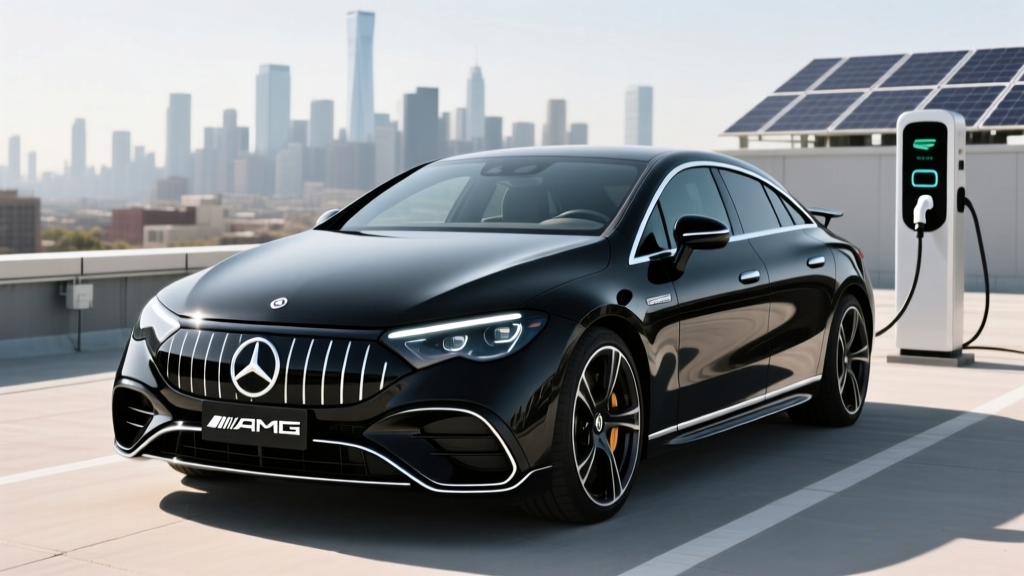
The Mercedes-AMG EQE occupies a narrow but fascinating slice of the EV market: a luxury performance sedan that can demolish a quarter-mile in the morning and deliver a near-silent, composed commute by evening. For 2026, the AMG EQE 43 and EQE 53 continue to pair Mercedes-Benz's EVA2 platform with hand-built Affalterbach electric drivetrains, producing up to 677 horsepower with the AMG Dynamic Plus package engaged. But performance sedan buyers face a math problem — one that involves 90.6 kWh of usable battery, a 230-mile EPA range sticker, and a starting price that clears six figures before a single option box is checked.
This review breaks down every number that matters: real-world range expectations on the highway and in cold weather, the charging curve you'll actually see at a DC fast charger, cargo space realities, and the federal tax credit situation that may or may not work in your favor. If you're cross-shopping the AMG EQE against the Tesla Model S Plaid, Porsche Taycan, or BMW i5 M60, you'll find the decision framework you need below.
2026 Mercedes-AMG EQE Specifications at a Glance
| Specification | EQE 43 4MATIC | EQE 53 4MATIC+ |
|---|---|---|
| EPA Estimated Range | 230 miles | 230 miles |
| Usable Battery Capacity | 90.6 kWh (NMC) | 90.6 kWh (NMC) |
| Horsepower | 469 hp | 617 hp (677 hp w/ Dynamic Plus) |
| Torque | 633 lb-ft | 701 lb-ft (738 lb-ft w/ Dynamic Plus) |
| 0-60 mph | 4.0 seconds | 3.2 sec (2.8 sec w/ Dynamic Plus) |
| Drivetrain | Dual-motor AWD | Dual-motor AWD (AMG-tuned) |
| Top Speed | 130 mph | 149 mph |
| Max DC Fast Charge Rate | 170 kW | 170 kW |
| 10-80% DC Fast Charge Time | ~32 minutes | ~32 minutes |
| Level 2 Home Charging Rate | 9.6 kW (~27 mi/hr) | 9.6 kW (~27 mi/hr) |
| EPA Efficiency (Combined) | 74 MPGe / 45 kWh/100mi | 74 MPGe / 45 kWh/100mi |
| Cargo Volume (Trunk) | 15.2 cu ft | 15.2 cu ft |
| Rear Legroom | 36.9 inches | 36.9 inches |
| Curb Weight | ~5,500 lbs | ~5,600 lbs |
| Base MSRP | $108,050 | $112,350 |
| Battery/Powertrain Warranty | 8 yr / 100,000 mi | 8 yr / 100,000 mi |
Range & Efficiency: EPA Sticker vs. Real-World Reality
The EPA rates both the AMG EQE 43 and EQE 53 at 230 miles of combined range. That number reflects the blended city/highway testing cycle on fueleconomy.gov, and it's important context: the standard Mercedes-Benz EQE 350+ (rear-wheel drive, less power) achieves up to 305 miles EPA on a similar battery. The AMG's all-wheel-drive system, stickier performance tires, and aggressive powertrain calibration consume roughly 20% more energy per mile.
- City/suburban driving: 235-250 miles (regenerative braking recovers more energy in stop-and-go traffic)
- Highway cruising (70-75 mph): 195-215 miles (aerodynamic drag and sustained high speeds reduce efficiency to ~50 kWh/100mi)
- Cold weather (below 32°F): 165-190 miles (battery thermal management draws energy, cabin heating adds load, and charging speeds may be limited until the pack warms)
- Performance driving (Sport+/Race mode): 150-175 miles (full power deployment and aggressive acceleration drain the pack rapidly)
Plan road trips assuming ~200 miles of usable range in mixed highway conditions. The AMG EQE's battery management system maintains a top and bottom buffer to protect the NMC cells, so the full 90.6 kWh is not user-accessible by design.
Efficiency-minded drivers will note that 74 MPGe combined and 45 kWh per 100 miles places the AMG EQE behind more efficiency-focused luxury EVs. The BMW i5 eDrive40 achieves 86 MPGe combined, and the Lucid Air Grand Touring posts 131 MPGe. But efficiency isn't why anyone buys an AMG — it's the trade-off for instant torque and dual-motor grip.
Charging: 170 kW Peak, But Watch the Curve
The AMG EQE supports DC fast charging at a peak rate of 170 kW via its CCS1 connector (NACS adapter available through Mercedes-Benz for Tesla Supercharger access). A 10-80% session at a compatible charger takes approximately 32 minutes under ideal conditions — pack preconditioned to optimal temperature, charger capable of sustained output, and ambient conditions favorable.
Here's the charging curve reality that spec sheets don't show: the AMG EQE sustains roughly 150-170 kW between 10% and 40% State of Charge (SoC), then tapers progressively. By 60% SoC, you're looking at roughly 100-120 kW, and above 80%, the rate drops sharply to protect the NMC chemistry. This taper behavior is typical for nickel-manganese-cobalt packs and is one reason charging to 100% at a public DC station is rarely worth the time.
| Charging Level | Power | Miles Added per Hour | Notes |
|---|---|---|---|
| Level 1 (120V household) | ~1.4 kW | ~3-4 mi/hr | Emergency/trickle only; full charge takes 3+ days |
| Level 2 (240V home/public) | 9.6 kW | ~27 mi/hr | Full charge in ~10 hours; ideal for overnight |
| DC Fast Charge (CCS1) | Up to 170 kW peak | ~150-200 mi in 20 min (10-60%) | Tapers significantly above 80% SoC |
Home charging setup: A Level 2 home charger rated at 48 amps (delivering 9.6 kW) on a dedicated 60-amp circuit will replenish the AMG EQE's battery overnight. Installation costs typically range from $800 to $2,500 depending on your electrical panel's capacity and the distance from panel to charger location. If your home has a 200-amp service panel with available capacity, expect the lower end. A panel upgrade to 200A or 400A can add $2,000-$5,000+ — consult a licensed electrician for your specific situation.
Preconditioning matters. The AMG EQE's navigation-linked battery preconditioning warms the pack before you arrive at a DC fast charger, which is essential for achieving peak charge rates. Navigate to your charging stop using the MBUX system, and the vehicle will automatically begin thermal preparation. Arriving at a fast charger without preconditioning — especially in cold weather — can reduce peak charge rates by 30-50%.
Performance: Hand-Built AMG Drivetrains, Dual-Motor AWD
Both AMG EQE variants use dual permanent-magnet synchronous motors — one on each axle — delivering all-wheel drive with AMG-specific torque vectoring. The EQE 43 produces 469 hp and 633 lb-ft of torque, reaching 60 mph in 4.0 seconds. That's brisk by any measure, but the EQE 53 is where Affalterbach's engineering shows its hand.
The EQE 53 delivers 617 hp and 701 lb-ft in standard mode, with the optional AMG Dynamic Plus package unlocking 677 hp and 738 lb-ft via a temporary overboost function (available when battery SoC and temperature permit). In Dynamic Plus mode, the 0-60 sprint drops to 2.8 seconds — putting it in the territory of the Tesla Model S Plaid (2.5 sec) and well ahead of the BMW i5 M60 (3.7 sec).
The AMG-tuned air suspension (standard on the 53, optional on the 43) features adaptive damping with three settings and automatic ride-height adjustment. Rear-axle steering (up to 3.6 degrees on the 43, standard 3.6 degrees on the 53) tightens the turning circle and improves both low-speed maneuverability and high-speed stability. The brake-by-wire system blends regenerative braking with the mechanical brakes, though some drivers note a slightly artificial pedal feel compared to traditional hydraulic setups.
Drive modes include Slippery, Comfort, Sport, Sport+, and Individual, with the EQE 53 adding a Race mode. Each mode adjusts throttle mapping, suspension firmness, steering weight, and the intensity of the AMG Electric Sport Sound — a synthesized powertrain soundtrack that pipes through the cabin speakers. Love it or disable it; it's a matter of taste.
Interior, Tech & Cargo Space
The AMG EQE's cabin is built around the MBUX Hyperscreen, a 56-inch curved glass panel spanning the entire dashboard. It integrates a 12.3-inch instrument cluster, a 17.7-inch central OLED touchscreen, and a 12.3-inch passenger display. The system runs Mercedes-Benz's latest MBUX generation with augmented-reality navigation overlays, natural-language voice control ("Hey Mercedes"), and over-the-air update capability.
AMG-specific interior touches include Nappa leather sport seats with multicontour adjustment and active bolstering, a flat-bottom AMG Performance steering wheel with integrated drive-mode buttons, and carbon-fiber or open-pore wood trim options. The Burmester 3D surround sound system (standard, 15 speakers, 710 watts) delivers excellent audio quality, though the optional Dolby Atmos upgrade adds spatial audio processing.
Cargo and passenger space: The trunk offers 15.2 cubic feet — competitive with the BMW i5 (17.4 cu ft) but smaller than the Tesla Model S (28 cu ft with the rear hatch). There is no front trunk (frunk); the space under the hood houses power electronics and the HVAC system. Rear-seat legroom measures 36.9 inches, which accommodates adults comfortably on shorter trips but may feel snug for taller passengers on long drives compared to the longer-wheelbase EQS sedan.
Driver assistance: The AMG EQE comes equipped with Mercedes-Benz's Driver Assistance Package, which includes Active Distance Assist (adaptive cruise), Active Steering Assist (lane centering), Active Lane Change Assist, and Active Emergency Stop Assist. This is an SAE Level 2 system — the driver must remain fully engaged and hands must be detected on the steering wheel. It is not self-driving. The system performs well on highways but requires regular driver input and does not handle complex urban scenarios autonomously. For hands-free driving on pre-mapped divided highways, Mercedes-Benz's DRIVE PILOT system (SAE Level 3, limited to 40 mph in approved conditions) is available in select markets — check current availability for your state.
Pricing, Trims & Federal Tax Credit Eligibility
| Trim | Base MSRP | As-Tested (Typical Options) | Federal §30D Tax Credit |
|---|---|---|---|
| EQE 43 4MATIC | $108,050 | $115,000-$122,000 | See eligibility note below |
| EQE 53 4MATIC+ | $112,350 | $125,000-$140,000+ | See eligibility note below |
The IRS §30D clean vehicle credit offers up to $7,500 for qualifying new EVs, but the AMG EQE faces several hurdles under current rules:
- MSRP cap: Sedans must have an MSRP at or below $55,000 to qualify. Both AMG EQE trims exceed this cap significantly — the credit is not available for either trim under the new-vehicle sedan MSRP limit.
- Buyer income cap: Modified adjusted gross income must not exceed $150,000 (single), $225,000 (head of household), or $300,000 (joint filers).
- Battery sourcing & critical minerals: Even if the price and income thresholds were met, the battery must meet escalating domestic-content and critical-mineral sourcing requirements that tighten each year.
- Point-of-sale transfer: For qualifying vehicles, the credit can be transferred to the dealer at purchase, reducing the upfront price. However, since the AMG EQE does not meet the MSRP cap, this option is unavailable.
Bottom line: The 2026 Mercedes-AMG EQE does not qualify for the federal §30D new-vehicle tax credit due to its MSRP exceeding the $55,000 sedan cap. Always verify current rules on IRS.gov and consult a tax professional before making purchase decisions based on incentive eligibility. State and local incentives may still apply — check your jurisdiction's EV programs.
Ownership Costs, Warranty & Long-Term Considerations
Mercedes-Benz backs the AMG EQE with a 4-year/50,000-mile limited vehicle warranty and an 8-year/100,000-mile battery warranty that covers capacity retention below 70% of original capacity. The 8-year battery warranty is standard across the luxury EV segment and provides meaningful protection against the degradation concern that lingers for many buyers.
NMC battery chemistry, as used in the AMG EQE, offers higher energy density than LFP (lithium iron phosphate) but is somewhat more sensitive to sustained high SoC and extreme temperatures. Best-practice ownership means charging to 80% for daily use, avoiding prolonged 100% SoC, and preconditioning before DC fast charging. Over a 5-year/75,000-mile ownership period, expect approximately 5-8% capacity degradation under normal use — meaning your 230-mile range might settle around 212-218 miles by year five.
Insurance: Performance luxury EVs carry higher insurance premiums. Expect annual premiums in the $3,500-$5,500 range depending on your profile, location, and coverage levels — roughly 30-50% higher than a comparably priced non-performance luxury sedan. Get quotes before committing.
Charging cost vs. gasoline: At the national average electricity rate of ~$0.16/kWh and the AMG EQE's 45 kWh/100mi consumption, you're spending roughly $7.20 per 100 miles on home charging. A comparable gasoline performance sedan getting 20 MPG at $3.50/gallon would cost $17.50 per 100 miles. DC fast charging on road trips (at $0.35-$0.50/kWh) narrows the gap to roughly $15.75-$22.50 per 100 miles.
Pros & Cons: The Honest Scorecard
- Explosive acceleration — 2.8 sec 0-60 with Dynamic Plus is supercar territory
- MBUX Hyperscreen is visually stunning and functionally capable
- Air suspension delivers a compliant ride despite 21-inch AMG wheels
- Rear-axle steering makes a 5,600-lb sedan feel nimble in parking lots
- AMG build quality and hand-finished drivetrain components
- Quiet, refined cabin at highway speeds with excellent isolation
- 8-year/100,000-mile battery warranty
- 230-mile EPA range is short for a $108K+ luxury EV; highway range drops below 215 mi
- No frunk; 15.2 cu ft trunk is modest for the class
- Does not qualify for the $7,500 federal tax credit (MSRP cap)
- 170 kW peak DC charge rate trails competitors (Porsche Taycan: 270+ kW; Lucid Air: 300+ kW)
- Heavy curb weight (~5,600 lbs) is noticeable in corner transitions
- Brake-by-wire pedal feel lacks the linearity of a traditional hydraulic setup
- Synthesized AMG sound is divisive; purists may prefer silence
- Rear-seat space is tighter than the EQS or Lucid Air
Competitor Check: AMG EQE vs. the Field
The AMG EQE doesn't compete in a vacuum. Here's how it stacks up against key rivals on the metrics that matter:
| Metric | AMG EQE 53 | Tesla Model S Plaid | Porsche Taycan Turbo S | BMW i5 M60 |
|---|---|---|---|---|
| EPA Range | 230 mi | 396 mi | 246 mi | 256 mi |
| 0-60 mph | 2.8 sec (DP) | 2.5 sec | 2.4 sec | 3.7 sec |
| Max DC Charge | 170 kW | 250 kW | 270 kW | 205 kW |
| Base MSRP | $112,350 | $108,490 | $190,500 | $85,295 |
| Cargo Volume | 15.2 cu ft | 28 cu ft (hatch) | 14.3 cu ft | 17.4 cu ft |
- Choose the AMG EQE if: You value Mercedes-Benz build quality and cabin luxury, want AMG performance without going to a Taycan Turbo S price, and your daily driving stays within ~180 miles with home charging available.
- Choose the Tesla Model S Plaid if: Range and charging speed are priorities, you want hatchback practicality, and you're comfortable with Tesla's minimalist interior approach.
- Choose the Porsche Taycan if: Driving dynamics, steering feel, and sustained high-speed performance matter most — and budget allows for the $190K+ Turbo S or the more accessible 4S/GTS trims.
- Choose the BMW i5 M60 if: You want a performance EV under $90K with better range and don't need sub-3-second acceleration.
Frequently Asked Questions
What is the real-world range of the Mercedes-AMG EQE?
The EPA rates the AMG EQE at 230 miles combined. In real-world highway driving at 70-75 mph, expect approximately 195-215 miles. In cold weather (below freezing), range can drop to 165-190 miles depending on cabin heating demand and battery preconditioning. City driving with regenerative braking can push slightly above the EPA estimate to around 235-250 miles.
How fast does the AMG EQE charge?
On a DC fast charger, the AMG EQE peaks at 170 kW, achieving a 10-80% charge in approximately 32 minutes under ideal conditions. The charge rate tapers significantly above 60% SoC. At home on a Level 2 charger (9.6 kW), a full charge takes about 10 hours. The 170 kW peak rate trails the Porsche Taycan (270+ kW) and Tesla Model S (250 kW), meaning longer stops on road trips.
Does the AMG EQE qualify for the federal EV tax credit?
No. Under current IRS §30D rules, new sedans must have an MSRP of $55,000 or below to qualify for the up-to-$7,500 federal clean vehicle credit. The AMG EQE starts at $108,050, well above this cap. State and local incentives may still apply. Always check IRS.gov for the latest eligibility rules and consult a tax professional.
Is the AMG EQE worth buying vs. the Tesla Model S Plaid?
They serve different priorities. The Model S Plaid offers dramatically more range (396 vs. 230 miles EPA), faster DC charging (250 kW vs. 170 kW), and a lower starting price ($108,490 vs. $112,350). The AMG EQE counters with superior interior materials, a quieter and more luxurious cabin, AMG-tuned air suspension, and the prestige of Affalterbach engineering. If range and road-trip convenience are top priorities, the Model S wins. If cabin quality and brand cachet matter more, the AMG EQE has the edge.
What battery chemistry does the AMG EQE use?
The AMG EQE uses an NMC (nickel-manganese-cobalt) lithium-ion battery pack with 90.6 kWh of usable capacity. NMC chemistry offers higher energy density than LFP (lithium iron phosphate), which is important given the AMG EQE's heavy curb weight and performance demands. NMC packs benefit from daily charging to 80% rather than 100% to maximize long-term health. Mercedes-Benz backs the battery with an 8-year/100,000-mile warranty covering capacity below 70%.
Does the AMG EQE have a frunk (front trunk)?
No. The space under the hood is occupied by power electronics, the onboard charger, and HVAC components. All cargo space is in the rear trunk, which offers 15.2 cubic feet — enough for two carry-on suitcases and a few bags, but less practical than the Model S's 28-cu-ft hatchback design.
Can the AMG EQE use Tesla Superchargers?
Yes. Mercedes-Benz offers a NACS adapter that allows CCS1-equipped vehicles like the AMG EQE to access Tesla's Supercharger network. This significantly expands fast-charging options on road trips, especially in areas where Electrify America or EVgo coverage is sparse. Confirm adapter availability and compatibility with your Mercedes-Benz dealer.
Sources: EPA fuel economy data via fueleconomy.gov; Mercedes-Benz USA official specifications; IRS §30D Clean Vehicle Credit guidelines via irs.gov. Specifications and pricing reflect the 2026 model year and are subject to change. Always verify with the manufacturer and a qualified tax professional before purchasing.