Search forums, Reddit threads, and EV Facebook groups long enough and you'll eventually encounter the phrase "mega Tesla" — a colloquial label shoppers use when hunting for the largest, most capable electric vehicle in Tesla's lineup. It isn't an official model name, but the intent is clear: buyers want maximum range, towing capacity, cargo volume, and performance from the brand that defined the modern EV.
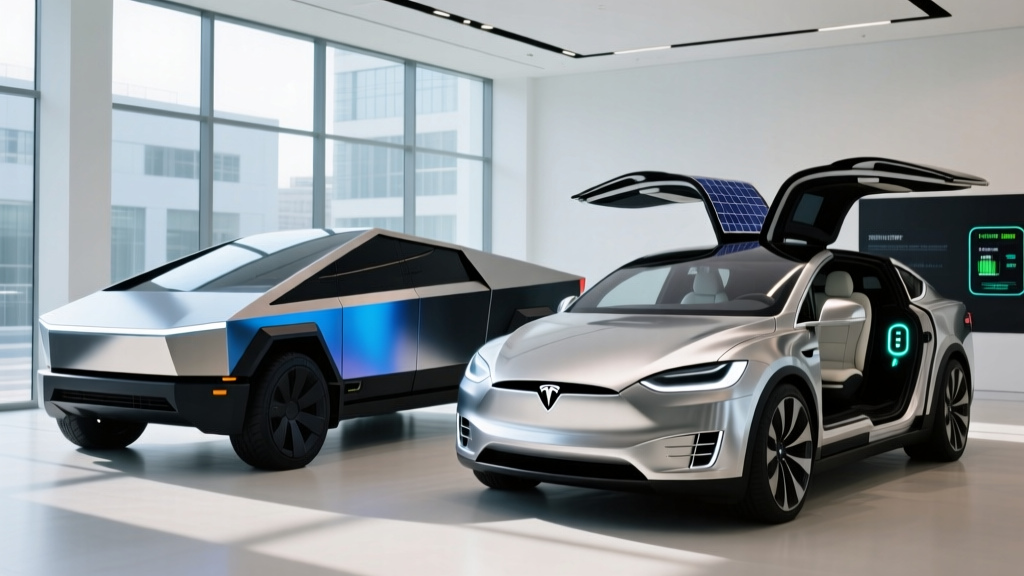
As of 2026, two vehicles compete for the "mega Tesla" crown: the angular Cybertruck (the electric pickup) and the Model X (the flagship three-row SUV). Both are large, expensive, and technologically dense — but they serve very different use cases. This review breaks down real-world range, charging speeds, pricing after federal tax credits, and which one actually deserves your garage space.
What Does 'Mega Tesla' Actually Mean in 2026?
Tesla has never marketed a vehicle called the "Mega Tesla." The term surfaces organically among buyers comparing Tesla's largest offerings against competitors like the Rivian R1T, Ford F-150 Lightning, Rivian R1S, and Kia EV9. When someone says they want a "mega Tesla," they're usually prioritizing one or more of the following:
- Maximum towing: Cybertruck tops the chart at up to 11,000 lbs (when properly equipped).
- Maximum passenger space: Model X seats up to seven across three rows.
- Maximum range: Model X Long Range reaches an EPA-estimated 348 miles.
- Maximum cargo utility: Cybertruck's 6-foot bed with powered tonneau, plus a front trunk (frunk).
Neither vehicle is inexpensive, and both carry trade-offs that spec sheets alone don't reveal. Let's look at the hard numbers.
Spec Showdown: Cybertruck vs. Model X at a Glance
| Spec | Cybertruck AWD | Cybertruck Cyberbeast | Model X Long Range | Model X Plaid |
|---|---|---|---|---|
| EPA Range | 340 mi | 320 mi | 348 mi | 320 mi |
| Battery (usable, est.) | ~123 kWh NMC | ~123 kWh NMC | ~100 kWh NMC | ~100 kWh NMC |
| Drivetrain | Dual-Motor AWD | Tri-Motor AWD | Dual-Motor AWD | Tri-Motor AWD |
| Horsepower | 600 hp | 845 hp | 670 hp | 1,020 hp |
| 0-60 mph | 4.1 sec | 2.6 sec | 3.8 sec | 2.5 sec |
| Max DC Fast Charge | 250 kW | 250 kW | 250 kW | 250 kW |
| 10-80% DCFC Time | ~28 min | ~28 min | ~30 min | ~30 min |
| Level 2 Home Charge | 11.5 kW (~37 mi/hr) | 11.5 kW (~37 mi/hr) | 11.5 kW (~34 mi/hr) | 11.5 kW (~34 mi/hr) |
| Max Towing | 11,000 lbs | 11,000 lbs | 5,000 lbs | 5,000 lbs |
| Seating | 5 | 5 | 5, 6, or 7 | 5, 6, or 7 |
| Cargo (behind 2nd/bed) | ~67 cu ft (bed + frunk) | ~67 cu ft (bed + frunk) | ~88 cu ft (max) | ~88 cu ft (max) |
| Base MSRP | $79,990 | $99,990 | $79,990 | $94,990 |
| MPGe (combined) | ~67 MPGe | ~64 MPGe | ~100 MPGe | ~95 MPGe |
Sources: fueleconomy.gov, Tesla Cybertruck Owner's Manual, Tesla Model X Design Studio. Pricing and specs reflect 2026 model year as published; confirm with Tesla before ordering.
Real-World Range: What the EPA Sticker Doesn't Tell You
Cybertruck AWD: EPA 340 mi → Expect ~270-290 mi at sustained 75 mph highway speeds; ~220-250 mi in sub-freezing winter conditions.
Model X Long Range: EPA 348 mi → Expect ~280-310 mi highway; ~240-270 mi in cold weather with cabin heating.
Both vehicles use NMC (nickel manganese cobalt) lithium-ion chemistry, which offers high energy density but is more sensitive to extreme temperatures than LFP (lithium iron phosphate). The Cybertruck's boxy stainless-steel shape carries a significant aerodynamic drag penalty at highway speeds — its frontal area and flat panels push energy consumption well above 400 Wh/mi at 75 mph, which is why real-world highway range drops roughly 15-20% below the EPA combined figure.
The Model X, while also a large vehicle, benefits from a more aerodynamic profile and a heat pump (standard on all current Tesla vehicles), which recovers waste heat from the drivetrain to warm the cabin. This reduces cold-weather range loss compared to resistive heating systems found in some older EVs. In our experience, a Model X Long Range driven conservatively at 65 mph in mild weather can approach its EPA number — but load it with seven passengers, luggage, and a roof box, and 260-280 miles is a safer planning figure.
For road-trip planning: Budget for 250 usable miles between stops in a Cybertruck and 280 in a Model X. Both vehicles navigate to Superchargers with battery preconditioning, which warms the pack to optimize charge speed on arrival.
Charging Speed: DC Fast, Level 2, and the Curve That Matters
| Level | Power / Rate | Speed | Notes |
|---|---|---|---|
| Level 1 (120V) | ~1.4 kW | ~3-4 mi/hr | Emergency/trickle only — not practical for daily use on these large packs. |
| Level 2 (240V, 48A) | 11.5 kW | ~34-37 mi/hr | Full overnight charge in 8-10 hours. Requires NEMA 14-50 or hardwired Wall Connector. |
| DC Fast (V3 Supercharger) | Peak 250 kW | ~170 mi in 15 min | Peak rate holds to ~50% SoC, then tapers. 10-80% in ~28-30 min. |
| DC Fast (V4 Supercharger) | Up to 250 kW (vehicle-limited) | Same as V3 for these models | V4 cabinet supports higher rates, but Cybertruck/Model X onboard architecture caps at 250 kW. |
A critical nuance often missed in spec sheets: peak kW is not sustained kW. Both the Cybertruck and Model X reach approximately 250 kW at low state-of-charge (SoC), but the charge curve tapers significantly above 50-60%. The final 20% (from 80% to 100%) can take as long as the first 50%. This is normal for NMC chemistry — charging above 80% generates excess heat and accelerates long-term degradation, so Tesla's battery management system deliberately slows the rate.
Home charging reality: To unlock 11.5 kW Level 2 charging, you need a Tesla Wall Connector (or equivalent J1772/NACS charger) on a 60-amp circuit. A typical installation by a licensed electrician runs $800-$2,500 depending on panel proximity and whether your home's electrical panel needs an upgrade from 100A to 200A service. Always get a quote from a qualified electrician before assuming a simple outlet swap.
Pricing, Trims, and the Federal Tax Credit Reality
| Model | Base MSRP | §30D Credit Eligible? | Effective Price (if eligible) |
|---|---|---|---|
| Cybertruck AWD | $79,990 | Likely NO — exceeds $80,000 truck cap with options/destination | $79,990 |
| Cybertruck Cyberbeast | $99,990 | NO — exceeds $80,000 truck MSRP cap | $99,990 |
| Model X Long Range | $79,990 | NO — exceeds $80,000 SUV/van MSRP cap | $79,990 |
| Model X Plaid | $94,990 | NO — exceeds $80,000 SUV/van MSRP cap | $94,990 |
Here's the hard truth for "mega Tesla" shoppers: neither the Cybertruck nor the Model X currently qualifies for the $7,500 federal EV tax credit under IRS §30D. The Inflation Reduction Act sets MSRP caps at $80,000 for vans, SUVs, and pickup trucks. While the Cybertruck AWD's base MSRP sits at $79,990, destination fees, mandatory options, and typical configurations push the transaction price above the cap. The Model X starts at $79,990 but similarly crosses the threshold with any added options.
Additionally, §30D imposes buyer income limits (adjusted gross income ≤ $150,000 single / $300,000 joint for new vehicles) and critical-mineral and battery-component sourcing requirements that shift annually. Even if a base-model Cybertruck AWD were configured to stay under the cap, the battery sourcing rules must also be satisfied in the year of delivery. Always verify current eligibility on IRS.gov's qualifying vehicle list and consult a tax professional before relying on the credit in your purchase math.
Used alternative: The previously owned clean vehicle credit (§25E) offers up to $4,000 (30% of sale price, capped) for qualifying used EVs under $25,000. Given current Cybertruck and Model X resale values, this credit is essentially unreachable for these models.
Driving, Tech, and Daily Ownership Experience
Cybertruck: Utility Meets Polarizing Design
The Cybertruck's stainless-steel exoskeleton and 48-volt electrical architecture make it a genuinely novel engineering platform. The steer-by-wire system (no mechanical linkage between wheel and rack) delivers variable steering ratios that feel disorienting for the first 20 minutes and intuitive by day two. Rear-wheel steering tightens the turning circle to a surprisingly manageable 34.7 feet — critical for a vehicle over 18 feet long.
The 6-foot bed features a powered roller-tonneau, 120V and 240V outlets (enough to power job-site tools or a campsite), and integrated ramps. Towing capacity reaches 11,000 lbs, though expect range to drop 40-50% when pulling a heavy trailer at highway speed — a physics reality shared by every EV pickup.
Drawbacks: The angular cabin sacrifices some interior volume relative to its exterior footprint. Rear-seat headroom is tight for passengers over 6'2". Panel-gap consistency and early-build quality issues have improved through 2025-2026 production, but fit and finish still trails legacy luxury trucks. Visibility is compromised by the thick A-pillars and small rear window — rely heavily on the camera system.
Model X: The Family Hauler That Still Performs
The Model X remains one of the quickest SUVs on the planet in Plaid trim (2.5 seconds to 60 mph with 1,020 hp), but its primary value is versatility. Configurable in 5-, 6-, or 7-seat layouts, it offers genuine third-row usability for children and smaller adults — though the floor-mounted battery pack raises the floor, creating a "knees-up" seating position in the back row that limits long-trip comfort.
Falcon-wing rear doors open vertically, providing excellent curb-side access to child seats and the second row in tight parking spaces. They're slower than conventional doors and can struggle in low-clearance garages (ultrasonic sensors adjust the opening arc, but not always gracefully). Cargo volume behind the second row reaches approximately 44 cu ft, expanding to ~88 cu ft with both rear rows folded, plus a front trunk (frunk) adding ~6.5 cu ft.
Drawbacks: The Model X platform dates to 2015 (refreshed in 2021/2023). Interior materials and build quality have improved but still don't match the price point against competitors like the BMW iX or Mercedes EQS SUV. The yoke steering wheel, if equipped, requires adaptation for parking maneuvers and hand-over-hand turns.
Shared Tech: Autopilot, FSD, and Over-the-Air Updates
Tesla Autopilot and Full Self-Driving (Supervised) are Level 2 driver-assistance systems under SAE J3016. The driver must remain fully attentive, keep hands on the wheel (or demonstrate engagement via cabin monitoring), and be prepared to take over at any moment. These systems are not self-driving. Only Level 4 robotaxi services like Waymo operate without a human driver in defined geofenced areas.
Both vehicles ship with Tesla's latest hardware suite and receive continuous over-the-air (OTA) software updates. Autopilot (included) provides adaptive cruise control and lane-centering on highways. FSD (Supervised), available as a $8,000 one-time purchase or $99/month subscription as of 2026, adds automated lane changes, traffic-light and stop-sign recognition, and city-street navigation — but driver supervision remains mandatory at all times.
Who Should Buy a 'Mega Tesla' — And Who Shouldn't?
- You need a pickup bed for work, recreation, or towing >5,000 lbs.
- You want V2L (vehicle-to-load) capability for tools, camping, or backup power.
- You prioritize novelty and off-road trail capability (16" ground clearance in Extract mode).
- You accept polarizing styling and are willing to adapt to steer-by-wire.
- You need three-row seating for family duty (school runs, carpools, road trips with 5+ passengers).
- You want maximum EPA range in a Tesla SUV (348 mi Long Range).
- You value hatchback cargo versatility with folding rear rows.
- You prefer a more conventional driving experience over experimental platforms.
- You regularly carry more than 4 passengers.
- You prioritize interior luxury and quietness over utility.
- You need proven long-term reliability data (platform is still maturing).
- You need a truck bed or heavy towing (>5,000 lbs).
- You want the latest Tesla platform architecture (Highland/Juniper generation).
- Third-row adult comfort is a priority — consider the Rivian R1S or Kia EV9 instead.
Pros and Cons at a Glance
- Access to Tesla's Supercharger network — the most reliable DC fast-charging network in North America
- Class-leading performance (especially Cyberbeast and Model X Plaid)
- Continuous OTA updates add features post-purchase
- Strong resale value relative to non-Tesla EVs
- Heat pump standard for efficient cabin climate control
- No federal tax credit eligibility at current MSRP levels
- Premium pricing — both start near or above $80,000
- Insurance costs run 20-40% above comparable ICE vehicles (get quotes before ordering)
- NMC battery chemistry means ~15-25% cold-weather range loss
- Tesla service center availability varies significantly by region
Battery Warranty and Long-Term Ownership Costs
Both the Cybertruck and Model X carry Tesla's standard battery and drive unit warranty:
- Battery: 8 years or 150,000 miles (whichever comes first), with a minimum 70% capacity retention threshold.
- Drive Unit: 8 years or 150,000 miles.
- Vehicle Limited Warranty: 4 years or 50,000 miles.
NMC batteries in Tesla vehicles have demonstrated strong longevity in real-world fleet data. Typical degradation is approximately 5-8% over the first 50,000 miles, then slowing to roughly 1-2% per year thereafter. Charging habits matter: regularly charging to 100% and letting the pack sit at high SoC in hot weather accelerates degradation. Tesla recommends daily charging to 80-90% for NMC packs and reserving 100% for trips.
Total cost of ownership advantage: Despite the high purchase price and no tax credit, both vehicles save significantly on fuel and maintenance versus ICE equivalents. Electricity costs approximately $0.13-$0.18/kWh at home (varies by utility), translating to roughly $0.04-$0.06 per mile — compared to $0.12-$0.18/mile for a gas truck or large SUV at $3.50/gallon. Over 100,000 miles, fuel savings alone can reach $8,000-$12,000. Add eliminated oil changes, no transmission fluid, and reduced brake wear (thanks to regenerative braking), and the 5-year operating cost gap narrows considerably.
Frequently Asked Questions
Is there an actual vehicle called the "Mega Tesla"?
No. "Mega Tesla" is an informal term used by shoppers to describe Tesla's largest vehicles — currently the Cybertruck (pickup) and Model X (SUV). Tesla has no model by this name, and no announced vehicle carries this badge. The rumored next-generation Tesla Roadster and a potential larger "Model V" van remain unannounced as of 2026.
What is the real-world range of the Cybertruck and Model X?
Expect 270-290 highway miles from the Cybertruck AWD (EPA 340) and 280-310 from the Model X Long Range (EPA 348) under normal conditions. In cold weather (below 32°F), subtract 15-25% due to battery chemistry limitations and cabin heating demand. Heavy towing in the Cybertruck can reduce range by 40-50%.
How fast do these vehicles charge at home and on the road?
On a Level 2 home charger (11.5 kW), both add approximately 34-37 miles of range per hour, achieving a full charge overnight in 8-10 hours. On a V3 or V4 Supercharger, both peak at 250 kW DC fast charging, reaching 10-80% in roughly 28-30 minutes. The charge rate tapers significantly above 80% to protect battery health.
Does the Cybertruck or Model X qualify for the $7,500 federal EV tax credit?
As of 2026, neither vehicle qualifies for the §30D new clean vehicle credit. Both exceed or effectively exceed the $80,000 MSRP cap for trucks/SUVs when destination fees and typical options are included. Additionally, battery critical-mineral sourcing requirements must be met. Always check the IRS qualifying vehicle list for the most current eligibility data before purchasing.
Which is better for families — Cybertruck or Model X?
The Model X is the clear family choice. It offers three-row seating for up to seven, a hatchback cargo area, and falcon-wing doors that simplify child-seat installation. The Cybertruck seats five and lacks an enclosed cargo area, making it better suited for active-lifestyle buyers who need a truck bed rather than a family hauler.
Should I wait for a larger Tesla model?
Tesla has not announced a vehicle larger than the Model X or Cybertruck as of early 2026. Speculation about a "Model V" passenger van or an expanded product line persists, but nothing is confirmed or available for order. If your needs align with what the Cybertruck or Model X offers today, waiting carries the risk of indefinite delay with no guarantee of a better product.
How does the Cybertruck compare to the Ford F-150 Lightning or Rivian R1T?
The F-150 Lightning offers a more conventional truck experience with a larger bed and proven work-truck ergonomics, at a lower starting price (~$55,000). The Rivian R1T provides superior off-road capability, a quad-motor option, and a more refined interior, but at a similar or higher price point. The Cybertruck differentiates on styling, 48V architecture, steer-by-wire, and Supercharger network access — but its bed is shorter (6 ft vs. 5.5 ft for Rivian, 5.5 ft for Lightning standard) and its real-world efficiency trails both competitors due to aerodynamics.