Quick Answer: Is There a McLaren EV You Can Buy?
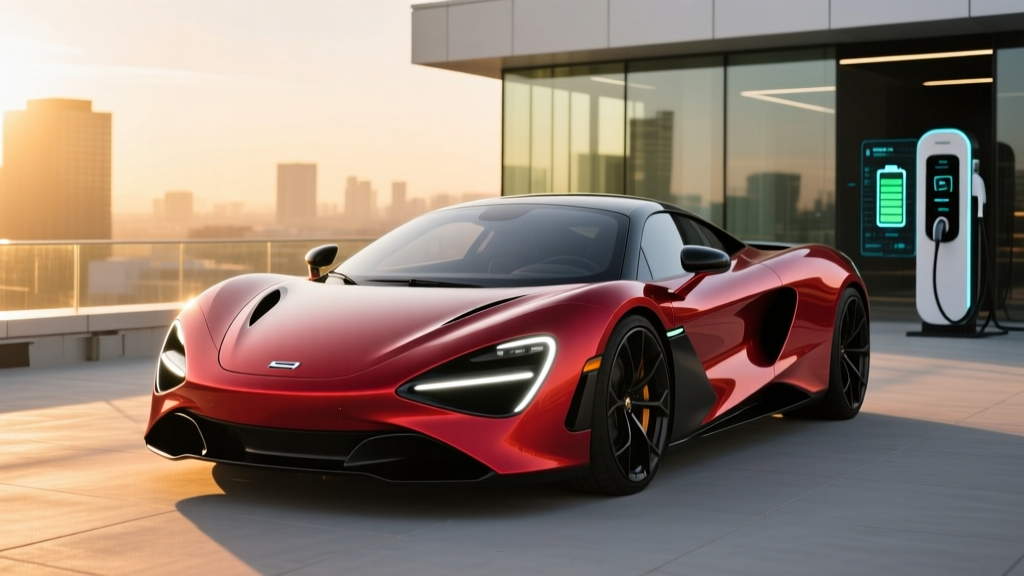
As of 2026, McLaren has not yet released a production battery-electric vehicle. The brand's first fully electric supercar is announced for the late-2020s timeframe (targeting approximately 2028–2030). What McLaren currently sells are high-performance plug-in hybrid supercars, most notably the Artura (starting around $249,000 MSRP) and the W1 successor hybrid hypercar. If you want a McLaren with an electric motor today, you're buying a hybrid — not a pure EV. For a pure-electric McLaren, you'll need to wait, and when it arrives, expect a price well above $300,000.
McLaren's Electrification Path: From Hybrid to EV
McLaren Automotive has been deliberate — some would say slow — in its transition to full electrification. Unlike mass-market automakers racing to meet 2030 ICE phase-out deadlines, McLaren operates in the ultra-luxury supercar segment where buyers prioritize driving dynamics, weight, and exclusivity over compliance timelines.
Here's where McLaren stands in 2026:
- Artura (PHEV): 3.0L twin-turbo V6 + electric motor, ~30 miles electric-only range, ~$249,000 MSRP
- 750S: Pure internal combustion (4.0L twin-turbo V8), no electrification
- W1 (hybrid hypercar): V8 + electric assist, limited production, ~$2,100,000 MSRP
- First BEV: Announced for late-2020s, specs preliminary
McLaren's CEO has confirmed the brand will eventually go fully electric, but has resisted committing to a hard date, citing battery energy density and weight as primary engineering challenges for supercars. A 200+ kWh battery pack needed for adequate range would add several hundred kilograms — anathema to a brand that built its reputation on lightweight carbon-fiber construction.
How McLaren's Current Hybrids Compare to a Future EV
For buyers evaluating McLaren's lineup today versus waiting for an EV, here's how the current hybrid models stack up against projected EV supercar competitors like the Lotus Evija and Rimac Nevera:
| Spec | McLaren Artura (PHEV) | Lotus Evija (BEV) | Rimac Nevera (BEV) |
|---|---|---|---|
| Powertrain | 3.0L V6 TT + E-Motor | Quad-Motor BEV | Quad-Motor BEV |
| Horsepower | 671 hp combined | 2,012 hp | 1,914 hp |
| 0–60 mph | 3.0 sec | <3.0 sec (est.) | 1.85 sec |
| Battery / Fuel | 7.4 kWh usable + 19.1 gal | ~70 kWh | 120 kWh |
| Electric-Only Range | ~30 mi (EPA est.) | N/A (full EV) | N/A (full EV) |
| Total Range (est.) | ~400+ mi (gas + electric) | ~217 mi (WLTP) | ~340 mi (WLTP) |
| Weight | ~3,384 lbs | ~4,160 lbs | ~4,740 lbs |
| Base MSRP | ~$249,000 | ~$2,100,000 | ~$2,200,000 |
Key takeaway: The Artura's hybrid system delivers a modest electric-only commute capability (~30 miles) while preserving the lightweight, driver-focused character McLaren is known for. The full-electric competitors produce staggering horsepower but carry 800–1,400 lbs more weight — a meaningful difference on a track. McLaren's eventual EV will need to solve this weight problem, likely through advanced cell chemistry or structural battery pack design.
Real Costs: Owning a McLaren Hybrid vs. Waiting for the EV
Whether you buy a current McLaren hybrid or wait for the EV, the economics of supercar ownership differ dramatically from mainstream vehicles. Here's a realistic 5-year ownership cost projection for the Artura PHEV versus a projected McLaren BEV:
| Cost Category (5-Year) | McLaren Artura (PHEV) | Projected McLaren BEV |
|---|---|---|
| Purchase Price (base MSRP) | $249,000 | $300,000+ (est.) |
| Federal §30D Tax Credit | $0 (MSRP cap: $80,000 for sedans) | $0 (MSRP cap exceeded) |
| Fuel / Energy (5 yrs, 7,500 mi/yr) | ~$18,000–$22,000 (premium gas + some electric) | ~$4,500–$6,000 (electricity at $0.15/kWh avg) |
| Insurance (annual avg) | $8,000–$14,000/yr | $9,000–$15,000/yr (est.) |
| Maintenance (5 yrs) | $12,000–$18,000 (oil, brakes, hybrid system) | $5,000–$8,000 (no oil, regen saves brakes) |
| Depreciation (est. 5 yrs) | ~40–50% ($100k–$125k) | Unknown (new segment) |
| Est. Total 5-Year Cost | $427,000–$536,000 | $400,000+ (highly speculative) |
Important context on the federal tax credit: The IRS §30D Clean Vehicle Credit caps eligibility at vehicles with an MSRP of $80,000 or less for SUVs/pickups/vans, and $55,000 for sedans. No McLaren — current or projected — qualifies. Buyer income caps ($300,000 joint / $150,000 single) are also far below the typical McLaren buyer's profile. Don't factor any federal incentive into your McLaren purchase decision.
Real-World Ownership Considerations for a Future McLaren EV
If you're seriously considering waiting for McLaren's first EV, several practical factors will shape your ownership experience:
Home Charging Is Non-Negotiable
A supercar EV will likely feature a large battery (80–120 kWh estimated). On a standard Level 2 home charger (11.5 kW / 48A), a full charge from 10% to 100% would take approximately 8–10 hours — feasible overnight. Without home charging access, relying on public DC fast charging exclusively would mean 30–45 minute sessions at 250–350 kW chargers, which is impractical for a daily-driven vehicle of any kind, let alone one costing $300,000+.
Expect to budget $2,000–$5,000 for a professional Level 2 home charger installation (240V / 60A circuit), potentially more if your electrical panel requires an upgrade to 200A service.
Climate and Range Reality
McLaren's headquarters and primary testing grounds are in Woking, England — mild climate territory. But buyers in North America will face real-world range challenges:
- Cold weather (below 32°F): Expect 20–35% range reduction due to battery chemistry limitations and cabin heating demands
- Highway driving at 80+ mph: Aerodynamic drag scales with the square of velocity; a supercar's wide, low body helps, but sustained high speeds will cut range by 15–25% versus EPA estimates
- Track use: Aggressive driving can deplete an EV battery in 20–40 minutes; thermal management will be critical to prevent power derating
Charging Infrastructure Gap
While Tesla's Supercharger network and Electrify America continue expanding, high-power 350 kW chargers capable of charging a future McLaren EV at its maximum rate remain concentrated in major metro areas. If you live in or frequently drive through rural regions, charging access will be a genuine constraint.
Common Misconceptions About McLaren and EVs
| Myth | Fact |
|---|---|
| "McLaren already has an electric car" | The Artura is a plug-in hybrid (PHEV), not a BEV. It has a 7.4 kWh battery for ~30 miles of electric driving, plus a twin-turbo V6 gasoline engine. |
| "An electric McLaren will be lighter than the gas version" | Current battery energy density (~250 Wh/kg at cell level) means a 100 kWh pack alone weighs ~880 lbs. McLaren will need breakthrough structural or solid-state battery tech to match ICE weight. |
| "I'll get the $7,500 federal tax credit" | No. The §30D credit has an MSRP cap of $80,000 (SUVs) or $55,000 (sedans), plus buyer income limits. No McLaren qualifies. |
| "EV supercars are always faster than gas supercars" | In straight-line acceleration, yes — electric motors deliver instant torque. But on a road course, the 800+ lb weight penalty of current EVs hurts braking distances, cornering G-forces, and tire wear. The Rimac Nevera weighs 4,740 lbs versus the Artura's 3,384 lbs. |
| "McLaren will go fully electric by 2030" | McLaren has not committed to a hard date. The brand has stated EVs are coming but emphasizes that battery technology must meet their performance and weight standards first. |
Decision Framework: Buy Now, Wait, or Look Elsewhere?
Choose the McLaren Artura (PHEV) now if:
- You want a McLaren with electrified drivetrain today
- 30 miles of electric-only range covers your daily commute
- You value the lightweight, analog driving feel (~3,384 lbs) that a future heavy EV may not replicate
- Your budget is $250,000–$350,000 (after options)
- You have no range anxiety because the V6 engine provides 400+ total miles
Wait for the McLaren EV if:
- You want zero tailpipe emissions and are willing to wait until ~2028–2030
- You have reliable home Level 2 charging and access to 250+ kW DC fast chargers nearby
- You're comfortable being an early adopter of a first-generation product with unknown depreciation
- Your budget exceeds $300,000 and you can absorb speculative ownership costs
Look at existing EV supercars now if:
- You want a pure-electric supercar today — the Rimac Nevera (~$2.2M, 1,914 hp, 1.85s 0–60) and Lotus Evija (~$2.1M, 2,012 hp) are available or in limited delivery
- You prioritize raw acceleration over track-day endurance and lightweight agility
- You can accept 800+ lb weight penalties and 200–340 mile range (WLTP, expect 15–25% less in real-world US driving)
What a Future McLaren EV Needs to Get Right
Based on McLaren's engineering philosophy and the current state of EV technology, the brand's first BEV will need to deliver on several fronts to justify its inevitable premium:
- Weight control: McLaren's carbon-fiber MonoCell architecture saves weight in the chassis, but the battery remains the challenge. Target: under 3,800 lbs (achievable only with next-gen cells or a smaller battery with less range)
- Thermal management: Supercar track sessions generate enormous heat in battery packs. McLaren will need advanced liquid cooling to sustain peak power output without derating after 2–3 hot laps
- Charging speed: An 800V+ architecture supporting 350 kW peak charging (10–80% in ~18 minutes) would be expected at this price point, matching the Porsche Taycan and Hyundai Ioniq 5 benchmarks
- Driver engagement: McLaren has stated that EV sound and steering feel must meet their standards. Simulated gear shifts (like the Hyundai Ioniq 5 N) or advanced haptic feedback may feature
- Range: A minimum of 250 miles EPA-estimated would be expected, though McLaren may prioritize weight savings over a massive battery, potentially delivering 200–250 miles with a focus on efficiency
Frequently Asked Questions
Does McLaren currently sell a fully electric car?
No. As of 2026, McLaren sells plug-in hybrid supercars (the Artura) and traditional ICE supercars (the 750S). A fully electric McLaren is announced for the late 2020s but is not yet available for purchase.
How much will the first McLaren EV cost?
McLaren has not announced pricing. Based on the brand's current lineup positioning and the premium that EV supercars command (Rimac Nevera: ~$2.2M, Lotus Evija: ~$2.1M), a reasonable estimate is $300,000–$500,000 depending on the model's positioning relative to the Artura and 750S.
Will the McLaren EV qualify for any tax credits?
Almost certainly not. The IRS §30D federal clean vehicle credit caps eligible MSRP at $80,000 for SUVs/pickups and $55,000 for sedans, with buyer income limits of $300,000 (joint) or $150,000 (single). A McLaren EV will exceed every cap. Some states offer separate luxury-EV incentives, but these vary by jurisdiction — check your state's official energy office for current programs.
What's the difference between the McLaren Artura and a full EV?
The Artura is a plug-in hybrid (PHEV): it combines a 3.0L twin-turbo V6 gasoline engine with a 7.4 kWh battery and electric motor for ~30 miles of electric-only driving. A full EV (BEV) has no gasoline engine — it runs entirely on battery power. The Artura gives you electric commuting with gasoline range extension; a BEV requires charging infrastructure but eliminates fuel costs and tailpipe emissions entirely.
Is it worth waiting for the McLaren EV or should I buy an Artura now?
If you want a McLaren with some electric capability today and value lightweight driving dynamics, the Artura is the clear choice — it's available now with known specs and pricing. If you're committed to zero-emissions driving and can wait 3–5 years with no guarantee on final specs or pricing, the EV may be worth monitoring. For pure-electric supercar performance available now, the Rimac Nevera and Lotus Evija are the established alternatives, albeit at $2M+ price points.
How will a McLaren EV handle on a race track compared to gas McLarens?
This is McLaren's central engineering challenge. Electric motors deliver superior instant torque and lower center of gravity, but current battery technology adds 800+ lbs. That extra mass increases braking distances, accelerates tire wear, and generates more heat. McLaren's thermal management system and chassis tuning will determine whether the EV can sustain competitive lap times without power derating — something the brand has acknowledged as a priority.