The Short Answer on McLaren Electric
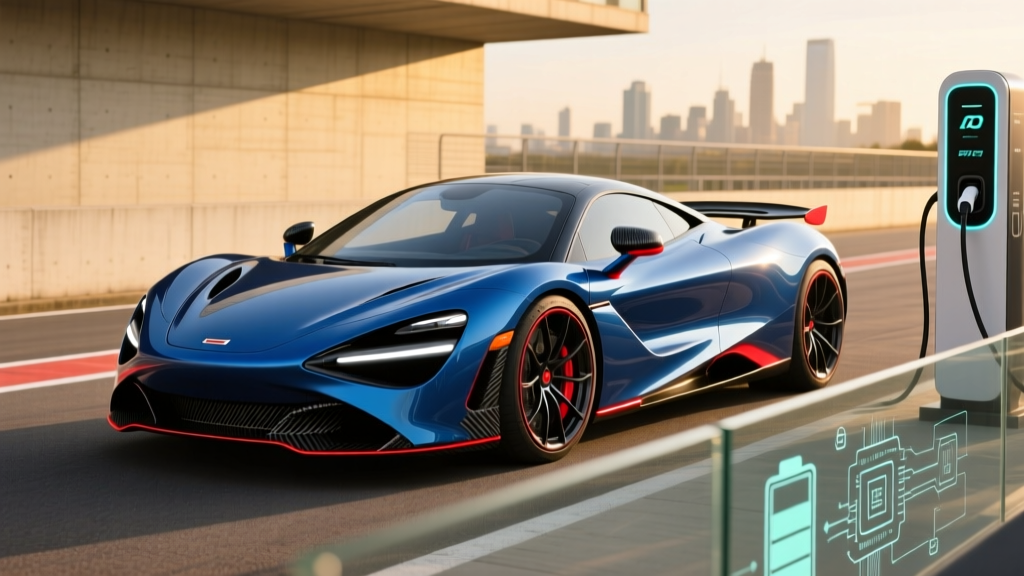
As of early 2026, McLaren has not yet released a production electric vehicle. The company has confirmed an all-electric supercar is in active development, with CEO Michael Leiters stating that McLaren will launch its first EV around 2028. Until then, McLaren's lineup remains entirely powered by twin-turbo V6 and V8 hybrid powertrains (the Artura and 750S). If you're searching for a "McLaren electric" to buy today, the closest option is the Artura plug-in hybrid, which offers roughly 19 miles of electric-only range paired with a twin-turbo V6.
Why McLaren Has Been Slow to Go Fully Electric
McLaren occupies a unique position in the supercar world. Unlike Porsche, which launched the all-electric Taycan in 2020 and has since expanded its EV lineup, or Lotus, which introduced the Eletre electric SUV, McLaren has deliberately delayed its full-electric transition. The reasons are rooted in physics and brand identity:
- Weight sensitivity: McLaren's engineering philosophy centers on lightweight construction. The 750S weighs roughly 3,050 lbs (dry). Current EV battery packs for performance applications add 800–1,200 lbs, which directly conflicts with McLaren's handling-first ethos.
- Track-duty thermal management: Supercars must sustain repeated high-power laps without battery thermal throttling. Current lithium-ion chemistries (even high-nickel NMC cells) struggle with sustained 600+ kW discharge rates without significant cooling overhead.
- Customer expectations: McLaren's buyer base expects visceral engine sound, sub-2,800-lb curb weights, and razor-sharp steering feel — all harder to deliver in a battery-electric architecture.
However, the calculus is shifting. Solid-state battery prototypes from Toyota and QuantumScape promise 30–40% weight reduction per kWh, and McLaren's own Formula E experience (the company supplied powertrains for the series) has accelerated its electric drivetrain knowledge.
What We Know About McLaren's Upcoming EV
Based on statements from McLaren Automotive and reporting from credible automotive outlets, here's what has been confirmed or strongly indicated about McLaren's first electric vehicle:
| Attribute | Confirmed / Estimated | Details |
|---|---|---|
| Launch Year | Estimated ~2028 | CEO confirmed EV is in development; no exact date given |
| Vehicle Type | Likely 2-door supercar / GT | McLaren has ruled out an SUV; expects to stay in its core segment |
| Battery Chemistry | Undisclosed | Solid-state or advanced NMC expected for weight savings |
| Estimated Battery Capacity | ~90–110 kWh (est.) | Sized for 250+ mi range while managing weight |
| Estimated Range (EPA) | ~250–300 mi (est.) | Supercars prioritize performance over max range |
| Estimated Power Output | ~800–1,000+ hp (est.) | Multi-motor AWD likely; must exceed current 750S (740 hp) |
| 0–60 mph | Sub-2.5 seconds (est.) | Electric torque delivery favors launch; must compete with Rimac Nevera |
| DC Fast Charging | TBD | 800V architecture expected for 300+ kW peak charge rate |
| Curb Weight Target | ~3,800–4,000 lbs (est.) | McLaren has stated weight must stay "as close to current cars as possible" |
| Estimated MSRP | $250,000–$350,000+ (est.) | Consistent with current McLaren GT/supercar pricing tiers |
Important caveat: These are preliminary estimates based on industry analysis and McLaren's public statements. Final specifications will not be confirmed until the vehicle's official unveiling, expected no earlier than late 2027.
The Closest Thing Today: McLaren Artura PHEV
If you want electrified McLaren ownership right now, the McLaren Artura is the answer. It's a plug-in hybrid supercar that pairs a 3.0L twin-turbo V6 with an electric motor integrated into the transmission.
| Spec | Value |
|---|---|
| Powertrain | 3.0L Twin-Turbo V6 + Electric Motor (PHEV) |
| Combined Output | 671 hp / 531 lb-ft torque |
| Battery | 7.4 kWh usable, lithium-ion (NMC) |
| Electric-Only Range (EPA) | 19 miles |
| Combined MPGe | 50 MPGe (electric + gas) |
| Gas-Only MPG | 18 mpg combined |
| 0–60 mph | 3.0 seconds |
| Top Speed | 205 mph |
| Curb Weight | ~3,295 lbs |
| Level 2 Charging | ~2.5 hours (0–100%) |
| Starting MSRP | ~$249,750 |
| Federal Tax Credit (§30D) | Not eligible (MSRP and sourcing rules) |
The Artura's 19-mile electric range is enough for short neighborhood drives or silent departures from your garage, but this is not an EV. Once the battery depletes, the V6 takes over entirely. Think of it as an electric assist with occasional zero-emission capability, not a daily electric commuter.
EV vs. Hybrid Supercar: How the Artura Compares to a Full EV
To put McLaren's current hybrid approach in context against the fully electric supercar competition, here's how the Artura stacks up against the Rimac Nevera — currently the benchmark all-electric hypercar:
| Attribute | McLaren Artura | Rimac Nevera |
|---|---|---|
| Powertrain | V6 PHEV | Quad-Motor BEV |
| Horsepower | 671 hp | 1,914 hp |
| 0–60 mph | 3.0 sec | 1.85 sec |
| Curb Weight | ~3,295 lbs | ~4,728 lbs |
| Electric-Only Range | 19 mi | ~275 mi (EPA est.) |
| Total Range (with gas) | ~350+ mi | ~275 mi (electric only) |
| MSRP | ~$249,750 | ~$2,200,000 |
| Track Sustained Performance | Strong (V6 + hybrid assist) | Limited by thermal throttling on extended sessions |
The Nevera obliterates the Artura in straight-line performance, but at nearly 10x the price and over 1,400 lbs heavier. McLaren's bet is that a future EV will close the power gap while using advanced battery tech to stay closer to that 3,300-lb ideal.
Ownership Cost Reality: What a McLaren Electric Would Cost
Let's model what ownership might look like for a hypothetical $300,000 McLaren EV, compared to the current Artura PHEV and a gas-only equivalent like the 750S:
| Cost Category | McLaren EV (Est.) | Artura PHEV | 750S (Gas) |
|---|---|---|---|
| Purchase Price | $300,000 | $249,750 | $325,000 |
| Fuel / Electricity (5 yr) | ~$7,500 | ~$18,000 | ~$22,500 |
| Maintenance (5 yr) | ~$8,000 | ~$14,000 | ~$16,000 |
| Insurance (5 yr avg) | ~$45,000 | ~$40,000 | ~$42,000 |
| Depreciation (est. 5 yr) | ~$120,000 | ~$100,000 | ~$130,000 |
| Est. 5-Year Total | ~$480,500 | ~$421,750 | ~$535,500 |
Key takeaways:
- Charging costs are trivial at this price point. Even at $0.30/kWh (public DC fast charging), a 100 kWh battery costs $30 to fill. The real savings vs. gas come from reduced maintenance — no oil changes, fewer brake replacements (regen braking), and no turbo/exhaust service.
- Insurance will be steep regardless of powertrain. Supercar insurance for a $300K vehicle runs $7,000–$12,000/year depending on driver profile, location, and coverage. An EV may carry a slight premium due to higher repair costs for battery-related collision damage.
- Depreciation is the wild card. McLaren limited-production models sometimes hold value or even appreciate. An EV McLaren's depreciation will depend heavily on battery warranty terms and long-term collector demand for electric supercars — an untested market.
- Federal tax credit (§30D): A $300,000 McLaren EV would not qualify for the $7,500 federal tax credit. Under current IRS §30D rules, the MSRP cap for sedans/sports cars is $55,000 (and $80,000 for SUVs/trucks). A McLaren supercar vastly exceeds this threshold.
Real-World Considerations for a Future McLaren EV Buyer
If you're seriously considering a McLaren electric when it arrives, here are practical factors to evaluate now:
Home Charging Is Non-Negotiable
For a high-performance EV, Level 2 home charging (240V, 48A / 11.5 kW) is essential. Expect to install a dedicated 60A circuit with a hardwired Level 2 charger. Installation costs typically range from $1,200 to $3,500 depending on your electrical panel capacity and run distance. A McLaren EV with a ~100 kWh battery would take roughly 9–10 hours to charge from 10–100% on Level 2 — perfectly suited for overnight replenishment.
Track Use and Thermal Limits
The biggest unresolved question for any electric supercar is sustained track performance. Current EVs — including the Porsche Taycan Turbo GT and Rimac Nevera — experience power reduction after 2–3 hard laps as battery temperatures rise. McLaren has stated publicly that its EV must deliver "repeatable, consistent track performance" without thermal derating. Watch for details on the cooling system architecture and whether McLaren adopts advanced cell chemistries or immersion cooling.
Cold-Weather Range Loss
All EVs lose 20–35% of rated range in freezing temperatures due to increased battery resistance and cabin heating demands. A McLaren EV rated at 280 miles EPA could deliver closer to 185–220 miles in sub-30°F conditions. If you live in a cold climate and plan to drive year-round, this matters — though supercar owners in northern climates typically garage vehicles during winter regardless.
Charging Infrastructure for Road Trips
A McLaren EV will almost certainly use the NACS (Tesla Supercharger) connector, given the industry-wide adoption of the standard by 2025–2026. Access to the Supercharger network (now over 25,000 stalls in North America) means road-trip charging is practical, with 10–80% charges likely taking 18–25 minutes at 300+ kW stalls. Plan stops around high-power chargers; slower 50–150 kW chargers will extend charge times significantly.
| Myth | Fact |
|---|---|
| "McLaren already sells an electric car." | McLaren's current lineup (Artura, 750S, GTS) uses hybrid or gas-only powertrains. No production BEV exists yet. |
| "An electric McLaren will be heavier than a truck." | While EV batteries add weight, McLaren has committed to lightweight engineering. Expect ~3,800–4,000 lbs — heavier than a 750S but far lighter than a 5,000-lb electric SUV. |
| "I'll get the $7,500 federal tax credit." | The §30D credit caps eligible vehicle MSRP at $55,000 (cars) or $80,000 (SUVs). A McLaren EV will far exceed these limits. |
| "Electric supercars can't handle like a McLaren." | Instant torque vectoring from multi-motor setups can actually enhance cornering dynamics. The challenge is managing weight and thermal limits, not raw capability. |
| "It'll have 500 miles of range." | Unlikely. Supercar EVs prioritize power and light weight over max range. Expect 250–300 miles EPA — adequate for a performance car that's rarely used as a daily commuter. |
Decision Framework: Should You Wait or Buy Now?
Choose the McLaren Artura (PHEV) Now If:
- You want electrified McLaren ownership today and don't need full EV capability
- You value the twin-turbo V6 soundtrack and sub-3,300-lb curb weight
- Your daily driving is short enough to use the 19-mile electric range for local trips
- You want a vehicle with established collector-market pricing and depreciation data
- You track your car regularly and want proven thermal endurance without EV derating risk
Wait for the McLaren Electric (~2028) If:
- You want zero tailpipe emissions and lower running costs (fuel and maintenance)
- You prioritize instant torque and sub-2.5-second 0–60 capability
- You have reliable home Level 2 charging and access to DC fast chargers for road trips
- You're willing to accept first-generation risk on battery longevity and residual values
- You want the latest in EV performance tech (800V architecture, torque vectoring, OTA updates)
Consider an Alternative Electric Supercar/GT If:
- You can't wait until 2028 and want a high-performance EV now
- Options include the Porsche Taycan Turbo GT ($230,000, 1,019 hp, 276 mi range), Lotus Eletre R ($120,000+, 905 hp, ~300 mi range), or the Rimac Nevera if budget is effectively unlimited
- You prefer a four-door GT format over a two-seat supercar
Frequently Asked Questions
Does McLaren currently make a fully electric car?
No. As of early 2026, McLaren has not released a production battery-electric vehicle. The company's lineup includes the Artura plug-in hybrid (V6 + electric motor, 19 mi electric range) and the 750S (twin-turbo V8, no electric assist). McLaren's first full EV is expected around 2028.
Will the McLaren electric qualify for the federal EV tax credit?
Almost certainly not. Under current IRS §30D rules, the vehicle MSRP cap is $55,000 for cars and $80,000 for SUVs/vans/trucks. A McLaren electric supercar will likely start well above $250,000, making it ineligible. Buyer income caps and battery sourcing requirements add further restrictions.
How much will the first McLaren EV cost?
No official pricing has been announced. Based on McLaren's current pricing ladder — the Artura starts at ~$250,000, the 750S at ~$325,000, and limited-run models like the Speedtail exceeded $2 million — a reasonable estimate for a first-generation McLaren EV is $250,000–$350,000, depending on trim and specification.
What battery technology will McLaren use?
McLaren has not disclosed battery chemistry details. Industry analysts expect either an advanced high-nickel NMC (nickel manganese cobalt) pack optimized for power density, or potentially a solid-state battery if the technology matures to production readiness by 2028. Solid-state cells offer higher energy density and lower weight but remain expensive and limited in production scale as of 2026.
Can I charge a future McLaren EV at home?
Yes, assuming you can install a Level 2 (240V) home charger. Most high-performance EVs support 11–22 kW Level 2 AC charging. A ~100 kWh battery would charge overnight (8–10 hours) on a standard 48A Level 2 unit. Home charger installation costs $1,200–$3,500 depending on your electrical panel and wiring run. A licensed electrician should evaluate your panel capacity before installation.
How does an electric supercar compare on track to a gas McLaren?
Electric powertrains offer instant torque and precise multi-motor torque vectoring, which can produce faster lap times on shorter circuits. However, sustained track use generates extreme battery heat, and current EVs typically reduce power output (thermal derating) after several hard laps. McLaren has stated its EV must match the consistency of its gas cars on track — a significant engineering challenge that will be a key differentiator when the car launches.
Should I buy a used McLaren Artura as a bridge until the EV launches?
The Artura has depreciated modestly since its 2023 introduction, with low-mileage examples available in the $190,000–$220,000 range. It's a capable, tech-forward supercar with genuine electric-only capability for short trips. However, as a PHEV with a small 7.4 kWh battery, it's not a true EV experience. If your goal is to "practice" EV ownership, a mainstream EV like a Porsche Taycan or Tesla Model S Plaid would better prepare you for charging routines and range planning.