Quick Answer: Is a Mazda Electric Vehicle Right for You?
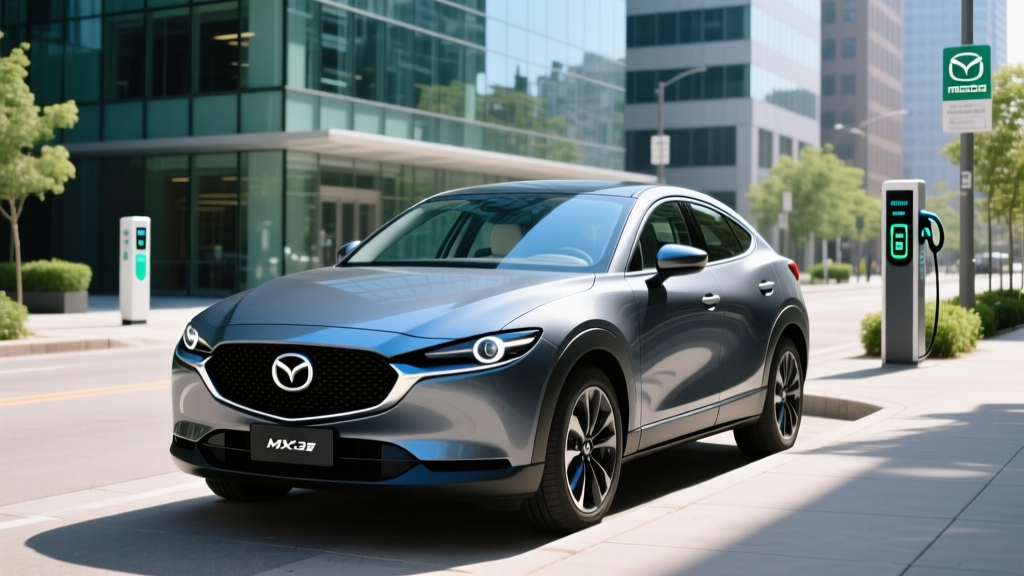
Mazda's only all-electric offering for 2026 remains the MX-30, a subcompact crossover with an EPA-estimated 100 miles of range from a 35.5 kWh battery. It starts at approximately $34,110 MSRP and qualifies for up to $7,500 in federal tax credits (subject to IRS §30D sourcing and income rules), potentially dropping the effective price below $27,000. The MX-30 is best suited as a city commuter or second vehicle for drivers with reliable home Level 2 charging. If you need 250+ miles of highway range or lack home charging access, Mazda's PHEV lineup (CX-70 PHEV, CX-90 PHEV) is a more practical entry into electrified driving.
Mazda's 2026 Electrified Lineup: Where the MX-30 Fits
Mazda has taken a more cautious electrification path than competitors like Hyundai or Tesla. Rather than rushing a long-range BEV to market, Mazda has focused on plug-in hybrids for its mainstream models while positioning the MX-30 as a compliance-friendly urban EV. As of 2026, Mazda has not announced a long-range electric SUV for the U.S. market, though the brand has confirmed a next-generation EV platform in partnership discussions. For now, buyers searching for a "Mazda electric vehicle" are looking at one option: the MX-30.
The MX-30 is sold in select U.S. markets (primarily California and states adopting California's ZEV mandate). If you're outside these regions, availability may be limited or nonexistent. Check with your local dealer before planning a purchase.
MX-30 Specs: Range, Battery, and Charging in Detail
The MX-30's modest battery is both its defining feature and its biggest limitation. Here's the full spec breakdown:
| Specification | 2026 Mazda MX-30 |
|---|---|
| EPA Range | 100 miles |
| Real-World Range (highway, 70 mph) | ~75–85 miles |
| Real-World Range (cold weather, 30°F) | ~60–75 miles |
| Battery Capacity (usable) | 35.5 kWh (NMC chemistry) |
| Efficiency | ~92 MPGe combined |
| DC Fast Charge (peak) | 50 kW (CCS) |
| 10–80% DC Fast Charge | ~36 minutes |
| Level 2 AC Charge Rate | 6.6 kW |
| Level 2 0–100% Time | ~5.5 hours |
| Motor Output | 143 hp / 200 lb-ft torque |
| 0–60 mph | ~8.7 seconds |
| Drivetrain | FWD only |
| Battery Warranty | 8 years / 100,000 miles |
| Base MSRP | $34,110 (Select) |
| Premium Plus MSRP | $37,280 |
Real-World Range Reality Check
The MX-30's 100-mile EPA estimate assumes a mix of city and highway driving in moderate temperatures. On a pure highway trip at 70+ mph, expect closer to 75–85 miles before the low-battery warnings begin. In winter conditions (below freezing), range can drop to 60–75 miles due to battery chemistry limitations and cabin heating demands. The MX-30 does not come with a heat pump in the U.S. market, which worsens cold-weather efficiency compared to competitors like the Chevrolet Bolt EUV or Nissan LEAF.
Charging the MX-30: What You'll Actually Experience
The MX-30 uses a CCS1 connector for DC fast charging and a J1772 connector for Level 1 and Level 2 AC charging. Its 50 kW peak DC charge rate is significantly slower than the 150–250 kW rates offered by modern competitors. This means the MX-30 is not a practical road-trip vehicle — a 10–80% charge takes roughly 36 minutes, and the charge curve tapers steeply above 80%.
| Charging Level | Power (kW) | Miles Added per Hour | Use Case |
|---|---|---|---|
| Level 1 (120V outlet) | ~1.4 kW | ~4 miles/hr | Emergency / overnight top-up |
| Level 2 (240V home charger) | 6.6 kW | ~18 miles/hr | Daily home charging |
| DC Fast Charge (CCS) | 50 kW peak | ~130 miles/hr (peak) | Occasional public charging |
Home charging is essential for MX-30 ownership. With only 100 miles of range, relying on public charging infrastructure is impractical for daily use. A Level 2 home charger installation typically costs $800–$2,500 depending on your electrical panel capacity and the distance from your panel to the charging location. If your home has a 200-amp panel with spare capacity, expect costs on the lower end. Older homes with 100-amp panels may need a panel upgrade ($1,500–$3,000 additional).
Cost of Ownership: MX-30 vs. Gas vs. Mazda PHEV
Let's break down what owning the MX-30 actually costs compared to a gas-powered Mazda CX-30 and the Mazda CX-70 PHEV over a 5-year, 60,000-mile ownership period.
| Cost Category | MX-30 (EV) | CX-30 (Gas) | CX-70 PHEV |
|---|---|---|---|
| Purchase Price (MSRP) | $34,110 | $28,950 | $54,400 |
| Federal Tax Credit (§30D) | Up to -$7,500* | $0 | Up to -$7,500* |
| Effective Purchase Price | ~$26,610 | $28,950 | ~$46,900 |
| Fuel/Energy (60k mi) | ~$2,700** | ~$7,200*** | ~$4,000**** |
| Maintenance (5 yr) | ~$1,200 | ~$3,800 | ~$2,800 |
| Insurance (5 yr avg) | ~$8,500 | ~$7,200 | ~$8,800 |
| 5-Year Total Cost | ~$39,010 | ~$47,150 | ~$62,500 |
* Federal tax credit eligibility depends on income caps ($150k single / $300k joint), MSRP caps ($55k SUVs), battery sourcing requirements, and point-of-sale transfer rules under IRS §30D. Verify eligibility before purchase.
** Based on $0.15/kWh national average, ~3.5 mi/kWh efficiency.
*** Based on $3.50/gallon, 27 MPG combined (fueleconomy.gov).
**** PHEV assumes 60% electric / 40% gas driving mix.
The MX-30's low effective price after the tax credit makes it surprisingly competitive on total cost — but only if your driving patterns fit within its range envelope. If you regularly drive more than 80 miles round-trip, the CX-70 PHEV offers 26 miles of electric-only range for commutes plus a gas engine for longer trips.
Common Misconceptions About the Mazda MX-30
| Myth | Fact |
|---|---|
| "100 miles of range is useless." | The average American drives ~37 miles per day (FHWA data). For single-commute households with home charging, 100 miles covers most daily needs with margin. |
| "The battery will need expensive replacement soon." | Mazda warranties the battery for 8 years/100,000 miles with a capacity retention threshold. The 35.5 kWh NMC pack is conservatively sized and thermally managed. Replacement cost, if out of warranty, is estimated at $6,000–$9,000 — lower than larger packs. |
| "I can road-trip in it like any other EV." | The 50 kW DC fast-charge rate and 100-mile range make highway road trips impractical. Plan for this being a local-use vehicle. |
| "It qualifies for the full $7,500 tax credit automatically." | Credit eligibility depends on critical mineral sourcing, battery component manufacturing, your income, and the vehicle's MSRP. Check the latest IRS qualified vehicle list before purchasing. |
| "Mazda is abandoning EVs." | Mazda has committed to electrifying its full lineup by 2030, with a mix of BEVs, PHEVs, and mild hybrids. The MX-30 is a first step, not the end of their EV strategy. |
Who Should (and Shouldn't) Buy the Mazda MX-30
Decision Framework
Buy the MX-30 if:
- Your daily round-trip commute is under 70 miles
- You have access to Level 2 home charging (garage or driveway with 240V)
- You want a premium-feeling small EV at a budget price (after tax credit)
- You already own a gas vehicle for longer trips
- You live in a mild climate (California, Southeast, Southwest)
- You value Mazda's interior quality and driving dynamics over maximum range
Skip the MX-30 and consider a Mazda PHEV or competitor EV if:
- You drive more than 80 miles daily or take frequent highway trips
- You lack home charging access (apartment, street parking)
- You live in a cold-weather climate where range loss exceeds 30%
- You need AWD (MX-30 is FWD only)
- You want one vehicle to do everything — look at the CX-70 PHEV or a 250+ mile EV like the Hyundai Ioniq 5 or Tesla Model Y
First-Time EV Buyer Checklist: What to Know Before Purchasing the MX-30
If the MX-30 is your first electric vehicle, here's what you need to confirm before signing a purchase agreement:
- Verify your home electrical panel. A licensed electrician should confirm you have a 240V circuit available or can install one. Budget $800–$2,500 for a Level 2 charger installation.
- Check federal tax credit eligibility. Use the IRS's clean vehicle credit tool and confirm the specific VIN qualifies. The credit can be transferred at point-of-sale as a discount starting in 2024.
- Research state and local incentives. Many states offer additional rebates (California's CVRP, for example). Amounts vary by jurisdiction — check your state energy office.
- Get insurance quotes before buying. EV insurance premiums can be 15–25% higher than comparable gas vehicles. Get a real quote, not an estimate.
- Plan your charging routine. With 100 miles of range, you'll likely charge at home nightly or every other night. Confirm your daily driving fits within ~70 miles to maintain a charging buffer.
- Download charging apps. PlugShare, ChargePoint, and EVgo will help you locate public CCS chargers for occasional top-ups. Confirm they're operational in your area.
- Understand the warranty. Mazda covers the battery at 8 years/100,000 miles. The vehicle warranty is 3 years/36,000 miles bumper-to-bumper and 5 years/60,000 miles powertrain.
Frequently Asked Questions
Is Mazda making a longer-range electric vehicle?
As of 2026, Mazda has not announced a specific long-range BEV for the U.S. market. The brand has discussed a dedicated EV platform and partnerships, but no model name, range figure, or release date has been confirmed. If you need 250+ miles of range today, look to competitors or Mazda's PHEV options.
Can I charge the MX-30 at Tesla Superchargers?
No. The MX-30 uses a CCS1 connector, and Tesla has not opened its Supercharger network to CCS-equipped non-Tesla vehicles at all locations. Some Electrify America, EVgo, and ChargePoint stations offer CCS charging — check availability in your area via PlugShare.
How does the MX-30 compare to the Nissan LEAF or Chevrolet Bolt?
The LEAF offers 149–212 miles of range (depending on battery pack) but uses the aging CHAdeMO connector for DC fast charging. The Bolt EV/EUV (now discontinued after 2023 but available used) offered 247–259 miles with CCS. The MX-30 trades range for a lower effective price after tax credits and Mazda's premium interior quality.
What happens if the battery degrades?
NMC batteries typically lose 10–15% capacity over the first 8–10 years under normal use. If capacity drops below the warranty threshold (typically 70% state of health), Mazda will repair or replace the battery under warranty. Out-of-pocket replacement is estimated at $6,000–$9,000.
Is the MX-30 available with all-wheel drive?
No. The U.S.-spec MX-30 is front-wheel drive only. Mazda offers an AWD version in some international markets (the MX-30 R-EV with a rotary range extender), but this variant is not currently sold in the United States.
Does the MX-30 qualify for the $7,500 federal tax credit?
The MX-30 may qualify for up to $7,500 under IRS §30D, but eligibility depends on battery component and critical mineral sourcing requirements that change annually. Your income must also fall below the caps ($150,000 single / $300,000 joint filer). Always verify the specific vehicle's eligibility on the IRS clean vehicle credit page before purchasing.