Quick Verdict: A Rotary-Powered EV for a Very Specific Buyer
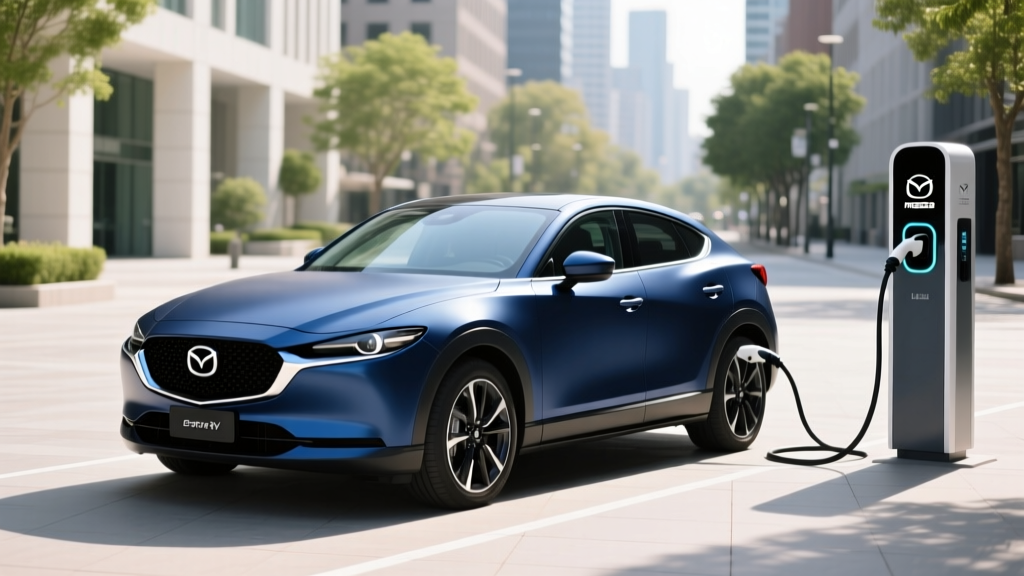
The 2026 Mazda MX-30 E-Skyactiv R-EV is not a conventional battery-electric vehicle. It is a plug-in hybrid that drives its front wheels exclusively through an electric motor, using a compact 830-cc single-rotor Wankel engine solely as a generator to recharge its 17.8 kWh lithium-ion battery on the go. Mazda calls this a "series hybrid" or range-extender EV (EREV) architecture — and it produces a driving experience that feels genuinely electric in daily use, with the safety net of a gasoline generator eliminating range anxiety entirely.
For the right buyer — a suburban commuter with home charging access who occasionally needs to drive beyond battery-only range — the R-EV is a compelling, stylish, and engaging package. But with an EPA-estimated 38 miles of pure electric range and a relatively small fuel tank, this is not a road-trip machine. It rewards owners who can do most daily driving on electricity and accept the rotary engine as an occasional bridge, not a primary power source.
Range, Efficiency, and the Rotary Range Extender Explained
Real-World Expectation: Expect 30–35 miles of EV range in mixed suburban/highway driving. In cold weather (below 40°F), plan for 22–28 miles before the rotary generator engages. Highway driving at 70+ mph reduces EV range by roughly 15–20% versus city use.
Total Range (EV + Generator): Approximately 370–410 miles combined, depending on driving style and the 13.2-gallon fuel tank.
The MX-30 R-EV's powertrain is unconventional. The 125-kW (168 hp) electric motor drives the front wheels at all times. The rotary engine — Mazda's first production Wankel since the RX-8 ended in 2012 — never connects to the drivetrain mechanically. Instead, it spins a generator that feeds electricity to the motor or charges the battery. This means acceleration feel is always linear and electric, with no gear shifts or engine-RPM surges typical of parallel hybrids.
The 17.8 kWh battery pack uses NMC (nickel-manganese-cobalt) lithium-ion cells, which offer higher energy density than LFP chemistry at the cost of slightly faster long-term degradation. Usable capacity is approximately 14.9 kWh, with Mazda maintaining a buffer to protect battery health. When the battery depletes to its minimum state of charge, the rotary generator activates seamlessly — most drivers report it is nearly imperceptible from inside the cabin at moderate speeds, though a faint hum is audible under hard acceleration or at highway speeds when the battery is low.
| Spec | Value |
|---|---|
| EV-Only Range (EPA) | 38 miles |
| Total Range (EV + Gas) | ~370–410 miles |
| Battery Capacity | 17.8 kWh total / ~14.9 kWh usable (NMC) |
| Electric Motor Output | 125 kW (168 hp) / 192 lb-ft torque |
| Rotary Generator Engine | 830 cc single-rotor Wankel, ~74 hp |
| Fuel Tank | 13.2 gallons (regular unleaded) |
| 0–60 mph | ~7.9 seconds |
| Drivetrain | FWD (front-wheel drive, electric motor only) |
| MPGe (EV mode) | ~100 MPGe combined (EPA est.) |
| Fuel Economy (charge-sustaining) | ~38–42 mpg combined |
| Cargo Volume | 21.0 cu ft (rear seats up) / 41.6 cu ft (folded) |
| Rear Legroom | 33.1 inches |
| Curb Weight | ~3,970 lbs |
Efficiency in charge-sustaining mode (when the rotary is actively generating electricity) is respectable for a crossover of this weight, returning roughly 38–42 mpg combined. This is lower than Toyota's RAV4 Prime (which achieves 38 mpg combined with a larger parallel-hybrid system and AWD), but competitive with other compact PHEVs in the segment. The key efficiency advantage is that daily commutes under 35 miles can be completed entirely on grid electricity, costing roughly $0.04–$0.06 per mile depending on local electricity rates — compared to $0.12–$0.15 per mile for a 30 mpg gas car at $3.50/gallon.
Charging Speed: DC Fast Charge and Home Level 2
| Charging Level | Power / Rate | Time / Rate |
|---|---|---|
| Level 1 (120V household) | ~1.4 kW | ~10–11 hours (0–100%); ~4 miles of range per hour |
| Level 2 (240V home/public) | Up to 7.2 kW (onboard charger limited to ~5.5 kW sustained) | ~2.5–3 hours (0–100%); ~18–22 miles of range per hour |
| DC Fast Charge (CCS) | Peak ~50 kW | 10–80% in ~25 minutes; ~30–36 minutes to 100% |
The MX-30 R-EV's relatively small 17.8 kWh battery means charging is straightforward, but the DC fast-charging rate is a weak point by 2026 standards. A peak rate of approximately 50 kW is modest — most modern BEVs in this price class accept 150–250 kW. The practical impact: a 10–80% DC fast charge takes roughly 25 minutes, which is acceptable for occasional top-ups but not ideal for long road trips where you'd want quick pit stops.
For daily use, Level 2 home charging is the recommended approach. A 240V Level 2 charger (such as a ChargePoint Home Flex or Wallbox Pulsar Plus, both 48-amp capable) will fully replenish the battery in about 2.5–3 hours. Since the battery is small, even a basic 32-amp Level 2 unit delivering 7.7 kW will max out the R-EV's onboard charger, which is limited to roughly 5.5 kW sustained. This means there is no benefit to installing a 48-amp or 80-amp charger specifically for this vehicle — a standard 32-amp unit is perfectly adequate and saves on installation cost.
Home charging installation cost: Expect $600–$1,500 for a professional Level 2 installation (equipment + electrician + permit) if your electrical panel has sufficient capacity. Panel upgrades (to 200A service) can add $1,500–$3,500. Since the R-EV draws modest power, most homes can accommodate it without an upgrade. Always consult a licensed electrician for final specifications.
Performance and Driving Dynamics
The MX-30 R-EV delivers 168 horsepower and 192 lb-ft of torque through its front-mounted electric motor. Mazda quotes a 0–60 mph time of approximately 7.9 seconds — not sports-car quick, but adequate for highway merging and confident around-town acceleration. The instantaneous torque delivery that defines EV driving is fully present here; the car pulls away from stops with the same linear urgency as a pure BEV.
Driving dynamics are where Mazda's engineering DNA shows. Steering is precise and well-weighted — a hallmark of the brand — and the chassis feels taut without being harsh. The R-EV uses a torsion-beam rear suspension (not independent), which is typical for this price class, and ride quality is composed over most surfaces. The ~3,970-lb curb weight is noticeable during direction changes but not objectionable.
The rotary generator's behavior deserves specific attention. Under light loads (cruising, gentle acceleration), it operates at a constant, low RPM and is nearly silent. Under hard acceleration or when the battery is deeply depleted, the engine revs higher and produces an audible drone. Unlike a conventional engine, the rotary's RPM is decoupled from vehicle speed, which some drivers find disconcerting — similar to the "rubber band" effect in older CVT-equipped hybrids. Mazda's sound engineering minimizes this, but it remains the R-EV's most noticeable refinement compromise.
Interior, Technology, and Practicality
The MX-30's interior is one of the most distinctive in the compact crossover segment. Mazda uses sustainable materials extensively: door trim incorporates recycled plastic bottles, the center console features cork (a nod to Mazda's founding as a cork manufacturer in 1920), and seat upholstery uses recycled PET fabric. The result is a warm, tactile cabin that feels premium without relying on leather or wood.
The infotainment system runs Mazda Connect on a 10.25-inch center display controlled by a rotary dial — no touchscreen, which Mazda argues reduces distraction. Wireless Apple CarPlay and Android Auto are standard. A 12-speaker Bose audio system is available on higher trims. The digital instrument cluster includes an energy-flow display showing real-time battery state of charge, motor output, and generator status.
The MX-30's most polarizing design feature is its rear-hinged "freestyle" doors (similar to the BMW i3 and original Mazda RX-8). These provide a wide opening for rear-seat access when both front and rear doors are open, but the rear doors cannot be opened independently — front doors must open first. This is a meaningful practicality limitation for families with children in car seats.
Cargo space measures 21.0 cubic feet behind the rear seats and 41.6 cubic feet with them folded — competitive with the Subaru Crosstrek but less than the RAV4 (37.6 / 69.8 cu ft). Rear legroom is a tight 33.1 inches, adequate for adults on shorter trips but snug for taller passengers.
Driver Assistance (ADAS): The MX-30 R-EV comes standard with Mazda's i-Activsense suite, which includes adaptive cruise control with stop-and-go, lane-keeping assist, blind-spot monitoring, rear cross-traffic alert, and automatic emergency braking with pedestrian detection. This is a SAE Level 2 driver-assistance system — it supports the driver but requires full attention and hands-on-wheel engagement at all times. It is not autonomous driving.
Pricing, Trims, and Federal Tax Credit Eligibility
| Trim | Base MSRP | Est. After §30D Credit* |
|---|---|---|
| Preferred | ~$36,500 | ~$29,000 (if eligible) |
| Premium Plus | ~$39,500 | ~$32,000 (if eligible) |
| Premium Plus w/ Tech Package | ~$42,000 | ~$34,500 (if eligible) |
*Pricing estimates based on announced figures and expected 2026 MSRP. Final pricing subject to confirmation by Mazda.
The MX-30 R-EV's federal tax credit eligibility under IRS §30D is the most critical financial consideration. As a plug-in hybrid (PHEV/EREV), the R-EV may qualify for up to $7,500 in federal tax credits, but eligibility depends on several factors that change annually:
- MSRP Cap: Vans, SUVs, and pickups are capped at $80,000 MSRP; sedans at $55,000. The MX-30 R-EV (classified as a compact SUV/crossover) clears this easily at all trim levels.
- Buyer Income Cap: Modified adjusted gross income (MAGI) must not exceed $150,000 (single), $225,000 (head of household), or $300,000 (married filing jointly).
- Battery Sourcing: The critical-minerals and battery-component requirements phase in increasingly strict thresholds each year. For 2026, a significant percentage of critical minerals must be sourced from the U.S. or free-trade-agreement countries, and battery components must be manufactured or assembled in North America. Mazda has not published detailed sourcing data for the R-EV's battery; buyers should verify current-year eligibility on fueleconomy.gov before purchasing.
- Point-of-Sale Transfer: As of 2024, buyers can transfer the credit to the dealer at the point of sale, receiving the credit as an immediate price reduction rather than waiting to claim it on their tax return. This option is available for the MX-30 R-EV if it qualifies.
- Final Assembly: The vehicle must undergo final assembly in North America. The MX-30 is manufactured in Japan, which is a significant concern for §30D eligibility. Consult irs.gov or a tax professional for the most current determination.
Critical caveat: The MX-30's Japanese manufacturing origin is a serious potential disqualifier for the full §30D credit. Mazda has not confirmed U.S.-market R-EV production location changes as of this writing. Buyers should not assume credit eligibility without verifying the specific VIN's assembly location and battery sourcing on the IRS clean vehicle credit portal. State-level incentives (such as California's CVRP or Colorado's innovative motor vehicle credit) may offer additional savings regardless of federal eligibility — check your state's energy office for current programs.
Ownership Costs, Warranty, and Long-Term Battery Health
Mazda backs the MX-30 R-EV with a competitive warranty package:
- Basic Warranty: 3 years / 36,000 miles
- Powertrain Warranty: 5 years / 60,000 miles
- Hybrid/EV Component Warranty: 8 years / 100,000 miles (covers battery pack, electric motor, and hybrid system components)
- Battery Capacity Retention: Mazda warrants the battery against falling below 70% state of health (SoH) during the 8-year/100,000-mile period
The 8-year/100,000-mile hybrid component warranty is industry-standard and matches what Toyota, Hyundai, and Kia offer for their electrified vehicles. The 70% SoH threshold is also typical — it means Mazda will repair or replace the battery if it degrades below 70% of original capacity within the warranty window.
Long-term battery degradation for NMC chemistry in a small pack like the R-EV's is manageable. Because the battery is small and frequently cycled (daily full charge/discharge is common for PHEV owners), expect roughly 8–12% capacity loss over 5 years of typical use. The rotary generator's presence actually reduces deep-cycle stress on the battery — when the pack depletes, the generator takes over rather than forcing the battery to discharge to critically low states of charge, which is the primary driver of lithium-ion degradation.
5-Year Total Cost of Ownership Estimate (15,000 miles/year):
| Cost Category | MX-30 R-EV | Toyota RAV4 Prime (comparison) |
|---|---|---|
| Purchase Price (after est. credit) | ~$29,000–$34,500 | ~$43,000–$46,000 |
| Fuel/Energy (5 years) | ~$3,200–$4,500 | ~$4,800–$5,500 |
| Insurance (5 years) | ~$7,500–$9,000 | ~$6,800–$8,200 |
| Maintenance (5 years) | ~$2,000–$2,800 | ~$2,500–$3,200 |
| Estimated Depreciation | ~$12,000–$15,000 | ~$10,000–$13,000 |
The R-EV's lower purchase price (assuming tax credit eligibility) is its strongest financial argument. However, higher insurance premiums (typical for EVs and PHEVs due to repair costs) and potentially steeper depreciation (Mazda's EV resale values are less established than Toyota's hybrid dominance) partially offset the savings. Home-charging access is essential to realize the fuel-cost advantage — relying solely on public Level 2 or DC fast charging will erode the per-mile cost benefit.
Pros, Cons, and Who Should Buy the MX-30 R-EV
Pros
- Genuine EV driving feel with no range anxiety — rotary generator provides unlimited total range
- Distinctive, premium interior with sustainable materials and excellent build quality
- Strong 8-year/100,000-mile hybrid component warranty
- Competitive pricing (especially if §30D credit applies)
- Refined, linear acceleration and Mazda's signature steering precision
- Small battery means fast, inexpensive home charging — no panel upgrade needed
Cons
- Only 38 miles EPA electric range — shorter than most PHEV competitors (RAV4 Prime: 42 mi; Tucson PHEV: 33 mi; Sportage PHEV: 34 mi)
- DC fast charging limited to ~50 kW peak — slow by 2026 standards
- Freestyle rear doors are impractical for car seats and require front doors open first
- Tight rear legroom (33.1 in) and modest cargo space (21.0 cu ft)
- Japanese assembly may disqualify from federal §30D tax credit — verify before purchase
- Rotary generator drone under heavy load is a refinement compromise
- FWD only — no AWD option, limiting appeal in snow-belt states
Who the MX-30 R-EV Suits Best
Buy it if: You have reliable home Level 2 charging, your daily round-trip commute is under 35 miles, you value distinctive design and driving dynamics over outright practicality, and you want EV driving feel without range anxiety on occasional longer trips.
Look elsewhere if: You need AWD, regularly carry rear-seat passengers or bulky cargo, want to road-trip frequently on electric power alone, need the fastest DC charging available, or require confirmed federal tax credit eligibility for your purchase decision.
Frequently Asked Questions
What is the real-world range of the Mazda MX-30 R-EV?
The EPA rates the R-EV at 38 miles of electric-only range. In real-world mixed driving, expect 30–35 miles before the rotary generator activates. In cold weather below 40°F, that drops to roughly 22–28 miles. Total range with the gasoline generator running is approximately 370–410 miles, depending on driving style.
How fast does the MX-30 R-EV charge?
DC fast charging peaks at approximately 50 kW, delivering a 10–80% charge in about 25 minutes. Home Level 2 charging at 240V fully replenishes the battery in 2.5–3 hours. The onboard charger limits sustained Level 2 charging to roughly 5.5 kW, so a standard 32-amp home charger is sufficient — no need for a 48-amp unit.
Does the MX-30 R-EV qualify for the federal EV tax credit?
Eligibility under IRS §30D is uncertain and depends on several factors. The MSRP clears the cap, but the vehicle's Japanese assembly is a potential disqualifier under the final-assembly-in-North-America requirement. Battery sourcing requirements also apply. Buyers must verify eligibility for their specific VIN on the IRS clean vehicle portal and consult a tax professional before relying on the credit.
Is the MX-30 R-EV worth buying vs. the Toyota RAV4 Prime or Hyundai Tucson PHEV?
The R-EV offers a more distinctive design, genuine EV-only driving feel, and a lower starting price. However, the RAV4 Prime provides more electric range (42 mi EPA), standard AWD, significantly more cargo space, stronger resale value, and confirmed North American assembly for tax credit purposes. The Tucson PHEV offers 33 miles of EV range, AWD, and a more spacious interior. The R-EV is best for style-conscious buyers with short commutes and home charging; the RAV4 Prime and Tucson PHEV are more practical family choices.
Can the rotary engine drive the wheels directly?
No. The 830-cc rotary engine functions exclusively as a generator — it charges the battery and powers the electric motor but never connects mechanically to the drivetrain. The front wheels are driven solely by the 125-kW electric motor at all times. This is a series-hybrid (EREV) architecture, similar in concept to the original BMW i3 REx.
What maintenance does the rotary generator require?
The rotary engine requires periodic oil changes and spark plug replacement, but because it operates at relatively constant RPM and is used only when the battery depletes, wear is reduced compared to a conventional engine. Mazda recommends standard PHEV maintenance intervals — expect oil changes every 10,000 miles or 12 months when the generator is used regularly. Owners who charge daily and rarely deplete the battery may go longer between engine-related service.