The Short Answer: Should You Wait for Mazda's 2028 Mid-Size Crossover EV?
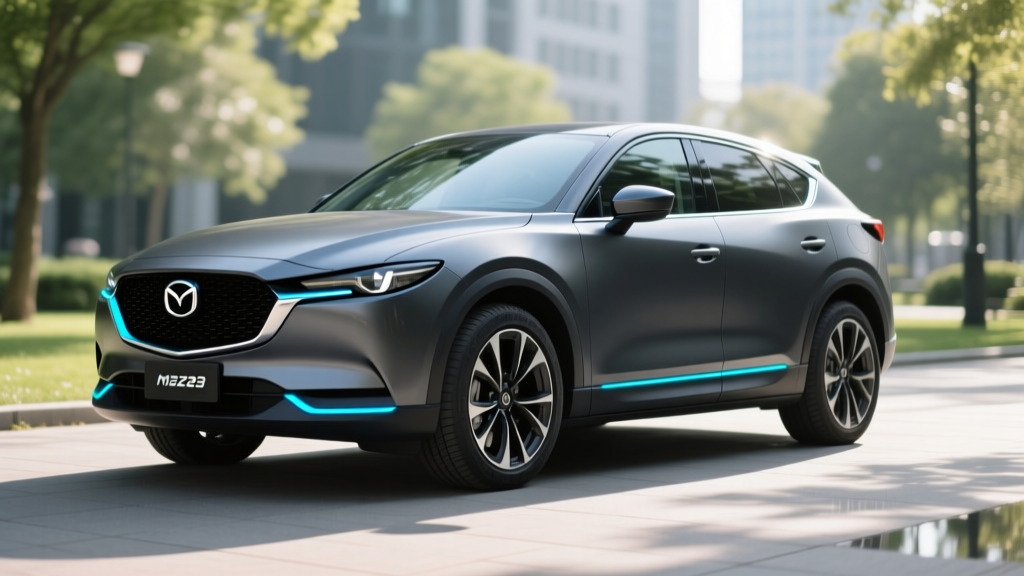
Mazda has confirmed it is developing a dedicated mid-size electric crossover built on a new scalable EV platform, with production targeted for the 2027–2028 timeframe. As of early 2026, Mazda has not released official EPA range, battery capacity, or pricing for this vehicle. Based on Mazda's published EV roadmap and industry analysis of the platform, expect a battery in the 70–85 kWh range, an EPA-estimated range likely between 250–300 miles, and a starting MSRP in the $42,000–$48,000 range before incentives. If you need an electric crossover now, competitors like the Hyundai Ioniq 5, Tesla Model Y, and Ford Mustang Mach-E are available today with proven specs. If you're a loyal Mazda buyer who values driving dynamics and interior refinement and your purchase timeline extends to late 2027 or 2028, waiting is reasonable — but go in with eyes open about what's confirmed versus speculative.
Mazda's EV Roadmap: Where This Crossover Fits
Mazda has been among the more cautious legacy automakers in its electrification strategy. The brand's current EV lineup in the U.S. is limited to the MX-30, a subcompact crossover with an EPA range of just 100 miles — a vehicle Mazda itself has acknowledged was designed primarily for compliance and urban use. That changes significantly with the brand's next-generation EV architecture.
In its Mazda Long-Term Vision and subsequent updates, the company outlined plans to launch multiple battery-electric vehicles on a dedicated EV platform — distinct from the adapted ICE architecture used for the MX-30. This new platform is expected to underpin a range of vehicles from compact to mid-size segments, with the mid-size crossover positioned as Mazda's volume electric play in the U.S. market.
Key strategic points from Mazda's disclosures:
- Platform: Dedicated skateboard-style EV architecture with rear- and all-wheel-drive configurations
- Battery strategy: Partnership with Panasonic and CATL; Mazda has indicated interest in both NMC (nickel manganese cobalt) for range-focused trims and LFP (lithium iron phosphate) for cost-optimized variants
- Timeline: First dedicated-platform EVs expected in Japan and Europe by 2027, with U.S.-market mid-size crossover following in the 2027–2028 model-year window
- Brand positioning: Mazda has consistently emphasized that its EVs will prioritize driving engagement — low center of gravity, rear-biased torque distribution, and the brand's signature interior material quality
Projected Specs: What the Numbers Might Look Like
Because Mazda has not published a full spec sheet, the following projections are based on Mazda's platform disclosures, supplier announcements, and segment benchmarks. All figures are preliminary estimates, not confirmed specifications.
| Specification | Projected Estimate | Segment Benchmark (2026) |
|---|---|---|
| Battery Capacity (usable) | 75–85 kWh | Ioniq 5: 77.4 kWh / Model Y LR: ~78 kWh |
| Battery Chemistry | NMC (AWD/Long Range), LFP (base RWD possible) | Mixed across segment |
| EPA Range (est.) | 260–310 mi depending on trim | Ioniq 5: 303 mi / Model Y LR: 320 mi |
| Peak DC Fast Charge Rate | ~175–220 kW | Ioniq 5: 240 kW / Model Y: 250 kW |
| 10–80% DC Charge Time (est.) | 22–28 minutes | Ioniq 5: ~18 min / Model Y: ~27 min |
| Level 2 AC Charging | 11 kW onboard charger | Segment standard: 11–11.5 kW |
| Drivetrain | RWD standard, AWD available | Varies by competitor |
| Horsepower (AWD est.) | 280–340 hp | Ioniq 5 AWD: 320 hp / Model Y LR: 384 hp |
| 0–60 mph (AWD est.) | 5.5–6.5 seconds | Ioniq 5 AWD: 4.5s / Mach-E ER AWD: 4.8s |
| Starting MSRP (est.) | $42,000–$48,000 | Ioniq 5 SE: $42,600 / Model Y: $44,990 |
| Battery/Powertrain Warranty | 8 yr / 100,000 mi (expected, per federal minimum) | Industry standard: 8/100k |
A few observations from these projections:
- Charging speed is the wildcard. Mazda's 800V architecture adoption (or lack thereof) will determine whether DC charging hits the 20+ minute benchmark or lags behind the Hyundai/Kia E-GMP platform's best-in-class 18-minute 10–80%. Mazda has not confirmed voltage architecture.
- LFP for a base trim would be smart. Offering an LFP battery on a lower-priced RWD trim would allow Mazda to hit a sub-$40K price point while sacrificing perhaps 15–20 miles of range — a trade-off many buyers accept.
- Real-world range caveat: On any mid-size electric crossover with ~80 kWh, expect EPA sticker range to drop by roughly 15–25% during sustained highway driving at 75+ mph, and by 20–30% in freezing temperatures. A 300-mile EPA sticker realistically means 225–250 miles in cold highway conditions.
EV vs. Gas vs. Hybrid: How Would a Mazda EV Compare?
Mazda's current mid-size crossover, the CX-5, remains one of the brand's best sellers. Many shoppers considering a future Mazda EV are weighing it against a gas CX-5, a CX-50, or the CX-70 PHEV. Here's how the economics stack up using current data and reasonable projections.
| Factor | Projected Mazda EV (2028) | CX-5 2.5T AWD (2026) | CX-70 PHEV (2026) |
|---|---|---|---|
| MSRP (base) | ~$44,000 est. | $38,950 | $54,950 |
| Federal Tax Credit (§30D) | Up to $7,500 if eligible* | $0 | Up to $3,750* |
| Effective Starting Price | ~$36,500 est. | $38,950 | ~$51,200 |
| Fuel/Energy Cost per Year† | $540–$720 (home charging) | $2,100–$2,400 | $900–$1,200 |
| Annual Maintenance | $200–$400 | $600–$900 | $500–$800 |
| 5-Year Fuel + Maintenance | $3,700–$5,600 | $13,500–$16,500 | $7,000–$10,000 |
*Federal §30D tax credit eligibility depends on buyer income, vehicle MSRP caps, battery component sourcing, and critical mineral requirements. Rules are current as of 2026 and subject to change. See IRS §30D guidelines and consult a tax professional. Credit may be transferred to the dealer at point of sale.
†Fuel/energy costs based on 15,000 mi/year, $3.50/gal regular unleaded, $0.14/kWh national average electricity rate. Actual costs vary significantly by state and utility.
The math tells a clear story: the EV's higher upfront cost is largely erased by the federal credit (if eligible), and annual operating savings of $1,200–$1,800 versus gas add up to $6,000–$9,000 over five years. The PHEV splits the difference — useful if you lack reliable home charging but want some electric-only commuting range.
Real-World Ownership: What First-Time EV Buyers Need to Know
Spec sheets only tell half the story. Here's what actually matters when you live with an electric crossover daily.
Home Charging Is Non-Negotiable for Most Owners
Over 80% of EV charging happens at home. If you have a garage or driveway where a Level 2 charger (240V, 32–48 amps) can be installed, an EV like this Mazda crossover will seamlessly add 25–35 miles of range per hour of charging — enough to fully replenish overnight. A professional Level 2 installation typically costs $500–$2,000 depending on your electrical panel's capacity and the run length from panel to charger. If your home has a 200-amp panel with spare capacity, expect the lower end. Older homes with 100-amp panels may need a $1,500–$3,000 panel upgrade.
If you live in an apartment or lack dedicated parking with electrical access, public DC fast charging and workplace charging become your lifeline — and that adds both cost ($0.30–$0.50/kWh at public chargers vs. $0.10–$0.18/kWh at home) and time. Be honest about your situation before committing.
Charging Speed Isn't Just About Peak kW
Automakers advertise peak DC fast-charge rates (e.g., "220 kW!"), but real-world charging follows a charge curve: the battery charges fastest between roughly 10–50% state of charge, then progressively slows to protect battery health. A vehicle that peaks at 220 kW may average only 120–140 kW across a full 10–80% session. This is why the 10–80% time (in minutes) is a more useful metric than peak kW alone. For Mazda's projected 22–28 minute 10–80% window, that's competitive but not class-leading — Hyundai's E-GMP platform still holds that crown.
Cold Weather Cuts Range — Plan For It
Lithium-ion batteries lose efficiency in freezing temperatures, and cabin heating draws significant energy. Expect a 20–30% range reduction in sustained sub-30°F driving. A projected 280-mile EPA range becomes roughly 200–220 miles in a Minnesota January. A heat pump (which Mazda has not confirmed for this platform) can mitigate this loss by 5–10 percentage points. If you live in a cold climate, prioritize the longest-range trim available and precondition the battery while plugged in before departure.
| Myth | Fact |
|---|---|
| "EV batteries need replacing every few years." | Modern EV batteries are warrantied for 8 years/100,000 miles and typically retain 85–90% capacity at that point. DOE data shows most packs outlast 150,000+ miles with manageable degradation. |
| "There aren't enough chargers." | The U.S. has over 70,000 public charging ports as of 2026. Coverage is excellent along major interstates and in metro areas, though rural corridors remain sparse. Check AFDC station locator for your routes. |
| "EVs are worse for the environment because of electricity generation." | Even on coal-heavy grids, EVs produce fewer lifecycle emissions than comparable gas vehicles. On cleaner grids (wind, solar, hydro, nuclear), the advantage is dramatic. Grid mix varies by state — check your local utility. |
| "The tax credit is $7,500 for everyone." | §30D has income caps ($150K single / $300K joint), MSRP caps ($55K cars / $80K SUVs/trucks), and strict battery sourcing rules. Many EVs qualify for the full amount, some for partial, and some for none. Always verify on irs.gov. |
| "EVs cost more to insure." | Sometimes true — EV insurance premiums can run 10–20% higher due to repair costs for battery and structural components. Get quotes before buying. |
Cost Breakdown: 5-Year Ownership Projection
Here's a realistic five-year total cost of ownership (TCO) for the projected Mazda mid-size crossover EV versus a gas CX-5, assuming 15,000 miles per year, home charging at $0.14/kWh, and $3.50/gallon gas.
| Category | Mazda EV (Projected) | Mazda CX-5 2.5T AWD |
|---|---|---|
| Purchase Price (MSRP) | $44,000 | $38,950 |
| Federal Tax Credit | −$7,500 (if eligible) | $0 |
| Net Purchase Cost | $36,500 | $38,950 |
| 5-Year Electricity / Fuel | $3,200 | $11,250 |
| 5-Year Maintenance | $1,500 | $3,750 |
| 5-Year Insurance (est.) | $7,800 | $6,500 |
| Estimated Depreciation | $16,000 | $14,000 |
| 5-Year Total | $65,000 | $74,450 |
Key takeaways:
- The EV wins on operating costs by a wide margin — roughly $8,000 less in fuel and maintenance over five years.
- Insurance and depreciation partially offset those savings. EV depreciation has been volatile; early Tesla and Ford Mach-E owners saw steeper-than-expected value loss as price cuts and incentives reshuffled the used market.
- The tax credit is the single biggest variable. If you don't qualify (income too high, vehicle doesn't meet sourcing rules), the EV's 5-year TCO rises to roughly $72,500 — nearly even with the CX-5.
- These are projections based on 2026 data. Actual 2028 pricing, credit rules, and electricity rates may differ.
Should You Wait? A Decision Framework
Choose to Wait for the Mazda EV If:
- Your current vehicle has 1–2+ years of useful life left and you're not under purchase pressure
- You're a Mazda loyalist who values the brand's interior quality, driving dynamics, and design language over having the latest EV tech today
- You have confirmed home charging access (garage/driveway with 240V capability)
- Your daily commute is under 60 miles round-trip, making any modern EV's range more than sufficient
- You're willing to accept the risk that specs, pricing, and availability may shift before launch
Buy an Available EV Now If:
- You need a vehicle within 6 months
- You want proven reliability data, established service networks, and real-world range validation from thousands of owners
- You want to lock in current §30D tax credit eligibility before potential rule changes
- Charging infrastructure on your common routes is already well-served
- You prefer to test-drive and compare multiple options today rather than commit to an unproven model
Consider a PHEV Instead If:
- You lack reliable home charging access
- You frequently drive 300+ mile routes through areas with sparse charging infrastructure
- You want electric-only commuting (25–40 miles) with gas-engine flexibility for road trips
- The Mazda CX-70 PHEV or a competitor like the Toyota RAV4 PHEV meets your needs today
Competitor Landscape: What Mazda Is Up Against
By the time Mazda's mid-size crossover EV arrives, it will enter a deeply competitive segment. Here's how the established players stack up as of 2026:
- Hyundai Ioniq 5 / Kia EV6: 800V architecture, ~300-mile range, 18-minute fast charging, strong value. The segment benchmark for charging speed.
- Tesla Model Y: 320-mile range, Supercharger network access, strong software, but aging design and controversial brand perception for some buyers.
- Ford Mustang Mach-E: 312-mile extended range, engaging to drive, BlueCruise ADAS. Ford has refined the platform significantly since launch.
- Volkswagen ID.4: 291-mile range, comfortable ride, competitive pricing. Slower DC charging than Korean competitors.
- Toyota bZ4X (2nd gen expected): Toyota is expected to launch a significantly improved successor by 2027–2028 on a new platform.
Mazda's differentiation will likely come from interior material quality (a genuine Mazda strength), driving dynamics, and brand loyalty — not from spec-sheet dominance. If Mazda prices aggressively and delivers 280+ miles of range with competitive charging, it will be a credible option. If it arrives with sub-250-mile range or slow DC charging, the segment will have moved on.
Frequently Asked Questions
Has Mazda officially confirmed this vehicle?
Mazda has confirmed it is developing dedicated EV platforms and will launch multiple battery-electric vehicles in the 2027–2028 timeframe. A specific mid-size crossover for the U.S. market has been strongly signaled in product roadmap presentations but has not been formally unveiled with a nameplate, full specs, or pricing as of early 2026.
Will it qualify for the $7,500 federal tax credit?
It's too early to say definitively. §30D eligibility depends on where the vehicle is assembled, battery component sourcing, critical mineral supply chains, buyer income, and MSRP caps. Mazda's U.S. assembly location and battery sourcing agreements will determine eligibility closer to launch. Check IRS.gov when the vehicle is closer to production.
Will it use NACS (Tesla connector) or CCS?
As of 2026, Mazda has not confirmed its North American charging connector. Most major automakers (Ford, GM, Hyundai, Volvo, and others) have committed to adopting NACS for their 2025+ models. It would be surprising if Mazda did not follow suit, but this is unconfirmed.
How does Mazda's EV reliability track record look?
Limited. The MX-30 is Mazda's only modern BEV sold in the U.S., and its low volume means there's scant long-term data. Mazda's overall brand reliability (per Consumer Reports and J.D. Power) is generally mid-pack to above-average for ICE vehicles. The new EV platform is unproven — early adopters should expect some first-year risk that established competitors have already worked through.
What should I do while I wait?
Prepare your home for EV ownership: assess your electrical panel capacity, get a quote from a licensed electrician for a 240V/50-amp circuit and Level 2 charger installation, and research your utility's EV time-of-use rate plans. This groundwork takes weeks to months and ensures you're ready to charge from day one when the vehicle arrives.