The Short Answer: No Electric Miata Exists Yet
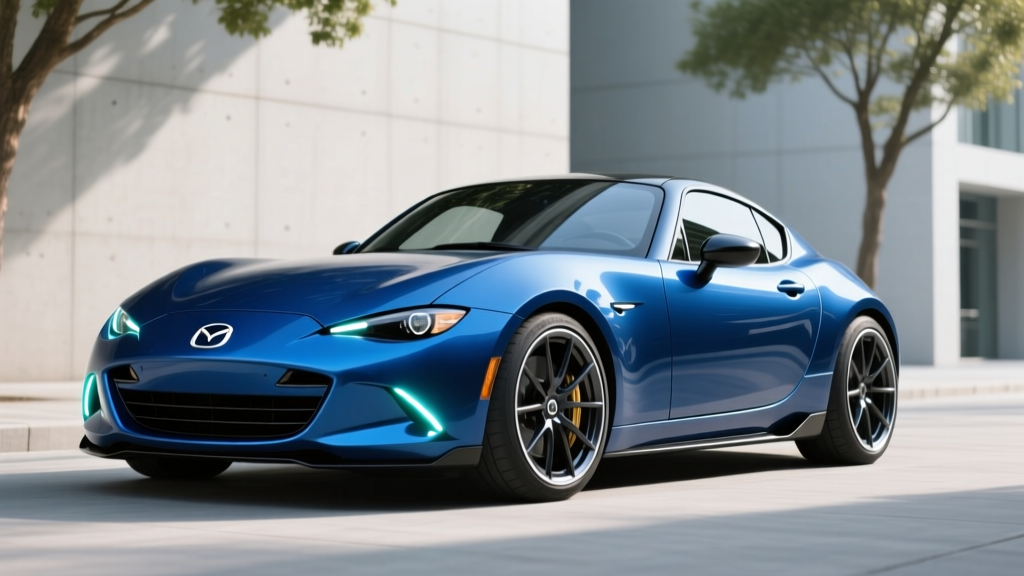
As of early 2026, there is no production Mazda Miata electric (MX-5 EV) available for purchase, nor has Mazda officially announced one. The current-generation ND2 Mazda MX-5 Miata remains a gasoline-powered, lightweight two-seat roadster. Mazda has not confirmed an electric successor, though the brand's broader EV strategy — including the Mazda CX-60e and CX-90 PHEV lineup and a modular EV platform expected later this decade — leaves the door open for an electrified sports car eventually. If you want an electric convertible today, your realistic options are limited to vehicles like the Tesla Model 3 (with aftermarket convertible conversions) or the upcoming next-gen roadsters from other manufacturers.
Why an Electric Miata Is Complicated
The MX-5 Miata's entire identity rests on a specific engineering philosophy: jinba ittai — horse and rider as one. That translates to a curb weight historically between 2,300 and 2,400 lbs, a near-perfect 50/50 weight distribution, and a naturally aspirated engine paired with a manual transmission. Electrification introduces a fundamental tension with these principles.
Battery packs are heavy. Even a modest 50 kWh LFP (lithium iron phosphate) pack weighs roughly 750–850 lbs. An NMC (nickel manganese cobalt) pack of the same capacity is somewhat lighter at around 650–750 lbs but trades cycle life and thermal stability for that weight savings. Adding that mass to a car whose magic depends on lightness is a serious engineering challenge. For context, the current 2025 MX-5 with the 2.0L Skyactiv-G engine produces 181 hp and tips the scales at approximately 2,341 lbs. An electric version targeting even 200 miles of EPA range would need a battery in the 45–55 kWh range, potentially pushing curb weight above 3,000 lbs — a 25–30% increase.
Mazda's engineers have acknowledged this weight problem in past interviews, suggesting that any future MX-5 would need a breakthrough in battery energy density or a willingness to accept reduced range to preserve the car's character.
Mazda's Current EV and Electrification Strategy
Understanding where an electric Miata might fit requires looking at what Mazda is actually selling and planning in 2026:
- MX-30 EV: Mazda's first mass-market electric vehicle, sold primarily in Japan and Europe. It features a small 35.5 kWh battery with an EPA-estimated range of just 100 miles (in its US-market form before withdrawal). Mazda deliberately limited battery size to reduce weight and environmental impact of battery production — a philosophy that might extend to a future sports car.
- CX-60 / CX-70 / CX-90 PHEVs: Mazda's plug-in hybrid SUVs use a 17.8 kWh battery pack with roughly 26–28 miles of electric-only range. These represent Mazda's current electrification priority: larger vehicles where battery weight is less penalizing.
- Modular EV platform: Mazda has referenced a dedicated EV architecture expected in the latter half of the 2020s, potentially co-developed with partners. This platform would underpin future battery-electric models, but Mazda has not confirmed which body styles it will support.
Notably, Mazda has not included a sports car or roadster in any announced EV product roadmap. The MX-5's low sales volume relative to SUVs makes it a lower priority for the massive R&D investment a new EV platform requires.
What an Electric Miata Would Need to Cost and Deliver
If Mazda were to build a battery-electric MX-5, here's a realistic projection based on current battery costs, platform economics, and the competitive landscape for 2026–2028:
| Specification | 2025 MX-5 Gas (Current) | Projected Miata EV (Estimate) |
|---|---|---|
| Base MSRP | $29,990 (Sport) | $38,000–$45,000 |
| Powertrain | 2.0L I4, 181 hp, 151 lb-ft | Single/dual motor, 200–270 hp |
| 0–60 mph | 5.8 sec (manual) | 4.5–5.5 sec (est.) |
| EPA Range / Tank Range | ~330 mi (11.9 gal tank) | 180–250 mi (est. EPA) |
| Energy Capacity | 11.9 gal gasoline | 45–55 kWh battery (est.) |
| Curb Weight | ~2,341 lbs | ~2,900–3,200 lbs (est.) |
| Charging (DC Fast) | N/A | ~100–150 kW peak, 10–80% in ~30 min (est.) |
| Level 2 Charging | N/A | ~7–11 kW, full charge in 5–7 hrs |
| Federal Tax Credit (§30D) | None | Up to $7,500 (if eligible) |
| Maintenance (5-yr est.) | ~$2,500–$3,500 | ~$800–$1,200 |
| Battery Warranty | 5 yr / 60,000 mi (powertrain) | 8 yr / 100,000 mi (federal minimum) |
The price premium of $8,000–$15,000 over the gas model reflects battery cost (approximately $120–$140 per kWh at the pack level in 2026), power electronics, and the lower production volume that prevents economies of scale. The IRS §30D tax credit could offset up to $7,500 if the vehicle meets critical-mineral and battery-component sourcing requirements, the MSRP stays under $55,000 (for cars, not SUVs), and the buyer's adjusted gross income falls within caps ($150,000 single / $300,000 joint). However, these rules change frequently — consult a tax professional and the current IRS guidance before assuming eligibility.
Electric Miata vs. Gas Miata: Real Ownership Costs
For buyers who would cross-shop a hypothetical electric MX-5 against the current gas version, the total cost of ownership over five years tells a nuanced story:
| Cost Category | Gas MX-5 ($30K) | Projected EV Miata ($42K) |
|---|---|---|
| Purchase Price (after credit) | $29,990 | $34,500 (est. after $7,500 credit) |
| Fuel / Electricity (5 yr, 60K mi) | $7,200 ($3.50/gal, 26 MPG) | $2,700 ($0.15/kWh, 3.5 mi/kWh) |
| Maintenance (5 yr) | $3,000 | $1,000 |
| Insurance (5 yr avg.) | $6,500 | $7,500 (EV premium ~15%) |
| Depreciation (5 yr est.) | $12,000 | $16,000 (higher initial cost, uncertain EV sports car resale) |
| 5-Year Total | $58,690 | $61,700 |
| Cost Per Mile | $0.98 | $1.03 |
The EV version saves substantially on fuel and maintenance — about $6,500 over five years — but those savings are largely consumed by the higher purchase price and greater depreciation. The breakeven point extends beyond seven years for most drivers. A sports car driven primarily on weekends (say, 6,000 miles/year) would see even slower payback, since fuel savings scale with mileage.
Real-World Ownership Considerations for an Electric Roadster
An electric Miata would face unique practical challenges that don't apply to electric SUVs or sedans:
Home Charging Access
Roadster owners are disproportionately likely to live in urban areas or apartments where dedicated home charging is unavailable. Without Level 2 home charging (240V, 7–11 kW), daily EV ownership becomes significantly more inconvenient. A Level 2 home charger installation typically costs $800–$2,500 including equipment, electrician labor, and permits — and may require a 200-amp panel upgrade ($1,500–$3,000 additional) if your home has an older 100-amp service. If you can't charge at home, a fun weekend car that requires public DC fast-charging trips loses much of its appeal.
Cold-Weather Range Loss
LFP batteries, which Mazda might choose for cost and longevity reasons, lose roughly 25–35% of their rated capacity in freezing temperatures. A projected 220-mile EPA range could drop to 145–165 miles in winter conditions. For a convertible that's primarily a warm-weather car, this may be less relevant — but it matters for year-round owners in northern climates.
Charging Speed and Road Trips
A lightweight sports car with a smaller battery (45–55 kWh) would charge faster in absolute terms but offer less buffer between stops. At a 150 kW DC fast charger, a 50 kWh pack could go from 10–80% in roughly 25–30 minutes — but charging curves taper significantly above 80%, meaning the last 20% can take as long as the first 80%. On a road trip, you'd stop more often than in an EV with a 75–100 kWh battery, though each stop would be shorter.
Common Myths About an Electric Miata
| Myth | Fact |
|---|---|
| "Mazda has confirmed an electric Miata for 2026." | Mazda has made no such announcement. The current MX-5 remains gas-only, and no EV variant has been revealed. |
| "An electric Miata would be heavier and therefore not a real Miata." | Weight is a legitimate concern, but Mazda's MX-30 showed willingness to accept limited range (100 mi EPA) to keep weight down. Engineering trade-offs exist. |
| "Electric motors can't deliver the Miata driving feel." | Electric motors provide instant torque and can be tuned for linear delivery. The challenge is replicating the engagement of a manual transmission and engine sound — areas where Mazda would need creative solutions (simulated shift points, haptic feedback). |
| "An EV Miata would qualify for the full $7,500 tax credit." | Credit eligibility depends on battery sourcing (critical minerals and components), MSRP caps ($55K for cars), and buyer income limits. Many EVs in 2026 qualify for only $3,750 or nothing at all. Always check the fueleconomy.gov tax credit tracker for the specific model and trim. |
| "You can convert a gas Miata to electric easily." | Aftermarket EV conversions exist but typically cost $20,000–$40,000, void all warranties, may not be street-legal in all states without special registration, and result in a car with limited range (~80–120 mi) and no fast-charging capability. |
What to Buy Instead Today
If you want an engaging electric drive experience now, or an affordable convertible, here's how the market stacks up:
Choose the Current Gas MX-5 If:
- You prioritize lightweight handling and manual-transmission engagement above all else
- Your budget is $29,000–$38,000 and you want a proven, reliable roadster
- You drive fewer than 10,000 miles/year in a weekend/fun car
- You lack home charging access and don't want public-charging dependency
Wait for a Potential Electric Miata If:
- You want an electric sports car and are willing to wait until at least 2028–2030
- You have home Level 2 charging and drive in mostly mild climates
- You're comfortable with 180–250 miles of range for a weekend car
- Mazda eventually announces a production model with confirmed specs
Consider These Alternatives Now:
- Tesla Model 3 Performance (2026): Not a roadster, but 346 mi EPA range, 0–60 in 2.9 sec, ~$53,000. The most engaging mass-market EV sedan available.
- BMW Z4 / Toyota Supra: Gas-only convertibles/coupes in the Miata's spirit but at higher prices ($52K+). No electric versions planned.
- MG Cyberster: An electric roadster sold in China and Europe (not US-homologated as of 2026). ~310 mi WLTP range, ~$55K equivalent. The closest thing to an electric Miata that exists globally.
- Fiat 124 Spider (used): Mazda ND-platform roadster with Fiat styling, gas-only, available used for $20,000–$28,000.
Frequently Asked Questions
Will Mazda ever make an electric Miata?
Mazda has not confirmed plans for an electric MX-5. The brand's EV roadmap focuses on SUVs and crossovers through 2027. A dedicated EV sports car platform would require significant investment for a low-volume model. Industry analysts suggest the earliest a next-generation MX-5 (potentially hybrid or electric) could appear is 2028–2030, and Mazda has hinted it may keep the MX-5 gasoline-powered longer than other models to preserve its character.
How much would an electric Mazda Miata cost?
Based on current battery pricing, platform costs, and comparable EV sports cars, a production electric MX-5 would likely start between $38,000 and $45,000 — roughly $10,000–$15,000 more than the current gas MX-5 Sport. Federal tax credits under §30D could reduce that by up to $7,500, but eligibility depends on battery sourcing requirements and buyer income limits that change annually.
Can I convert my gas Miata to electric?
Yes, aftermarket EV conversion shops can replace the engine and fuel system with an electric motor and battery pack. Costs typically run $20,000–$40,000 depending on range and performance targets. However, conversions void all factory warranties, may require specialty insurance, can complicate state registration, and typically deliver only 80–120 miles of range with Level 1/2 charging only (no DC fast charging). For most owners, selling the gas Miata and buying a production EV is more practical.
Is the MG Cyberster available in the US?
No. As of 2026, the MG Cyberster electric roadster is sold in China, the UK, and select European markets. MG (owned by SAIC Motor) has not announced US homologation or sales plans. Importing one independently would face significant regulatory hurdles with NHTSA and EPA compliance.
What's the lightest electric car available in the US?
The lightest mainstream EVs in 2026 include the Mini Cooper SE (~3,100 lbs, 114 mi EPA range) and the Nissan Leaf S (~3,500 lbs, 149 mi EPA range). Both are significantly heavier than the gas MX-5 (~2,341 lbs), illustrating the weight challenge any electric roadster would face.
Should I buy a gas Miata now or wait for an electric version?
Buy the gas MX-5 now if you want a Miata. An electric version is speculative, likely years away, and will cost significantly more. The current ND2 generation is mature, reliable, and represents the purest expression of the Miata formula. If electrification is a priority, consider it for your next daily driver (an EV sedan or crossover) and keep the Miata as a gasoline weekend car — a two-car solution that satisfies both goals today.