The Short Answer on Mazda EVs
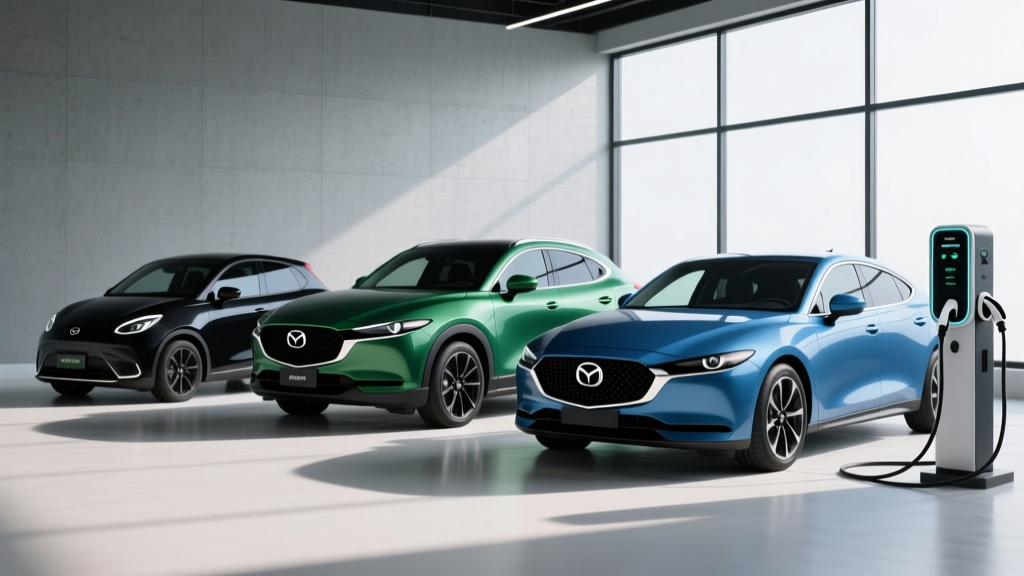
As of the 2026 model year, Mazda's fully electric lineup in the U.S. consists primarily of the Mazda CX-70 PHEV (plug-in hybrid, not a BEV) and the Mazda MX-30 EV, which remains limited to California and select states with an EPA-estimated range of just 100 miles from a 35.5 kWh battery. Mazda's first dedicated long-range BEV — a next-generation electric crossover built on a new EV platform — is announced but not yet on sale. If you need a 250+ mile electric Mazda today, you'll have to wait. If you want Mazda's electrified driving dynamics now, the CX-70 PHEV (26 miles electric-only, ~310 miles total) or the CX-90 PHEV are the practical choices, while the MX-30 fits only short-commute urban drivers with reliable home charging.
Mazda's Current Electrified Lineup: What's Actually Available
Mazda's approach to electrification has been cautious compared to rivals like Hyundai, Kia, and Tesla. Rather than rushing a full BEV lineup, Mazda has prioritized plug-in hybrids and mild hybrids while developing a dedicated EV architecture. Here's what you can actually buy in 2026:
| Model | Type | Battery (kWh) | EPA EV Range | Total Range | Peak DC Charge | 0-60 mph | Starting MSRP |
|---|---|---|---|---|---|---|---|
| MX-30 EV | BEV | 35.5 kWh (NMC) | 100 mi | 100 mi | 50 kW | 9.1 sec | ~$34,000 |
| CX-70 PHEV | PHEV | 17.8 kWh (NMC) | 26 mi | ~310 mi | N/A (L2 only) | 6.3 sec | ~$55,000 |
| CX-90 PHEV | PHEV | 17.8 kWh (NMC) | 26 mi | ~320 mi | N/A (L2 only) | 5.9 sec | ~$51,000 |
The MX-30's 100-mile EPA range is the most controversial spec here. For context, the Chevrolet Bolt EV — now discontinued but representative of affordable EVs — offered 259 miles. Even the base Nissan Leaf delivers 149 miles. Mazda deliberately chose a smaller battery to reduce weight and cost, but the trade-off is severe range limitation that restricts the MX-30 to a very specific use case: short urban commutes with guaranteed home charging.
Mazda MX-30 EV: Charging, Range, and Real-World Ownership
MX-30 Range: EPA vs. Reality
EPA estimate: 100 miles
Real-world expectation: 75–85 miles on highway at 70+ mph; 60–70 miles in cold weather (below 32°F) with cabin heating. The 35.5 kWh battery has a usable capacity of approximately 32 kWh, and the MX-30's efficiency is rated at 92 MPGe combined (~36 kWh/100mi). In winter testing, expect roughly 30% range loss — a common issue across all BEVs, but more punishing with a small battery.
Charging the MX-30 is where the small battery becomes both an advantage and a frustration:
| Level | Power (kW) | Time (0–100%) | Miles Added per Hour |
|---|---|---|---|
| Level 1 (120V) | 1.2 kW | ~28 hours | ~3 mi/hr |
| Level 2 (240V, 32A) | 7.2 kW | ~5 hours | ~18 mi/hr |
| DC Fast Charge | 50 kW peak | ~36 min (10–80%) | ~75 mi in 30 min |
The 50 kW peak DC charge rate is slow by 2026 standards. Most competing EVs — the Hyundai Ioniq 5, Tesla Model Y, Ford Mustang Mach-E — accept 150–250+ kW on DC fast chargers. The MX-30 uses a CCS1 connector (J1772 for Level 2). Mazda has not adopted the NACS (Tesla) connector for the MX-30, though adapters are available for Supercharger access where supported.
Home charging is essentially mandatory for MX-30 ownership. At 100 miles of range, relying on public charging is impractical for most drivers. If you live in an apartment without charging access or frequently drive more than 60 miles round-trip, the MX-30 is not a viable primary vehicle.
Mazda PHEVs: The CX-70 and CX-90 as EV Alternatives
For buyers who want electric driving without range compromise, Mazda's PHEV models offer a pragmatic middle ground. Both the CX-70 PHEV and CX-90 PHEV share a 17.8 kWh battery pack and a 2.5-liter four-cylinder engine paired with an electric motor, producing a combined 323 horsepower.
The 26 miles of EPA-estimated electric-only range covers most daily commutes. According to fueleconomy.gov, the average American drives roughly 37 miles per day — meaning PHEV owners who charge nightly will drive mostly on electricity, with the gas engine handling longer trips seamlessly.
| Factor | CX-90 PHEV | CX-90 Gas (I-6 Turbo AWD) |
|---|---|---|
| EPA Combined | 56 MPGe / 25 mpg (gas-only) | 24 mpg combined |
| Annual Fuel (15,000 mi) | ~$1,100 (mix of electric + gas) | ~$2,050 (gas only) |
| Annual Fuel Savings | PHEV saves ~$950/year | |
| Starting MSRP | ~$51,000 | ~$44,000 |
| Price Premium | PHEV costs ~$7,000 more upfront | |
| Payback Period | ~7.4 years on fuel savings alone (before incentives) | |
The PHEV premium takes years to recoup through fuel savings alone, but the calculus changes with the federal tax credit. Under current IRS §30D rules, qualifying PHEVs with sufficient battery capacity may be eligible for up to $7,500 — though eligibility depends on MSRP caps ($80,000 for SUVs), buyer income limits ($300,000 joint / $150,000 single), and battery component and critical-mineral sourcing requirements. The point-of-sale transfer option lets dealers apply the credit at purchase. Always verify eligibility on the IRS clean vehicle credit page before committing, as sourcing rules tighten periodically.
Total Cost of Ownership: Mazda EVs vs. Gas and Hybrid
Let's run a 5-year ownership comparison for a driver covering 15,000 miles per year with home Level 2 charging access, using national averages for electricity ($0.17/kWh) and gasoline ($3.40/gallon):
| Cost Category | MX-30 EV | CX-70 PHEV | CX-70 Gas (AWD) |
|---|---|---|---|
| Purchase Price (base MSRP) | $34,000 | $55,000 | $45,000 |
| Est. Federal Tax Credit | Up to $7,500* | Up to $7,500* | $0 |
| Fuel/Energy (5 years) | $3,100 | $5,500 | $10,250 |
| Maintenance (5 years) | $1,800 | $3,200 | $3,800 |
| Insurance (5-year est.) | $7,500 | $8,200 | $7,800 |
| Total 5-Year Cost | ~$38,900 | ~$64,400 | ~$66,850 |
*Tax credit eligibility varies by buyer income, MSRP caps, and battery sourcing. Verify at irs.gov. Assumes credit applied at point of sale.
The MX-30's low purchase price and minimal fuel cost make it the cheapest to own over five years — but only if its 100-mile range fits your lifestyle. The CX-70 PHEV and gas models are closely matched in total cost, with the PHEV pulling slightly ahead thanks to lower fuel and maintenance expenses over time.
Key ownership considerations that shift these numbers:
- Home charging access: Without Level 2 home charging, MX-30 ownership becomes impractical, and PHEV electric-mode savings disappear.
- Cold climate: Expect 25–35% range loss on the MX-30 in sustained sub-freezing temperatures. PHEVs are less affected since the gas engine provides heat and backup range.
- Insurance premiums: EVs and PHEVs typically cost 10–20% more to insure than gas equivalents due to higher repair costs and battery replacement risk. Get quotes before purchasing.
- Depreciation: The MX-30 has suffered steep depreciation in the used market due to its limited range, which may hurt resale value. Mazda PHEVs hold value closer to their gas counterparts.
Common Mazda EV Misconceptions: Facts vs. Myths
| Myth | Fact |
|---|---|
| "Mazda doesn't make real EVs" | The MX-30 is a fully electric BEV sold in the U.S. since 2022, though its 100-mile range limits its practicality. Mazda's first long-range BEV on a dedicated EV platform is in development. |
| "The MX-30 qualifies for the full $7,500 tax credit" | Eligibility depends on current-year battery sourcing and critical-mineral requirements under §30D. The MX-30's credit status has fluctuated — always confirm on the IRS clean vehicle list before purchasing. |
| "PHEVs don't need charging" | You can drive a PHEV without ever plugging in, but you'll lose the electric-only miles and fuel savings that justify the price premium. PHEVs are most economical with daily Level 1 or Level 2 charging. |
| "Mazda's EV batteries degrade quickly" | Mazda covers its EV and PHEV batteries with an 8-year/100,000-mile warranty against defects and excessive capacity loss (typically below 70% state of health). NMC batteries in these applications show typical degradation of 8–12% over 8 years based on industry data. |
| "Mazda is switching to Tesla's NACS plug" | As of the 2026 model year, Mazda's U.S. EVs use CCS1. Mazda has not announced a NACS transition timeline for existing models, though future EVs may adopt the standard. |
Mazda's EV Roadmap: What's Coming Next
Mazda has announced a multi-model EV rollout through the end of the decade, including:
- A dedicated EV platform co-developed with partners, expected to underpin a midsize electric SUV with an estimated 250–300+ miles of range.
- Next-generation battery systems with potential LFP chemistry options for cost reduction and improved cycle life.
- Expanded PHEV offerings across the CX-50 and other models before full BEV availability broadens.
These models are announced but not yet on sale. Mazda has historically been conservative with timelines, so treat preliminary specs as estimates until official EPA certification and pricing are released.
Decision Framework: Should You Buy a Mazda EV or PHEV?
Choose the Mazda MX-30 EV if:
- Your daily round-trip commute is under 50 miles
- You have reliable Level 2 home charging
- You live in a mild climate (limited sub-freezing driving)
- You want the lowest purchase price in Mazda's lineup and can capture the federal tax credit
- You have a second gas or hybrid vehicle for longer trips
Choose the Mazda CX-70 or CX-90 PHEV if:
- You want electric commuting without range anxiety on road trips
- Your daily drive is under 26 miles and you can charge nightly
- You need a 3-row SUV (CX-90) or a sporty 2-row (CX-70) with Mazda's premium interior
- You're not ready to commit to a full BEV due to charging access or climate concerns
Wait for Mazda's upcoming long-range BEV if:
- You want 250+ miles of EPA range in a Mazda-badged electric vehicle
- You need DC fast charging above 150 kW for road-trip practicality
- You're willing to hold off 12–24 months for official specs, pricing, and availability
Look at competitors (Hyundai Ioniq 5, Tesla Model Y, Ford Mach-E) if:
- You need a long-range BEV available today with 270–330+ miles of EPA range
- You want DC fast charging at 150–250+ kW with 10–80% times under 25 minutes
- You need NACS Supercharger access without an adapter
Frequently Asked Questions About Mazda EVs
What is the range of the Mazda MX-30 EV?
The MX-30 has an EPA-estimated range of 100 miles from its 35.5 kWh battery. In real-world highway driving at 70+ mph, expect roughly 75–85 miles. In cold weather below freezing, plan for 60–70 miles. This makes it suitable only for short urban commutes with home charging.
Does the Mazda MX-30 qualify for the federal EV tax credit?
Credit eligibility under IRS §30D depends on battery component sourcing, critical-mineral requirements, buyer income limits ($300,000 joint / $150,000 single), and the $80,000 MSRP cap for SUVs. The MX-30's eligibility has changed across model years. Always check the current IRS clean vehicle credit list before purchasing.
How long does it take to charge the Mazda MX-30?
On a Level 2 (240V) home charger at 7.2 kW, a full charge takes approximately 5 hours. On a 50 kW DC fast charger, reaching 80% takes about 36 minutes. The MX-30's peak charge rate of 50 kW is slow compared to competitors accepting 150–250 kW.
Are Mazda PHEVs worth it over the gas models?
If you can charge daily and your commute is under 26 miles, the PHEV models (CX-70, CX-90) let you drive mostly on electricity, saving roughly $950/year in fuel versus the gas versions. The upfront premium of $5,000–$7,000 takes about 7 years to recoup on fuel alone, but a qualifying federal tax credit can shorten payback to under a year.
What is Mazda's battery warranty?
Mazda provides an 8-year/100,000-mile warranty on EV and PHEV battery packs covering defects and capacity loss below a specified threshold (typically 70% state of health). This is consistent with industry standards and federal emissions-related warranty requirements.
Will Mazda release a long-range electric vehicle?
Mazda has announced plans for dedicated BEVs on a new EV platform with an expected 250+ mile range. However, as of early 2026, these models are announced but not yet available for purchase. Final EPA range, pricing, and charging specs have not been confirmed.
What connector does the Mazda MX-30 use?
The MX-30 uses a CCS1 connector for DC fast charging and a J1772 connector for Level 1 and Level 2 AC charging. It does not natively support Tesla's NACS connector, though third-party adapters may provide Supercharger access where permitted.