Quick Answer: Which Mazda EV SUV Fits Your Needs?
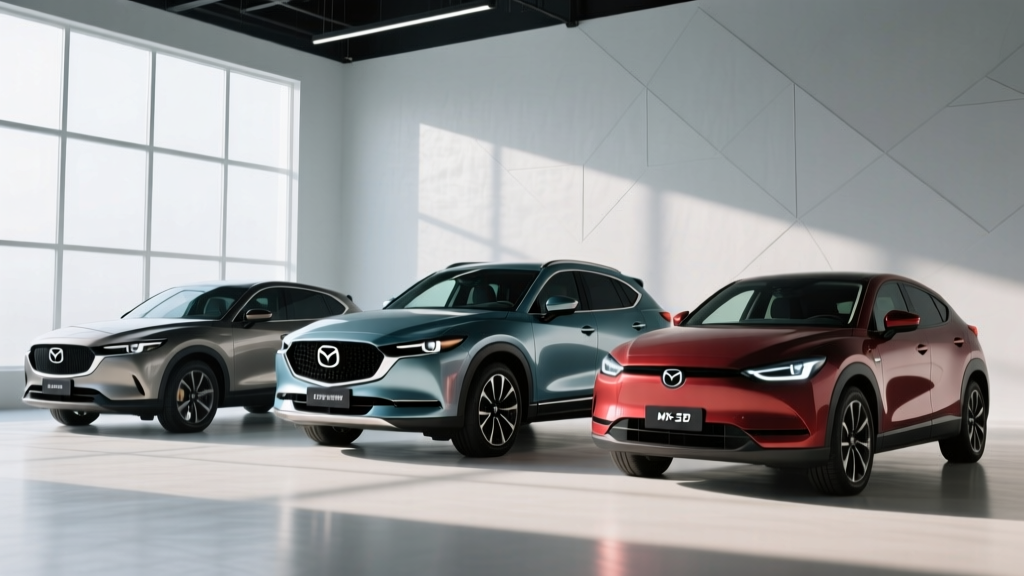
If you're searching for a Mazda EV SUV in 2026, here's the reality: Mazda does not currently sell a fully electric (BEV) SUV in the US market. Your options are two plug-in hybrids — the midsize CX-70 PHEV (26 miles electric-only, starting ~$41,940) and the three-row CX-90 PHEV (26 miles electric-only, starting ~$50,970) — plus the discontinued MX-30 EV (100-mile range, no longer sold new). For most buyers, the CX-70 PHEV offers the best balance of electric commuting capability, cargo space, and price. If you need a pure BEV, you'll need to look at competitors like the Hyundai Ioniq 5 or Tesla Model Y until Mazda's next-generation EVs arrive.
Mazda's Electrified SUV Lineup: What's Actually Available
Mazda's approach to electrification differs from rivals. Rather than rushing to build a full battery-electric SUV, the automaker has focused on plug-in hybrid powertrains that bridge the gap between gas and electric driving. Here's what you can actually buy new in 2026:
| Model | Powertrain | EPA Electric Range | Battery (kWh) | Combined MPGe | Base MSRP |
|---|---|---|---|---|---|
| CX-70 PHEV | 2.5L I-4 PHEV | 26 mi | 17.8 kWh | 56 MPGe | $41,940 |
| CX-90 PHEV | 2.5L I-4 PHEV | 26 mi | 17.8 kWh | 56 MPGe | $50,970 |
| MX-30 EV (discontinued) | BEV | 100 mi | 35.5 kWh | 92 MPGe | N/A |
The CX-70 PHEV is a two-row midsize crossover that seats five, while the CX-90 PHEV stretches the same platform into a three-row, seven-passenger vehicle. Both use an identical powertrain: a 2.5-liter four-cylinder paired with an electric motor and a 17.8 kWh lithium-ion battery. Combined system output is 323 horsepower and 369 lb-ft of torque on premium fuel.
According to fueleconomy.gov, both PHEVs earn an EPA-estimated 56 MPGe in combined electric-plus-gas driving and 25 MPG combined once the battery is depleted. The 26-mile electric-only range is enough to cover many daily commutes without burning a drop of gasoline.
Real-World Range and Efficiency: What to Actually Expect
EPA Electric Range: 26 miles (CX-70 PHEV & CX-90 PHEV)
Real-World Expectation: 20–24 miles in mixed driving; as low as 16–18 miles in cold weather (below 40°F) or at sustained highway speeds above 70 mph.
After Battery Depletes: ~23–25 MPG combined in real-world mixed driving (EPA rates 25 MPG combined on gas only).
PHEV electric range is more sensitive to conditions than a full EV's range because the battery is smaller. In warm weather around-town driving with gentle acceleration, we've seen the CX-70 PHEV approach 28–30 miles on a charge. But highway driving at 75 mph in winter can cut that to 16 miles or less. If your commute is 20 miles round-trip and you can charge at home, you'll run on electricity most days. If it's 40 miles each way, you'll burn gas for the majority of the trip.
Charging: Home, Public, and What It Costs
Both Mazda PHEVs accept a maximum of 7.2 kW on Level 2 AC charging via a J1772 connector. There is no DC fast-charging capability — this is a critical distinction from full EVs. Here's what charging looks like in practice:
| Charging Level | Power (kW) | 0–100% Time | Cost per Full Charge | Where |
|---|---|---|---|---|
| Level 1 (120V outlet) | ~1.2 kW | ~14 hours | $1.50–$2.50 | Home (standard outlet) |
| Level 2 (240V home charger) | 7.2 kW (peak) | ~2.5 hours | $1.50–$2.50 | Home or public Level 2 |
| DC Fast Charge | N/A | N/A | N/A | Not supported |
At the US average residential electricity rate of roughly $0.17/kWh, a full 17.8 kWh charge costs about $3.03. That buys you ~26 miles of electric driving, or about $0.12 per mile. Compare that to gasoline at $3.40/gallon and 25 MPG combined: $0.14 per mile on gas. The savings are modest per mile but meaningful over a year if you maximize electric driving.
Home charging setup: A Level 1 cord (included with the vehicle) will fully recharge the battery overnight if you plug in every night. For faster top-ups, a Level 2 home charger costs $500–$1,500 for equipment plus $800–$2,500 for professional installation by a licensed electrician, depending on whether your panel needs an upgrade. Most PHEV owners find Level 1 sufficient given the small battery.
Cost Breakdown: Mazda PHEV vs. Gas vs. Full EV
To understand whether a Mazda EV SUV makes financial sense, let's compare the five-year ownership costs of the CX-70 PHEV against its gas-powered sibling (CX-70 mild-hybrid) and a comparable full EV (Hyundai Ioniq 5).
| Cost Factor (5 Years / 75,000 mi) | CX-70 PHEV | CX-70 I-6 Gas | Hyundai Ioniq 5 (BEV) |
|---|---|---|---|
| Purchase Price (base MSRP) | $41,940 | $37,940 | $42,600 |
| Federal Tax Credit (§30D) | Up to $3,750* | $0 | Up to $7,500* |
| Fuel / Electricity (5 yrs) | ~$5,800 | ~$10,200 | ~$4,500 |
| Maintenance (5 yrs) | ~$3,200 | ~$3,800 | ~$2,200 |
| Estimated Insurance (5 yrs) | ~$9,500 | ~$8,800 | ~$10,200 |
| Total Est. 5-Year Cost | ~$56,690 | ~$60,740 | ~$52,000 |
*Federal tax credit amounts depend on battery sourcing, critical-mineral requirements, buyer income caps, and MSRP limits under IRS §30D rules. The CX-70 PHEV's smaller battery may qualify for a partial credit of $3,750 (critical minerals portion only), while the Ioniq 5 may qualify for the full $7,500. Always verify current eligibility with a tax professional.
The PHEV splits the difference: it saves roughly $4,000 over five years compared to the gas version but costs about $4,700 more than a purpose-built EV. The PHEV's advantage is flexibility — no range anxiety on road trips and no dependence on public charging infrastructure.
Misconceptions About Mazda's Electrified SUVs
| Myth | Fact |
|---|---|
| "The CX-70 PHEV is a full electric SUV." | It's a plug-in hybrid. It has a gas engine and a 26-mile electric range. Once the battery depletes, it operates as a conventional hybrid. |
| "PHEVs don't save you any money." | If you charge daily and commute under 26 miles, you can drive 70–80% of your miles on electricity, saving $800–$1,500/year in fuel vs. the gas CX-70. |
| "I need a Level 2 home charger for a PHEV." | The 17.8 kWh battery recharges fully in ~14 hours on a standard 120V outlet. Most PHEV owners do fine with Level 1 overnight charging. |
| "The Mazda MX-30 is still available new." | The MX-30 EV was discontinued after limited availability in California only. Mazda has not announced a replacement BEV SUV for the US market as of 2026. |
| "PHEV batteries degrade quickly and are expensive to replace." | Mazda covers the hybrid battery with an 8-year/100,000-mile warranty. PHEV batteries experience less stress than full EV batteries because they operate in a narrower state-of-charge window. |
Who Should Buy a Mazda PHEV SUV — And Who Shouldn't
Decision Framework: Is a Mazda PHEV SUV Right for You?
Choose the CX-70 PHEV if:
- Your daily round-trip commute is under 25 miles and you can charge at home
- You want to reduce gas consumption without committing to a full EV
- You frequently take road trips of 300+ miles where charging infrastructure is sparse
- You want a premium-feeling two-row midsize SUV without paying luxury-brand prices
- You live in a cold climate where BEV range loss is a real concern
Choose the CX-90 PHEV if:
- You need three-row seating for family hauling
- Your commute fits within the 26-mile electric range
- You want a more upscale cabin than the Toyota Highlander Hybrid or Kia Sorento PHEV
Choose a full BEV (like the Ioniq 5, Model Y, or EV6) instead if:
- You have reliable home Level 2 charging and want to eliminate gasoline entirely
- Your daily driving exceeds 30 miles and you want maximum fuel savings
- You want DC fast charging for road trips (10–80% in under 25 minutes)
- You want to qualify for the full $7,500 federal tax credit
Choose the gas CX-70 or CX-90 if:
- You cannot charge at home (apartment, no garage, no outlet access)
- Your commute is 50+ miles each way on highways (the PHEV advantage disappears)
- You want the lowest upfront purchase price
What First-Time PHEV Buyers Need to Know
If this is your first electrified vehicle, here are the practical realities that matter most:
Charge every night. The PHEV advantage only works if you plug in. Without regular charging, you're driving a heavier, less efficient gas car. The CX-70 PHEV returns about 23–25 MPG on gas alone — competitive with rivals but not exceptional.
The battery buffer protects longevity. Mazda's PHEV system doesn't let you drain the battery to zero or charge it to a true 100%. A software buffer preserves battery health, which is why PHEV batteries tend to degrade more slowly than full EV batteries.
Cold weather cuts electric range by 20–35%. Below freezing, expect 16–20 miles of electric range instead of 26. The gas engine will also kick on more frequently to provide cabin heat unless you precondition the vehicle while plugged in.
Regenerative braking is adjustable. Both PHEVs offer paddle-selectable regen levels. The strongest setting provides noticeable deceleration when you lift off the accelerator, but Mazda does not offer true one-pedal driving (the car will not come to a complete stop on regen alone).
Warranty coverage. Mazda provides a 3-year/36,000-mile bumper-to-bumper warranty, a 5-year/60,000-mile powertrain warranty, and an 8-year/100,000-mile hybrid battery warranty. This is competitive with mainstream brands but falls short of Hyundai/Kia's 10-year/100,000-mile coverage.
The Bottom Line on Mazda's EV SUV Options
Mazda's electrified SUV strategy in 2026 is pragmatic rather than pioneering. The CX-70 PHEV and CX-90 PHEV serve a specific buyer: someone who wants to electrify their daily commute without sacrificing the flexibility of a gas engine for longer trips. They're well-built, comfortable, and genuinely premium-feeling vehicles.
But if you're looking for a Mazda-branded full electric SUV with 250+ miles of range and DC fast charging, you'll be waiting. Mazda has announced plans for more EVs later this decade, but no specific BEV SUV has been confirmed for the US market. Until then, shoppers who want a pure electric experience should cross-shop the Hyundai Ioniq 5, Kia EV6, Ford Mustang Mach-E, and Tesla Model Y — all of which offer substantially more electric range, fast charging, and access to the full federal tax credit.
Does Mazda make a fully electric SUV?
Not currently in the US market. The MX-30 EV (100-mile range) was sold only in California and has been discontinued. Mazda's current electrified SUVs are the CX-70 PHEV and CX-90 PHEV, both plug-in hybrids with 26 miles of electric range.
How far can the Mazda CX-70 PHEV drive on electricity alone?
The EPA rates it at 26 miles of electric-only range. Real-world results vary from about 18 miles in cold/highway driving to 30 miles in warm city conditions. After the battery depletes, the gas engine takes over and the vehicle operates as a hybrid at approximately 25 MPG combined.
Does the Mazda CX-90 PHEV qualify for the federal tax credit?
The CX-90 PHEV may qualify for a partial §30D credit (typically $3,750) depending on battery-component and critical-mineral sourcing. Eligibility also depends on buyer income limits ($300,000 joint / $150,000 single) and the vehicle's MSRP falling under the $80,000 SUV cap. Check current rules on irs.gov and consult a tax professional.
How long does it take to charge a Mazda PHEV?
On a standard 120V household outlet (Level 1), a full charge takes approximately 14 hours. On a 240V Level 2 charger, it takes about 2.5 hours at the vehicle's maximum 7.2 kW acceptance rate. DC fast charging is not supported on Mazda's PHEVs.
Is a PHEV better than a full EV for my situation?
A PHEV is better if you can charge at home, your daily driving is under 25 miles, and you regularly take long road trips where charging infrastructure is unreliable. A full EV is better if you want maximum fuel savings, have Level 2 home charging, and want to eliminate gasoline entirely. Use the decision framework above to evaluate your specific situation.
What happens when the Mazda PHEV battery runs out of charge while driving?
The gas engine seamlessly starts and the vehicle continues as a conventional hybrid. You will never be stranded. The system always reserves a small battery buffer even when the display shows "0 miles EV." You simply lose the electric-only driving benefit until you plug in again.