Quick Answer: Should You Buy a Mazda EV?
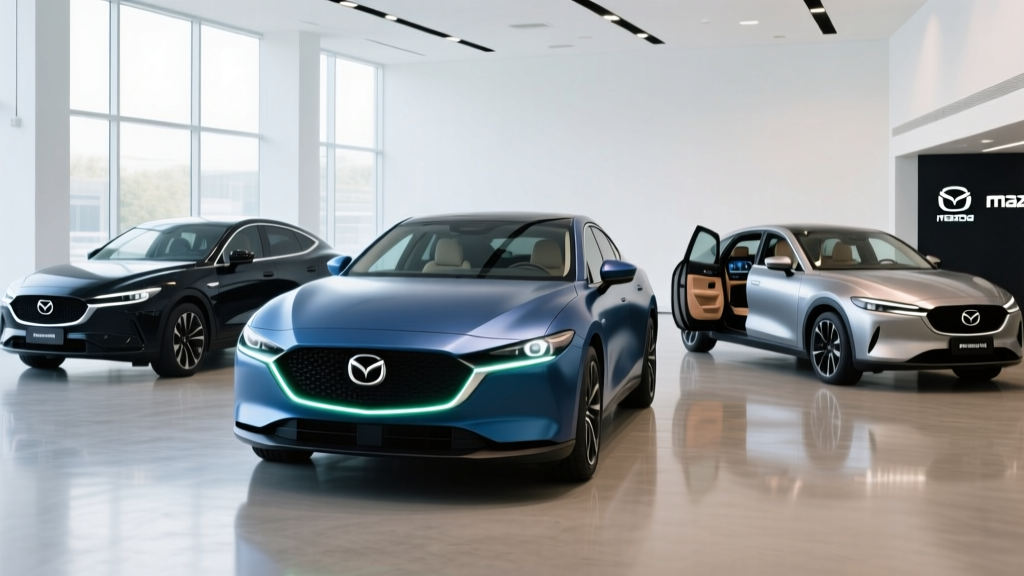
Mazda's primary electric offering for 2026 is the Mazda CX-70 PHEV (plug-in hybrid) and the fully electric Mazda CX-60e (limited markets). The CX-70 PHEV delivers approximately 26 miles of electric-only range with a combined 31 MPGe, starting around $53,000. If you need a pure BEV (battery electric vehicle), Mazda's options remain limited in the US market — most buyers cross-shopping Mazda EVs should also consider the Hyundai Ioniq 5, Tesla Model Y, or Ford Mustang Mach-E for longer range and broader charging infrastructure access.
Understanding Mazda's Electrification Strategy
Mazda has taken a more cautious approach to full electrification compared to competitors. Rather than rushing to market with multiple BEVs, the company has prioritized plug-in hybrids as a bridge technology while developing dedicated electric platforms.
For 2026, US buyers primarily have access to:
- Mazda CX-70 PHEV: Midsize SUV with 26 miles electric range
- Mazda CX-90 PHEV: Three-row SUV variant with similar powertrain
- Mazda MX-30: Discontinued after 2023 model year (limited availability)
The MX-30, Mazda's first mass-market EV, offered only 100 miles of EPA range and has been phased out. This reflects Mazda's strategy of waiting for battery technology improvements before committing to longer-range BEVs.
Mazda CX-70 PHEV: Specifications and Real-World Performance
| Specification | Mazda CX-70 PHEV (2026) |
|---|---|
| Electric-Only Range (EPA) | 26 miles |
| Combined MPGe | 31 MPGe |
| Gas-Only MPG | 25 MPG combined |
| Battery Capacity | 17.8 kWh (lithium-ion) |
| Total System Power | 323 hp |
| 0-60 mph | 6.5 seconds |
| Level 2 Charging Time | ~2.5 hours (0-100%) |
| DC Fast Charging | Not available |
| Starting MSRP | $53,000 |
| Federal Tax Credit | Up to $3,750 (varies by battery sourcing) |
| Warranty | 8 years/100,000 miles (battery) |
Real-World Range Reality Check
EPA Estimate: 26 miles electric-only
Real-World Expectation: 18-22 miles in mixed driving, 15-18 miles in cold weather (below 40°F), 24-26 miles in ideal conditions (city driving, 65-75°F)
The 26-mile electric range works well for short commutes and local errands but requires daily charging to maximize electric driving. Highway speeds above 65 mph and cold temperatures significantly reduce electric-only range.
Cost Comparison: Mazda PHEV vs Gas vs Pure EV
| Vehicle Type | Purchase Price | Annual Fuel/Energy Cost | 5-Year Total Cost | Maintenance (5yr) |
|---|---|---|---|---|
| Mazda CX-70 PHEV | $53,000 | $1,200 (mixed electric/gas) | $59,000 | $2,500 |
| Mazda CX-70 Gas | $48,000 | $2,100 | $58,500 | $3,000 |
| Hyundai Ioniq 5 (BEV) | $42,000 | $600 | $45,000 | $1,500 |
| Tesla Model Y (BEV) | $44,000 | $650 | $47,250 | $1,800 |
Note: Costs assume 15,000 miles/year, $3.50/gallon gas, $0.14/kWh electricity. Federal tax credits applied where eligible. Actual costs vary by location, driving patterns, and electricity rates. Source: fueleconomy.gov
Charging Infrastructure and Home Setup
The CX-70 PHEV charges exclusively via Level 1 (120V) or Level 2 (240V) charging — no DC fast charging capability. This is a critical limitation for buyers without reliable home charging access.
Home Charging Costs and Timeline
| Component | Cost Range |
|---|---|
| Level 2 Charger (240V, 32A) | $500-$800 |
| Electrician Installation | $800-$2,000 |
| Electrical Panel Upgrade (if needed) | $1,500-$3,000 |
| Permits | $100-$300 |
| Total Installation | $1,400-$6,100 |
With a Level 2 home charger, the CX-70 PHEV battery charges fully in approximately 2.5 hours. Level 1 charging (standard outlet) takes 8-10 hours, making overnight charging feasible but slower.
Apartment/condo dwellers: If you lack home charging access, a PHEV's limited electric range becomes less practical. You'll rely more on gas power, reducing the efficiency advantage. Consider a traditional hybrid or wait until you have charging access before purchasing a PHEV.
Federal Tax Credit Eligibility
The Mazda CX-70 PHEV qualifies for a partial federal tax credit under IRS §30D rules, but eligibility depends on multiple factors:
- MSRP Cap: SUVs must be under $80,000 (CX-70 qualifies)
- Buyer Income Limits: $150,000 single / $300,000 married filing jointly
- Battery Component Sourcing: Must meet North American assembly requirements
- Critical Minerals: Battery minerals must meet sourcing thresholds
- Point-of-Sale Transfer: Credit can be applied at purchase (2026 rule)
Based on current battery sourcing, the CX-70 PHEV typically qualifies for $3,750 (not the full $7,500). Verify eligibility with your dealer and consult IRS guidelines before purchase, as sourcing requirements change annually.
Common Misconceptions About Mazda EVs
| Myth | Fact |
|---|---|
| "Mazda has a full lineup of electric cars" | Mazda offers primarily PHEVs in the US; pure BEV options are limited or discontinued |
| "The CX-70 PHEV can fast-charge on road trips" | No DC fast charging — Level 2 only, requiring multi-hour stops |
| "PHEVs don't need home charging" | Without home charging, you'll rarely use electric mode, negating efficiency benefits |
| "26 miles of electric range is enough for everyone" | Works for short commutes; longer trips or highway driving deplete battery quickly |
| "PHEVs have the same maintenance as gas cars" | Lower maintenance than gas (fewer oil changes), but more complex than pure EVs (dual powertrains) |
Decision Framework: Is a Mazda PHEV Right for You?
Choose the Mazda CX-70 PHEV if:
- Your daily commute is under 25 miles round-trip
- You have reliable home charging (garage or dedicated outlet)
- You need a midsize SUV with premium features
- You take occasional long road trips and want gas-engine flexibility
- You prefer Mazda's interior quality and driving dynamics over competitors
Consider a Pure EV (Ioniq 5, Model Y, Mach-E) if:
- You drive more than 40 miles daily and want to minimize gas use
- You need DC fast charging for road trips (10-80% in 18-25 minutes)
- You want lower long-term maintenance costs (no gas engine)
- You qualify for the full $7,500 federal tax credit on eligible BEVs
- You want 250+ miles of range for flexibility
Stick with a Gas or Traditional Hybrid if:
- You lack home charging access (apartment, street parking)
- Your budget is under $40,000
- You drive very low annual miles (under 8,000) where fuel savings don't offset higher purchase price
- You live in an area with limited EV service infrastructure
Real Ownership Considerations
Cold Weather Impact
PHEV batteries lose 20-30% of electric range in freezing temperatures. Expect 18 miles instead of 26 in winter conditions. The gas engine compensates, but efficiency drops.
Insurance Costs
PHEVs typically cost 10-15% more to insure than gas equivalents due to higher repair costs and battery replacement concerns. Get quotes before purchase — expect $1,800-$2,400 annually depending on location and driving record.
Resale Value
Mazda PHEVs hold value reasonably well (55-60% after 3 years), but pure EVs from Tesla and Hyundai currently show stronger resale performance due to higher demand and longer range.
Maintenance Reality
PHEVs require maintenance for both powertrains: oil changes (less frequent than gas-only), brake fluid, coolant for both engine and battery systems. Budget $500-$700 annually, less than gas cars but more than pure EVs.
Frequently Asked Questions
Does Mazda make a fully electric SUV?
As of 2026, Mazda does not offer a fully electric SUV in the US market. The MX-30 (100-mile range EV) was discontinued after 2023. Mazda's electrified options are primarily plug-in hybrids like the CX-70 PHEV and CX-90 PHEV.
How long does the CX-70 PHEV battery last?
Mazda warranties the battery for 8 years/100,000 miles with a capacity retention threshold of 70%. Real-world data suggests PHEV batteries last 10-15 years with gradual degradation. Replacement costs range from $8,000-$12,000 if needed outside warranty.
Can I charge the CX-70 PHEV at Tesla Superchargers?
No. The CX-70 PHEV uses a J1772 connector for Level 1/2 charging and has no DC fast-charging capability. Tesla Superchargers are DC-only and incompatible with PHEVs.
Is the CX-70 PHEV worth it over the gas version?
If you can charge at home and drive under 25 miles daily, the PHEV saves $800-$1,200 annually in fuel costs. With the $3,750 tax credit, breakeven occurs in 4-5 years. If you lack home charging or drive long distances, the gas version may be more practical.
What's better: Mazda PHEV or Toyota RAV4 Prime?
The RAV4 Prime offers 42 miles of electric range vs the CX-70's 26 miles, plus DC fast charging capability. The Mazda provides more premium interior materials and a smoother ride. Choose Toyota for maximum electric range and efficiency; choose Mazda for luxury feel and driving dynamics.
Bottom Line
Mazda's 2026 electrified lineup centers on plug-in hybrids rather than pure electric vehicles. The CX-70 PHEV works well for buyers with short commutes, home charging access, and a preference for Mazda's premium feel. However, buyers seeking longer electric range, fast-charging capability, or lower total cost of ownership should cross-shop pure EVs from Hyundai, Tesla, and Ford.
Before purchasing, verify your federal tax credit eligibility, get insurance quotes, and honestly assess your daily driving distance and charging access. A PHEV only delivers its efficiency promise if you can charge regularly and stay within electric range for most trips.