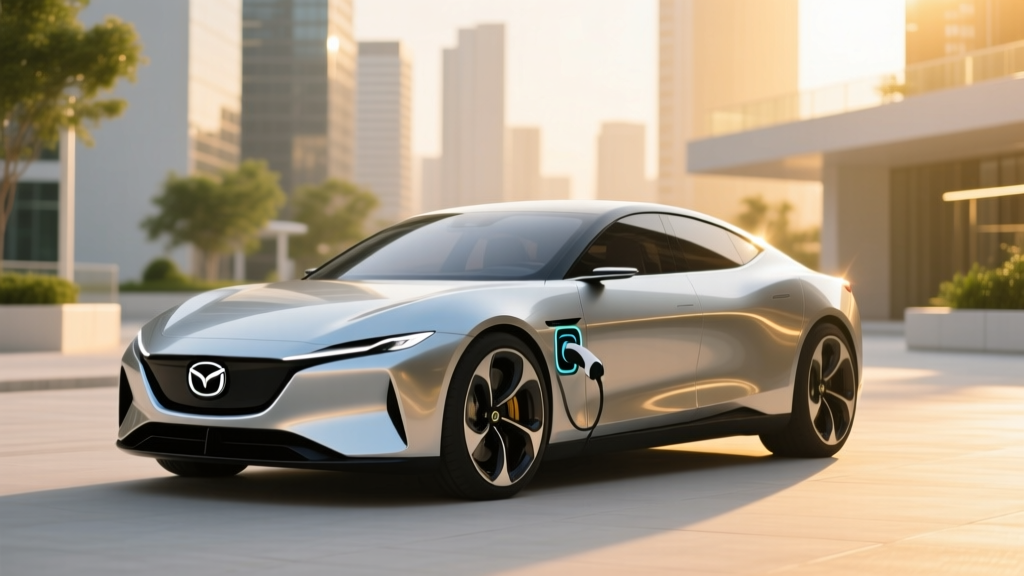
Quick Answer: As of early 2026, Mazda does not sell a fully electric (BEV) car in the U.S. market. The closest electrified option is the Mazda CX-70 PHEV (plug-in hybrid), offering an EPA-estimated 26 miles of electric-only range and 25 MPG combined once the battery depletes. If you're searching for a "Mazda EV car" expecting a pure battery-electric vehicle like a Tesla Model Y or Hyundai Ioniq 5, you'll need to wait for Mazda's next-generation BEVs (announced for the 2027–2028 timeframe) or consider a competing brand today. If a plug-in hybrid fits your commute, the CX-70 PHEV starts at $55,895 MSRP and may qualify for partial incentives depending on your tax situation.
The Current Mazda Electrified Lineup: What You Can Actually Buy
Mazda's approach to electrification has been more cautious than rivals like Hyundai, Kia, or Ford. Rather than rushing a dedicated EV platform to market, Mazda has focused on plug-in hybrid powertrains while developing its first ground-up battery-electric models. Here's what's available at U.S. dealerships as of the 2026 model year:
| Model | Type | EPA Electric Range | EPA MPG (Combined) | Battery (kWh) | Starting MSRP |
|---|---|---|---|---|---|
| Mazda CX-70 PHEV | Plug-in Hybrid (PHEV) | 26 miles | 25 MPG | 17.8 kWh (usable) | $55,895 |
| Mazda CX-90 PHEV | Plug-in Hybrid (PHEV) | 26 miles | 25 MPG | 17.8 kWh (usable) | $51,595 |
| Mazda MX-30 EV (discontinued) | Battery Electric (BEV) | 100 miles | 92 MPGe | 35.5 kWh | ~$34,000 (was) |
The MX-30 — Mazda's only dedicated EV — was sold in very limited numbers (California-only) and was discontinued after the 2023 model year due to its extremely short 100-mile EPA range, which made it uncompetitive. If you encounter one on the used market, understand what you're getting into before purchasing.
Mazda CX-70 PHEV Deep Dive: The Closest Thing to a Mazda EV
Since the CX-70 PHEV is the most practical electrified Mazda you can buy new in 2026, let's break down its real-world performance, charging characteristics, and ownership economics.
Range and Efficiency Reality Check
EPA Electric Range: 26 miles
Real-World Expectation: 20–24 miles on a full charge in mixed driving; as low as 16–18 miles in cold weather (below 30°F) or at sustained highway speeds above 70 mph.
After Battery Depletes: The 2.5L inline-4 engine takes over, delivering 25 MPG combined (EPA). Expect 22–24 MPG in real-world highway driving.
The 26-mile electric range covers a typical one-way commute for many drivers, but it's notably shorter than competitors. The Toyota RAV4 Prime offers 42 miles of electric range, and the Hyundai Tucson PHEV delivers 33 miles. If your round-trip commute exceeds 40 miles, you'll be burning gas for a significant portion of your drive.
Charging Speed and Infrastructure
| Charging Level | Power (kW) | Time to Full | Practical Notes |
|---|---|---|---|
| Level 1 (120V outlet) | ~1.4 kW | ~12–14 hours | Overnight only; impractical for daily use if you deplete the battery |
| Level 2 (240V, home wallbox) | ~3.3 kW (vehicle-limited) | ~5 hours | Best daily charging method; a basic 240V/16A circuit suffices |
| DC Fast Charging | Not supported | N/A | The CX-70 PHEV does not have a DC fast-charge port |
This is a critical limitation: no DC fast charging. The onboard charger maxes out at 3.3 kW, meaning even at a public Level 2 station, you're looking at hours to refill the small battery. For a PHEV with a 17.8 kWh battery, this is manageable — most owners charge overnight at home and never need public charging. But if you lack home charging access, a PHEV becomes significantly less convenient.
Powertrain Performance
The CX-70 PHEV pairs a 2.5-liter four-cylinder engine with an electric motor for a combined output of 323 horsepower and 369 lb-ft of torque. The 0–60 mph time is approximately 6.3 seconds, which is brisk for a two-row midsize SUV. Power delivery in EV mode is smooth and immediate, as expected from electric drive.
Cost Breakdown: Mazda CX-70 PHEV vs. Gas SUV vs. Competing EV
Let's compare the 5-year ownership cost of the CX-70 PHEV against a conventional gas midsize SUV (Toyota Highlander) and a comparable battery-electric SUV (Hyundai Ioniq 5) to understand where the Mazda stands financially.
| Cost Factor (5 Years) | Mazda CX-70 PHEV | Toyota Highlander (Gas) | Hyundai Ioniq 5 (BEV) |
|---|---|---|---|
| Purchase Price (MSRP) | $55,895 | $42,290 | $44,950 |
| Federal Tax Credit (§30D) | $0 (does not qualify) | $0 | Up to $7,500 (eligibility varies) |
| Effective Purchase Price | $55,895 | $42,290 | ~$37,450 |
| Fuel/Energy (5 yrs, 60K mi) | ~$4,800 | ~$8,500 | ~$3,200 |
| Maintenance (5 yrs) | ~$3,200 | ~$4,000 | ~$2,100 |
| Insurance (5 yrs est.) | ~$9,500 | ~$7,800 | ~$8,800 |
| 5-Year Total | ~$73,395 | ~$62,590 | ~$51,550 |
Assumptions: $3.50/gal gas, $0.14/kWh electricity, 12,000 mi/yr, national average insurance. Actual costs vary by state, driving habits, and utility rates. Tax credit eligibility per IRS §30D rules — consult a tax professional.
The CX-70 PHEV's higher purchase price and lack of federal tax credit eligibility put it at a significant cost disadvantage. Mazda's PHEVs currently do not meet the IRS battery-sourcing and critical-mineral requirements for the §30D credit, which is a major factor for price-sensitive buyers. Meanwhile, the Ioniq 5 — a true BEV with 300+ miles of range — can be substantially cheaper over five years when the tax credit applies.
Mazda EV vs. Gas vs. Hybrid: Which Makes Sense for You?
| Common Claim | Fact |
|---|---|
| "Mazda has a full electric car" | Not in the U.S. as of 2026. The MX-30 EV was discontinued after 2023 with only 100 miles of range. The CX-70/CX-90 are plug-in hybrids, not BEVs. |
| "PHEVs don't need charging" | You can drive a PHEV without ever plugging in, but you'll get worse fuel economy and pay more for the powertrain you're not using. A PHEV only saves money if you charge regularly. |
| "A PHEV is the best of both worlds" | Only if your commute is under the electric range AND you have home charging. Otherwise, you're carrying dead battery weight for reduced MPG. |
| "The CX-70 PHEV qualifies for a tax credit" | As of 2026, Mazda's PHEVs do not meet IRS §30D battery-component and critical-mineral sourcing requirements. Verify current eligibility at fueleconomy.gov. |
| "Mazda EVs charge fast" | The CX-70 PHEV's onboard charger is limited to 3.3 kW with no DC fast-charge capability. Full charges take ~5 hours on Level 2. |
EV vs. Gas vs. PHEV Efficiency Comparison
| Metric | Mazda CX-70 PHEV | Toyota Highlander (Gas) | Hyundai Ioniq 5 (BEV) |
|---|---|---|---|
| Electric-Only Range | 26 mi | 0 mi | 303 mi (Long Range) |
| MPG / MPGe | 25 MPG / N/A | 24 MPG combined | 114 MPGe combined |
| Cost Per Mile (energy) | ~$0.08 (electric) / ~$0.14 (gas) | ~$0.14 | ~$0.05 |
| CO₂ Emissions (tailpipe) | Low (EV mode) / Moderate (gas) | ~400 g/mi | 0 g/mi (tailpipe) |
| Home Charging Needed? | Strongly recommended | No | Essential for convenience |
What First-Time Mazda EV Buyers Should Know
If you're drawn to Mazda's design language and driving dynamics but want to go electric, here are the practical realities you need to confront before committing:
Home Charging Is Non-Negotiable for PHEV Value
The CX-70 PHEV's 26-mile electric range only delivers savings if you charge nightly. Without a 240V Level 2 home charger, you'll rely on a standard 120V outlet, which takes 12–14 hours for a full charge — barely enough to refill overnight if you've driven the battery down. A basic Level 2 home installation typically costs $800–$2,200 (equipment + electrician + permit), depending on your electrical panel capacity. If you live in an apartment or lack garage access, a PHEV's value proposition collapses.
Cold Weather Cuts Electric Range by 20–35%
The 17.8 kWh battery in the CX-70 PHEV is small, which means cold-weather losses hit harder. In sub-freezing temperatures, expect your 26-mile electric range to shrink to roughly 16–20 miles. The gasoline engine will activate sooner to provide cabin heat (the CX-70 PHEV lacks a dedicated heat pump for EV-mode heating). If you live in the upper Midwest or Northeast, plan for this reduction.
Mazda's Upcoming BEVs: What's Announced
Mazda has confirmed it will launch dedicated battery-electric vehicles on a new scalable platform, with the first models expected for the 2027–2028 model years. These are anticipated to include an electric crossover in the CX-60/CX-70 size range with an estimated 250–300+ miles of range. However, these are announced/preliminary — no final specs, pricing, or U.S. availability dates have been confirmed. If a true Mazda BEV is what you want, you'll need to wait or consider a competitor now.
Decision Framework: Should You Buy a Mazda Electrified Vehicle?
Buy the Mazda CX-70 PHEV if:
- Your daily round-trip commute is under 40 miles and you have reliable home Level 2 charging
- You prioritize Mazda's interior quality, driving dynamics, and styling over maximum electrification
- You take regular road trips and want the flexibility of a gas engine without range concerns
- You're not dependent on a federal tax credit to justify the purchase price
Wait for a future Mazda BEV if:
- You want a true zero-emission vehicle with 250+ miles of range
- You want DC fast charging for road trips
- You're targeting a $7,500 federal tax credit to bring the effective price down
Choose a competing EV today if:
- You need 300+ miles of range and DC fast charging now (Hyundai Ioniq 5, Kia EV6, Tesla Model Y)
- Federal tax credit eligibility is essential to your budget
- Your commute exceeds 40 miles round-trip and you want to drive entirely on electricity
- You want lower 5-year total cost of ownership
Battery Warranty and Long-Term Ownership
Mazda covers the CX-70 PHEV's high-voltage battery with an 8-year/100,000-mile warranty (10 years/150,000 miles in California and states that follow CARB standards). The warranty guarantees the battery will retain a minimum capacity threshold — typically 70% of original capacity — over the warranty period. For a PHEV with a 17.8 kWh battery, degradation is less of a concern than with a full BEV, since the battery undergoes shallower charge cycles. However, replacement cost for an out-of-warranty PHEV battery is estimated at $5,000–$8,000 based on industry averages for batteries of this size.
For reference, the Mazda CX-70 PHEV official page provides current trim details, and fueleconomy.gov lists the official EPA ratings.
Frequently Asked Questions
Does Mazda make a fully electric car in 2026?
No. Mazda does not currently sell a battery-electric vehicle (BEV) in the United States. The MX-30 EV was discontinued after 2023. The CX-70 and CX-90 are plug-in hybrids (PHEVs), not full EVs. Mazda has announced dedicated BEVs for the 2027–2028 timeframe, but final specs and availability are not confirmed.
How far can the Mazda CX-70 PHEV drive on electricity alone?
The EPA rates the CX-70 PHEV at 26 miles of electric-only range. In real-world driving, expect 20–24 miles in mild weather and 16–20 miles in cold conditions or at highway speeds.
Does the Mazda CX-70 PHEV qualify for the $7,500 federal tax credit?
As of 2026, the CX-70 PHEV does not qualify for the IRS §30D new clean vehicle credit due to battery-sourcing and critical-mineral requirements. Always verify current eligibility on fueleconomy.gov and consult a tax professional before purchasing.
Can I charge the CX-70 PHEV at a DC fast charger?
No. The CX-70 PHEV only supports Level 1 (120V) and Level 2 (240V) AC charging. Its onboard charger is limited to 3.3 kW, so a full charge on Level 2 takes approximately 5 hours.
Is a Mazda PHEV better than a Toyota RAV4 Prime?
The RAV4 Prime offers 42 miles of electric range vs. the CX-70's 26 miles, faster Level 2 charging (6.6 kW onboard charger), and a lower starting price (~$44,500 vs. $55,895). The CX-70 counters with a more premium interior and sportier driving dynamics. On pure electrification value, the RAV4 Prime wins decisively.
What will Mazda's first real EV cost?
Mazda has not announced pricing for its upcoming dedicated BEVs. Based on the segment (midsize electric crossover) and competitive positioning against vehicles like the Hyundai Ioniq 5 ($44,950) and Ford Mustang Mach-E ($42,995), expect a starting MSRP in the $45,000–$55,000 range when they arrive around 2027–2028.