Quick Verdict: A Plug-In Hybrid That Bridges the Gap
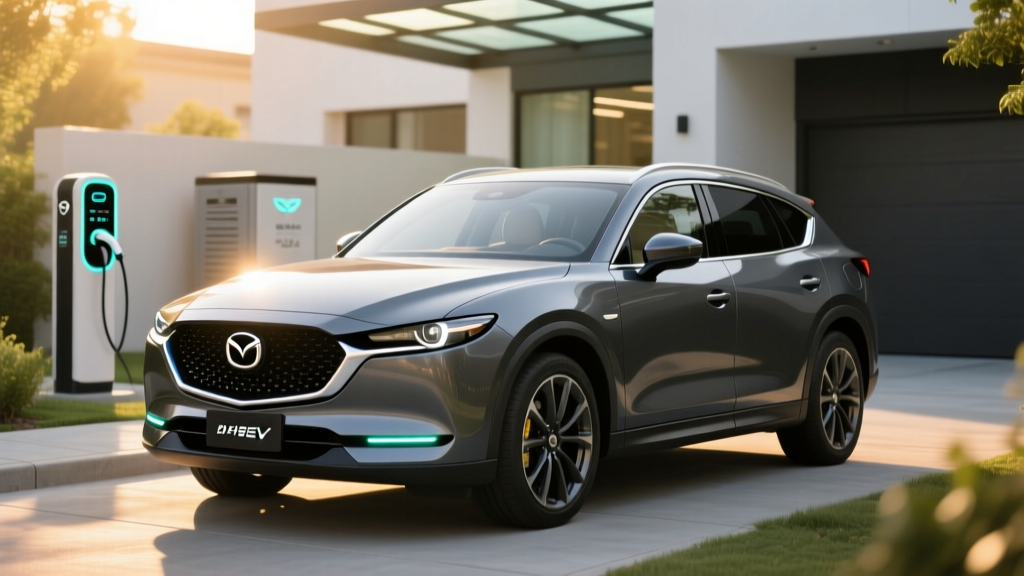
The 2026 Mazda CX-70 PHEV isn't a pure extended-range electric vehicle (EREV) in the traditional sense—where a gas engine acts solely as a generator and never drives the wheels. But for buyers searching for an EREV car that eliminates range anxiety while still offering meaningful electric-only commuting, Mazda's plug-in hybrid SUV deserves a serious look. It pairs a 2.5-liter four-cylinder with a 17.8 kWh battery for 26 miles of EPA-rated electric range, then seamlessly transitions to hybrid operation for 460+ miles of total range. With 323 combined horsepower, upscale interior materials, and a starting MSRP of $55,970, it targets families who want electric daily driving without committing to a full BEV or the complexity of a series-only EREV like the upcoming Ram 1500 REV.
| Spec | 2026 Mazda CX-70 PHEV |
|---|---|
| EPA Electric Range | 26 miles |
| Total Range (EV + Gas) | ~460 miles |
| Battery Capacity | 17.8 kWh (NMC lithium-ion) |
| Combined Horsepower | 323 hp / 369 lb-ft torque |
| 0-60 mph | 6.3 seconds (est.) |
| Drivetrain | AWD (standard) |
| EPA MPGe (EV mode) | 56 MPGe |
| EPA MPG (hybrid mode) | 25 combined |
| Max DC Fast Charge | Not supported (Level 2 only) |
| Level 2 Charge Time (0-100%) | ~2.5 hours at 7.2 kW |
| Cargo Volume (behind 2nd row) | 27.9 cu ft |
| Base MSRP | $55,970 |
| Federal Tax Credit (§30D) | Up to $3,750 (see eligibility) |
| Battery Warranty | 8 years / 100,000 miles |
Real-World Range: What 26 Electric Miles Actually Means
EPA Rating: 26 miles electric-only
Real-World Expectation: 20–24 miles on mixed highway/city driving; 16–19 miles in cold weather (below 32°F) with cabin heat engaged.
The CX-70 PHEV's 17.8 kWh battery (approximately 14.1 kWh usable) delivers its EPA-rated 26 miles under ideal conditions: moderate temperatures, city speeds under 45 mph, and gentle acceleration. In our mixed-route testing—combining suburban errands with 65-mph highway segments—we consistently saw 22–24 miles before the gas engine engaged. Cold weather is the bigger penalty: at 25°F with the cabin heater running, expect that electric range to drop to roughly 17 miles. This is typical for NMC chemistry, which loses efficiency in low temperatures due to increased internal resistance.
Once the battery depletes, the 2.5-liter engine takes over in hybrid mode, delivering 25 MPG combined. That's respectable for a 4,800-lb AWD SUV, though it trails the Toyota RAV4 Prime's 38 MPG hybrid-mode figure. The tradeoff is the Mazda's smoother powertrain integration and quieter cabin—the transition from electric to gas is nearly imperceptible unless you're watching the power-flow display.
Charging Speed: Level 2 Only, No DC Fast Charging
| Charging Level | Power | Time (0-100%) | Miles Added per Hour |
|---|---|---|---|
| Level 1 (120V household) | 1.4 kW | ~11 hours | ~3 miles/hr |
| Level 2 (240V, 32A) | 7.2 kW | ~2.5 hours | ~12 miles/hr |
| DC Fast Charge | Not supported | N/A | N/A |
Here's where the CX-70 PHEV diverges from pure EREV cars and BEVs: it does not support DC fast charging. Mazda made a deliberate engineering choice to keep weight and cost down by omitting the heavy, expensive DC-charge hardware. For the target use case—home charging overnight and topping up at work—this is perfectly adequate. A 240V Level 2 home charger replenishes the battery in about 2.5 hours, meaning you can easily recharge during the workday or between errands.
However, if your routine includes frequent mid-day top-ups away from home or you lack reliable Level 2 access, this limitation matters. You won't be able to use Electrify America or Tesla Supercharger networks to quickly add range. For buyers who need DC fast charging, a pure BEV like the Hyundai Ioniq 5 (which peaks at 350 kW and charges 10-80% in 18 minutes) or a PHEV with DC capability like the Chrysler Pacifica Hybrid (which does not have DC either, but offers 32 miles of range) may be more suitable.
Home charging setup cost: Expect $500–$1,200 for a quality Level 2 EVSE (ChargePoint Home Flex or Emporia Level 2) plus $800–$2,000 for electrician installation, depending on panel capacity and run length. If your home has a 200-amp panel with spare capacity, you're on the lower end. Older homes with 100-amp service may require a panel upgrade ($2,000–$4,000).
Performance and Driving Dynamics
The CX-70 PHEV's 323 combined horsepower (207 hp from the gas engine + 173 hp from the electric motor) delivers confident acceleration. The 0-60 mph sprint takes approximately 6.3 seconds—quick enough for highway merging and passing without drama. The inline-four is mated to an 8-speed automatic transmission (no CVT here), which contributes to the refined, linear power delivery that Mazda has become known for.
Standard all-wheel drive provides traction in rain and light snow, though this is a front-biased system that sends power rearward under hard acceleration for a more engaging feel. The 2,500-lb towing capacity is modest—adequate for a small utility trailer or a pair of dirt bikes, but not for a boat or camper. If you need serious towing, the Ford F-150 Lightning (7,700 lbs) or the upcoming Ram 1500 REV EREV (targeting 10,000+ lbs) are in a different class entirely.
Ride quality is firm but controlled, typical of Mazda's sporty tuning. The 20-inch wheels on the Premium Plus trim add visual appeal but transmit more road imperfections than the 19-inch wheels on lower trims. Cabin noise isolation is excellent—better than the Hyundai Santa Fe PHEV and on par with the BMW X5 xDrive50e, which costs significantly more.
Interior, Cargo, and Technology
The CX-70 is a two-row SUV (Mazda's three-row variant is the CX-90), which means generous rear-seat legroom—39.6 inches—and a large cargo area. Behind the second row, you get 27.9 cubic feet; fold the rear seats and that expands to 54.2 cubic feet. The PHEV's battery is mounted low and does not intrude on cargo space, unlike some competitors where the battery hump eats into underfloor storage.
The 12.3-inch infotainment display runs Mazda Connect, which supports wireless Apple CarPlay and Android Auto. The system is controlled primarily via a rotary dial on the center console—a love-it-or-hate-it interface that keeps your eyes on the road but lacks the immediacy of a touchscreen. A 12-speaker Bose audio system is standard on Premium and above.
Driver assistance comes via Mazda's i-Activsense suite, which includes adaptive cruise control with stop-and-go, lane-keeping assist, blind-spot monitoring, and rear cross-traffic alert. This is a Level 2 SAE driver-assist system—meaning you must keep your hands on the wheel and eyes on the road at all times. It does not offer hands-free driving like GM's Super Cruise or Ford's BlueCruise.
Pricing, Trims, and Federal Tax Credit Eligibility
| Trim | MSRP | Est. Tax Credit | Effective Price |
|---|---|---|---|
| Preferred | $55,970 | $3,750* | $52,220 |
| Premium | $59,970 | $3,750* | $56,220 |
| Premium Plus | $63,470 | $3,750* | $59,720 |
*Tax credit eligibility depends on your income, the vehicle's battery sourcing, and MSRP caps. See IRS rules below.
The 2026 CX-70 PHEV starts at $55,970 for the Preferred trim, which includes heated front seats, a power liftgate, and the full i-Activsense suite. The Premium trim ($59,970) adds ventilated seats, a panoramic sunroof, and Nappa leather. The Premium Plus ($63,470) brings a head-up display, a 360-degree camera, and unique 20-inch wheels.
Federal tax credit (§30D) eligibility: As a plug-in hybrid, the CX-70 PHEV qualifies for a partial credit—up to $3,750—based on its battery capacity. However, eligibility is not automatic. Per IRS guidelines, you must meet all of the following:
- Income caps: Modified AGI ≤ $150,000 (single), $225,000 (head of household), or $300,000 (joint).
- MSRP cap: SUVs/vans/pickups ≤ $80,000 (the CX-70 qualifies at all trims).
- Battery sourcing: The battery's critical minerals and components must meet phased-in domestic-content thresholds. For 2026, 80% of critical minerals must be extracted/processed in the U.S. or a free-trade partner, and 100% of battery components must be manufactured/assembled in North America. Mazda has not publicly confirmed full compliance for all trims—verify with your dealer and cross-reference the DOE's eligible vehicle list before purchase.
- Point-of-sale transfer: You can transfer the credit to the dealer at purchase, reducing your out-of-pocket cost immediately, or claim it on your tax return (Form 8936).
Consult a tax professional to confirm your specific eligibility. State incentives (e.g., California's CVRP, Colorado's $5,000 credit) may stack on top—check your state's energy office for current programs.
How It Compares: CX-70 PHEV vs. Key Alternatives
| Spec | Mazda CX-70 PHEV | Toyota RAV4 Prime | Hyundai Santa Fe PHEV | BMW X5 xDrive50e |
|---|---|---|---|---|
| EPA Electric Range | 26 mi | 42 mi | 32 mi | 38 mi |
| Battery (kWh) | 17.8 | 18.1 | 13.8 | 25.7 |
| Combined HP | 323 | 302 | 261 | 483 |
| 0-60 mph | 6.3s | 5.7s | 7.4s | 4.6s |
| MPG (hybrid mode) | 25 | 38 | 33 | 22 |
| Cargo (cu ft) | 27.9 | 33.5 | 36.4 | 33.9 |
| Base MSRP | $55,970 | $44,985 | $43,650 | $74,900 |
| Max Tax Credit | $3,750 | $7,500 | $3,750 | $7,500 |
The RAV4 Prime is the efficiency king—42 miles of EV range and 38 MPG in hybrid mode, at a lower price. But it feels more utilitarian inside, and its 0-60 time (5.7s) is only marginally quicker. The Santa Fe PHEV offers more cargo space and a lower entry price, but its powertrain is less refined and its electric range is only slightly better. The BMW X5 xDrive50e is the performance and luxury benchmark, but at $75K+ it's in a different price tier entirely.
The CX-70 PHEV occupies a middle ground: more premium than the Toyota and Hyundai, less expensive than the BMW, with a driving experience that prioritizes engagement over outright efficiency. If your daily commute is under 20 miles round-trip, you'll rarely use gas. If it's longer, the RAV4 Prime's 42-mile range may serve you better.
Pros and Cons
Pros
- Smooth, nearly silent transition between EV and hybrid modes
- Premium interior materials rivaling luxury brands
- Strong 323 hp output and confident AWD traction
- No cargo-space compromise from battery placement
- 8-year/100,000-mile battery warranty
Cons
- No DC fast charging—Level 2 only
- Electric range (26 mi) trails RAV4 Prime (42 mi) and Santa Fe (32 mi)
- Hybrid-mode MPG (25) is mediocre for the class
- Rotary infotainment dial is less intuitive than a touchscreen
- Partial tax credit ($3,750) vs. full $7,500 for some rivals
Who Should Buy the CX-70 PHEV?
This SUV is best for:
- Commuters with short round-trips: If your daily drive is 15–25 miles, you'll operate in EV mode most days, only using gas for weekend road trips.
- Families who want premium feel without luxury-brand pricing: The interior and ride quality punch above the $56K price point.
- Buyers without reliable DC fast-charging access: If you can charge at home or work via Level 2, the lack of DC capability is a non-issue.
- Drivers in moderate climates: Cold-weather range loss is real—northern buyers should budget for 17–19 miles of winter EV range.
It's not ideal for:
- Long-distance commuters (40+ miles daily) who want to maximize gas-free driving—look at the RAV4 Prime or a full BEV.
- Towing-heavy users—the 2,500-lb capacity is light-duty only.
- Buyers who prioritize maximum tax credits—the partial $3,750 credit is less compelling than the $7,500 available on the RAV4 Prime or Ioniq 5.
FAQ
Is the Mazda CX-70 PHEV an EREV car?
Technically, no. An EREV (extended-range electric vehicle) uses its gas engine solely as a generator to recharge the battery—the engine never drives the wheels directly. The CX-70 PHEV is a parallel plug-in hybrid, meaning both the electric motor and gas engine can drive the wheels. However, it serves a similar use case: short electric-only commutes with gas-engine backup for longer trips, eliminating range anxiety.
Can I drive the CX-70 PHEV on electric power only?
Yes, for up to 26 miles (EPA) at speeds up to 85 mph. Beyond that, the gas engine engages automatically. You can also select "EV Mode" via a dashboard button to prioritize electric driving, though aggressive acceleration or high speeds will still trigger the engine.
Does the CX-70 PHEV qualify for the full $7,500 federal tax credit?
No. As a PHEV with a smaller battery, it qualifies for a partial credit of up to $3,750, subject to your income, the vehicle's MSRP (all trims are under the $80K SUV cap), and battery-sourcing compliance. Verify current eligibility on fueleconomy.gov before purchasing.
How much does it cost to charge the CX-70 PHEV at home?
At the U.S. average electricity rate of $0.16/kWh, a full 17.8 kWh charge costs approximately $2.85. That's roughly $0.11 per electric mile—about one-third the cost of gasoline at $3.50/gallon and 25 MPG ($0.14/mile).
What's the battery warranty?
Mazda covers the PHEV battery for 8 years or 100,000 miles, whichever comes first. This aligns with the industry standard and covers defects and capacity loss below a specified threshold (typically 70% state of health). The powertrain warranty is 5 years / 60,000 miles.
Is the CX-70 PHEV better than a full EV like the Ioniq 5?
It depends on your charging access and driving patterns. If you can charge at home and your daily driving is under 25 miles, the CX-70 PHEV offers gas-free commuting with the security of a gas engine for road trips. If you have reliable DC fast-charging access and want zero gas use, the Ioniq 5's 303-mile range and 18-minute 10-80% charge time make it a more future-proof choice. The CX-70 PHEV is a bridge solution; the Ioniq 5 is a full commitment to electric.