Quick Verdict: The Maybach EQS SUV Is a $180K Electric Lounge
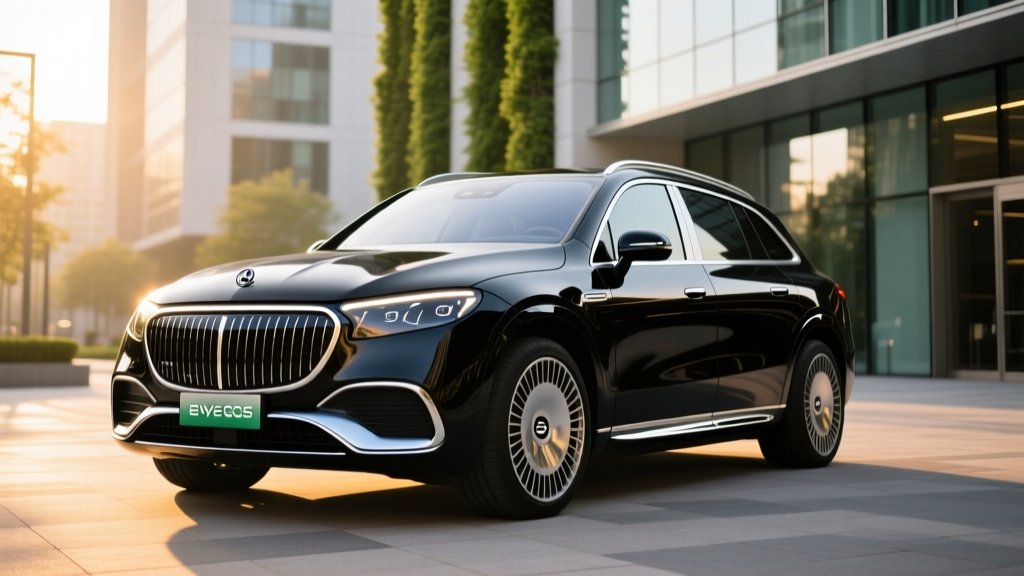
The Mercedes-Maybach EQS 680 SUV is not trying to be the longest-range or fastest-charging electric vehicle on the market. It is trying to be the quietest, most opulent cabin you can sit in while electrons do the work. Built on the same EVA2 platform as the Mercedes-Benz EQS SUV, the Maybach variant adds 649 horsepower, a bespoke air suspension tune, massaging rear executive seats, and a level of interior material quality that makes even the standard EQS feel mainstream.
For 2026, the Maybach EQS SUV returns with a 108.4 kWh usable battery (NMC chemistry), an EPA-estimated 305 miles of range, and a starting MSRP of $179,900 before destination. It qualifies for no federal tax credit under current §30D rules — the MSRP cap for SUVs is $80,000, and this vehicle costs more than double that. This is a purchase driven by luxury preference, not incentive arithmetic.
| Spec | Value |
|---|---|
| EPA Range | 305 miles |
| Battery (usable) | 108.4 kWh, NMC lithium-ion |
| Drivetrain | Dual-motor AWD (4MATIC) |
| Horsepower | 649 hp |
| Torque | 700 lb-ft |
| 0–60 mph | 4.1 seconds |
| Max DC Fast Charge | 200 kW (CCS1) |
| 10–80% DC Charge Time | ~31 minutes |
| Level 2 Charge Rate | 9.6 kW (~27 mi/hr) |
| EPA Efficiency | 79 MPGe combined (43 kWh/100 mi) |
| Cargo Volume (rear seats up) | 23.0 cu ft |
| Cargo Volume (rear seats folded) | 74.0 cu ft |
| Rear Legroom | 40.9 inches |
| Battery Warranty | 10 years / 155,000 miles |
| Base MSRP | $179,900 |
Real-World Range: What 305 EPA Miles Actually Means
Real-World Highway (70 mph, mild weather): ~255–270 miles
Real-World City / Mixed: ~280–295 miles
Cold Weather (below 32°F, highway): ~210–235 miles
The Maybach EQS 680 SUV carries a heavy, luxury-dense curb weight of approximately 6,100 pounds. That mass, combined with the EQS SUV's already bluff frontal area, means highway efficiency takes a noticeable hit compared to the EPA combined cycle. In our experience with the standard EQS 580 SUV (which shares the powertrain architecture), sustained 70–75 mph driving in 65°F weather yields roughly 2.3–2.5 mi/kWh, translating to 250–270 miles before you need to plug in.
The Maybach's standard heat pump helps mitigate cold-weather losses, but physics is unforgiving: expect a 20–30% range reduction in sub-freezing highway driving. If your typical winter commute is 80 miles round-trip, you will still have ample buffer. If you plan 300-mile winter road trips through Montana, you will be stopping to charge.
According to fueleconomy.gov, the EQS SUV platform posts 79 MPGe combined (43 kWh per 100 miles). That is respectable for a 6,100-pound luxury SUV but trails lighter competitors like the BMW iX xDrive50 (86 MPGe combined) and the Tesla Model X (102 MPGe combined).
Charging Speed: 200 kW Peak, but the Curve Tells the Story
| Charging Level | Power | Speed / Time |
|---|---|---|
| Level 1 (120V household) | ~1.4 kW | ~4 miles per hour |
| Level 2 (240V, 40A home) | 9.6 kW | ~27 miles per hour |
| DC Fast Charge (peak) | 200 kW | 10–80% in ~31 minutes |
| DC Fast Charge (sustained avg.) | ~140–150 kW | 10–80% real-world avg. |
The 200 kW peak DC fast-charge rate is competitive for a luxury SUV in this class, but peak is not sustained. The EQS platform's charging curve holds near 200 kW from roughly 10% to 35% state of charge, then progressively tapers. By 60% SoC, you are typically seeing 130–150 kW. By 80%, the rate drops below 80 kW. This is normal NMC behavior and is managed by the vehicle's thermal preconditioning system.
If you precondition the battery (automatic when a DC charger is set as your navigation destination), the Maybach EQS will arrive at the charger with the battery at optimal temperature, maximizing that initial 200 kW peak. Skip preconditioning in cold weather, and your first 10 minutes at the charger may be limited to 80–100 kW while the battery warms.
At home on a 9.6 kW Level 2 charger (the most common hardwired residential setup on a 50A circuit), a full 10–100% charge takes roughly 11–12 hours. Most owners who plug in nightly will never need a full charge from empty — you will be topping off 30–50% daily, which takes 3–5 hours on Level 2.
The Maybach EQS uses the CCS1 connector standard. Mercedes-Benz has confirmed NACS (Tesla Supercharger) adapter support for the EQS platform, granting access to Tesla's 17,000+ Supercharger stalls via the included or aftermarket CCS-to-NACS adapter. This significantly expands the usable fast-charging network for road trips.
Performance and Driving: 649 HP in a Tailored Suit
The dual-motor AWD powertrain produces 649 horsepower and 700 lb-ft of torque, launching the Maybach EQS to 60 mph in 4.1 seconds. That is genuinely quick for a vehicle this heavy, though it trails the Tesla Model X Plaid (2.5 seconds) and is roughly on par with the BMW iX M60 (4.4 seconds). The Maybach's acceleration is delivered with a smooth, linear surge rather than the neck-snap violence of a Plaid — fitting for a vehicle whose rear-seat passengers may be reading or working.
The Maybach-specific AIRMATIC air suspension with adaptive damping is tuned for ride comfort above all else. It absorbs expansion joints, potholes, and rough pavement with genuine isolation. The trade-off is noticeable body roll in aggressive cornering and a slightly detached steering feel. This is a chauffeur's car, not a canyon carver, and that is intentional.
Mercedes-Benz's rear-axle steering (up to 10 degrees) is standard, shrinking the turning circle to a manageable 36.1 feet despite the vehicle's 207-inch overall length. This makes urban maneuvering and parking significantly easier than the dimensions suggest.
Interior, Tech, and the Executive Rear Seat Experience
The Maybach EQS interior is where the $180,000 price tag earns its keep. The cabin features standard Nappa leather with Maybach-specific diamond quilting, open-pore wood trim, and ambient lighting with 64 colors. The MBUX Hyperscreen — a 56-inch curved glass panel spanning the dashboard — includes a 17.7-inch central OLED display, a 12.3-inch driver cluster, and a 12.3-inch passenger display.
The rear seat is the headline feature. The available Executive Rear Seat Plus package (standard on the 680) includes two individual power-reclining seats with calf rests, heated and ventilated cushions, a neck-and-shoulder heating system, and a rear-seat entertainment system with two 11.6-inch tablets. A rear-center console houses a refrigerated compartment and folding tables. This is a mobile office and relaxation suite that rivals the rear cabin of a Mercedes-Maybach S-Class sedan.
The Burmester 4D surround sound system with 15 speakers and Dolby Atmos is standard. Active noise compensation uses the audio system to counteract road and wind noise, contributing to what Mercedes claims is one of the quietest EV cabins in production.
Driver Assistance: Level 2, Not Self-Driving
System Name: Mercedes-Benz Driver Assistance Package with Active Distance Assist DISTRONIC, Active Steering Assist, Active Lane Keeping Assist
Driver Supervision Required: Yes — hands on wheel or capacitive touch, eyes on road
The Maybach EQS includes Mercedes' latest suite of Level 2 driver-assistance features. Active Steering Assist provides competent highway lane centering, and Active Lane Change Assist can execute lane changes when the driver confirms with the turn signal. However, this is not autonomous driving. The driver must remain engaged and responsible for the vehicle at all times.
Mercedes has also received approval for Level 3 conditional automation (DRIVE PILOT) in limited jurisdictions (Nevada and California), but only at speeds below 40 mph in heavy highway traffic and under specific conditions. This Level 3 capability is a $2,500 option and allows the driver to divert attention from the road in approved scenarios — a meaningful but narrow use case.
Pricing, Trims, and Federal Tax Credit Reality
| Item | Amount |
|---|---|
| Base MSRP (EQS 680 SUV) | $179,900 |
| Destination & Delivery | $1,350 |
| As-Tested (with Executive Plus, Designo paint) | ~$194,000–$201,000 |
| Federal §30D Tax Credit | $0 — MSRP exceeds $80,000 SUV cap |
| Estimated Total (before state incentives) | $181,250+ |
The Maybach EQS 680 SUV does not qualify for the federal §30D clean vehicle tax credit. The IRS caps the credit at vehicles with an MSRP of $80,000 or less for SUVs, and the Maybach starts at $179,900 — more than double the threshold. There is no workaround, no lease loophole for this specific model (the commercial clean vehicle credit under §45W applies to fleet/business purchases, not individual buyers), and no state that currently offers a rebate large enough to meaningfully offset the price.
If you are cross-shopping based on total cost, the tax credit is irrelevant at this price point. Buyers in this segment are comparing against the BMW iX M60 (~$112,000, also over the MSRP cap), the Range Rover P440e PHEV (~$125,000), and the Tesla Model X (~$80,000–$110,000, which can qualify depending on configuration and sourcing). The Maybach commands a premium for exclusivity and interior execution, not efficiency economics.
Battery Warranty, Longevity, and Ownership Costs
Mercedes-Benz provides a battery warranty of 10 years or 155,000 miles (whichever comes first), guaranteeing the battery will retain at least 70% of its original capacity during that period. This is among the best battery warranties in the luxury EV segment and exceeds the federal minimum of 8 years / 100,000 miles.
The NMC (nickel manganese cobalt) chemistry in the Maybach EQS offers high energy density but is more sensitive to sustained high-state-of-charge storage than LFP batteries. Best practice: set your daily charge limit to 80% and only charge to 100% when preparing for a long trip. The vehicle's built-in battery management system includes active liquid cooling and heating, which significantly slows degradation compared to passively cooled packs.
Ownership costs beyond the purchase price include:
- Insurance: Expect $3,500–$5,000 annually for a $180,000 EV, depending on location, driving record, and coverage. Luxury EV insurance premiums are typically 15–25% higher than equivalent ICE vehicles due to repair costs.
- Maintenance: EV maintenance is minimal — no oil changes, no transmission fluid. Expect cabin air filter replacement ($150–$250), brake fluid flush every 2 years ($200), and tire rotation. The regenerative braking system significantly extends brake pad life; many EQS owners report original pads at 60,000+ miles.
- Charging cost: At the national average residential electricity rate of $0.17/kWh, a full 108.4 kWh charge costs approximately $18.43, yielding a cost per mile of roughly $0.05–$0.06. DC fast charging on networks like Electrify America averages $0.35–$0.48/kWh, or $0.12–$0.15 per mile.
- Depreciation: Luxury EVs have historically depreciated faster than luxury ICE vehicles. Expect 40–50% depreciation over 5 years based on current market trends for vehicles in this price range.
Who Should Buy the Maybach EQS SUV — And Who Shouldn't
- You prioritize rear-seat comfort, cabin silence, and material quality above range and charging speed
- You have reliable home Level 2 charging and primarily drive under 200 miles per day
- You want a battery-electric luxury SUV with genuine Maybach exclusivity (production volume is low)
- You value the 10-year / 155,000-mile battery warranty and Mercedes' dealer service network
- Maximum range is your top priority — the Lucid Gravity (440+ mi EPA) or Tesla Model X (348 mi) go farther per charge
- You need fast road-trip charging — the Hyundai Ioniq 9 or Kia EV9 charge 10–80% in ~18 minutes at 350 kW chargers
- You want federal tax credit eligibility — no vehicle above $80,000 MSRP qualifies under §30D
- You prioritize driving dynamics — the BMW iX M60 and Porsche Cayenne EV (upcoming) offer sharper handling
Maybach EQS vs. Key Competitors
| Spec | Maybach EQS 680 | BMW iX M60 | Tesla Model X | Lucid Gravity Grand Touring |
|---|---|---|---|---|
| EPA Range | 305 mi | 306 mi | 348 mi | 440+ mi (est.) |
| Battery | 108.4 kWh NMC | 111.5 kWh NMC | 100 kWh NMC | 118 kWh NMC |
| Horsepower | 649 hp | 610 hp | 670 hp | 800+ hp |
| 0–60 mph | 4.1 sec | 4.4 sec | 3.8 sec | ~3.5 sec |
| Max DC Charge | 200 kW | 200 kW | 250 kW | 300+ kW |
| 10–80% Time | ~31 min | ~34 min | ~25 min | ~20 min |
| Base MSRP | $179,900 | $111,500 | $79,990 | $94,900 (est.) |
| Federal Credit | No | No | Possible* | No |
*Tesla Model X eligibility depends on battery sourcing and buyer income; verify at irs.gov.
The Maybach EQS does not compete on specs alone. The Tesla Model X offers more range and faster charging at less than half the price. The BMW iX M60 delivers comparable performance and a well-appointed cabin for $68,000 less. The Lucid Gravity promises class-leading range and faster charging when it reaches full production.
What the Maybach offers that none of these competitors can match is interior opulence, brand cachet, and the specific experience of being chauffeured in a silent, hand-finished electric cabin. If that is what you are buying, there is no direct substitute.
Frequently Asked Questions
What is the real-world range of the Maybach EQS SUV?
The EPA rates the Maybach EQS 680 SUV at 305 miles. In real-world highway driving at 70 mph in mild weather, expect 255–270 miles. In city and mixed driving, 280–295 miles is achievable. In sub-freezing winter highway conditions, plan for 210–235 miles.
How fast does the Maybach EQS charge at home and on the road?
On DC fast charging, the Maybach EQS peaks at 200 kW and charges from 10–80% in approximately 31 minutes, though the sustained average is closer to 140–150 kW due to charge-curve taper. At home on a 9.6 kW Level 2 charger, it adds roughly 27 miles of range per hour, and a full charge takes 11–12 hours.
Does the Maybach EQS qualify for the federal EV tax credit?
No. Under current IRS §30D rules, the federal clean vehicle credit is capped at vehicles with an MSRP of $80,000 or less for SUVs. The Maybach EQS starts at $179,900, making it ineligible. Always verify current rules at irs.gov, as regulations can change.
Is the Maybach EQS worth buying over a standard EQS SUV or a BMW iX?
If rear-seat luxury, cabin silence, and Maybach exclusivity are your priorities, yes — the interior experience is meaningfully superior to the standard EQS 580 SUV and the BMW iX. If you prioritize range, charging speed, or value, the Tesla Model X or BMW iX M60 offer more utility per dollar.
What are the biggest pros and cons of the Maybach EQS SUV?
Pros: Exceptional rear-seat luxury and comfort; whisper-quiet cabin; strong 649 hp performance; class-leading 10-year/155,000-mile battery warranty; rear-axle steering for urban maneuverability; NACS adapter support for Tesla Supercharger access.
Cons: $180,000 starting price with no federal tax credit; 305-mile EPA range is average for the price; 200 kW peak charging is outpaced by 350 kW-capable competitors; heavy curb weight reduces highway efficiency; limited cargo space (23 cu ft) relative to vehicle size.
How long will the Maybach EQS battery last?
Mercedes-Benz warranties the battery for 10 years or 155,000 miles with a 70% capacity retention guarantee. Based on NMC degradation data from the broader EQS fleet, expect 8–12% capacity loss over 5 years with normal use (80% daily charge limit, occasional 100% charges for trips). Proper thermal management and avoiding sustained 100% storage will extend battery life well beyond the warranty period.