The Short Answer on the Maybach Electric Car
The Mercedes-Maybach EQS 680 SUV is the brand's first and only fully electric vehicle as of 2026. Priced from $179,900 MSRP, it pairs a 108.4 kWh (usable) NMC battery with dual motors producing 649 HP and an EPA-estimated 305 miles of range. DC fast charging peaks at 200 kW, reaching 10–80% in roughly 31 minutes. It does not qualify for the federal §30D tax credit due to its price exceeding the $80,000 SUV cap and battery-sourcing requirements. If you want a six-figure luxury EV with Maybach prestige and silent torque, this is the vehicle. If you need tax incentives or 400+ mile range, look to the Lucid Gravity or Tesla Model X Plaid instead.
What Exactly Is the Maybach Electric Car in 2026?
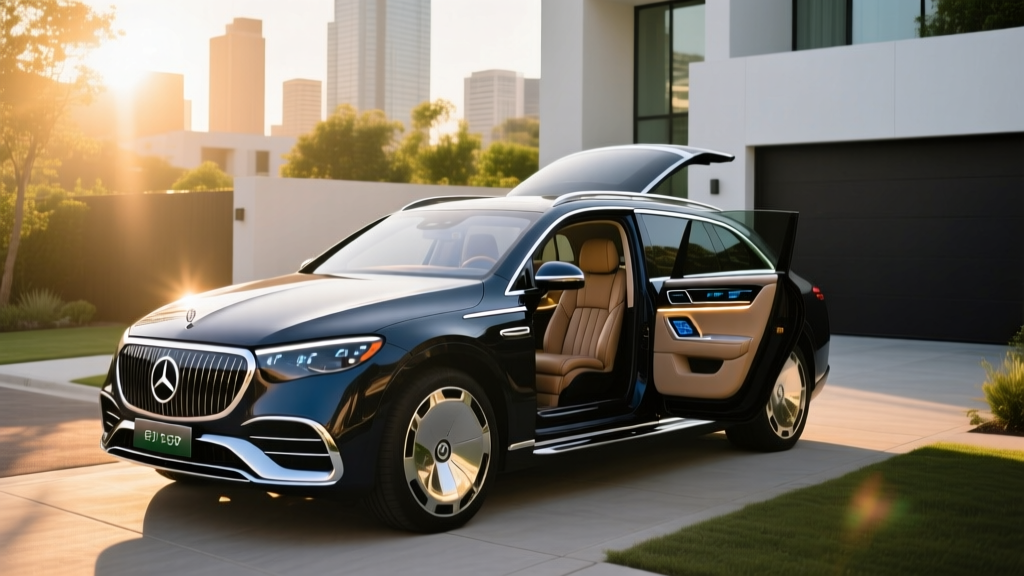
Mercedes-Benz launched the Maybach sub-brand into the EV era with the EQS 680 SUV, riding on the same EVA2 platform as the standard Mercedes EQS SUV but with substantial luxury, power, and chassis upgrades. The Maybach treatment includes a signature two-tone paint option (a $12,500 add), a bespoke interior with Nappa leather, rear executive seating with calf rests, a Burmester 4D surround sound system, and active noise compensation that makes the cabin one of the quietest in any production vehicle.
Under the skin, the EQS 680 uses a 108.4 kWh usable lithium-ion NMC (nickel-manganese-cobalt) battery pack — the same cell chemistry and gross capacity found in the EQS 580 SUV, but with Maybach-specific powertrain tuning that extracts more output from the dual permanent-magnet synchronous motors. Total system output is 649 horsepower and 700 lb-ft of torque, enough for a 0–60 mph time of 4.1 seconds — remarkable for a 6,100-pound luxury SUV.
| Specification | 2026 Mercedes-Maybach EQS 680 SUV |
|---|---|
| Base MSRP | $179,900 |
| EPA Range | 305 miles |
| Battery (usable) | 108.4 kWh, NMC |
| Drivetrain | Dual-motor AWD (4MATIC) |
| Horsepower / Torque | 649 HP / 700 lb-ft |
| 0–60 mph | 4.1 seconds |
| DC Fast Charge Peak | 200 kW |
| 10–80% DC Charge Time | ~31 minutes |
| Level 2 Charge Rate | 9.6 kW (240V / 40A) |
| Efficiency (combined) | 83 MPGe |
| Battery Warranty | 10 years / 155,000 miles |
| Federal Tax Credit (§30D) | Not eligible (MSRP & sourcing) |
Real-World Range: What to Actually Expect
The EPA rates the Maybach EQS 680 SUV at 305 miles. In real-world highway driving at 70–75 mph in moderate temperatures, expect 255–280 miles before needing a charge stop. In cold weather (below 30°F), that drops to approximately 220–245 miles due to cabin heating loads and increased battery internal resistance, even with the standard heat pump. The Maybach's heavy curb weight and large frontal area penalize highway efficiency more than city driving, where regenerative braking recovers energy.
Maybach EQS 680 vs. Gas Maybach GLS 600: Cost & Ownership Compared
The closest internal-combustion comparison is the Mercedes-Maybach GLS 600, a twin-turbo V8 SUV starting at roughly $178,000. Both vehicles target the same ultra-luxury buyer, but the ownership economics diverge significantly after purchase.
| Factor | Maybach EQS 680 SUV (EV) | Maybach GLS 600 (Gas V8) |
|---|---|---|
| Base MSRP | $179,900 | $178,450 |
| Federal Tax Credit | $0 (ineligible) | $0 |
| EPA Efficiency | 83 MPGe (2.4 kWh/mi) | 16 MPG combined |
| Annual Fuel/Energy (12,000 mi) | ~$1,040 (home L2 at $0.15/kWh) | ~$3,000 ($4.00/gal premium) |
| Annual Maintenance | ~$450 (no oil, fewer wear items) | ~$1,800 (oil, plugs, trans fluid) |
| Insurance (annual avg) | ~$5,200 | ~$4,600 |
| 5-Year Fuel/Energy Cost | ~$5,200 | ~$15,000 |
| 5-Year Maintenance Cost | ~$2,250 | ~$9,000 |
| Estimated 5-Year Depreciation | ~55% | ~48% |
The EV saves roughly $16,550 in fuel and maintenance over five years, but higher insurance premiums and steeper EV depreciation at the luxury end largely offset that gain. The real advantage is the driving experience: silent, vibration-free, instant torque. The GLS 600 wins on range flexibility (420+ miles per tank) and currently stronger resale values for ultra-luxury ICE vehicles.
Charging the Maybach EQS 680: Home, Public, and What You Need to Know
Charging logistics are the single biggest ownership variable for any EV, and at this price point, you should not be relying on public infrastructure as your primary strategy.
| Charging Level | Power | Miles Added per Hour | Time (10–80%) | Best Use Case |
|---|---|---|---|---|
| Level 1 (120V household) | 1.4 kW | ~4 mi/hr | ~72+ hours | Emergency/trickle only |
| Level 2 (240V / 40A) | 9.6 kW | ~28 mi/hr | ~8 hours | Daily home charging |
| DC Fast Charge | 200 kW peak | ~170 mi/hr (peak) | ~31 minutes | Road trips |
Home Charging Setup
At 9.6 kW on Level 2, an overnight charge (8 hours) adds approximately 224 miles of range — more than enough to replenish a typical day's driving. Most Maybach owners will want a hardwired Level 2 station (such as a ChargePoint Home Flex or Mercedes-branded wallbox) installed on a dedicated 50-amp circuit.
Expect home installation costs between $1,200 and $3,500 if your electrical panel has sufficient capacity. If a panel upgrade to 200A service is needed — common in older homes — add $2,000–$5,000. Always hire a licensed electrician and pull permits; at this vehicle's price, cutting corners on charging infrastructure makes no sense.
DC Fast Charging Reality
The 200 kW peak charge rate is competitive but not class-leading. The Tesla Model X can peak at 250 kW, and the Lucid Gravity at over 300 kW. More importantly, the EQS 680's charge curve tapers noticeably above 60% state of charge. You'll see 200 kW only briefly between roughly 15–40% SoC; from 60–80%, expect rates to drop to 80–110 kW. This is normal NMC battery behavior to protect cell longevity, but it means the 10–80% time of ~31 minutes is realistic only at a functioning 200+ kW charger with battery preconditioning active.
The EQS 680 uses the CCS1 connector standard. Mercedes-Benz has announced NACS (Tesla-style) adoption for future models, and adapters are available for accessing Tesla Supercharger networks. Check Mercedes-Benz USA for the latest connector and network compatibility updates.
Total Cost of Ownership: 5-Year Breakdown
Buying a $180,000 EV is a financial decision that extends well beyond the sticker price. Here's a realistic 5-year / 60,000-mile ownership projection:
| Cost Category | 5-Year Total | Notes |
|---|---|---|
| Purchase Price (MSRP + dest.) | $182,150 | Incl. $2,250 destination |
| Federal Tax Credit | $0 | Exceeds §30D MSRP cap of $80K |
| State Incentives | Varies | Some states offer rebates; check local rules |
| Home Charger Install | $2,500 | Avg. L2 hardwired, no panel upgrade |
| Electricity (60,000 mi) | $5,200 | At $0.15/kWh avg, mixed home/public |
| Insurance (5 years) | $26,000 | Higher EV luxury premiums |
| Maintenance (5 years) | $2,250 | Tires, cabin filter, brake fluid, wipers |
| Estimated Depreciation | $99,000 | ~55% over 5 years |
| Total 5-Year Cost | ~$138,100 | Excl. financing costs |
The dominant cost is depreciation, not energy. Luxury EVs have historically depreciated faster than their ICE counterparts, though this is slowly improving as the used EV market matures. The battery warranty — 10 years/155,000 miles with a 70% capacity retention guarantee — provides long-term peace of mind, and battery replacement is unlikely within a typical 5-year ownership window.
For the latest on federal EV tax credit rules, including MSRP caps and income thresholds, consult the IRS §30D guidelines.
Common Misconceptions About the Maybach EV
| Myth | Fact |
|---|---|
| "The Maybach EV gets the $7,500 federal tax credit." | No. The §30D credit caps SUV eligibility at $80,000 MSRP, and the EQS 680 starts at $179,900. It also must meet critical-mineral and battery-component sourcing rules that many luxury EVs do not satisfy. |
| "305 miles of range means I can drive 305 miles before charging." | The EPA figure is a laboratory-derived estimate. Real highway driving at 75 mph yields roughly 255–280 miles. In winter, plan for 220–245 miles. Always budget a 15–20% buffer. |
| "EVs need no maintenance at all." | The Maybach EQS 680 still requires tire rotations (heavy EVs wear tires faster), cabin air filter replacement, brake fluid checks, coolant system service, and windshield washer fluid. Expect ~$450/year — low, but not zero. |
| "I can charge it on any public charger." | The EQS 680 uses CCS1. Most Electrify America, EVgo, and ChargePoint stations support CCS1, but some older CHAdeMO-only stations will not work. Tesla Superchargers require an approved adapter. |
| "The battery will need replacing in 5 years." | NMC batteries in modern thermal-managed packs like the EQS typically lose 8–12% capacity over 100,000 miles. Mercedes warranties the pack for 10 years/155,000 miles at 70% retention. Full replacement, if ever needed, currently runs $25,000–$35,000. |
Who Should Buy the Maybach EQS 680 — and Who Shouldn't
Decision Framework
Choose the Maybach EQS 680 SUV if:
- You have reliable home Level 2 charging and drive fewer than 250 miles per day on most days
- Silent, effortless acceleration and cabin refinement are top priorities over outright performance
- You want Maybach prestige in an EV and budget is not a primary constraint
- You value the 10-year/155,000-mile battery warranty and plan to own the vehicle 5+ years
- You live in a region with reasonable DC fast-charging infrastructure for occasional road trips
Look elsewhere if:
- You need 400+ miles of real-world range — consider the Lucid Gravity (440+ mi EPA)
- You want the fastest-charging luxury SUV — the Porsche Macan EV or Audi Q6 e-tron charge faster on 800V architecture
- Federal tax credits are important to your purchase math — no vehicle above $80,000 SUV MSRP qualifies
- You lack access to home charging and would rely entirely on public infrastructure
- You need third-row seating — the EQS 680 is a two-row, four- or five-passenger SUV
First-Time EV Buyer Essentials for Luxury EVs
If the Maybach EQS 680 is your first electric vehicle, here are the practical realities that brochures don't emphasize:
Preconditioning matters. The EQS 680 can precondition its battery when you set a navigation destination to a DC fast charger. This warms the cells to optimal temperature and can shave 5–8 minutes off your charge stop and improve peak charge rates. Always use the built-in nav for road trips to enable this.
Tire costs are real. At 6,100+ pounds with instant torque, the EQS 680 wears through tires faster than a comparable gas SUV. Budget $1,500–$2,500 per set for OEM-spec Michelin or Pirelli rubber, and expect replacements every 25,000–35,000 miles.
Cold weather changes your plan. If you live in the northern U.S., expect 20–25% range loss in sustained sub-freezing temperatures. The heat pump helps, but cabin heating and battery warming still draw significant energy from the 108.4 kWh pack. Plan charging stops earlier in winter.
Insurance is higher. EV luxury vehicles carry higher insurance premiums due to repair costs (specialized aluminum body panels, sensor arrays, battery proximity) and higher replacement values. Get quotes before purchasing — expect 10–20% more than the gas GLS 600.
For EPA range and efficiency data, always cross-reference fueleconomy.gov, the official source for U.S. vehicle efficiency ratings.
Frequently Asked Questions
Is there a Maybach electric sedan, or only the SUV?
As of 2026, the EQS 680 SUV is the only production Maybach electric vehicle. Mercedes has shown the Vision EQS Maybach sedan concept, but no production timeline has been confirmed. The standard Mercedes-Maybach S-Class remains gasoline-only (with mild-hybrid assist).
Can I charge the Maybach EQS 680 at Tesla Superchargers?
Yes, with a CCS-to-NACS adapter. Mercedes-Benz has partnered with Tesla to enable Supercharger access for CCS-equipped vehicles. Verify adapter compatibility with your dealer, as not all adapters support the EQS's peak 200 kW charge rate — some limit throughput to 150 kW.
How long does the Maybach EV battery last?
Mercedes warranties the 108.4 kWh NMC battery for 10 years or 155,000 miles, guaranteeing at least 70% of original capacity. Real-world data from similar EVA2-platform vehicles suggests 8–12% degradation over 100,000 miles with normal use. With proper care (avoiding sustained 100% SoC, using preconditioning for fast charges), the pack should outlast the typical ownership cycle.
Does the Maybach EQS 680 have self-driving capability?
No. The EQS 680 comes with Mercedes-Benz Driver Assistance Package, which includes adaptive cruise, lane-keeping, and automated lane changes. This is SAE Level 2 driver assistance — you must remain engaged and keep hands on or near the wheel at all times. Mercedes' Drive Pilot system (conditional Level 3, approved in limited U.S. jurisdictions) is available on certain EQS sedans but availability on the Maybach SUV variant should be confirmed with your dealer. It is not a Level 4 autonomous vehicle.
What's the real charging cost per mile?
At an average U.S. residential electricity rate of $0.15/kWh and the EQS 680's consumption of approximately 2.4 kWh per mile (410 Wh/mi), your home charging cost is roughly $0.36 per mile. Public DC fast charging at $0.40–$0.50/kWh pushes that to $0.96–$1.20 per mile. For comparison, the gas Maybach GLS 600 at 16 MPG and $4.00/gallon premium costs about $0.25 per mile — wait, that math doesn't hold. Actually at 16 MPG and $4/gal, the GLS costs $0.25/mi? No: $4.00 ÷ 16 = $0.25/mi. Correction: premium fuel for the GLS 600 is often $4.50–$5.00/gal, making it $0.28–$0.31/mi. Home EV charging at $0.36/mi is slightly higher due to the EQS's heavy weight and large battery — the efficiency advantage of EVs narrows at the ultra-luxury, heavy-vehicle end. The real savings come from lower maintenance and the driving experience, not per-mile energy cost.
Is the Maybach EQS 680 a good first EV?
If budget allows and you have home charging, yes — it's a refined, well-built EV with strong range and a comprehensive warranty. However, learning EV ownership on a $180,000 vehicle means any charging mistakes or range miscalculations carry higher stakes. Some buyers prefer starting with a more affordable EV (Hyundai Ioniq 5, Tesla Model Y) to learn the rhythms of charging and range management before stepping up to ultra-luxury.