Quick Answer: Is the Maybach Electric SUV Worth It in 2026?
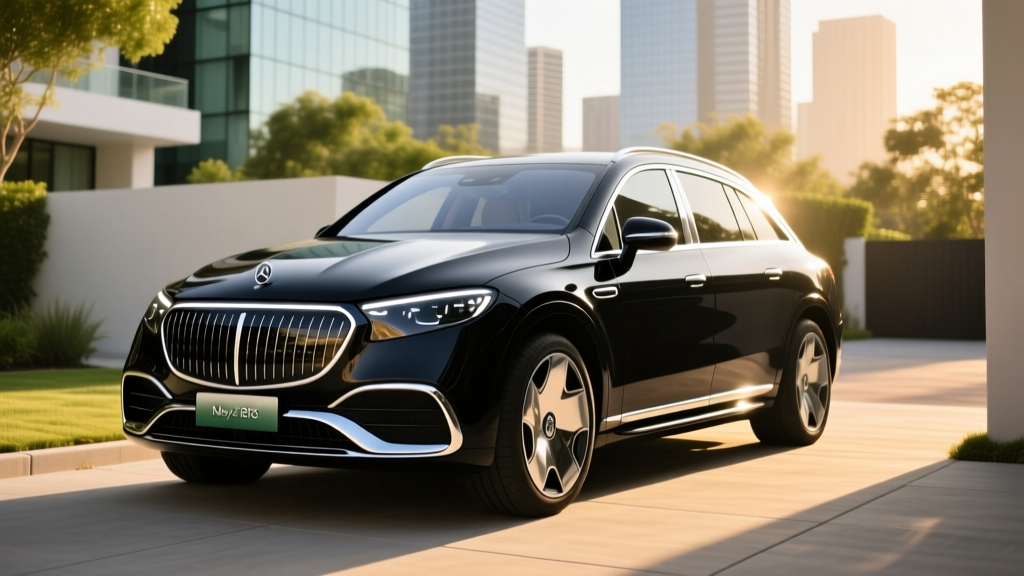
The Mercedes-Maybach EQS 680 SUV is a $181,050+ ultra-luxury electric vehicle with an EPA-estimated 280 miles of range, a 118 kWh (usable) NMC battery, peak DC fast charging at 200 kW (10–80% in ~31 minutes), and 649 horsepower delivering a 0–60 mph time of 4.1 seconds. Compared to the gas-powered Maybach GLS 600 ($175,000+), the electric Maybach trades some highway range certainty for near-silent propulsion, lower per-mile energy costs, and zero tailpipe emissions — but demands reliable access to Level 2 home charging and acceptance of cold-weather range loss (~15–25%). Federal §30D tax credit eligibility is unlikely due to MSRP caps ($80,000 SUV limit) and battery sourcing requirements.
Maybach Goes Electric: The EQS 680 SUV Explained
Mercedes-Benz has extended its Maybach ultra-luxury sub-brand into the electric era with the EQS 680 SUV, built on the same EVA2 platform as the Mercedes-Benz EQS SUV but with substantially upgraded materials, rear-seat executive accommodations, and bespoke Maybach styling. For the 2026 model year, the EQS 680 SUV remains the sole Maybadth electric vehicle available in the U.S., though Mercedes has announced a Maybach EQS sedan variant and a next-generation electric GLS (expected 2027–2028) built on the new MB.EA platform.
This is not a mass-market EV. It targets buyers who would otherwise consider a Bentley Bentayga Hybrid, a Rolls-Royce Cullinan, or the gas Maybach GLS 600 — and who want the refinement of electric drivetrain isolation in a chauffeur-friendly package. The question isn't whether it's practical; it's whether the electric powertrain enhances or complicates the Maybach ownership experience.
Range, Battery, and Charging: The Numbers That Matter
| Specification | 2026 Maybach EQS 680 SUV |
|---|---|
| EPA Range (est.) | 280 miles |
| Real-World Highway Range | ~230–250 miles |
| Real-World Cold Weather (20°F) | ~200–220 miles |
| Battery Capacity (Usable) | 118 kWh, NMC chemistry |
| Peak DC Fast Charge Rate | 200 kW |
| 10–80% DC Fast Charge Time | ~31 minutes |
| Level 2 Charging (11 kW onboard) | ~11 hours (0–100%) |
| Efficiency (MPGe combined, est.) | 82 MPGe |
| Connector | CCS1 (NACS adapter available) |
Real-World Range Reality: The EPA estimate of 280 miles assumes mixed driving. On sustained highway trips at 75 mph, expect 230–250 miles before needing a charge. In freezing temperatures (20°F or below), cabin heating and battery thermal management can reduce range to 200–220 miles. The Maybach's heavy curb weight (~6,300 lbs) and luxury-oriented aero profile work against highway efficiency compared to lighter, sleeker EVs.
The 200 kW peak charge rate is competitive for this segment but not class-leading. The charge curve tapers significantly above 80% State of Charge (SoC) to protect the NMC battery — a typical session from 80–100% can add another 25+ minutes. For road trips, plan stops around the 10–80% window for the fastest turnaround. Preconditioning the battery (automatic when a DC fast charger is set as the navigation destination) is essential for achieving peak charge speeds in cooler weather.
Performance and Powertrain
The EQS 680 SUV uses a dual-motor all-wheel-drive setup producing 649 horsepower and 700 lb-ft of torque. The 0–60 mph sprint takes 4.1 seconds — brisk for a 6,300-lb luxury barge, though not sports-car territory. The power delivery is characteristically Maybach: smooth, effortless, and tuned for passenger comfort rather than aggressive acceleration.
Regenerative braking offers multiple levels, selectable via steering-wheel paddles, including a near-one-pedal driving mode. However, unlike some competitors, the Maybach does not default to strong regen — it prioritizes the coasting feel traditional luxury car buyers expect.
Maybach Electric vs. Gas Maybach GLS 600: Cost and Experience Comparison
| Factor | Maybach EQS 680 SUV (Electric) | Maybach GLS 600 (Gas V8) |
|---|---|---|
| Base MSRP | $181,050 | $175,900 |
| Powertrain | Dual-motor AWD, 649 hp | 4.0L V8 Biturbo + 48V mild hybrid, 550 hp |
| 0–60 mph | 4.1 sec | 4.8 sec |
| EPA Range / Fuel Economy | 280 mi / 82 MPGe | ~15 mpg combined (330 mi on 22-gal tank) |
| "Fuel" Cost per Mile | ~$0.05–$0.07 (home L2 at $0.16/kWh) | ~$0.24 (premium at $4.20/gal) |
| Annual Fuel/Energy (12K mi) | ~$600–$840 | ~$2,880 |
| Annual Maintenance (est.) | ~$400–$600 | ~$1,200–$1,800 |
| Noise/Vibration | Near-silent at low speed, minimal vibration | V8 rumble, more NVH at idle |
| Refueling/Recharge Time | ~11 hrs (L2 home), ~31 min (DC 10–80%) | ~5 min (gas station) |
| Federal Tax Credit (§30D) | Not eligible (MSRP exceeds $80K cap) | N/A |
The per-mile energy savings are substantial — roughly $2,000+ annually at 12,000 miles driven. However, at this price point, fuel savings are a minor percentage of total ownership cost. The real advantage of the electric Maybach is drivetrain refinement: the absence of engine noise and vibration aligns perfectly with Maybach's isolation-focused luxury philosophy. The trade-off is range planning on long trips and dependence on home Level 2 charging infrastructure.
Total Cost of Ownership: 5-Year Breakdown
| Cost Category (5 Years / 60K Miles) | Maybach EQS 680 SUV | Maybach GLS 600 (Gas) |
|---|---|---|
| Purchase Price (base) | $181,050 | $175,900 |
| Federal Tax Credit | $0 (MSRP cap) | $0 |
| Energy/Fuel | ~$3,500 | ~$14,400 |
| Maintenance | ~$2,500 | ~$7,500 |
| Insurance (est. avg/yr × 5) | ~$27,500 | ~$24,000 |
| Depreciation (est. 55%) | ~$99,578 | ~$96,745 |
| Estimated 5-Year Total | ~$314,128 | ~$318,545 |
Insurance costs are typically 10–15% higher for EVs in this segment, driven by expensive parts, specialized repair networks, and high battery replacement costs. Depreciation is the single largest expense for both vehicles; ultra-luxury EVs have historically depreciated steeply, though Maybach badge equity may provide some residual support. According to IRS §30D rules, the EQS 680 SUV does not qualify for the federal tax credit because its MSRP far exceeds the $80,000 SUV cap, and battery critical-mineral sourcing requirements add further restrictions.
Real-World Ownership: What First-Time Luxury EV Buyers Must Know
Home Charging Is Non-Negotiable
At this price tier, reliance on public DC fast charging is impractical as a daily strategy. A Level 2 home charger (240V, 48-amp circuit) is essential. Installation costs typically range from $1,500 to $4,000 depending on panel capacity, conduit runs, and local permitting. Many Maybach owners have multi-car garages with existing 200-amp electrical panels, but a dedicated 60-amp circuit for an 11 kW charger may require a panel upgrade ($2,000–$5,000) in older homes. Always consult a licensed electrician for final specifications.
Charging Network Access
The EQS 680 SUV ships with a CCS1 connector. Mercedes-Benz provides access to the Mercedes me Charge network, which aggregates Electrify America, EVgo, and ChargePoint stations. A NACS adapter enables access to Tesla Superchargers — increasingly important as Tesla's network is the most reliable and widespread DC fast-charging infrastructure in the U.S. For cross-country road trips, route planning via the Mercedes me app or A Better Routeplanner (ABRP) is recommended to account for the 280-mile EPA range and charging-curve taper above 80%.
Cold-Weather Considerations
NMC batteries lose 15–25% of usable range in sustained sub-freezing temperatures. The EQS 680 includes a heat pump for efficient cabin heating, which mitigates but does not eliminate cold-weather losses. Owners in northern climates (Minnesota, New England, Colorado) should plan for ~200–220 miles of real-world winter range and precondition the battery before DC fast charging sessions.
Common Misconceptions About the Maybach Electric SUV
| Myth | Fact |
|---|---|
| "It qualifies for the $7,500 federal tax credit." | The §30D credit caps SUV eligibility at $80,000 MSRP. The EQS 680 at $181K+ does not qualify. Income limits and battery sourcing rules add further barriers. See IRS guidelines. |
| "280 miles of range means I can drive 280 miles on the highway." | EPA range is a mixed-cycle estimate. Sustained highway driving at 75 mph yields ~230–250 miles; cold weather drops this further. |
| "It charges as fast as a Tesla." | The EQS 680 peaks at 200 kW, while Tesla's latest V4 Superchargers can deliver 250+ kW to compatible vehicles. The Maybach's heavier battery and charge-curve taper mean 10–80% takes ~31 minutes, longer than lighter EVs. |
| "Electric means zero maintenance." | EVs eliminate oil changes and transmission service, but tires (heavy vehicle wear), brake fluid, cabin air filters, coolant loops, and 12V battery replacement still require scheduled service. |
| "The battery will need replacing in 5 years." | Mercedes warranties the high-voltage battery for 10 years / 155,000 miles against capacity loss below 70% State of Health. NMC degradation typically follows a curve: ~5–8% loss in the first 2 years, then gradual slowing. Full replacement, if ever needed, is estimated at $25,000–$35,000 out of warranty. |
Decision Framework: Should You Buy the Maybach Electric SUV?
Choose the Maybach EQS 680 SUV (Electric) if:
- You have reliable Level 2 home charging (garage with 240V access)
- Your daily driving is under 150 miles round-trip, with occasional longer trips you're willing to plan around DC fast charging
- You prioritize silent, vibration-free propulsion as the ultimate luxury feature
- You want lower per-mile energy costs and reduced maintenance visits
- You live in a region with robust public charging infrastructure (urban/suburban corridors)
Choose the Maybach GLS 600 (Gas) if:
- You frequently drive 300+ miles in a single day without time for 30-minute charge stops
- You lack home charging access (apartment, street parking, older home without panel capacity)
- You regularly travel in remote areas with limited DC fast-charging infrastructure
- You prefer the established refueling convenience and don't want to plan trips around charging
- You value the V8 character and sound as part of the luxury experience
Interior, Technology, and Rear-Seat Luxury
The Maybach EQS 680 SUV interior represents the pinnacle of Mercedes' luxury execution: Nappa leather throughout, open-pore wood trim, active ambient lighting with 64 colors, and the MBUX Hyperscreen spanning the full dashboard width (56 inches of combined display). The rear seats are the centerpiece — individual executive recliners with heated/cooled cupholders, calf rests, massage functions, and dedicated 11.6-inch rear entertainment screens.
Driver assistance includes Mercedes' Drive Pilot system, which is a SAE Level 3 conditional automation system approved for use at speeds up to 40 mph on divided highways in approved regions (currently limited to specific Nevada and California corridors). Unlike Level 2 systems (Tesla Autopilot, GM Super Cruise), Level 3 permits the driver to divert attention under defined conditions — though the system will request takeover with advance warning. Outside approved zones, the vehicle defaults to Level 2 driver-assist with active lane-keeping and adaptive cruise, requiring full driver engagement.
Battery Warranty and Longevity
Mercedes-Benz provides a high-voltage battery warranty of 10 years or 155,000 miles (whichever comes first), guaranteeing the battery will retain at least 70% of its original usable capacity. This is in line with industry standards for luxury EVs. The NMC chemistry used in the EQS 680 offers high energy density but is more sensitive to sustained high-SoC storage and extreme heat than LFP batteries. Best practices for longevity:
- Set daily charge limit to 80% unless a long trip requires 100%
- Avoid leaving the vehicle at 100% SoC for extended periods (multiple days)
- Use preconditioning when possible to reduce thermal stress during fast charging
- In hot climates, park in shade or a garage when feasible
Pricing and Trims (2026 Model Year)
The 2026 Mercedes-Maybach EQS 680 SUV starts at $181,050 (including destination). Mercedes typically offers a single, heavily equipped trim for Maybach products, with optional packages adding:
- Executive Rear Seat Package with folding tables: ~$5,000
- Manufaktur exclusive paint and interior combinations: $3,000–$12,000
- Rear-axle steering (up to 10°): included
- Burmester 4D surround sound system: included
Well-optioned examples easily exceed $200,000. According to fueleconomy.gov, check for updated EPA efficiency and range figures as final certifications are published.
Frequently Asked Questions
Does the Maybach EQS 680 SUV qualify for any EV tax credits?
No. The federal §30D clean vehicle credit caps SUV eligibility at $80,000 MSRP and imposes buyer income limits ($300K joint / $150K single). The EQS 680 at $181,050+ fails the MSRP cap regardless of income. Some states offer additional luxury-EV incentives, but these vary by jurisdiction — consult your state's energy office or a tax professional.
How long does it take to charge the Maybach electric SUV at home?
Using a Level 2 home charger (11 kW, 48-amp), a full 0–100% charge takes approximately 11 hours. Most owners will plug in overnight and wake to a full battery. A typical daily top-up from 40–80% takes about 4–5 hours on Level 2.
What happens if the battery fails after the warranty expires?
Out-of-warranty high-voltage battery replacement is estimated at $25,000–$35,000, depending on parts and labor at a Mercedes-Benz dealer. However, NMC batteries in well-managed thermal systems (like the EQS platform) typically retain 80–85% capacity at 150,000 miles based on data from NHTSA-filed manufacturer reports and fleet studies. Catastrophic failure is rare; gradual capacity loss is the norm.
Can I take the Maybach EQS 680 on a cross-country road trip?
Yes, with planning. Using the CCS1 connector (or NACS adapter for Tesla Superchargers), you can access the Electrify America and Tesla networks. Plan 30-minute DC fast-charge stops every 200–230 highway miles. The Mercedes me navigation system automatically routes through compatible chargers and preconditions the battery for optimal charge speed.
Is the Maybach electric SUV self-driving?
No. The standard driver-assist features are SAE Level 2 — the driver must remain engaged and supervise at all times. The optional Drive Pilot system is Level 3, but only in approved highway corridors at speeds under 40 mph. Outside those conditions, full driver attention is required. This is not a Level 4 autonomous vehicle like a Waymo robotaxi.
How does the Maybach electric compare to the Bentley Bentayga Hybrid?
The Bentayga Hybrid is a plug-in hybrid (PHEV) with ~18 miles of electric-only range and a V6 gas engine for extended driving. It offers refueling flexibility but far less electric driving. The Maybach EQS 680 provides 280 miles of pure electric range, quieter propulsion, and lower running costs — but less flexibility in charging-desert regions. The Bentayga Hybrid starts around $210,000 and is positioned as a more driver-oriented luxury SUV.