Maryland's EV Tax Credit: What Changed in 2026 and What It Means for Your Wallet
If you've been searching for a "maryland tax credit ev" deal, you've likely hit a wall of outdated information. Maryland's once-popular $3,000 state EV excise tax credit expired on July 1, 2023, and as of 2026, the state has not reinstated a direct purchase incentive for new electric vehicles. That doesn't mean Maryland buyers are out of luck — the federal IRS §30D Clean Vehicle Credit still offers up to $7,500, and Maryland's utility companies provide meaningful rebates for home charging equipment. But stacking incentives correctly and understanding your true 5-year cost of ownership requires precision, not guesswork.
This guide breaks down the exact numbers: what you'll pay, what you'll save, and where Maryland EV buyers stand in 2026.
Federal Tax Credit (IRS §30D): Full Eligibility Checklist for 2026
The federal Clean Vehicle Credit remains the single largest incentive available to Maryland EV buyers. But qualifying is far from automatic — the rules tightened significantly after the Inflation Reduction Act, and they continue to evolve. Here is the current eligibility framework:
- Credit amount: Up to $7,500 ($3,750 for critical minerals + $3,750 for battery components)
- Income caps (modified AGI): $150,000 single / $225,000 head of household / $300,000 married filing jointly
- MSRP caps: $55,000 for sedans; $80,000 for SUVs, pickups, and vans
- Battery sourcing: Required percentages of critical minerals and battery components must be sourced from the U.S. or free-trade-agreement partners (thresholds increase annually)
- Foreign Entity of Concern (FEOC) exclusion: Vehicles with battery components from a FEOC (primarily Chinese-sourced) are disqualified — this rule tightened in 2025-2026
- Point-of-sale transfer: You can transfer the credit to the dealer at purchase, reducing your out-of-pocket cost immediately (you must still meet income limits and report the transfer on your tax return)
- Vehicle must be new, assembled in North America — verify the VIN on fueleconomy.gov
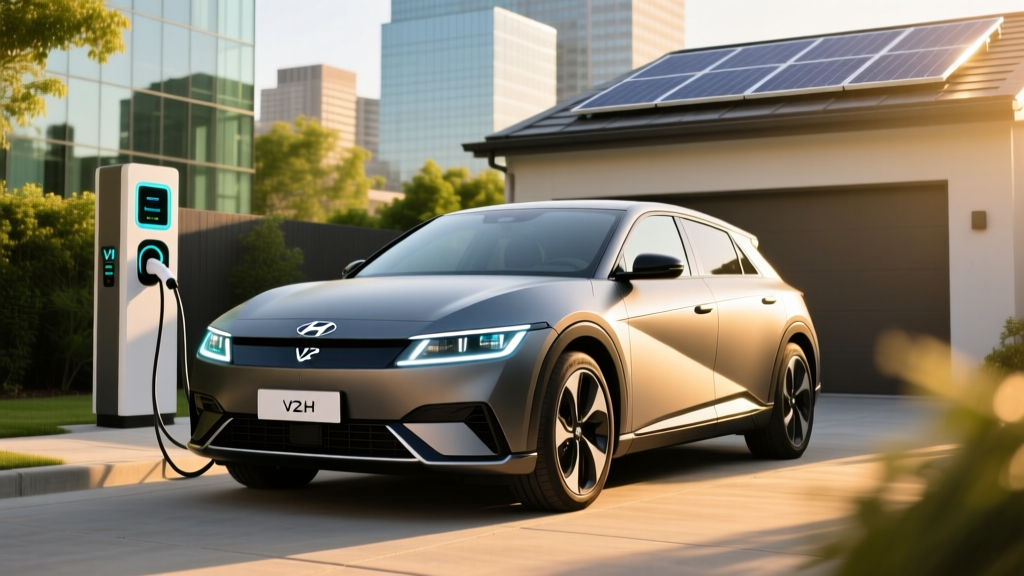
Practical example: A 2026 Hyundai Ioniq 5 SEL (MSRP ~$46,500, assembled in Georgia) may qualify for the full $7,500 if its battery sourcing meets current thresholds. A married couple earning $280,000 AGI buying this vehicle could apply the credit at the dealer, dropping their effective purchase price to ~$39,000 before state fees. But a buyer earning $310,000 AGI gets nothing, regardless of the vehicle.
Always verify: Check the IRS's official credit page and the manufacturer's current certification before signing. Battery sourcing rules shift as supply chains change — a model that qualified in 2025 may not in 2026.
Maryland State & Local Incentives: What's Still Available
Maryland-specific incentives in 2026:
- State EV excise tax credit: EXPIRED July 2023. No direct state purchase incentive currently available for new EVs.
- HOV lane access: Maryland allows qualifying EVs and PHEVs to use HOV lanes on I-270 and I-68 (requires a permit from the MVA).
- Utility rebates (vary by provider):
- Potomac Edison: Up to $300 rebate for Level 2 home charger purchase
- BGE (Baltimore Gas & Electric): Smart Energy Savers program may include EV charger rebates — check current offerings
- Pepco: Previously offered up to $500 for Level 2 equipment — verify 2026 availability
- Time-of-use (TOU) rates: Most Maryland utilities offer off-peak electricity rates (often $0.07-$0.10/kWh overnight), significantly reducing home charging costs
The loss of Maryland's $3,000 state credit is a real blow — it made models like the base Tesla Model 3 effectively $39,490 after combined federal and state incentives. Today, that same benefit requires relying solely on the federal credit. However, Maryland's HOV lane access remains a meaningful non-monetary perk for commuters on congested corridors.
5-Year Total Cost of Ownership: EV vs. Gas in Maryland
Let's compare a 2026 Hyundai Ioniq 5 SEL (BEV) against a comparably equipped 2026 Toyota RAV4 XLE (gas) over 5 years and 75,000 miles (15,000 mi/year). Both are popular crossover choices for Maryland buyers.
| Cost Category | 2026 Ioniq 5 SEL (BEV) | 2026 RAV4 XLE (Gas) |
|---|---|---|
| Base MSRP | $46,500 | $33,500 |
| Federal tax credit (§30D) | -$7,500 (if eligible) | $0 |
| Effective purchase price | $39,000 | $33,500 |
| Maryland sales tax (6%) | $2,340 | $2,010 |
| Fuel/Energy (75,000 mi) | $3,900* | $8,250** |
| Maintenance (5 years) | $1,200 | $3,800 |
| Insurance (5-year avg) | $9,750 | $7,500 |
| Estimated depreciation | $15,600 | $11,725 |
| 5-Year Total Cost | $52,450 | $47,035 |
* Assumes 3.5 kWh/mile efficiency, 70% home charging at $0.13/kWh (Maryland avg residential), 30% public DCFC at $0.35/kWh.
** Assumes 30 MPG combined, $3.30/gal avg (Maryland mid-grade).
The reality: Even with the full federal credit, the Ioniq 5 costs roughly $5,400 more over 5 years in this scenario — driven primarily by higher insurance premiums and steeper depreciation. The fuel and maintenance savings are real ($4,350 and $2,600 respectively), but they don't fully bridge the gap against a $13,000 cheaper gas vehicle. If you don't qualify for the federal credit (income or sourcing disqualification), the 5-year gap widens to ~$12,900.
Where the EV wins decisively: if you drive more than 15,000 miles/year, have access to cheap overnight home charging (TOU rates under $0.09/kWh), or place a high value on HOV lane access and the driving experience.
Charging vs. Gas: The Per-Mile Cost Math
| Scenario | Cost/kWh or Gal | Efficiency | Cost per Mile |
|---|---|---|---|
| Home Level 2 (Maryland avg) | $0.13/kWh | 3.5 kWh/mi (Ioniq 5) | $0.046 |
| Home Level 2 (TOU off-peak) | $0.08/kWh | 3.5 kWh/mi | $0.028 |
| Public DCFC (avg) | $0.35/kWh | 3.5 kWh/mi | $0.123 |
| Gas (RAV4, Maryland avg) | $3.30/gal | 30 MPG | $0.110 |
At home on standard rates, the Ioniq 5 costs 4.6 cents per mile — less than half the RAV4's 11 cents. On TOU off-peak rates, it drops to under 3 cents. But if you rely heavily on public DC fast chargers, your per-mile cost actually exceeds gasoline at 12.3 cents. This is why home charging access is the single biggest variable in EV ownership economics. Maryland buyers without a garage or dedicated parking spot should factor this in seriously.
Maintenance Savings: Where EVs Genuinely Win
| Service Item | Gas Vehicle (5 yr) | EV (5 yr) |
|---|---|---|
| Oil changes (2x/year) | $750 | $0 |
| Brake pads/rotors | $800 | $200 (regen extends life) |
| Transmission fluid/service | $400 | $0 (single-speed) |
| Air filters, spark plugs | $350 | $150 (cabin filter only) |
| Coolant, belts, misc. | $500 | $200 |
| Tire rotation/replacement | $1,000 | $1,200 (heavier vehicle wear) |
| Total (est.) | $3,800 | $1,750 |
EVs eliminate the most frequent maintenance items entirely — no oil, no spark plugs, no multi-speed transmission. Regenerative braking dramatically extends brake pad life; many EV owners report original pads at 80,000+ miles. The offset: EVs are heavier (the Ioniq 5 weighs ~4,500 lbs vs. the RAV4 at ~3,600 lbs), which accelerates tire wear. Budget for tire replacement every 35,000-40,000 miles rather than 50,000.
Insurance Cost Reality: The Uncomfortable Truth
EV insurance premiums run 15-30% higher than equivalent gas vehicles. For the Ioniq 5 vs. RAV4 comparison, Maryland drivers can expect to pay roughly $1,950/year vs. $1,500/year — a $2,250 gap over 5 years.
Why the premium?
- Higher repair costs: Battery packs and specialized EV components are expensive to replace after collision damage
- Specialized labor: Fewer body shops are certified for high-voltage EV repairs
- Higher vehicle values: Insurers price replacement cost, and EVs carry higher MSRPs
- Claim severity data: Early actuarial data shows EV claims tend to be more expensive per incident
Shop aggressively: Premiums vary wildly by insurer. GEICO, Progressive, and State Farm may quote very differently for the same EV. Some carriers (like Lemonade or Root) offer EV-specific discounts. Get at least three quotes before purchase — this single step can save $300-$500/year.
Depreciation and Resale Value: The Evolving Picture
EV depreciation has been the most volatile ownership cost in recent years. In 2022-2023, Tesla price cuts and a flood of off-lease EVs hammered resale values across the board. The Ioniq 5, for instance, saw 3-year residual values dip from ~60% to ~45% of MSRP during that period.
As of 2026, the market is stabilizing but EVs still depreciate faster than comparable gas vehicles on average:
- Typical EV 5-year depreciation: 45-55% of MSRP
- Typical gas crossover 5-year depreciation: 35-40% of MSRP
- Key factors: Battery health data at resale, whether the model is still in production, federal credit eligibility of the used vehicle (the $4,000 used EV credit helps demand for qualifying pre-owned models)
The wildcard: battery state of health (SoH). A well-maintained EV with 90%+ battery capacity retention commands a premium on the used market. Buyers increasingly check SoH reports (available via the vehicle's telematics or third-party tools like Recurrent) before purchasing. Maryland's moderate climate — without extreme cold or heat — is actually favorable for long-term battery health compared to states like Arizona or Minnesota.
Maryland EV Ownership: The Bottom Line Decision Framework
Choose an EV in Maryland if:
- You qualify for the full $7,500 federal credit (income, MSRP, and sourcing all check out)
- You have reliable home Level 2 charging access (garage or dedicated spot)
- You drive 15,000+ miles/year (fuel savings compound with mileage)
- You commute on I-270 or I-68 and value HOV lane access
- You can secure insurance quotes within 15-20% of your current gas vehicle
Wait or choose a hybrid/PHEV if:
- You don't qualify for the federal credit (income or vehicle sourcing disqualifies you)
- You rent or lack home charging access (public DCFC costs erode savings)
- You plan to own the vehicle less than 4 years (depreciation dominates short-term ownership)
- You frequently tow or drive in extreme conditions where EV range loss is significant
Maryland's EV incentive landscape is leaner in 2026 than it was in 2022, but the federal credit and utility rebates still make electrification financially viable for the right buyer. Run your own numbers with your specific utility rate, commute distance, and insurance quotes before deciding.
Frequently Asked Questions
Does Maryland still offer a state EV tax credit in 2026?
No. Maryland's $3,000 EV excise tax credit expired on July 1, 2023, and has not been renewed as of 2026. The primary incentive available is the federal IRS §30D Clean Vehicle Credit (up to $7,500), subject to income, MSRP, and battery sourcing requirements.
How much does it really cost to own an EV over 5 years in Maryland?
For a mid-range EV like the 2026 Hyundai Ioniq 5 SEL with the full federal credit, expect approximately $52,000-$55,000 over 5 years / 75,000 miles including purchase, energy, maintenance, insurance, and depreciation. This is typically $3,000-$8,000 more than a comparably equipped gas crossover, though the gap narrows significantly with high mileage, cheap home electricity, and lower insurance quotes.
How much do I save on fuel and maintenance with an EV?
Maryland EV owners with home charging typically save $4,000-$5,000 on fuel and $2,000-$2,500 on maintenance over 5 years compared to a gas vehicle — roughly $6,000-$7,500 in combined operational savings. These savings are largest for high-mileage drivers and those on time-of-use electricity rates.
Are EVs more expensive to insure in Maryland?
Yes, typically 15-30% more than equivalent gas vehicles. Expect to pay $300-$500 more per year. This is due to higher repair costs, specialized labor requirements, and actuarial data showing higher claim severity. Shopping multiple insurers can reduce this gap significantly.
How well do EVs hold their value compared to gas cars?
EVs currently depreciate faster on average — expect 45-55% value loss over 5 years vs. 35-40% for gas crossovers. However, this gap is narrowing as the used EV market matures and battery health data becomes more transparent. Maryland's moderate climate is favorable for battery longevity, which supports resale value.
Can I get the federal EV tax credit at the point of sale in Maryland?
Yes. Under §30D, you can transfer the credit to the dealer at purchase, reducing your out-of-pocket cost immediately. You must still meet all income and eligibility requirements, and you must report the transfer on your federal tax return using Form 8936. If your income exceeds the cap at tax time, you may owe the credit back.
Do Maryland utilities offer special EV electricity rates?
Most Maryland utilities (BGE, Pepco, Potomac Edison) offer time-of-use (TOU) rates that provide significantly cheaper electricity during off-peak hours (typically 11 PM - 7 AM). Off-peak rates can be as low as $0.07-$0.10/kWh vs. $0.13-$0.17/kWh on standard plans — cutting your per-mile fuel cost nearly in half.