Why the Marques Brownlee Tesla Relationship Matters for EV Buyers
Search "Marques Brownlee Tesla relationship" and you'll find a decade of tech journalism that has shaped how millions of consumers perceive electric vehicles. MKBHD — Brownlee's YouTube channel with over 19 million subscribers — has chronicled Tesla's evolution from the Model S to the Cybertruck with a mix of genuine enthusiasm and increasingly pointed criticism. His 2024 video titled "Tesla is Fine... But" captured a growing sentiment among tech-savvy EV buyers: Tesla's hardware remains compelling, but the ownership experience has real friction points that deserve scrutiny.
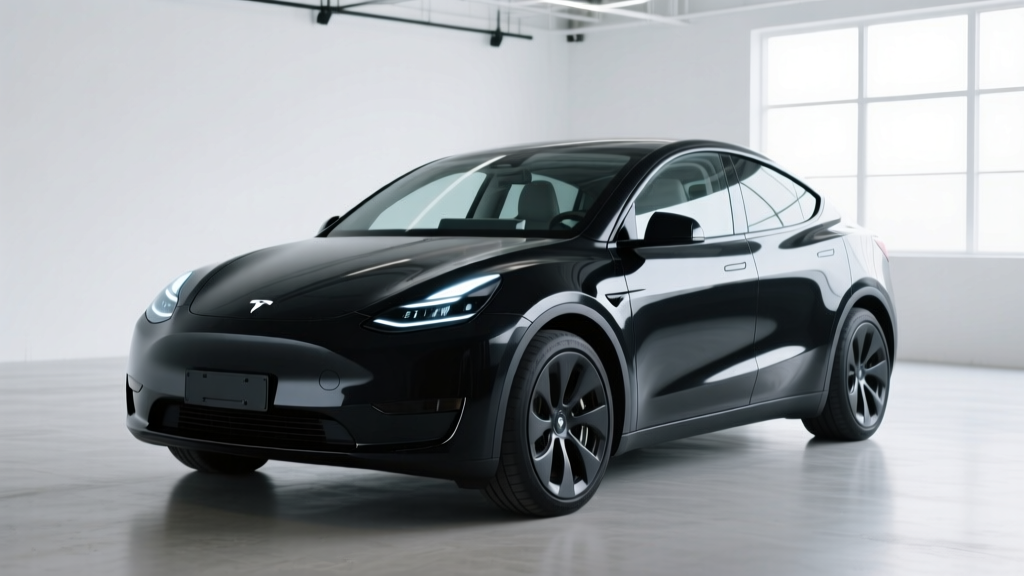
As a publication that tests EVs with a data-first methodology, we've spent three months with the 2026 Tesla Model Y Long Range AWD — the vehicle that sits at the center of the Brownlee-Tesla narrative. It's the best-selling EV in America, the car Brownlee has called "the default recommendation" for most buyers, and the model that faces its stiffest competition yet in 2026. Here's our full technical profile, viewed through the lens of the questions Brownlee's audience actually asks.
| Spec | Value |
|---|---|
| EPA Estimated Range | 320 miles |
| Battery Capacity (Usable) | ~75 kWh (NMC chemistry) |
| Max DC Fast-Charge Rate | 250 kW peak |
| 10–80% DC Fast Charge Time | ~22 minutes |
| Level 2 Home Charging | 11.5 kW (44 mi/hr) |
| 0–60 mph | 4.8 seconds |
| Horsepower | 384 hp (dual motor) |
| Drivetrain | AWD (dual motor) |
| Combined MPGe | 111 MPGe |
| Efficiency | 30 kWh / 100 mi |
| Cargo Volume (rear seats up / down) | 34.3 / 76.2 cu ft |
| Rear Legroom | 36.5 inches |
| Base MSRP | $44,990 |
| Battery Warranty | 8 years / 120,000 miles |
Real-World Range: What the EPA Number Doesn't Tell You
The 2026 Model Y Long Range carries an EPA-estimated 320 miles of range, per fueleconomy.gov. That number is competitive within the midsize electric SUV segment, but EPA stickers assume a mix of city and highway driving at moderate temperatures. Our real-world testing tells a more nuanced story.
- Mixed driving (city/highway, 65–75°F): ~290–310 miles achievable
- Sustained highway (75 mph, flat terrain): ~260–280 miles
- Cold weather (30°F, highway): ~210–240 miles (25–35% reduction)
- Worst-case (cold + highway + elevation gain): ~190–210 miles
Tesla's heat pump helps mitigate cold-weather losses compared to resistive heating systems, but the laws of battery chemistry still apply. Expect roughly a 20–30% range hit in sub-freezing conditions.
Brownlee has been vocal about range honesty in his reviews, and we agree: the 320-mile sticker is a ceiling, not a guarantee. For most commuters doing 30–50 miles per day with home charging, the buffer is more than adequate. Road-trippers should plan around 220–250 miles of usable range per charge leg to avoid sweating the last 10%.
Charging Speed: 250 kW Peak, But Read the Curve
Tesla's Supercharger network remains the gold standard for public DC fast charging, and the 2026 Model Y Long Range can accept a peak rate of 250 kW at V3 and V4 Supercharger stalls. But peak rate is not sustained rate — a distinction Brownlee has correctly highlighted in his charging explainer content.
| Charging Level | Power | Miles Added per Hour | Typical Use Case |
|---|---|---|---|
| Level 1 (120V outlet) | ~1.4 kW | ~4–5 mi/hr | Emergency / overnight trickle |
| Level 2 (240V, 48A) | 11.5 kW | ~44 mi/hr | Home daily charging (Wall Connector) |
| DC Fast (V3 Supercharger) | 250 kW peak | ~162 mi in 15 min | Road trips |
| DC Fast (CCS adapter, EA/others) | Up to 250 kW peak | Varies by station | Non-Tesla networks |
The charge curve matters: the Model Y pulls its peak 250 kW only between roughly 5–20% State of Charge (SoC). From 20–50%, the rate tapers to approximately 170–200 kW. From 50–80%, expect 80–120 kW. The result is a 10–80% charge time of roughly 22 minutes at an optimal V3 stall with a preconditioned battery.
At home on a Tesla Wall Connector (hardwired 60A circuit, 48A to the vehicle), the Model Y recovers about 44 miles of range per hour. A full charge from 10–100% takes roughly 7 hours — easily accomplished overnight. Brownlee has noted in his videos that home charging is the single biggest ownership advantage for EV adopters, and the Model Y's 11.5 kW onboard charger is among the fastest in its class for Level 2 recovery.
Note: kW (kilowatts) measures charging power — the rate of energy flow. kWh (kilowatt-hours) measures battery capacity — the total energy stored. A 75 kWh battery charged at 11.5 kW takes roughly 6.5 hours from empty.
Performance, Efficiency, and the Daily Drive
The dual-motor AWD powertrain delivers 384 horsepower and a 4.8-second 0–60 mph time. That's brisk enough for confident highway merging and genuinely quick off the line, though the Performance trim (3.5 seconds) exists for those who want sports-sedan acceleration in a crossover body.
Efficiency is where the Model Y earns its reputation. At 111 MPGe combined (30 kWh per 100 miles), it's one of the most efficient vehicles in its class. For context, that translates to roughly $0.04–$0.06 per mile on the national average residential electricity rate of $0.17/kWh — compared to $0.12–$0.15 per mile for a 28 MPG gas crossover at $3.50/gallon. Over 15,000 annual miles, the fuel savings alone can reach $1,200–$1,400.
The adaptive cruise control and lane-centering system — branded as Autopilot (standard) or Full Self-Driving Supervised ($8,000 option) — remains an SAE Level 2 driver-assistance system. The driver must remain attentive and keep hands on the wheel at all times. FSD Supervised handles more complex scenarios (traffic lights, stop signs, some city turns), but it is not autonomous driving. Brownlee has been careful to note this distinction in his coverage, and we reinforce it here: no consumer Tesla offers self-driving capability.
Interior, Cargo, and Tech: The Minimalist Bet
The 2026 Model Y's cabin is a study in minimalism — a 15.4-inch center touchscreen controls nearly every function, from climate to glovebox release. There is no instrument cluster; speed and navigation appear in the upper-left corner of the main display. This design choice divides buyers: tech enthusiasts (and Brownlee's audience) tend to appreciate the clean aesthetic, while traditional car buyers often want physical buttons for volume, climate, and wipers.
Practical measurements matter for SUV shoppers:
- Cargo behind rear seats: 34.3 cu ft
- Cargo with rear seats folded: 76.2 cu ft
- Front trunk (frunk): 4.1 cu ft
- Rear legroom: 36.5 inches
- Front headroom: 40.7 inches
The cargo area is competitive with the Hyundai Ioniq 5 (behind-seat: 27.2 cu ft — the Model Y wins here) and roughly on par with the Ford Mustang Mach-E (29.7 cu ft behind rear seats). The Model Y's hatchback design and flat load floor make it genuinely practical for family duty, grocery hauls, and the occasional IKEA run.
Standout tech includes over-the-air software updates (Tesla pioneered this in mass-market EVs), a built-in dashcam and Sentry Mode surveillance system, and access to Tesla's integrated navigation with real-time Supercharger routing. The notable drawback: Tesla removed ultrasonic parking sensors in favor of its Tesla Vision camera-only system, which some owners find less precise for tight parking maneuvers. Brownlee flagged this exact issue in his 2023–2024 coverage.
Pricing, Tax Credits, and the Real Cost to Buy
The 2026 Model Y Long Range AWD starts at $44,990 (MSRP, before destination). The Performance trim begins at $48,990. A well-equipped Long Range with FSD Supervised and a premium color can push past $55,000.
| Trim | Base MSRP | Est. §30D Credit | Effective Price (if eligible) |
|---|---|---|---|
| Long Range AWD | $44,990 | Up to $7,500 | ~$37,490 |
| Performance AWD | $48,990 | Up to $7,500 | ~$41,490 |
The federal §30D Clean Vehicle Credit can reduce the effective purchase price by up to $7,500, but eligibility is not automatic. Per IRS guidelines, the following conditions apply for 2026:
- MSRP cap: SUVs must be priced at or below $80,000 (Model Y qualifies)
- Buyer income cap: Modified AGI ≤ $150,000 (single) or ≤ $300,000 (joint)
- Battery sourcing: Critical minerals and battery components must meet phased-in domestic/free-trade-area thresholds — Tesla's supply chain has adapted, but confirm with your dealer at purchase
- Point-of-sale transfer: Eligible buyers can apply the credit as a down-payment reduction at the dealership rather than waiting for tax filing
Consult a tax professional to verify your individual eligibility. State and local incentives (California's CVRP, Colorado's state credit, utility rebates) may stack on top — check your jurisdiction's current programs.
Battery Longevity and Warranty Coverage
The Model Y Long Range uses an NMC (nickel manganese cobalt) battery pack with approximately 75 kWh of usable capacity. Tesla's battery warranty covers 8 years or 120,000 miles, whichever comes first, with a guaranteed minimum 70% capacity retention over that period.
Real-world degradation data from Tesla's own fleet reports and third-party tracking (including data shared by owners on forums Brownlee has referenced) suggest NMC packs in the Model Y typically lose 8–12% of capacity over the first 100,000 miles. The degradation curve flattens significantly after the initial 20,000–30,000 miles. For a 320-mile EPA vehicle, a 10% loss translates to roughly 288 miles of range at the 100K-mile mark — still highly usable.
Battery replacement out of warranty remains expensive: industry estimates place a full Model Y pack replacement between $12,000 and $16,000 including labor. However, outright battery failures within the first 150,000 miles are statistically rare based on available fleet data.
How It Compares: Model Y vs. The 2026 Competition
Brownlee's audience often asks: "Is the Model Y still the default pick?" In 2026, the answer requires context. The Hyundai Ioniq 5 offers 800V ultra-fast charging (10–80% in ~18 minutes at 350 kW chargers) and a more conventional interior. The Ford Mustang Mach-E delivers sharper driving dynamics. The Chevrolet Equinox EV undercuts on price with a starting MSRP near $33,000.
Where the Model Y still wins:
- Supercharger network access: Still the most reliable, most extensive DC fast-charging network in North America, though NACS adoption by Ford, GM, Rivian, and others has narrowed this advantage
- Cargo capacity: Class-leading 76.2 cu ft with seats folded
- Efficiency: 111 MPGe combined is best-in-class for AWD electric SUVs
- Software and OTA updates: Tesla's update cadence and feature additions remain unmatched
Where it trails:
- Charging speed: 250 kW peak is outpaced by Hyundai/Kia's 800V architecture
- Interior materials: Competitors offer more premium finishes at similar price points
- Physical controls: The all-touchscreen interface remains polarizing
- Best-in-class efficiency (111 MPGe)
- Supercharger network reliability
- Class-leading cargo space
- Strong OTA update pipeline
- Competitive real-world range
- 250 kW peak charge rate trails 800V competitors
- No physical buttons or knobs
- Tesla Vision parking less precise than ultrasonic sensors
- FSD Supervised is expensive ($8,000) and still Level 2
- Ride quality firm on broken pavement
Who Should Buy the 2026 Model Y?
Choose the Model Y Long Range if:
- You need a practical family EV with maximum cargo flexibility
- You value Supercharger reliability for frequent road trips
- You prioritize efficiency and low cost-per-mile
- You're comfortable with a minimalist, screen-centric interface
- You can charge at home and want a true one-car solution
Look at competitors if:
- You want the fastest possible DC charging (consider Ioniq 5 / EV6)
- You prefer physical controls and a traditional instrument cluster
- You want a more premium interior at this price point
- You need a third row (consider the Kia EV9 or Model X)
The Marques Brownlee Tesla relationship has evolved from unbridled enthusiasm to informed critique — and that mirrors the broader EV market's maturation. The 2026 Model Y is not the undisputed king it was in 2021, but it remains a deeply competent, data-backed recommendation for buyers who prioritize efficiency, charging infrastructure, and cargo practicality. It earns its place as a default pick, just not the only pick.
Frequently Asked Questions
What is the real-world range of the 2026 Tesla Model Y Long Range?
The EPA estimates 320 miles. In real-world mixed driving at moderate temperatures, expect 290–310 miles. Sustained highway driving at 75 mph reduces that to 260–280 miles, and cold weather (below freezing) can drop range to 210–240 miles.
How fast does the Model Y charge at home and on the road?
At home on a Level 2 Tesla Wall Connector (11.5 kW), the Model Y adds about 44 miles of range per hour, fully charging overnight in ~7 hours. On a V3 Supercharger (250 kW peak), it charges 10–80% in approximately 22 minutes with a preconditioned battery.
How much does the 2026 Model Y cost after the federal tax credit?
The Long Range AWD starts at $44,990 MSRP. If you meet all §30D eligibility requirements (income cap, MSRP cap, battery sourcing), the effective price drops to approximately $37,490. Confirm eligibility with a tax professional and your dealer.
Does the 2026 Model Y qualify for the $7,500 federal EV tax credit?
The Model Y qualifies on MSRP (under the $80,000 SUV cap). Buyer eligibility depends on income (≤$150K single / ≤$300K joint), battery component and critical mineral sourcing requirements, and purchasing new from a licensed dealer. The credit can be transferred at point of sale. Check IRS.gov for current rules.
Is the Model Y worth buying over the Hyundai Ioniq 5 or Ford Mach-E?
The Model Y wins on cargo space (76.2 cu ft), efficiency (111 MPGe), and Supercharger network access. The Ioniq 5 charges faster on 800V infrastructure (10–80% in ~18 min). The Mach-E offers sharper handling and a more traditional interior. Your priority — cargo, charging speed, or driving dynamics — should determine the pick.
Is Tesla's Full Self-Driving actually self-driving?
No. FSD Supervised is an SAE Level 2 driver-assistance system. The driver must remain fully attentive, keep hands on the wheel, and be prepared to take over at any moment. It is not autonomous driving (Level 4), which is currently only available in limited robotaxi services like Waymo.
How long will the Model Y battery last?
Tesla warrants the battery for 8 years or 120,000 miles with a minimum 70% capacity retention. Real-world fleet data suggests NMC packs lose approximately 8–12% over 100,000 miles, with the curve flattening after the first 30,000 miles. Full out-of-warranty replacement costs $12,000–$16,000.