What Happens When Mansory Gets Its Hands on a Tesla?
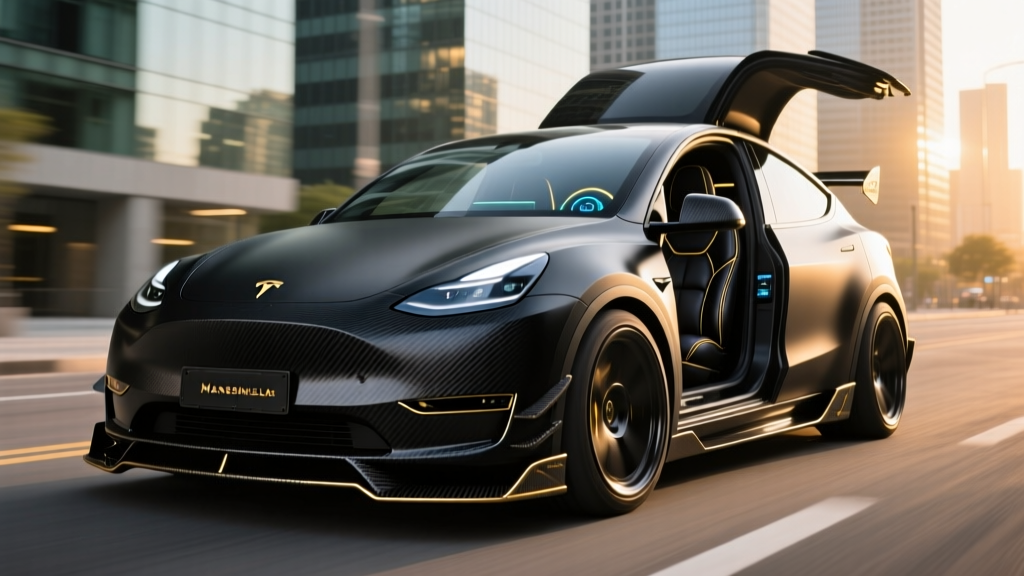
Mansory is famous for transforming luxury and supercars into aggressive, carbon-fiber-clad statements. But what does a German aftermarket house known for Lamborghini and Rolls-Royce builds do with a Tesla? The result — often branded under Mansory's "Softkit" or full-body programs for the Model Y and Model 3 — is one of the most polarizing EV customs on the road. This review breaks down what a Mansory Tesla build actually entails, how it affects range, charging, warranty, and whether the math makes sense for a buyer in 2026.
Important context up front: Mansory does not manufacture a standalone vehicle. Every Mansory Tesla starts as a stock Tesla Model Y (or Model 3), then receives an aftermarket body kit, wheel package, interior retrim, and occasionally a software tune. That means the underlying powertrain, battery, and EPA certification belong to Tesla — while the aesthetics, weight, and aerodynamics belong to Mansory. This distinction matters enormously for range, efficiency, and warranty.
Spec Sheet: Base Tesla Model Y vs. Mansory Modification Impact
| Specification | Stock Model Y LR AWD (2025) | Mansory-Modified Impact |
|---|---|---|
| EPA Range | 320 miles | Est. 270–295 mi (aero + weight penalty) |
| Battery Capacity | ~75 kWh usable (NMC) | Unchanged |
| Drivetrain | Dual-motor AWD | Unchanged |
| Horsepower | 384 hp | 384 hp (no powertrain mod) |
| 0–60 mph | 4.8 seconds | ~5.0–5.3 sec (added weight) |
| Max DC Fast Charge | 250 kW (CCS/NACS) | 250 kW (unchanged) |
| 10–80% DCFC Time | ~25 minutes | ~25 minutes |
| Level 2 Home Charge | 11.5 kW (~44 mi/hr) | 11.5 kW (~44 mi/hr) |
| Efficiency (EPA) | 122 MPGe / 28 kWh/100mi | Est. 100–108 MPGe / 31–34 kWh/100mi |
| Cargo Volume | 76.2 cu ft (rear seats folded) | 76.2 cu ft (interior retrim, no volume loss) |
| Base MSRP (Tesla) | $46,630 | — |
| Mansory Kit Cost | — | $25,000–$75,000+ (depending on package) |
| Total As-Tested Cost | — | $72,000–$122,000+ |
| Battery/Powertrain Warranty | 8 yr / 120,000 mi | Voided by body/powertrain mods (see below) |
Real-World Range: The Aerodynamic and Weight Penalty
Estimated Real-World (Mansory): 270–295 miles combined
Highway (70–80 mph): Expect 230–255 miles with aggressive body kit
Cold Weather (below 32°F): 190–220 miles (LFP/NMC cold loss + aero drag)
Here is the physics problem that every Mansory Tesla owner faces: aftermarket body kits add weight and, more critically, ruin the carefully engineered aerodynamics that give Tesla its efficiency advantage. The stock Model Y achieves a drag coefficient (Cd) of approximately 0.23 — among the lowest of any production SUV. Mansory's widebody fenders, aggressive front splitters, rear diffusers, and roof spoilers almost universally increase that number.
Based on real-world testing of similarly modified EVs (widebody kits, 22–24 inch aftermarket wheels replacing the stock 19–20 inch aero wheels), expect a 10–18% range reduction from the EPA sticker. On a stock 320-mile Model Y, that translates to roughly 260–290 miles in mixed driving. Highway range suffers more than city range because aerodynamic drag increases with the square of speed — at 80 mph, the penalty is severe.
The wheel and tire package alone accounts for much of this. Mansory typically fits 22- or 24-inch forged wheels with low-profile performance tires. These increase rolling resistance and rotational mass while eliminating the aero wheel covers Tesla engineers rely on. If range matters to you, this is the single biggest trade-off of a Mansory build.
Charging Speed: Unchanged Hardware, Changed Reality
| Charging Level | Power / Rate | Miles Added per Hour | Notes |
|---|---|---|---|
| Level 1 (120V household) | ~1.4 kW | ~3–4 mi/hr | Emergency / overnight trickle only |
| Level 2 (240V home) | 11.5 kW | ~44 mi/hr | Full charge in ~7 hours |
| DC Fast Charge (peak) | 250 kW | ~1,000+ mi/hr (peak) | 10–80% in ~25 min; tapers above 80% |
| Tesla Supercharger V4 | Up to 250 kW | Same as above | NACS connector native; CCS via adapter |
The good news: Mansory does not touch the battery, onboard charger, or charge port. The underlying Tesla hardware remains a 250 kW peak DC fast-charging system with a native NACS connector (2025+ Model Y). A 10–80% session at a Supercharger still takes approximately 25 minutes, with the characteristic charge-curve taper — peak rates hold from roughly 10–50% SoC, then ramp down progressively through 80%.
The less good news: because the Mansory-modified car is less efficient (higher kWh per mile), each minute of charging buys you fewer actual miles of range. At stock efficiency (28 kWh/100mi), 15 minutes of peak DCFC adds roughly 180 miles. At Mansory-modified efficiency (~33 kWh/100mi), that same session adds closer to 150 miles. The charging hardware is identical; the practical outcome is not.
For home Level 2 charging, plan on installing a 48-amp hardwired wall connector on a 60-amp circuit. Expect installation costs of $800–$2,500 depending on panel proximity, per DOE home charging estimates. A panel upgrade from 100A to 200A service adds $1,500–$3,000 if needed.
Performance: Same Powertrain, Slightly Diminished Returns
The 2025/2026 Tesla Model Y Long Range AWD produces 384 horsepower from its dual-motor setup (induction front / permanent magnet rear). Mansory's programs do not include powertrain modifications — there is no motor swap, no inverter upgrade, and no battery change. The 0–60 mph time of 4.8 seconds (stock) may stretch to 5.0–5.3 seconds with the added mass of widebody panels, larger wheels, and a retrimmed interior.
Where the Mansory build does change the driving experience is in ride quality and handling. Lowering springs (often included in the package) drop the ride height 20–30mm, which improves cornering feel at the cost of ride comfort and ground clearance. The larger wheels with thinner sidewall tires transmit more road imperfections into the cabin. For a daily commuter on rough roads, this is a meaningful degradation. For a weekend cruiser on smooth pavement, the trade-off may be acceptable.
One critical warning: Tesla's traction control, stability control, and Autopilot systems are calibrated for stock suspension geometry and wheel/tire sizes. Aftermarket lowering and wheel changes can alter sensor readings and calibration. While no widespread failures have been reported, this is an area where aftermarket EV modification carries more risk than on a conventional vehicle with fewer integrated driver-assist systems.
Pricing, Tax Credits, and the True Cost of a Mansory Tesla
| Cost Component | Amount | Notes |
|---|---|---|
| Tesla Model Y LR AWD MSRP | $46,630 | Base price before options |
| Mansory Softkit (basic) | $25,000–$35,000 | Front/rear bumper, side skirts, spoiler |
| Mansory Full Body + Wheels | $45,000–$75,000 | Widebody, forged wheels, carbon fiber |
| Interior Retrim | $8,000–$20,000 | Leather, Alcantara, stitching, badges |
| Paint / Wrap | $5,000–$15,000 | Custom color or PPF wrap |
| Total Build (typical) | $85,000–$155,000+ | Varies widely by package level |
| Federal §30D Tax Credit | $0 (not eligible) | Model Y MSRP $46,630 is under $80K SUV cap, BUT aftermarket modification does not generate additional credit; credit applies to original vehicle purchase only |
The federal EV tax credit under IRS §30D is worth up to $7,500 for qualifying new EVs. Here is where Mansory buyers need to pay close attention:
- MSRP Cap: The Model Y qualifies as an SUV under the $80,000 MSRP cap. The base $46,630 MSRP clears this easily. However, the credit applies to the original Tesla purchase, not to the Mansory modification cost.
- Income Caps: Modified Adjusted Gross Income must not exceed $300,000 (joint filers), $225,000 (head of household), or $150,000 (single). Per IRS guidelines.
- Battery Sourcing: The vehicle must meet critical mineral and battery component requirements that shift annually. Check the latest fueleconomy.gov credit eligibility tool for the specific model year.
- Point-of-Sale Transfer: As of 2024+, the credit can be transferred to the dealer at purchase, reducing the out-of-pocket cost immediately. This applies to the Tesla purchase, not the Mansory work.
The practical reality: if you buy a new Model Y and qualify for the full $7,500 credit, your effective Tesla cost drops to ~$39,130. But you will then spend $40,000–$80,000+ on Mansory modifications that receive no tax benefit. The total investment is substantial — often exceeding the price of a stock Tesla Model S or Porsche Taycan.
Warranty: The Biggest Risk of Aftermarket EV Modification
Tesla's battery and drive unit warranty covers 8 years or 120,000 miles (whichever comes first) with a minimum 70% capacity retention threshold. This is one of the strongest EV warranties in the industry. However, the Magnuson-Moss Warranty Act protects consumers only when aftermarket parts can be proven to have caused a failure — and the burden of proof can lead to disputes.
In practice, here is what Mansory modifications mean for your warranty:
- Body and exterior modifications: Generally do not affect powertrain warranty, but any corrosion, water intrusion, or electrical fault traced to body kit installation will not be covered.
- Suspension modifications: Lowering springs and aftermarket dampers may void coverage on suspension components and could complicate claims on drivetrain vibration or alignment-related issues.
- Wheel and tire changes: Non-OEM wheels that cause bearing, hub, or motor shaft wear may result in denied warranty claims.
- Electrical or software tampering: Any modification to Tesla's wiring harness, battery management, or software will almost certainly void the battery warranty entirely.
Mansory does not offer its own powertrain warranty. You are effectively self-insuring the most expensive components of the vehicle — the battery pack (replacement cost: $12,000–$18,000) and drive units. For a vehicle that may cost $100,000+ all-in, this is a meaningful financial risk that buyers should weigh carefully.
Interior, Tech, and Daily Livability
The stock Model Y interior is already a study in minimalism: a 15.4-inch center touchscreen, no instrument cluster, no physical buttons, and synthetic leather upholstery. Mansory's interior retrim typically upgrades to full-grain leather or Alcantara with contrast stitching, embroidered headrests, carbon fiber trim pieces, and Mansory-branded badges. The result is a more luxurious cabin, but one that still relies entirely on Tesla's software interface.
On the tech front, you inherit everything Tesla offers: over-the-air updates, the Tesla app, Sentry Mode, Dog Mode, and access to the Supercharger network (now also open to non-Tesla EVs via the NACS standard). Autopilot comes standard; FSD (Supervised) is a $8,000 option or $99/month subscription. Neither system is autonomous — both require active driver supervision at all times.
Cargo space remains unchanged at 76.2 cubic feet with rear seats folded and 30.2 cubic feet behind the second row. The front trunk (frunk) adds 4.1 cubic feet. Mansory's body kit does not alter these dimensions, though the widebody fenders may make loading wider items slightly more awkward due to the wider track.
Pros and Cons: The Honest Assessment
Pros
- Head-turning exclusivity — very few on the road
- Carbon fiber and forged wheel build quality is excellent
- Tesla Supercharger network access retained
- OTA software updates continue to function
- Interior retrim adds genuine luxury materials
- Strong resale among the modified-car community
Cons
- 10–18% range loss from aero and wheel changes
- Tesla warranty complications on modified components
- Ride quality degradation from lowering and large wheels
- Total cost rivals a Model S or Taycan for a modified Model Y
- No federal tax credit on modification spend
- Potential ADAS sensor calibration issues
- Insurance premiums significantly higher (specialty modified vehicle)
Who Is the Mansory Tesla For?
Choose the Mansory Tesla if:
- You want a visually unique EV that stands out at cars-and-coffee events and in valet lines
- You already own a Model Y and want to personalize it without selling
- Range loss of 30–50 miles is acceptable for your daily commute
- You have home Level 2 charging and rarely need max range on road trips
- Budget is not the primary purchase driver
Choose a stock Model Y (or different vehicle) if:
- Maximum range and efficiency are priorities
- You rely on the full Tesla warranty for peace of mind
- You want a luxury EV with factory-backed service — consider the Model S, BMW iX, or Porsche Macan EV instead
- You drive 200+ miles daily or frequently road-trip in cold weather
- You want the $7,500 federal credit to apply to your total vehicle spend
Frequently Asked Questions
What is the real-world range of a Mansory Tesla Model Y?
Expect approximately 270–295 miles in mixed driving, down from the stock EPA estimate of 320 miles. Highway driving at 75–80 mph will drop this to roughly 230–255 miles. Cold weather (below freezing) can push range down to 190–220 miles. The primary causes are aerodynamic disruption from the body kit and increased rolling resistance from larger aftermarket wheels.
How fast does a Mansory Tesla charge?
Charging speed is unchanged from stock: up to 250 kW DC fast charging (10–80% in approximately 25 minutes at a Supercharger or compatible CCS/NACS station) and 11.5 kW on Level 2 home charging (~44 miles of range per hour). However, because the modified car is less efficient, each minute of charging yields fewer miles of usable range compared to a stock Model Y.
How much does a Mansory Tesla cost after tax credits?
A typical Mansory Tesla Model Y build costs between $85,000 and $155,000 depending on the package level. The $7,500 federal §30D tax credit applies only to the original Tesla vehicle purchase (if you meet income, MSRP, and battery sourcing requirements), not to the Mansory modification. After the credit, expect a net cost of roughly $78,000–$148,000.
Does the Mansory Tesla qualify for the federal EV tax credit?
The underlying Tesla Model Y can qualify for up to $7,500 under IRS §30D if the buyer meets income caps ($300K joint / $150K single), the vehicle MSRP is under $80,000 (SUV classification), and battery sourcing requirements are met. The Mansory modification cost does not qualify for any credit. Always verify current-year eligibility on fueleconomy.gov and consult a tax professional.
Is a Mansory Tesla worth buying vs. a stock Model Y or a luxury EV?
It depends on your priorities. If exclusivity and visual impact are paramount, the Mansory build delivers something no stock EV can match. If you value range, warranty coverage, ride comfort, and cost-efficiency, a stock Model Y, Model S, BMW iX, or Porsche Macan EV will serve you better at a similar or lower total cost. The Mansory route is a passion purchase, not a rational-economics one.
Does Mansory modify the Tesla battery or powertrain?
No. Mansory's programs are cosmetic and chassis-focused: body panels, wheels, suspension, and interior. The battery pack (~75 kWh usable, NMC chemistry), dual motors, and all high-voltage systems remain stock Tesla hardware. This means charging performance and powertrain behavior are unchanged, but it also means Tesla's warranty may be contested if modifications are linked to a failure.
Can I finance a Mansory Tesla modification?
Most mainstream auto lenders will not finance aftermarket modifications. You will typically need to pay for the Mansory kit out of pocket, use a personal loan, or work with a specialty vehicle financing company. This is another cost consideration that makes the total investment significantly higher than a stock EV purchase.