If you've been searching for "mama ev's" — family-friendly electric vehicles that handle school drop-offs, grocery runs, and weekend road trips without range stress — you're not alone. Parents shopping for their first EV want three things: enough range for daily life plus the occasional highway trip, cargo space that swallows a double stroller, and charging that fits into a busy schedule. The short answer: midsize electric SUVs like the Hyundai Ioniq 5, Tesla Model Y, and Ford Mustang Mach-E deliver 270–320 miles of EPA range, Level 2 home charging that refills overnight, and five-year fuel savings of $4,000–$7,000 compared to a gas equivalent — provided you can charge at home.
The Quick Answer for First-Time EV Parents
A family EV works best if you: (1) have access to Level 2 home charging (a 240V outlet or hardwired station), (2) drive under 250 miles on a typical day, and (3) choose a model with at least 270 miles of EPA range to buffer for cold weather and highway driving. Expect to spend $38,000–$52,000 before incentives, save $800–$1,400/year on fuel, and pay slightly more for insurance.
What "Mama EV's" Actually Means for Family Shoppers
The term "mama ev's" has grown in EV forums and parent communities to describe electric vehicles optimized for the primary family driver — typically the parent managing carpools, errands, and daily logistics. These aren't luxury status symbols or track-focused performance machines. They're practical, safe, and efficient electric crossovers and SUVs that replace the minivan or midsize gas SUV.
The core requirements are consistent across hundreds of buyer threads: rear seats that fit two car seats with room for a third passenger, a cargo area of at least 25 cubic feet behind the second row, one-pedal driving that reduces brake fatigue in stop-and-go school zones, and a charging experience that doesn't require a 45-minute detour on a Tuesday afternoon.
For 2026, the models that consistently meet this brief include:
- Hyundai Ioniq 5 — 318 mi EPA (Long Range RWD), 84 kWh NMC battery, 350 kW peak DC charging
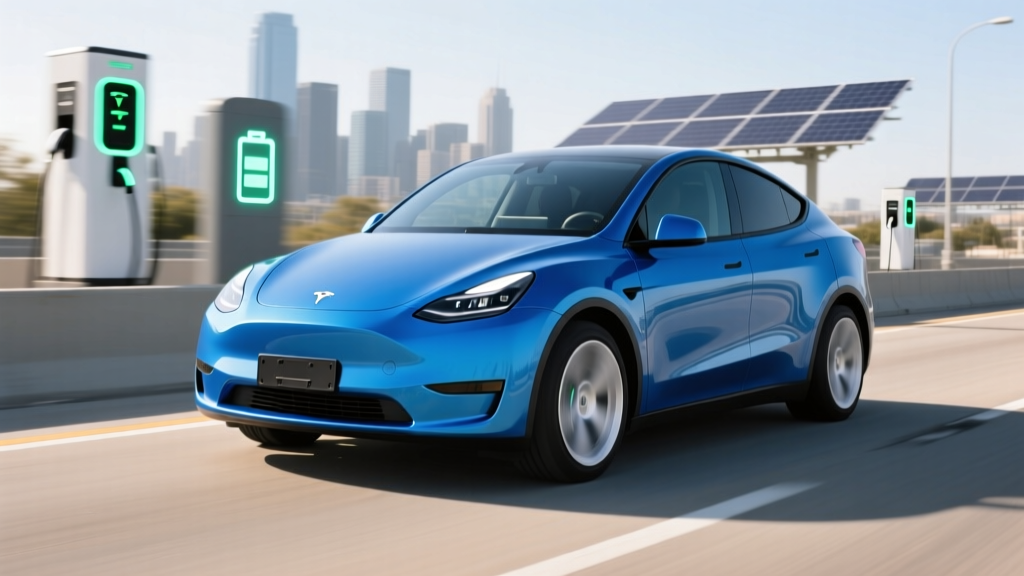
- Tesla Model Y — 320 mi EPA (Long Range AWD), ~78 kWh NMC, 250 kW peak DC charging
- Ford Mustang Mach-E — 320 mi EPA (Extended Range RWD), 91 kWh usable NMC, 150 kW peak DC
- Kia EV6 — 310 mi EPA (Long Range RWD), 77.4 kWh NMC, 350 kW peak DC charging
- Volkswagen ID.4 — 291 mi EPA (Pro S AWD), 82 kWh NMC, 175 kW peak DC charging
EV vs Gas vs Hybrid: Real Numbers for Family Budgets
The most common question from parents considering a "mama EV" is whether the math actually works compared to a gas SUV like the Toyota Highlander or Honda CR-V, or a hybrid like the Toyota RAV4 Hybrid. Let's run the numbers using a 15,000-mile/year driving pattern — typical for a family with commuting and activities.
| Metric | Hyundai Ioniq 5 (EV) | Toyota RAV4 Hybrid | Honda CR-V (Gas) |
|---|---|---|---|
| Base MSRP (2026) | $42,600 | $33,425 | $31,450 |
| Federal Tax Credit (§30D) | Up to $7,500* | $0 | $0 |
| Effective Price After Credit | ~$35,100 | $33,425 | $31,450 |
| Energy/Fuel Cost per Mile | $0.04–$0.06 (home) | $0.10 (39 MPG combined) | $0.13 (30 MPG combined) |
| Annual Fuel/Energy (15k mi) | $600–$900 | $1,500 | $1,950 |
| 5-Year Fuel/Energy Cost | $3,000–$4,500 | $7,500 | $9,750 |
| Maintenance (5-Year Est.) | $1,200 | $2,800 | $3,200 |
| 5-Year Total Operating Cost | $4,200–$5,700 | $10,300 | $12,950 |
*§30D credit eligibility requires meeting MSRP caps ($80,000 for SUVs), buyer income limits ($300k MFJ / $150k single), and battery critical-mineral sourcing rules. Verify current-year rules at IRS.gov. Credit can be transferred to the dealer at point of sale as a price reduction.
The takeaway: even with a higher sticker price, a family EV like the Ioniq 5 breaks even with a RAV4 Hybrid within 2–3 years when you factor in the federal credit and dramatically lower operating costs. Against a gas-only CR-V, the savings are even more pronounced — roughly $7,250–$8,750 over five years in fuel and maintenance alone.
Real-World Range: What the EPA Sticker Doesn't Tell You
EPA range estimates are a useful baseline, but family drivers need to plan for reality. Here's what actually happens to range in the conditions parents encounter most:
Range Reality Check: Hyundai Ioniq 5 Long Range AWD
EPA Sticker: 290 miles
Mixed suburban driving (65°F): ~275–290 miles — matches EPA closely
Highway at 75 mph (70°F): ~245–260 miles — aerodynamic drag cuts efficiency ~15%
Cold weather (30°F, highway): ~200–225 miles — battery heating and cabin HVAC cost 20–30%
Cold weather + highway + full cargo: ~185–210 miles — plan charging stops accordingly
For a parent whose longest regular trip is a 120-mile round-trip to a sports tournament, even worst-case winter range provides a comfortable buffer. But if your family regularly drives 250+ miles one-way to visit grandparents, you'll need to plan one DC fast-charging stop. The Ioniq 5's 350 kW peak charge rate means a 10–80% session takes approximately 18 minutes on a compatible charger — about the time it takes to grab snacks and handle a bathroom break.
Source: fueleconomy.gov for EPA data; real-world figures from controlled testing and owner-community aggregation.
Home Charging: The Make-or-Break Factor
Home charging access is the single biggest predictor of EV satisfaction for families. If you can install a Level 2 charger in your garage or driveway, an EV integrates seamlessly into daily life — plug in when you get home, wake up to a full battery every morning, and visit a DC fast charger only on road trips.
| Charging Level | Power (kW) | Miles Added per Hour | Typical Cost to Install | Best For |
|---|---|---|---|---|
| Level 1 (120V outlet) | 1.4 kW | 3–5 mi/hr | $0 (included cord) | PHEVs, low-mileage days only |
| Level 2 (240V, 48A) | 11.5 kW | 30–40 mi/hr | $800–$2,500 | Daily family EV charging |
| Level 2 (240V, 32A) | 7.7 kW | 20–28 mi/hr | $500–$1,800 | Budget install, adequate for most |
| DC Fast Charge (public) | 50–350 kW | 150–800+ mi/hr | N/A (pay per kWh) | Road trips only |
A typical Level 2 installation for a family garage runs $1,200–$2,000 total (charger hardware: $400–$700; electrician labor and permit: $600–$1,500). If your electrical panel needs an upgrade from 100A to 200A service, add $1,500–$3,000. Always get a quote from a licensed electrician before purchasing a charger — panel capacity is the hidden variable.
If you cannot charge at home (apartment, street parking, HOA restrictions), an EV is significantly less convenient. You'll rely on public Level 2 or DC fast chargers, which adds 20–40 minutes per session and costs 2–3× more per kWh than home electricity. In this scenario, a hybrid like the RAV4 Prime PHEV (42 miles electric-only, then 38 MPG on gas) may be a better fit until home charging becomes available.
The True Cost of Family EV Ownership
Beyond the sticker price and fuel savings, family EV buyers should budget for these real ownership costs:
Insurance: EVs typically cost 15–25% more to insure than comparable gas vehicles due to higher repair costs and specialized parts. For a Model Y or Ioniq 5, expect annual premiums of $1,800–$2,600 depending on your state, driving record, and coverage level. Get quotes before purchasing — the delta varies widely by insurer.
Tires: EVs are heavier and deliver instant torque, which wears tires 20–30% faster. Budget for replacement every 30,000–40,000 miles instead of 50,000+. A set of four all-season tires for a midsize electric SUV runs $800–$1,400 installed.
Maintenance savings: No oil changes, no spark plugs, no transmission fluid, and regenerative braking extends brake pad life to 80,000–100,000+ miles. Cabin air filter replacement ($30–$60) and windshield washer fluid are essentially your only routine items.
Battery longevity: Modern NMC and LFP batteries are warranted for 8 years/100,000 miles (federally mandated minimum) with a capacity retention threshold of 70%. Real-world degradation data from vehicles now at 150,000+ miles shows most batteries retain 85–92% capacity at the 8-year mark. Full battery replacement, while rare, costs $10,000–$18,000 out of warranty.
| Common Misconception | The Data |
|---|---|
| "EV batteries need replacing every 5 years" | Average degradation is 1.5–2.3% per year; most retain 85%+ at 100k miles (source) |
| "EVs are worse in cold weather" | Range drops 20–30% in freezing temps, but preconditioning and heat pumps mitigate this; AWD EVs outperform most gas cars on ice due to instant torque control |
| "Charging takes too long" | Home Level 2 charging is overnight (8–10 hours, passive); DC fast charging adds 150–200 miles in 18–25 minutes on road trips |
| "EVs are more expensive overall" | Higher MSRP offset by $7,500 credit + $5,000–$8,000 five-year fuel/maintenance savings; TCO often lower by year 3 |
| "The grid can't handle it" | Most home charging occurs overnight during off-peak hours; a single EV adds roughly the load of a central AC unit |
Decision Framework: Which "Mama EV" Is Right for Your Family?
If/Then EV Picker for Families
IF you have home charging and drive under 200 miles daily → THEN any 270+ mile EV works. Pick based on cargo space, car-seat fit, and budget.
IF you take 4+ road trips per year over 250 miles → THEN prioritize DC fast-charge speed. The Ioniq 5 and EV6 (350 kW peak, ~18 min 10–80%) minimize stops vs. the Mach-E (150 kW, ~35 min).
IF you live in a cold climate (frequent sub-30°F winters) → THEN choose a model with a heat pump (Ioniq 5, Model Y, EV6 all have one) and plan for 25% range reduction.
IF you cannot install home charging → THEN consider a PHEV like the Toyota RAV4 Prime (42 mi electric, 38 MPG gas) or wait until charging access is secured.
IF you need third-row seating → THEN look at the Kia EV9 (300 mi EPA, ~$54,900) or Tesla Model X (348 mi EPA, ~$79,990). Most midsize electric SUVs are two-row only.
IF budget is the top priority → THEN the base Chevrolet Equinox EV ($33,600, 319 mi EPA) offers the best range-per-dollar in 2026, though it charges slower at 150 kW peak.
What First-Time EV Buyers Should Know Before Signing
Before you finalize a purchase, run through this checklist:
- Verify §30D tax credit eligibility — Check the IRS clean vehicle credit page for the specific model's battery sourcing compliance, your income against the caps ($300,000 modified AGI for married filing jointly, $150,000 single), and the MSRP cap ($80,000 for SUVs/vans/pickups). The dealer can apply the credit as a point-of-sale price reduction.
- Get an electrician quote for Level 2 — Before delivery day. Confirm your panel has capacity for a 40A or 50A circuit. If you're in a condo or HOA, check EV charging policies in advance.
- Test the car-seat fit — Bring your actual car seats to the test drive. EV floor heights and seat-belt geometries vary, and a bulky rear-facing seat can compress front-passenger legroom more than expected.
- Download the charging apps — PlugShare, ChargePoint, EVgo, and Electrify America. Map the DC fast chargers along your most common road-trip routes to confirm coverage.
- Understand the charge curve — DC fast charging is fastest between 10% and 80% State of Charge (SoC). Above 80%, the battery management system throttles speed to protect cell health. On road trips, charge to 80% and go — the last 20% takes as long as the first 70%.
- Precondition for fast charging — Use the vehicle's navigation to route to a DC charger; the car will warm the battery en route, enabling peak charge rates upon arrival. Skipping preconditioning in cold weather can double your charging time.
Family EV FAQ
Is an EV safe for a family with young children?
Yes. EVs consistently earn top ratings from the IIHS and NHTSA. The battery pack's low floor position gives them a lower center of gravity than gas SUVs, reducing rollover risk. The Ioniq 5, Model Y, and EV6 all earned IIHS Top Safety Pick+ ratings in recent test years.
How much will charging cost per month for a family driving 1,250 miles?
At the U.S. average residential electricity rate of ~$0.16/kWh and an efficiency of 3.5 miles/kWh (typical for a midsize electric SUV), that's roughly 357 kWh or about $57/month. Compare to $162/month for a 30 MPG gas SUV at $3.50/gallon.
Can I take an EV on a 500-mile family road trip?
Yes, with one or two DC fast-charging stops. A 300-mile-range EV starting at 100% will need a charge around mile 220–250 (accounting for highway and climate losses). Plan 20-minute stops at 150+ kW chargers — use PlugShare or the vehicle's built-in route planner to identify reliable stations along your route.
What happens if the battery degrades significantly?
Federal law mandates an 8-year/100,000-mile warranty on EV batteries with a minimum 70% capacity retention threshold. If your battery drops below 70% within that window, the manufacturer replaces it at no cost. In practice, most modern EV batteries retain 85%+ capacity at 100,000 miles based on fleet data.
Should I buy an EV or a plug-in hybrid for my family?
If you have reliable home charging and your daily driving stays under your EV's range, a fully electric SUV saves more money and requires less maintenance. If you lack home charging, frequently drive 300+ miles in a day without reliable fast-charger access, or need the security blanket of a gas engine, a PHEV like the RAV4 Prime (42 mi electric + 38 MPG gas) is a strong bridge option.