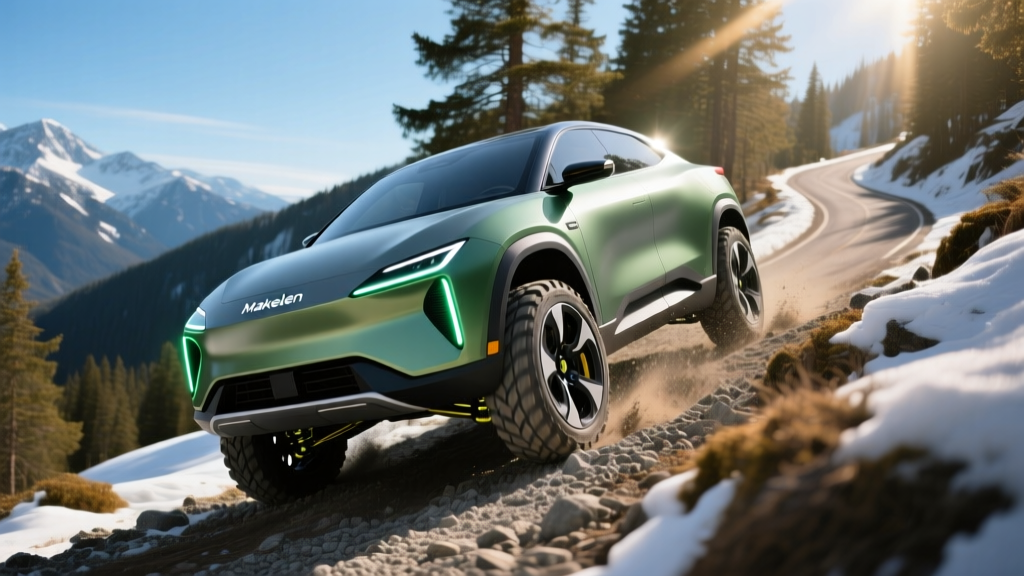
If you’re researching Makelen all-terrain electric cruisers for mountain use in 2026, here’s the practical reality: Makelen is not a mainstream, EPA-certified EV manufacturer with published specs on fueleconomy.gov or verified dealer networks in the United States. Searches for this brand yield limited results, and no Makelen electric cruiser model appears in current NHTSA safety databases, IRS §30D tax-credit qualified vehicle lists, or major automotive press reviews. Before committing funds to a niche or direct-import electric cruiser marketed for off-road or mountain terrain, buyers should demand verifiable EPA range figures, battery chemistry documentation (LFP vs NMC), confirmed peak DC fast-charge kW rates, and a legitimate battery warranty. Below, we break down what to evaluate in any all-terrain electric cruiser aimed at mountain driving, how EVs compare to gas alternatives on steep grades, and the real ownership costs involved.
Quick Answer: Makelen All-Terrain Electric Cruisers
As of early 2026, Makelen does not appear as a recognized, EPA-listed electric vehicle manufacturer in the U.S. market. Buyers considering any niche all-terrain electric cruiser for mountain driving should verify: (1) EPA-certified range, (2) battery kWh capacity and chemistry, (3) DC fast-charge peak kW and 10–80% time, (4) NHTSA/IIHS safety testing, and (5) eligibility for the federal §30D tax credit via IRS.gov. If these data points aren’t transparent, treat the purchase as high-risk.
What Mountain Driving Demands From an Electric Cruiser
Mountain terrain is one of the most demanding environments for any electric vehicle. Sustained grades of 6–8% force the drivetrain to draw heavily from the battery, and altitude changes can consume range far faster than the EPA sticker suggests. Here’s what matters when evaluating any all-terrain EV—whether it carries the Makelen badge or a more established name like Rivian, GMC Hummer EV, or Jeep Wrangler 4xe:
- Battery capacity (kWh): Mountain driving rewards large usable battery packs. Expect to consume 1.5–2.5x your rated kWh/100mi on sustained uphill grades. A 100 kWh usable pack is a practical minimum for serious mountain touring with reserves.
- Thermal management: Climbing generates significant battery heat. Active liquid cooling is non-negotiable; air-cooled packs will throttle performance and accelerate degradation.
- Regenerative braking on descents: This is where EVs shine. A well-tuned regen system can recapture 20–30% of the energy spent climbing on the way back down, reducing brake wear to near zero.
- Ground clearance and approach angles: True all-terrain capability requires 8.5+ inches of ground clearance, skid plates, and all-wheel drive with torque vectoring.
- Tire specification: All-terrain (A/T) tires reduce efficiency by 5–10% compared to highway tires but are essential for loose-surface traction.
EV vs Gas: Mountain Performance and Cost Comparison
The debate between electric and gas-powered all-terrain cruisers in mountain environments comes down to torque delivery, energy cost, and refueling logistics. Here’s a data-driven comparison:
| Factor | Electric Cruiser (AWD, ~100 kWh) | Gas 4x4 Cruiser (V6, ~20 MPG) |
|---|---|---|
| Peak torque at low RPM | Instant (0 RPM) — superior on grades | Requires revs; turbo lag possible |
| Energy cost per mile (mountain) | ~$0.08–$0.14 (home charging at $0.13/kWh) | ~$0.22–$0.30 (at $3.80/gal, 15 MPG on grades) |
| Range loss on 6% sustained grade | 40–60% reduction vs EPA | 20–35% reduction vs EPA |
| Refueling/recharging in remote areas | Limited — requires planning | Gas stations widely available |
| Regen on descents | Recaptures 20–30% of climb energy | None — brake wear instead |
| Maintenance (annual) | ~$300–$500 (tires, cabin filter, fluid top-off) | ~$800–$1,400 (oil, filters, belts, brakes) |
| Cold-weather performance (20°F) | 15–30% range loss; cabin heat drains battery | Minimal range impact; waste heat for cabin |
The EV advantage in torque delivery and per-mile energy cost is significant, but remote mountain charging remains a real constraint. If your typical route takes you more than 80 miles from the nearest DC fast charger, a gas or plug-in hybrid alternative deserves serious consideration.
Real Ownership Costs: Purchase, Charging, Insurance, Maintenance
Whether you’re eyeing a Makelen cruiser or an established competitor, the total cost of ownership (TCO) for an all-terrain electric vehicle breaks down as follows. These figures reflect 2026 market averages for a ~$65,000–$85,000 electric SUV/cruiser class:
| Cost Category | Electric Cruiser (Year 1) | Electric Cruiser (5-Year Total) |
|---|---|---|
| Purchase price (MSRP avg) | $65,000–$85,000 | — |
| Federal §30D tax credit (if eligible) | Up to $7,500 (income/MSRP/sourcing limits apply) | Up to $7,500 one-time |
| Home Level 2 charger install | $800–$2,500 (240V, 40–48A circuit) | $800–$2,500 one-time |
| Electricity (12,000 mi/yr) | $480–$780/yr | $2,400–$3,900 |
| Insurance | $1,800–$2,800/yr | $9,000–$14,000 |
| Maintenance | $300–$500/yr | $1,500–$2,500 |
| Tire replacement (A/T tires) | $1,200–$2,000 at ~30,000 mi | $2,400–$4,000 |
| Estimated 5-Year TCO | — | $75,000–$105,000 |
For comparison, a gas-powered all-terrain SUV in the same price range typically costs $95,000–$125,000 over five years, driven primarily by higher fuel and maintenance expenses. The EV savings are real—but only if you have reliable home charging access and drive patterns that don’t regularly exceed the vehicle’s real-world range.
Charging Logistics for Mountain and Remote Driving
This is where niche electric cruisers marketed for "all-terrain" or "off-grid" use face their toughest test. Public DC fast-charging infrastructure in mountainous and rural regions remains sparse in 2026. Here’s what you need to plan for:
- Home charging (Level 2, 240V/48A): Adds roughly 30–40 miles of range per hour of charging, or about 11–14 kW. A full charge from 10–100% on a 100 kWh battery takes 8–10 hours. This is your primary refueling method.
- DC fast charging (public): Peak rates of 150–250 kW can add 10–80% in 20–35 minutes on capable vehicles. However, sustained charge rates matter more than peak—the charge curve tapers significantly above 80% State of Charge (SoC), and cold batteries accept charge more slowly until preconditioned.
- Remote areas: If you regularly travel more than 100 miles from a DC fast charger, you must plan charging around destination Level 2 outlets (lodges, campgrounds with 240V/50A service) or carry a portable generator as backup—defeating the emissions advantage.
- NACS vs CCS: In 2026, the North American Charging Standard (NACS, Tesla’s connector) has been adopted by most major automakers. Verify which connector any cruiser uses and whether adapters are available for the networks you’ll rely on.
Common Misconceptions About All-Terrain EVs
| Myth | Fact |
|---|---|
| "Electric cruisers can’t handle mountain grades." | EVs deliver instant torque at 0 RPM, making them excellent climbers. The challenge is range consumption, not capability. |
| "The battery will die in cold mountain weather." | Cold reduces range by 15–30% at 20°F, but a heat pump and battery preconditioning mitigate this. Degradation from cold is minimal with proper thermal management. |
| "All-terrain EVs qualify for the full $7,500 tax credit." | The §30D credit requires meeting MSRP caps ($80,000 for SUVs/trucks), buyer income limits ($300K MFJ), and critical-mineral/battery-component sourcing rules. Many niche imports do not qualify. Verify at IRS.gov. |
| "You can charge anywhere off-grid with solar." | A typical portable solar panel array (400W) adds roughly 1–2 miles of range per hour in full sun. This is emergency trickle charging, not practical refueling. |
| "Battery replacement will cost $20,000+." | While out-of-warranty battery replacements can cost $10,000–$22,000, modern NMC and LFP packs are designed for 200,000+ miles with <20% degradation. Federal law mandates an 8-year/100,000-mile battery warranty minimum. |
What a First-Time EV Buyer Should Know Before Choosing a Niche Cruiser
If Makelen or any lesser-known brand is your first EV purchase, the stakes are higher than buying from an established automaker. Here’s a practical checklist:
- Verify EPA certification: Check fueleconomy.gov for the model. If it’s not listed, the manufacturer hasn’t submitted EPA testing data, and range claims are unverified.
- Confirm safety testing: Search the NHTSA ratings database and IIHS. No crash-test data means unknown occupant protection.
- Parts and service network: Can you get brake pads, suspension components, or a battery module replaced within 100 miles of your home? Niche brands often lack service infrastructure.
- Resale value: Unproven brands depreciate steeply. Established EVs from Tesla, Ford, Hyundai, and Rivian retain 45–60% of value at 3 years; unknown brands may retain 25–35%.
- Battery chemistry: Ask whether the pack uses LFP (lithium iron phosphate—longer cycle life, lower energy density, better for daily 100% charging) or NMC/NCA (higher energy density, better range, but prefers 80% daily charge limit). This affects your daily usability and long-term degradation.
- Warranty terms: U.S. law requires 8 years/100,000 miles on the battery and powertrain for emissions-related components, but enforcement on niche importers varies. Get warranty terms in writing and confirm who honors them domestically.
Decision Framework: Should You Buy an All-Terrain Electric Cruiser?
If X, Then Y — Your EV Mountain Cruiser Decision
- If you have home Level 2 charging AND drive <150 miles/day in mountains: An electric cruiser is an excellent fit. You’ll save $1,500–$3,000/year on fuel vs gas and enjoy superior low-speed torque on grades.
- If you regularly drive >200 miles from the nearest DC fast charger: Choose a plug-in hybrid (PHEV) like the Jeep Wrangler 4xe or a gas 4x4. Charging infrastructure gaps make pure EV ownership impractical for remote touring.
- If the vehicle isn’t EPA-certified or NHTSA-tested: Walk away unless you’re prepared to accept unknown range accuracy, unverified safety performance, and potentially zero resale demand. The risk outweighs any novelty factor.
- If you qualify for the §30D tax credit (income <$300K, MSRP <$80K, compliant sourcing): The credit reduces effective purchase price by up to $7,500 and can now be transferred at point of sale as an instant discount. This significantly improves the value proposition for eligible established-brand EVs.
- If you live in a cold climate (<30°F winters) and lack a garage: Budget for 25–30% winter range loss and prioritize a vehicle with a heat pump and battery preconditioning. LFP chemistry is more cold-sensitive than NMC.
Frequently Asked Questions
Is Makelen a legitimate EV brand sold in the United States?
As of 2026, Makelen does not appear in EPA, NHTSA, or IRS databases as a certified vehicle manufacturer for U.S. sale. Buyers should exercise extreme caution and independently verify any brand’s regulatory compliance before purchasing.
How much range do you actually lose driving an EV uphill in mountains?
On sustained 6–8% grades, expect 40–60% range reduction compared to the EPA combined estimate. A vehicle rated at 300 miles EPA may deliver only 130–180 miles of real range on a mountain pass route. Regenerative braking on descents recaptures some energy but won’t fully offset the climb.
What’s the cheapest way to charge an electric cruiser at home?
A Level 2 home charger (240V, 40–48 amps, ~$400–$700 for the unit) installed by a licensed electrician ($500–$1,800 depending on panel capacity and run length) is the standard. Total cost: $800–$2,500. Charging at $0.13/kWh (national average) costs roughly $13 for a full 100 kWh charge—about 5–7x cheaper than filling a gas tank for equivalent range.
Do all-terrain EVs need special insurance?
Not specifically "special" insurance, but EV insurance premiums run 15–25% higher than comparable gas vehicles due to higher repair costs and battery replacement values. Off-road use may require an endorsement on your policy. Expect $1,800–$2,800/year for a $70,000 electric SUV.
What battery chemistry is best for mountain driving?
NMC (nickel manganese cobalt) offers higher energy density—more range per kWh of battery weight—which matters when climbing. LFP (lithium iron phosphate) is heavier but lasts more charge cycles and tolerates daily 100% charging better. For mountain touring where range is critical, NMC is the common choice; for daily drivers who occasionally hit trails, LFP is a strong option.