The Quick Answer: Can You Buy a Mahindra Electric Car in the US?
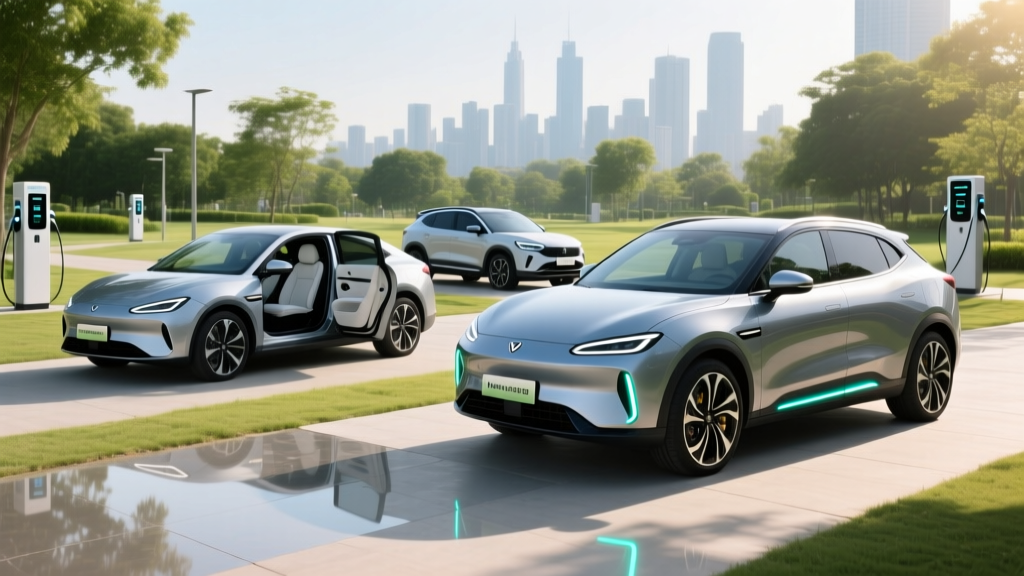
As of early 2026, Mahindra & Mahindra does not sell electric vehicles directly in the United States. The Indian automaker's current EV portfolio—built on its BEV.06 and INGLO skateboard platforms—includes models like the XUV400 (a compact SUV launched in India in 2023) and the upcoming BE 6 and XUV 9e coupe-SUVs. While Mahindra has signaled long-term interest in global expansion, no US-spec models have been formally announced for American dealerships. US buyers researching a Mahindra electric car should understand what these vehicles offer abroad, how they compare to US-market EVs, and what a potential entry would mean for pricing and ownership costs.
Mahindra's Current Electric Vehicle Portfolio
Mahindra's electrification strategy pivoted sharply with the reveal of its INGLO modular platform and BEV.06 architecture, designed to underpin a new generation of battery-electric vehicles. Here is what the lineup looks like from a specifications standpoint:
| Model | Platform | Battery (kWh) | Estimated Range (WLTP) | Peak DC Charge (kW) | 0-100 km/h (est.) | Status |
|---|---|---|---|---|---|---|
| XUV400 | Modified ICE | 39.4 kWh (NMC) | ~278 mi (450 km) | 50 kW | 8.3 sec | On sale (India) |
| BE 6 | INGLO BEV.06 | 59 / 79 kWh (LFP/NMC) | ~310-380 mi (500-610 km) | 175 kW | ~6.7 sec (79 kWh AWD) | Announced / Launching India 2025-2026 |
| XUV 9e | INGLO BEV.06 | 59 / 79 kWh (LFP/NMC) | ~330-400 mi (530-640 km) | 175 kW | ~7.0 sec (79 kWh AWD) | Announced / Launching India 2025-2026 |
Note: Range figures above are WLTP estimates used in India and Europe. EPA ratings—typically 10-20% lower than WLTP—would apply to any future US-spec version. Source: Mahindra & Mahindra official site.
The BE 6 and XUV 9e are the vehicles most likely to represent Mahindra globally if the company pursues export markets. Both feature 800V-capable architectures (a rarity at this anticipated price point), Qualcomm Snapdragon cockpit chips, and Level 2+ ADAS suites. The INGLO platform was co-developed with Volkswagen's MEB components in some variants, signaling an ambition to meet European and potentially US safety and homologation standards.
How a Mahindra EV Would Compare to US-Market Alternatives
If Mahindra were to bring the BE 6 or XUV 9e to the US, the likely target price bracket would be $35,000-$50,000 MSRP—putting these models squarely against some of America's best-selling electric crossovers. Here is how a hypothetical US-spec Mahindra BE 6 (79 kWh AWD) might stack up against current market leaders:
| Spec | Mahindra BE 6 (Est. US) | Tesla Model Y LR AWD | Hyundai Ioniq 5 LR AWD | Ford Mustang Mach-E ER AWD |
|---|---|---|---|---|
| Battery | 79 kWh (NMC) | 78.1 kWh (NMC) | 84 kWh (NMC) | 91 kWh (NMC) |
| EPA Range (est.) | ~280-310 mi | 320 mi | 290 mi | 300 mi |
| Peak DC Charge | 175 kW | 250 kW | 240 kW | 150 kW |
| 10-80% Charge (est.) | ~25 min | ~22 min | ~18 min | ~36 min |
| 0-60 mph | ~6.0 sec | 4.8 sec | 5.1 sec | 5.1 sec |
| Est. Base MSRP | $38,000-$45,000 | $48,590 | $54,600 | $52,995 |
| Connector | CCS2 (India) / TBD | NACS | NACS (2025+) | NACS (adapter) |
The potential pricing advantage is Mahindra's strongest card. A sub-$40,000 compact electric SUV with 300 miles of range and 175 kW charging would undercut every mainstream competitor in the US. However, the trade-offs are equally important: an unproven US dealer and service network, unknown NHTSA/IIHS crash-test results, uncertain eligibility for the §30D federal tax credit (which requires North American battery sourcing and critical-mineral compliance), and a connector standard that may not natively support NACS without an adapter.
Real-World Ownership Costs: What a Mahindra EV Buyer Would Face
Let's model the five-year ownership cost of a hypothetical Mahindra BE 6 at $42,000 MSRP against a comparably equipped Tesla Model Y and a Toyota RAV4 Hybrid as a gas comparison baseline.
| Cost Category (5 yr / 75,000 mi) | Mahindra BE 6 (Est.) | Tesla Model Y LR | Toyota RAV4 Hybrid |
|---|---|---|---|
| Purchase Price (MSRP) | $42,000 | $48,590 | $35,425 |
| Federal Tax Credit | $0-$7,500 (uncertain) | $7,500 (if eligible) | $0 |
| Home Charging Install (Level 2) | $1,200-$2,500 | $1,200-$2,500 | N/A |
| Energy/Fuel Cost | $3,750 (home L2) | $3,750 (home L2) | $8,400 (gas @ $3.50/gal, 39 MPG) |
| Maintenance | $1,500 | $1,500 | $3,200 |
| Insurance (avg.) | $9,500 (est. new brand) | $10,200 | $7,800 |
| Estimated 5-Yr Total | $50,450-$59,450 | $57,740 | $54,825 |
Assumptions: 15,000 mi/yr; electricity at $0.16/kWh national average; EV efficiency at 3.0 mi/kWh. Tax credit for Mahindra shown as range because battery sourcing compliance is unknown for a non-US-market vehicle. Source: fueleconomy.gov for EPA efficiency data.
The takeaway is that a Mahindra EV's lower MSRP could offset the uncertainty around tax credit eligibility. However, insurance costs for a brand-new entrant with limited US crash data and scarce parts availability could run 15-25% higher than established EV brands. Maintenance savings versus a hybrid are real—no oil changes, no transmission fluid, fewer moving parts—but tire wear on EVs (due to higher curb weight and instant torque) typically adds $200-$400 over five years compared to ICE equivalents.
Charging Realities: Home Access and Public Networks
Any US buyer considering an imported EV must confront charging logistics head-on. Here is what matters:
Home Charging (Level 2)
Mahindra's India-market vehicles use Type 2 AC connectors (the European/Indian standard). A US version would almost certainly adopt the J1772 standard for Level 2 AC charging or, increasingly, NACS. Home Level 2 installation on a 240V/48A circuit typically costs $1,200-$2,500 including equipment (e.g., ChargePoint Home Flex, Emporia Vue), electrician labor, and permits. If your home electrical panel requires a 200A upgrade, add $2,000-$5,000. A 79 kWh battery charging at 11.5 kW (48A) takes roughly 7-8 hours from empty—easily an overnight top-up.
DC Fast Charging
The INGLO platform's 175 kW peak charge rate is competitive. On a 350 kW Electrify America or Tesla Supercharger station (with adapter), a 10-80% session would take approximately 25 minutes. However, as with all EVs, the charge curve tapers significantly above 80% SoC—expect a full 10-100% session to take 40+ minutes. In cold weather (below 32°F / 0°C), battery preconditioning becomes critical; without it, peak charge rates can drop by 30-50% until the pack warms up.
Connector Compatibility Concern
The US market has decisively moved to NACS (Tesla's connector), with Ford, GM, Rivian, Hyundai, and others adopting it for 2025+ models. If Mahindra enters the US with CCS2 or even CCS1, owners would need a NACS adapter to access the Tesla Supercharger network—the most reliable and extensive DC fast-charging infrastructure in North America with over 25,000 stalls. This is a non-trivial consideration for road-trip viability.
Common Misconceptions About Mahindra EVs
| Myth | Fact |
|---|---|
| "Mahindra EVs are just slow, low-range city cars." | The BE 6 and XUV 9e on the INGLO platform target 300+ miles (WLTP) with 175 kW DC charging and 0-100 km/h times under 7 seconds for AWD variants. These are competitive mid-range EV specs. |
| "Indian cars can't meet US safety standards." | Mahindra's XUV700 (ICE) achieved a 5-star Global NCAP rating. The INGLO platform is engineered with global homologation in mind, though NHTSA/IIHS testing for US-spec models would be required. |
| "They'll get the full $7,500 federal tax credit." | The §30D credit requires final assembly in North America, battery component sourcing from the US or FTA partners, and critical-mineral supply chain compliance. A Mahindra imported from India would likely not qualify unless local assembly is established. Always verify current rules at IRS.gov. |
| "Mahindra will launch in the US any day now." | As of 2026, Mahindra has not announced a US launch timeline. The company is prioritizing India, with potential future focus on Europe, Africa, and Southeast Asia. US entry remains speculative. |
Decision Framework: Should You Wait for Mahindra or Buy Now?
Wait for a Mahindra electric car if:
- You are not in a rush to buy and can wait 2-4 years for a potential US launch.
- Your budget is $35,000-$45,000 and you want a compact/mid-size electric SUV with 280+ miles of range.
- You have reliable home charging access and primarily drive in urban/suburban settings.
- You are comfortable with a new-to-market brand and potentially limited initial service infrastructure.
Buy a current US-market EV now if:
- You need a vehicle within 6 months and want proven dealer support, warranty service, and parts availability.
- You rely on the $7,500 federal tax credit to make the math work—models like the Tesla Model Y, Ford F-150 Lightning, and certain GM EVs currently qualify.
- You road-trip frequently and need seamless access to the Supercharger network via native NACS.
- You want NHTSA/IIHS safety ratings and established insurance rate data before committing.
Frequently Asked Questions
Does Mahindra sell any electric cars in the United States?
No. As of 2026, Mahindra does not have a US sales presence for any vehicle, electric or otherwise. Their EV lineup is currently sold in India, with future exports likely targeting Europe and other emerging markets before North America.
What is the Mahindra BE 6 and when will it be available?
The BE 6 is a coupe-SUV built on Mahindra's INGLO BEV.06 platform, offered with 59 kWh or 79 kWh battery packs and available in RWD and AWD configurations. It is launching in India in phases during 2025-2026. There is no confirmed US availability date.
How does Mahindra's EV technology compare to Tesla or Hyundai?
Mahindra's INGLO platform supports 800V architecture, up to 175 kW DC charging, and modern LFP/NMC battery options—placing it technically in the same tier as Hyundai's E-GMP platform. However, Tesla and Hyundai have years of real-world charging-curve optimization, thermal management refinement, and established software ecosystems that Mahindra has yet to prove at scale globally.
Would a Mahindra EV qualify for the US federal tax credit?
Almost certainly not under current §30D rules, which require North American final assembly and strict battery-sourcing criteria. Unless Mahindra establishes a US or Mexico assembly plant, buyers should not expect the $7,500 credit. Consult a tax professional and check IRS.gov for the latest eligibility details.
What should I buy instead of waiting for Mahindra?
In the $35,000-$50,000 electric SUV segment, strong current options include the Tesla Model Y (320 mi EPA, NACS native, $7,500 credit eligible), Hyundai Ioniq 5 (290 mi EPA, ultra-fast 18-min 10-80% charging), Chevrolet Equinox EV (315 mi EPA, competitive pricing), and the Volvo EX30 (275 mi EPA, starting ~$36,000). Each offers established US dealer networks and proven reliability data.