Quick Answer: Is the Mack LR Electric Right for Your Fleet?
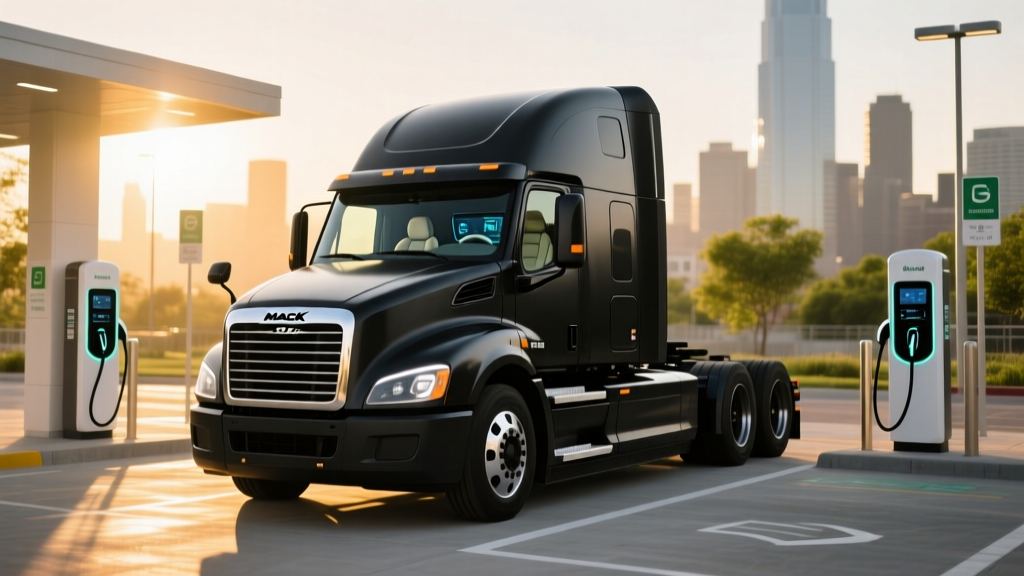
The Mack LR Electric is a battery-electric Class 8 refuse and vocational truck designed for stop-and-go municipal routes. It offers an EPA-estimated range of up to 150 miles on a full charge (real-world: expect 100–130 miles depending on payload, terrain, and climate), charges from 10–80% in roughly 70 minutes at a 150 kW DC fast charger, and carries a base MSRP around $450,000 before federal and state commercial EV incentives. It makes financial sense for fleets running predictable, sub-120-mile daily routes with depot-based overnight charging. It does not suit long-haul or high-mileage variable routes.
Mack LR Electric at a Glance: Key Specifications
The LR Electric is Mack's purpose-built electric refuse truck, now in its second generation for the 2026 model year. Unlike a simple diesel-to-electric conversion, the LR Electric uses Mack's integrated electric powertrain with a purpose-designed chassis optimized for battery placement and refuse body integration.
| Specification | Mack LR Electric (2026) |
|---|---|
| Vehicle Class | Class 8 Vocational / Refuse |
| Battery Capacity | 376 kWh usable (NMC lithium-ion) |
| EPA-Estimated Range | Up to 150 miles (unladen) |
| Real-World Range (loaded refuse route) | 100–130 miles |
| Electric Motor Output | 448 HP (334 kW) continuous / 536 HP peak |
| Peak Torque | 4,270 lb-ft at wheels (via 2-speed transmission) |
| Max DC Fast Charge Rate | 150 kW (CCS1 connector) |
| 10–80% DC Charge Time | ~70 minutes at 150 kW |
| Level 2 AC Charging | 19.2 kW (SAE J1772 / CCS1 AC) |
| GVWR | 66,000 lbs (with refuse body) |
| Payload Capacity | Varies by body config; ~25,000–28,000 lbs typical |
| Base MSRP | ~$450,000 (cab/chassis, before body & incentives) |
| Battery Warranty | 6 years / unlimited miles (min 70% capacity retention) |
| Powertrain Warranty | 5 years / 300,000 miles |
Source: Mack Trucks LR Electric Official Page
Real-World Range: What Fleet Operators Actually See
The 150-mile EPA estimate assumes an unladen truck on a flat test cycle. In actual refuse collection duty, range drops significantly due to the energy demands of the hydraulic compactor, frequent stop-start cycles, and gross vehicle weight approaching 66,000 lbs.
EPA Sticker: 150 miles (unladen, controlled conditions)
Real-World Loaded Refuse Route: 100–130 miles typical
Cold Weather (below 32°F): 80–100 miles — battery thermal management and cabin heat consume 15–25% additional energy
Hilly Terrain (e.g., San Francisco, Pittsburgh): 85–110 miles depending on grade severity
Regenerative braking partially offsets stop-and-go energy loss. On a typical 120-stop refuse route, regen can recover 20–30% of braking energy — one of the key efficiency advantages electric drivetrains hold over diesel in this duty cycle. Diesel trucks waste this energy as heat in the brake pads and transmission.
Most municipal refuse routes run 60–90 miles per day, making the LR Electric viable for single-shift operations. Double-shift or extended suburban routes exceeding 120 miles will require opportunity charging or a second vehicle rotation.
Charging Infrastructure: Depot Requirements and Costs
Charging a Class 8 truck is fundamentally different from plugging in a passenger EV. The LR Electric requires commercial-grade charging infrastructure at your depot or yard.
| Charging Level | Power (kW) | Connector | Full Charge Time (0–100%) | Use Case |
|---|---|---|---|---|
| Level 2 AC (Depot Overnight) | 19.2 kW | CCS1 AC / J1772 | ~20 hours | Not practical for full recharge; useful for top-off or storage maintenance |
| DC Fast Charge (60 kW) | 60 kW | CCS1 DC | ~5.5 hours (10–80%) | Overnight depot charging with lower electrical service requirements |
| DC Fast Charge (150 kW) | 150 kW | CCS1 DC | ~70 minutes (10–80%) | Recommended depot charger; enables single overnight cycle for multiple trucks |
Critical installation considerations:
- Electrical service upgrade: A single 150 kW DC charger draws roughly 200 amps at 480V three-phase. A depot with 5 trucks needs approximately 1 MW of dedicated electrical capacity — most fleet yards will require a utility service upgrade.
- Utility coordination: Expect 6–18 months lead time for utility transformer and service upgrades. Start this process before ordering trucks.
- Charger hardware cost: A 150 kW CCS1 DC fast charger costs $60,000–$90,000 per unit (hardware only).
- Installation cost: Trenching, conduit, switchgear, and electrician labor typically add $30,000–$80,000 per charger, depending on distance from the service panel.
- Smart charging software: Load management systems (e.g., ChargePoint, Enel X) stagger charging across trucks to avoid demand-charge spikes. Budget $5,000–$15,000 annually for fleet charging management software.
For a 10-truck depot, total charging infrastructure investment typically runs $1.2M–$2.5M including utility upgrades — a significant capital outlay that must be factored into the total cost of ownership calculation.
Total Cost of Ownership: Mack LR Electric vs. Diesel Refuse Truck
The LR Electric's purchase price is roughly 2–2.5× that of a comparable diesel Mack LR. The economic case rests on fuel savings, maintenance reduction, and incentive offsets over a 10–12 year service life.
| Cost Category (10-Year / 25,000 hrs) | Mack LR Electric | Mack LR Diesel |
|---|---|---|
| Vehicle Purchase (MSRP) | $450,000 | $195,000 |
| Refuse Body & Integration | $120,000 | $120,000 |
| Federal Commercial Clean Vehicle Credit (§45W) | –$40,000 | $0 |
| State/Local Incentives (varies) | –$50,000 to –$120,000 | $0 |
| Net Vehicle Cost | $360,000–$480,000 | $315,000 |
| Depot Charging Infrastructure (allocated per truck) | $120,000–$250,000 | $0 |
| Fuel / Electricity (10 years) | $45,000–$70,000 | $130,000–$180,000 |
| Maintenance (10 years) | $25,000–$40,000 | $85,000–$120,000 |
| DEF Fluid, Oil Changes, DPF | $0 | $15,000–$25,000 |
| Brake Replacement | $3,000–$5,000 (regen extends life) | $12,000–$18,000 |
| Estimated 10-Year TCO | $550,000–$840,000 | $540,000–$660,000 |
Key takeaway: On pure TCO, the LR Electric reaches parity or a modest premium over diesel at the 10-year mark — if your fleet qualifies for the full stack of federal and state incentives and electricity rates remain below $0.12/kWh. Without incentives, the electric option costs $150,000–$250,000 more over 10 years. The breakeven point typically arrives at year 7–9.
Fuel savings are most pronounced in states with low commercial electricity rates and high diesel prices. At $4.20/gallon diesel and $0.10/kWh electricity, the per-mile energy cost drops from roughly $0.85/mile (diesel, at 3.5 mpg in refuse duty) to $0.35/mile (electric, at ~2.2 kWh/mile) — a savings of about $0.50/mile or roughly $12,500/year per truck at 25,000 miles/year.
Source: IRS §45W Commercial Clean Vehicle Credit
Common Misconceptions About Electric Refuse Trucks
| Myth | Fact |
|---|---|
| "Electric trucks can't handle a full refuse route." | Most US municipal refuse routes are 60–90 miles. The LR Electric's real-world 100–130 mile range covers this with margin. The issue is routes exceeding 120 miles or double-shift operations. |
| "Charging takes too long for fleet operations." | Overnight depot charging at 60–150 kW refills the pack in 5–10 hours — well within a standard off-shift window. Daytime opportunity charging at 150 kW adds ~80 miles in 30 minutes. |
| "The batteries won't last and replacement costs $200K." | Mack warranties the battery for 6 years with 70% retention. NMC cells in vocational use (shallow daily cycles, active thermal management) typically show 15–20% degradation at year 8. Replacement cost is estimated at $80,000–$120,000, but full replacement before year 10 is uncommon. |
| "Electric trucks are weaker than diesel." | The LR Electric produces 4,270 lb-ft of wheel torque — more than the diesel LR's ~1,860 lb-ft. Electric motors deliver peak torque from 0 RPM, which is ideal for heavy start-stop loads. The 2-speed transmission manages highway efficiency. |
| "There are no incentives for commercial EVs." | The §45W Commercial Clean Vehicle Credit provides up to $40,000 for Class 8 vehicles (30% of cost basis, capped at $40K). Many states (CA, NY, NJ, CO) offer additional $50K–$150K in vouchers or rebates for zero-emission refuse trucks. |
First-Time EV Fleet Buyer: What You Need to Know
If your fleet is transitioning from diesel to electric for the first time, the learning curve extends well beyond the truck itself. Here are the operational realities that catch most first-time buyers off guard:
1. Route analysis comes first. Before ordering a single truck, GPS-log every route for 30 days. You need daily mileage, elevation profiles, stop counts, and idle time. Any route consistently exceeding 120 miles is a candidate for a diesel or hybrid assignment, not the LR Electric.
2. Utility engagement takes longer than truck delivery. Mack's current lead time for the LR Electric is approximately 12–18 months. Utility service upgrades for depot charging can take 12–24 months. Start utility conversations now, even before placing a vehicle order.
3. Cold weather requires route derating. If your fleet operates in regions with sustained sub-freezing winters (Upper Midwest, Northeast), plan for 20–30% range reduction. A route that's comfortable at 110 miles in July may require mid-day opportunity charging in January.
4. Driver training is non-negotiable. Regenerative braking behavior, one-pedal driving techniques, and pre-conditioning protocols require formal driver orientation. Fleets that skip training report 10–15% higher energy consumption due to poor regen utilization and excessive friction braking.
5. The §45W credit has sourcing requirements. Like the consumer §30D credit, the commercial §45W credit has battery component and critical mineral sourcing requirements that phase in over time. Consult your tax professional and verify current-year IRS guidance on §45W eligibility before counting the full $40,000 in your financial model.
Decision Framework: Should Your Fleet Buy the Mack LR Electric?
Choose the Mack LR Electric if:
- Your daily routes are under 120 miles (loaded) and predictable
- You operate single-shift with 8+ hours of overnight depot downtime
- You have depot space for charger installation and can secure utility service upgrades
- Your state offers additional ZE truck vouchers (CA HVIP, NY Truck Voucher, NJ ZEV programs)
- Your fleet operates in an area with clean-air mandates or low-emission zones
- You plan to hold trucks 10+ years (to reach TCO breakeven)
- Noise ordinances restrict early-morning diesel operations in residential areas
Stick with diesel (or wait) if:
- Daily routes regularly exceed 130 miles or include double shifts
- Your depot lacks three-phase 480V power and utility upgrade timelines are prohibitive
- You operate in extreme cold (sustained below 10°F) with high-mileage routes
- Your fleet turnover cycle is under 7 years (you won't reach TCO parity)
- You lack capital or financing for the $1M+ depot charging buildout
- Your routes include significant highway-speed segments (>55 mph sustained), where electric efficiency drops sharply
Frequently Asked Questions
How long does the Mack LR Electric battery last before replacement?
Mack warranties the NMC battery pack for 6 years with a minimum 70% state-of-health retention. Based on field data from first-generation LR Electric fleets (2020–2024), packs show approximately 2–3% annual degradation in typical refuse duty. Full pack replacement before year 10 is uncommon, but budget $80,000–$120,000 as a contingency for years 10–12.
Can the Mack LR Electric use public DC fast chargers?
Technically yes — it uses the CCS1 connector standard. However, most public DC chargers (Electrify America, EVgo, ChargePoint) are designed for passenger vehicles with 50–350 kW stalls and cannot physically accommodate a Class 8 truck. Fleet operations should plan exclusively around depot-based charging infrastructure.
What's the difference between kW and kWh on the LR Electric?
The LR Electric's battery holds 376 kWh (kilowatt-hours) of energy — this is the "fuel tank size" that determines range. The charger delivers up to 150 kW (kilowatts) of power — this is the "pump speed" that determines how fast the battery refills. A 150 kW charger can theoretically deliver 150 kWh in one hour, but the actual charge curve tapers above 80% state of charge, which is why 10–80% takes ~70 minutes rather than the full pack capacity divided by 150.
Does the LR Electric qualify for the $7,500 consumer EV tax credit?
No. The consumer §30D credit applies only to light-duty vehicles under 14,000 lbs GVWR. The LR Electric is a Class 8 truck (66,000 lbs GVWR) and instead qualifies for the §45W Commercial Clean Vehicle Credit, which provides up to $40,000 (30% of cost basis, capped) for qualifying commercial zero-emission vehicles. This is a business credit applied against tax liability — consult a tax professional for eligibility specifics.
How does the LR Electric perform in hot climates like Phoenix or Houston?
The active liquid thermal management system keeps battery temperatures within optimal range even in sustained 100°F+ ambient heat. However, cooling the pack consumes energy, reducing range by approximately 5–10% in extreme heat. Fleets in desert Southwest cities should plan for 95–115 miles of real-world range in summer months.
What maintenance does the LR Electric require compared to diesel?
The LR Electric eliminates oil changes, diesel particulate filter (DPF) regeneration, diesel exhaust fluid (DEF) refills, transmission fluid service, and most emissions-system maintenance. Remaining maintenance items include tire rotation, cabin air filter, brake inspection (friction brakes last 2–3× longer due to regen), coolant system service, and HVAC checks. Fleets report 50–65% lower maintenance costs vs. diesel equivalents.