Quick Verdict: A Rally-Bred EV Crossover With Real Personality
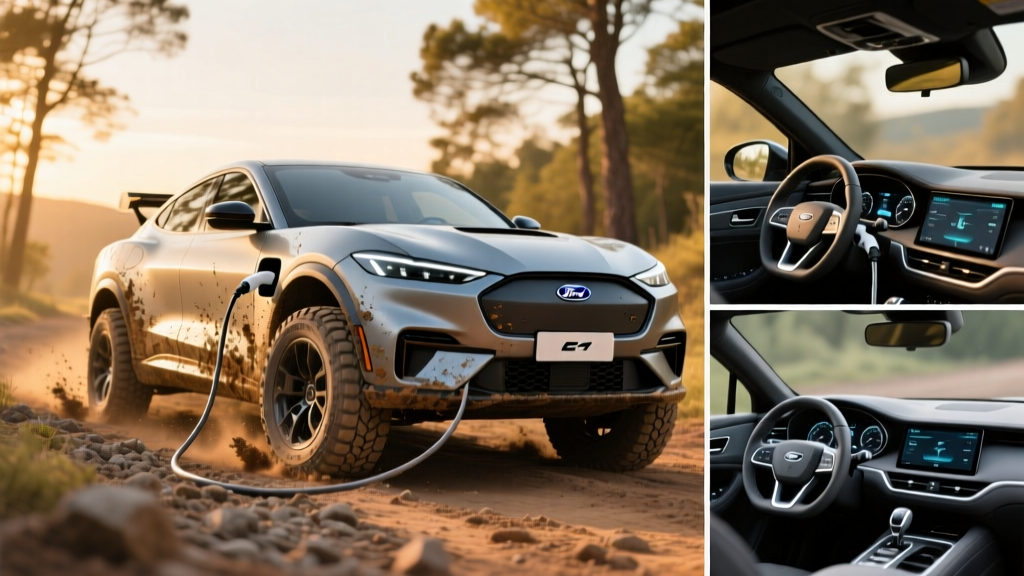
The Ford Mustang Mach-E Rally occupies a strange and compelling corner of the EV market: it's a lifted, rally-tuned electric crossover that prioritizes driving fun over maximum range. Built on the extended-range platform with a 91 kWh usable battery, dual-motor all-wheel drive, and 480 horsepower, the Rally trim adds MagneRide dampers, rally-specific drive modes, and protective underbody shielding to the Mach-E formula. It trades roughly 25 miles of EPA range versus the standard GT for a suspension setup that can genuinely handle gravel roads, snow-covered trails, and washboard fire roads without flinching.
If you want the most efficient Mach-E, this isn't it. If you want the one that makes you look forward to the dirt-road shortcut to the trailhead, the Rally delivers something no other mainstream EV crossover offers at this price point.
Range, Efficiency & Real-World Expectations
Real-World Expectation: ~230–245 miles in mixed highway/city driving at 70 mph; ~190–210 miles in sustained cold weather (below 30°F) or aggressive gravel-road use. The Rally's all-terrain tires, increased ride height, and added weight reduce efficiency versus the GT Extended Range by roughly 8–10%.
The 265-mile EPA figure comes from the EPA's fueleconomy.gov testing cycle. In practice, the Mach-E Rally's efficiency penalty comes from three factors: the taller, heavier all-terrain tire package (roughly 3–4% range loss vs. the GT's summer tires), increased frontal area from the 1.0-inch lift, and the added mass of the rally hardware (underbody shields, reinforced suspension components).
On a 75-mph highway loop in moderate temperatures (60–75°F), expect to see consumption around 38–41 kWh/100 miles, which translates to roughly 230–245 miles of usable range before the low-battery warning. In city driving with regenerative braking engaged, efficiency improves noticeably — drivers report 32–35 kWh/100 mi, stretching range closer to the EPA sticker. Cold weather is the equalizer: at 20°F with cabin heat running, plan for 190–210 miles of real range. The Mach-E's heat pump helps mitigate winter losses compared to resistive-heating EVs, but the Rally's larger thermal mass and all-terrain tire rolling resistance compound the cold-weather penalty.
| Spec | Value |
|---|---|
| EPA Range | 265 miles |
| Battery (usable) | 91 kWh, NMC (nickel manganese cobalt) |
| Drivetrain | Dual-motor AWD (eAWD) |
| Horsepower | 480 hp |
| Torque | 700 lb-ft |
| 0–60 mph | 3.5 seconds |
| Efficiency (combined) | 86 MPGe / 39 kWh/100 mi |
| Max DC Fast Charge | 150 kW (peak) |
| 10–80% DC Charge Time | ~38 minutes |
| Level 2 Home Charge Rate | 10.5 kW (~30 mi/hr) |
| Cargo (behind 2nd row) | 29.7 cu ft |
| Cargo (seats folded) | 59.7 cu ft |
| Front Trunk (frunk) | 4.7 cu ft |
| Base MSRP | $59,995 (before destination) |
| Battery/Powertrain Warranty | 8 years / 100,000 miles |
Charging Speed: DC Fast, Level 2 & Home Setup
The Mach-E Rally uses the same 91 kWh extended-range battery as the GT, meaning charging infrastructure compatibility is identical. The peak DC fast-charge rate is 150 kW via CCS1 connector (or NACS with Ford's included adapter, as Ford transitioned to NACS access for Tesla Superchargers starting in 2024).
| Charging Level | Power (kW) | Miles Added per Hour | Notes |
|---|---|---|---|
| Level 1 (120V household) | ~1.4 kW | ~3 mi/hr | Emergency/trickle only; full charge takes ~65 hours |
| Level 2 (240V, 48A home charger) | 10.5 kW | ~30 mi/hr | Full 0–100% in ~9.5 hours; overnight-ready |
| DC Fast Charge (peak) | 150 kW | ~180 mi/hr (at peak) | 10–80% in ~38 min; tapers significantly above 80% |
A critical ownership note: the Mach-E's DC charging curve is conservative above 80% State of Charge. While 10–80% takes roughly 38 minutes at a 150+ kW station, pushing from 80–100% adds another 25–30 minutes. For road trips, the practical strategy is charging to 80% and driving on — which means your effective fast-charge stop yields about 210 miles of real-world range in moderate conditions.
For home charging, the Ford Mobile Power Cord (included) delivers up to 30 miles of range per hour on a 240V/48A circuit. Most Rally owners will want a hardwired Level 2 station (ChargePoint Home Flex, Emporia V2, or Ford Connected Charge Station) installed on a 60A breaker. Budget $800–$2,200 for a professional installation depending on panel proximity and whether your home's electrical service needs an upgrade to 200A. Always get a quote from a licensed electrician before purchasing equipment.
Performance, Ride Quality & Rally Hardware
The Rally's 480 hp and 700 lb-ft of torque are identical to the Mach-E GT, and the 3.5-second 0–60 mph time makes it genuinely quick by any standard. But the Rally's differentiator isn't straight-line speed — it's the MagneRide adaptive damper system retuned for off-pavement compliance.
On pavement, the MagneRide system firms up appropriately and the Rally handles like a slightly softer GT. On gravel, dirt, and snow, the rally-specific drive mode softens the dampers, recalibrates the torque split to favor controlled slip, and adjusts the regenerative braking to prevent wheel lockup on loose surfaces. The 1.0-inch ride-height increase and Michelin CrossClimate 2 all-terrain tires (225/55R19) provide genuine ground clearance for fire roads and moderate trail use.
Underbody protection includes a steel front skid plate and reinforced composite shields along the battery enclosure. This isn't a rock crawler, but it handles Class II forest-service roads, sandy beach access, and snow-covered mountain passes with confidence that the standard Mach-E simply cannot match.
The eAWD system uses independent front and rear motors with no mechanical connection. Torque vectoring is handled electronically, and the Rally's calibration allows more rear-bias slip than the GT for a playful, controllable drift character on loose surfaces — something Ford demonstrated convincingly at the Rally's launch events.
Pricing, Tax Credits & Total Cost
| Item | Amount |
|---|---|
| Base MSRP | $59,995 |
| Destination & Delivery | $1,895 |
| As-Tested (with E-Latch delete, paint) | ~$62,500 |
| Federal §30D Tax Credit (if eligible) | Up to $7,500 (point-of-sale transfer available) |
| Estimated Price After Max Credit | ~$54,390 |
Federal EV tax credit eligibility under IRS §30D depends on several requirements that must all be met simultaneously:
- MSRP Cap: The vehicle MSRP must not exceed $80,000 for SUVs/crossovers. The Mach-E Rally qualifies at ~$61,890 MSRP.
- Buyer Income Cap: Modified AGI must not exceed $150,000 (single), $225,000 (head of household), or $300,000 (joint filers).
- Battery Sourcing: A percentage of critical minerals and battery components must be sourced from the U.S. or free-trade-agreement countries. Ford has restructured supply chains to maximize credit eligibility, but verify current-year compliance at the dealer before purchase.
- Point-of-Sale Transfer: Since 2024, buyers can transfer the credit to the dealer at purchase, reducing the sale price directly rather than waiting for a tax refund. Confirm with your dealer that they participate.
Important: tax credit rules change annually, and battery-sourcing compliance can shift between model years. Always verify eligibility with your tax professional and check the latest fueleconomy.gov tax credit database before committing to a purchase.
Interior, Cargo & Daily Practicality
The Rally shares its interior with the rest of the Mach-E lineup: a 15.5-inch vertical touchscreen running Ford's SYNC 4A infotainment system, a 10.2-inch digital instrument cluster, and a minimalist center console with a floating armrest and wireless charging pad.
Cargo space is generous for the segment: 29.7 cubic feet behind the second row and 59.7 cu ft with the 60/40 split seats folded. The 4.7 cu ft front trunk (frunk) includes a drain plug — handy for storing muddy gear after a trail run, which is exactly the use case the Rally targets. Rear-seat legroom measures 38.9 inches, adequate for adults on moderate-length trips.
Notable tech features include Ford BlueCruise 1.2 (hands-free highway driving on pre-mapped divided highways — this is SAE Level 2, requiring driver attention at all times), a 360-degree camera system, and over-the-air updates that have meaningfully improved the Mach-E's software since its 2021 launch. The Rally also includes a specific "RallySport" drive mode accessible from the touchscreen that remaps throttle response, damper settings, and stability-control thresholds.
Drawbacks worth noting: the Mach-E's panoramic glass roof lacks a retractable shade, which can make the cabin warm in summer. The E-Latch electronic door handles have drawn criticism for being unintuitive in emergencies (Ford offers a manual-delete option). And the 15.5-inch screen, while impressive, requires too many taps for basic climate adjustments — a physical knob would be preferable.
Pros, Cons & Who Should Buy the Mach-E Rally
Pros
- Unique rally-tuned suspension with MagneRide — no mainstream EV competitor offers this
- Genuine off-pavement capability for fire roads, snow, and gravel
- 480 hp and 3.5-sec 0–60 with playful eAWD torque vectoring
- Generous cargo space with practical frunk drain for muddy gear
- Ford's dealer network and service infrastructure are extensive
- Eligible for up to $7,500 federal tax credit (verify sourcing compliance)
Cons
- 265-mile EPA range trails the Mach-E Premium RWD (320 mi) and key rivals
- 150 kW peak DC charging is slower than Hyundai Ioniq 5 (240 kW) and Tesla Model Y (250 kW)
- Premium pricing at ~$62K as-tested
- Touchscreen-heavy interface; limited physical controls
- All-terrain tires generate more road noise on pavement than standard rubber
- E-Latch door handles remain controversial
Best for: Active-lifestyle EV buyers who regularly drive on unpaved roads, forest-service trails, ski-area access roads, or snow-covered routes. If your weekend involves a gravel shortcut to a trailhead, the Rally is purpose-built for you.
Not ideal for: Range-priority commuters, budget-focused buyers, or anyone whose driving is 100% on pavement. The Mach-E Premium Extended Range RWD delivers 320 miles of EPA range for roughly $15,000 less, and the GT provides similar performance without the off-road hardware.
Competitor Comparison: Rally vs. the Field
The Mach-E Rally doesn't have a direct rival — no other mainstream EV crossover offers rally-tuned suspension and dedicated off-pavement drive modes at this price. But buyers cross-shop it against these alternatives:
- Tesla Model Y Long Range AWD: More range (310+ mi EPA), faster DC charging (250 kW), broader Supercharger network. But no rally hardware, lower ground clearance, and a firmer ride on rough roads.
- Hyundai Ioniq 5 Limited AWD: Faster DC charging (240 kW, 10–80% in ~18 min), 800V architecture, slightly more range. No off-road pretensions.
- Subaru Solterra / Toyota bZ4X: Better genuine off-road clearance and X-Mode traction systems, but significantly less power (215 hp), slower charging, and ~220-mile range.
- Rivian R1S (Dual-Motor): Far more capable off-road, but starts above $75,000 and is a larger, heavier vehicle in a different class.
The Rally's niche is the buyer who wants EV performance and daily practicality with moderate off-road capability — enough for fire roads and snow, not rock crawling. In that specific lane, it's unchallenged.
Frequently Asked Questions
What is the real-world range of the Mach-E Rally?
The EPA rates it at 265 miles. In real-world mixed driving at highway speeds, expect 230–245 miles. Cold weather (below 30°F) reduces this to approximately 190–210 miles. Aggressive driving on gravel will further reduce range due to the higher rolling resistance of all-terrain tires.
How fast does the Mach-E Rally charge?
On a DC fast charger, it peaks at 150 kW, delivering a 10–80% charge in approximately 38 minutes. At home on a Level 2 (240V/48A) charger, it adds roughly 30 miles of range per hour, achieving a full charge overnight in about 9.5 hours.
Does the Mach-E Rally qualify for the federal EV tax credit?
It can, but eligibility depends on your income (AGI caps apply), the vehicle's battery-sourcing compliance for the current model year, and the MSRP cap (which the Rally meets at under $80,000). Verify current-year eligibility at fueleconomy.gov and with your tax professional before purchasing. The credit can be transferred at the point of sale to reduce your purchase price directly.
Is the Mach-E Rally worth buying vs. the Mach-E GT?
If you drive on unpaved roads regularly — gravel, dirt, snow — the Rally's MagneRide suspension, all-terrain tires, and underbody protection justify the premium and small range trade-off. If you stay on pavement, the GT delivers the same powertrain performance with slightly better range and a lower price.
Can the Mach-E Rally tow?
Yes. With the factory tow package, the Mach-E Rally is rated for up to 2,300 pounds — enough for a small utility trailer, a pair of dirt bikes, or a lightweight camper. Towing will significantly reduce range; plan for roughly 50% of the EPA rating when towing near capacity.
What is the battery warranty on the Mach-E Rally?
Ford covers the high-voltage battery and electric powertrain components for 8 years or 100,000 miles, whichever comes first. The warranty guarantees the battery will retain a minimum capacity threshold (typically 70% of original capacity) during the coverage period.