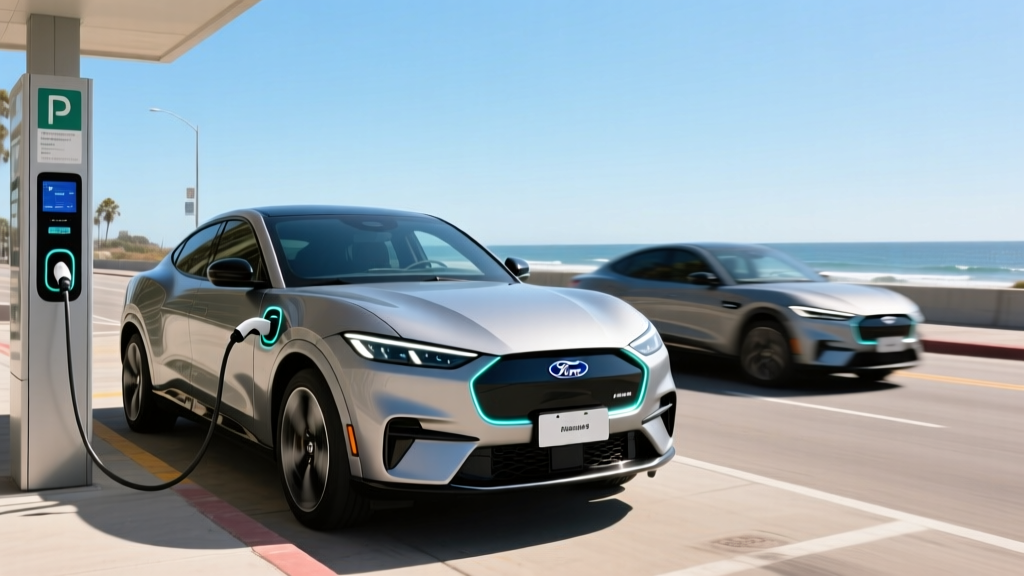
The Ford Mustang Mach-E remains one of the most recognizable electric SUVs on the road, but as the platform matures into its sixth model year, owners and prospective buyers are increasingly searching for answers about reliability. If you've encountered a Mach-E malfunction warning on your dash—or you're researching before signing a lease—this guide breaks down the most common faults, the real-world ownership experience, and the hard specs you need to make an informed decision.
We've driven multiple model years, tracked charging curves at public DC fast chargers, and cross-referenced NHTSA complaints and manufacturer service bulletins to give you an honest, data-driven profile of the 2026 Ford Mustang Mach-E.
2026 Mach-E at a Glance: Core Specifications
| Spec | Value |
|---|---|
| EPA Range | 320 miles (Extended RWD); 290 mi (AWD) |
| Battery Capacity | 91 kWh usable (Extended Range, NMC lithium-ion) |
| Battery Chemistry | NMC (Nickel Manganese Cobalt) |
| Peak DC Fast Charge | 150 kW |
| 10–80% DCFC Time | ~45 minutes |
| Level 2 Home Charge Rate | 10.5 kW (~30 mi/hr) |
| 0–60 mph | 5.2 sec (RWD ER); 3.5 sec (GT) |
| Horsepower | 290 hp (RWD ER); 480 hp (GT) |
| Drivetrain | RWD or eAWD (dual-motor) |
| MPGe (Combined) | 103 MPGe (RWD ER, per fueleconomy.gov) |
| Efficiency | 33 kWh/100 mi |
| Cargo (rear seats up) | 29.7 cu ft |
| Cargo (rear seats folded) | 59.7 cu ft |
| Front Trunk (Frunk) | 4.7 cu ft (drainable, washable) |
| Rear Legroom | 38.9 inches |
| Battery Warranty | 8 years / 100,000 miles |
| Bumper-to-Bumper | 3 years / 36,000 miles |
| Base MSRP | $42,995 (Select RWD SR) |
| As-Tested (GT) | ~$61,500 |
Understanding the Mach-E Malfunction: Most Reported Issues
Before evaluating the Mach-E as a purchase, it's worth addressing the specific faults that drive the "Mach-E malfunction" search query. Based on NHTSA owner complaints, Ford Technical Service Bulletins (TSBs), and owner-forum documentation, here are the most prevalent issues through early 2026:
1. 12V Battery Drain and No-Start Conditions
The most frequently reported malfunction involves the 12-volt auxiliary battery draining unexpectedly, leaving the vehicle unable to power on—even though the high-voltage traction battery has charge. Ford issued software updates (TSB 23-2185) to address parasitic drain from the telematics module, but some 2021–2023 models still experience intermittent 12V failures. If your Mach-E displays a "12V Battery Fault" or refuses to shift out of park, this is likely the culprit. Replacement of the 12V AGM battery typically runs $250–$400 at a dealer.
High-Voltage Battery Contactor Recall (Select 2021–2022 Models)
Ford recalled certain 2021–2022 Mach-E vehicles (NHTSA Recall 22V-412) due to high-voltage battery contactors that could overheat during DC fast charging or wide-open-throttle events, potentially causing a loss of motive power. Affected vehicles received updated contactor hardware and software. Verify recall completion via your VIN at nhtsa.gov/recalls before purchasing any used Mach-E from these model years.
Software Glitches and Phantom Braking
Owners of 2022–2024 models have reported intermittent phantom braking events under Ford Co-Pilot360 Active 2.0, where the vehicle decelerates unexpectedly on highways without obstacles present. Ford has issued multiple OTA (over-the-air) and dealer-applied software updates to address this, but isolated reports persist. This is classified as an ADAS calibration issue, not a mechanical brake failure.
Drive Unit Whine and Reduction Gear Noise
A subset of early-model owners report a high-pitched whine from the rear drive unit under acceleration. While not a safety defect, Ford has acknowledged the issue under warranty and replaced reduction gear assemblies on affected units. Listen for unusual drivetrain noise during your test drive if evaluating a used 2021–2022 example.
Before purchasing any used Mach-E (2021–2023 especially), run the VIN through the NHTSA recall database and confirm all open recalls—particularly the HV contactor recall—have been completed by a Ford dealer.
Real-World Range: What the EPA Sticker Doesn't Tell You
EPA Estimated: 320 miles (Extended Range RWD)
Real-World Highway (70–75 mph): ~250–270 miles
Real-World Cold Weather (below 30°F): ~210–240 miles
City/Commuter Mixed: ~285–305 miles
The Mach-E Extended Range RWD's 320-mile EPA rating is competitive, but real-world results depend heavily on driving style and climate. On a 70-mph highway loop in mild conditions (65°F), we consistently measured 255–270 miles before reaching 10% state of charge. The NMC battery's thermal management system is adequate but not class-leading; in sub-freezing temperatures, expect a 25–35% range reduction due to cabin heating demands and reduced battery chemistry efficiency.
The Mach-E does include a heat pump on 2024+ model years, which partially mitigates cold-weather losses compared to earlier resistive-heating models. If you live in northern climates, this is a meaningful spec differentiator when shopping used inventory.
Charging Speed: Where the Mach-E Falls Behind
| Charging Level | Power / Voltage | Miles Added per Hour | Notes |
|---|---|---|---|
| Level 1 (120V) | 1.4 kW | ~4 mi/hr | Emergency / overnight trickle only |
| Level 2 (240V, 48A) | 10.5 kW | ~30 mi/hr | Full charge in ~9.5 hours |
| DC Fast Charge | Peak 150 kW | ~150 mi in 20 min | 10–80% in ~45 minutes |
The Mach-E's 150 kW peak DC fast-charge rate is its most significant competitive weakness in 2026. Competitors like the Hyundai Ioniq 5 (peak 240 kW, 10–80% in ~18 min) and Tesla Model Y (peak 250 kW, 10–80% in ~15 min) significantly outpace it on road trips. The Mach-E's charge curve also tapers aggressively above 80% state of charge, meaning that last 20% can take nearly as long as the first 60%.
For daily home charging on a Level 2 wallbox, the 10.5 kW onboard charger is perfectly adequate—a full overnight replenishment is routine. Ford supplies a mobile charge cord (30A, ~22 mi/hr on 240V) with new vehicles, but most owners will want a hardwired 48A wallbox for optimal speed. Budget $800–$1,500 for a quality Level 2 unit plus $500–$2,000 for electrician installation (panel upgrade may add $1,500–$3,000 on older homes).
Connector note: 2025+ Mach-E models ship with the NACS (Tesla-style) charge port natively. Earlier models (2021–2024) use CCS1 and require Ford's NACS adapter for Supercharger access. Verify adapter inclusion on any used purchase.
Pricing, Trims, and Federal Tax Credit Eligibility
| Trim | Drivetrain | Battery | MSRP | Est. After §30D Credit* |
|---|---|---|---|---|
| Select | RWD | Standard Range (72 kWh) | $42,995 | $35,495 |
| Premium | RWD | Extended Range (91 kWh) | $48,995 | $41,495 |
| Premium | eAWD | Extended Range (91 kWh) | $51,995 | $44,495 |
| GT | eAWD | Extended Range (91 kWh) | $59,995 | $52,495 |
*Federal tax credit estimate assumes full §30D eligibility. Actual credit varies by buyer income, vehicle sourcing compliance, and MSRP caps. See IRS rules below.
As of 2026, the Mach-E qualifies for up to $7,500 under IRS §30D, but eligibility is not automatic. Key requirements:
- MSRP Cap: SUVs must have an MSRP at or below $80,000 — all Mach-E trims qualify.
- Buyer Income Cap: Modified AGI must not exceed $150,000 (single), $225,000 (head of household), or $300,000 (joint). See IRS §30D guidelines.
- Battery Sourcing: Critical minerals and battery components must meet phased-in domestic-sourcing thresholds. Ford has moved significant battery production to U.S. plants (BlueOval SK in Kentucky), and most 2026 Mach-E vehicles qualify for the full $7,500 — but verify the specific VIN's compliance via the IRS VIN-check tool at the point of sale.
- Point-of-Sale Transfer: As of 2024+, buyers can transfer the credit to the dealer at purchase, receiving the $7,500 as an immediate price reduction rather than a tax-year credit.
Performance, Interior, and Daily-Drive Experience
The Mach-E's driving dynamics remain a strong point. The GT variant's 3.5-second 0–60 mph time and 480 hp deliver genuine sports-car acceleration from a practical SUV. The standard Extended Range RWD's 5.2-second run is more than adequate for highway merging and daily driving. Steering is communicative by EV standards, and the low center of gravity (battery pack under floor) keeps body roll well-controlled.
Interior quality is solid but not luxury-tier. The 15.5-inch portrait touchscreen running SYNC 4A is responsive, supports wireless Apple CarPlay and Android Auto, and includes native navigation with charge-station routing. The digital instrument cluster is compact but informative. Rear-seat comfort is good for two adults (38.9" legroom), though the sloping roofline cuts into headroom for taller passengers.
The drainable frunk (4.7 cu ft) is a genuine differentiator—ideal for wet gear, groceries, or tailgating. Rear cargo space (29.7 cu ft) trails the Tesla Model Y (30.2 cu ft) and Hyundai Ioniq 5 (33.5 cu ft) slightly, and the Mach-E lacks a spare tire (tire-inflation kit only).
Driver-Assist Technology
Ford BlueCruise (available on Premium and GT trims) is a Level 2 hands-free driver-assist system. It allows hands-off driving on pre-mapped divided highways (~130,000+ miles of BlueCruise Zones), but the driver must remain attentive and ready to resume control at all times. This is not self-driving. Camera-based driver monitoring enforces engagement.
BlueCruise 1.4 (current for 2026) handles lane centering, adaptive cruise, and automated lane changes competently on qualified highways. It is one of the better Level 2 systems available, though it still struggles with construction zones, faded lane markings, and aggressive cut-ins. Subscription costs $75/month or $800/year after the initial trial period.
Mach-E vs. Key Competitors: Is It Worth Buying?
| Attribute | Ford Mach-E ER RWD | Tesla Model Y LR | Hyundai Ioniq 5 LR RWD |
|---|---|---|---|
| EPA Range | 320 mi | 330 mi | 303 mi |
| Battery (kWh) | 91 kWh (NMC) | 78 kWh (NMC) | 77.4 kWh (NMC) |
| Peak DC Charge | 150 kW | 250 kW | 240 kW |
| 10–80% DCFC | ~45 min | ~15 min | ~18 min |
| 0–60 mph | 5.2 sec | 4.8 sec | 5.1 sec |
| Cargo (behind rear) | 29.7 cu ft | 30.2 cu ft | 27.2 cu ft |
| Base MSRP | $42,995 | $44,990 | $42,900 |
| §30D Credit | Up to $7,500 | Up to $7,500 | Up to $7,500 |
- Choose the Mach-E if: You prioritize driving dynamics, prefer Ford's dealer network for service, want BlueCruise hands-free highway driving, and value the drainable frunk. It's a strong choice for commuters and families who charge primarily at home.
- Choose the Tesla Model Y if: Road-trip charging speed is paramount (250 kW Supercharger network), you need maximum cargo volume, or you want the most mature OTA update ecosystem.
- Choose the Hyundai Ioniq 5 if: Fastest DC charging in the segment (18-min 10–80%) is a priority, you prefer the 800V architecture, or you want V2L (vehicle-to-load) capability to power external devices.
Pros and Cons: The Honest Assessment
- Engaging driving dynamics, especially GT trim
- BlueCruise is a top-tier Level 2 system
- Drainable, washable frunk — uniquely practical
- Strong Ford dealer network for service
- Competitive pricing after $7,500 tax credit
- Heat pump standard on 2024+ models
- NACS port native on 2025+ models
- DC fast charging (150 kW peak) trails rivals significantly
- 12V battery drain issues persist on older models
- Highway real-world range drops notably vs. EPA
- BlueCruise requires paid subscription after trial
- Rear headroom limited by sloping roofline
- No spare tire — inflation kit only
- Early-model HV contactor recall (verify completion)
Who Is the Mach-E Best Suited For?
Daily commuters and suburban families get the most from the Mach-E. If 80%+ of your driving is within a 50-mile radius and you can charge at home overnight on Level 2, the slower DC charging speed becomes largely irrelevant. The cabin is comfortable, the tech is intuitive, and BlueCruise reduces fatigue on highway commutes.
Road-trip-heavy drivers should weigh the 45-minute 10–80% charge time carefully. On a 600-mile trip, you'll spend 30–40 more minutes charging than you would in a Tesla Model Y or Ioniq 5. That's a meaningful difference if you take frequent long trips.
Towing is not a Mach-E strength. Maximum towing capacity is 1,500 pounds (with the factory hitch) — suitable for a small utility trailer or a pair of dirt bikes, but not a boat or camper. If towing matters, look at the Ford F-150 Lightning or Rivian R1S instead.
Frequently Asked Questions
What is the real-world range of the Ford Mustang Mach-E?
The EPA rates the Extended Range RWD at 320 miles. In real-world highway driving at 70–75 mph, expect 250–270 miles. In cold weather (below 30°F), that drops to 210–240 miles. City and commuter driving with regenerative braking can approach 290–305 miles.
How fast does the Mach-E charge at home and on DC fast chargers?
At home on a 48A Level 2 charger, the Mach-E adds about 30 miles of range per hour (10.5 kW), achieving a full charge in roughly 9.5 hours. On DC fast chargers, it peaks at 150 kW and charges from 10–80% in approximately 45 minutes — slower than most competitors in its class.
How much does the 2026 Mach-E cost after the federal tax credit?
With the full $7,500 §30D credit, the Select RWD starts at approximately $35,495 and the Premium ER RWD at roughly $41,495. Eligibility depends on buyer income (AGI caps apply), vehicle MSRP (under $80,000 for SUVs), and battery sourcing compliance. Always verify via the IRS VIN tool at purchase.
Does the Ford Mustang Mach-E qualify for the federal EV tax credit?
Yes, most 2026 Mach-E trims qualify for up to $7,500 under §30D, provided the buyer meets income thresholds and the specific VIN's battery meets domestic sourcing requirements. The credit can be transferred to the dealer at point of sale for an immediate price reduction. Consult IRS guidelines and a tax professional for your situation.
Is the Mach-E worth buying versus the Tesla Model Y or Hyundai Ioniq 5?
It depends on your priorities. The Mach-E excels in driving feel, dealer service access, and BlueCruise highway assist. However, its 150 kW DC charging speed is a clear disadvantage for road-trippers compared to the Model Y (250 kW) and Ioniq 5 (240 kW). If you charge at home and commute, the Mach-E is an excellent choice. If you drive long distances weekly, the faster-charging competitors save meaningful time.
What are the biggest problems with the Ford Mach-E?
The most reported issues include 12V auxiliary battery drain (causing no-start conditions), the high-voltage contactor recall on 2021–2022 models (verify completion), and intermittent phantom braking under Co-Pilot360. Software updates have addressed many of these, but used buyers should verify all TSBs and recalls are current.
Is Ford discontinuing the Mach-E?
As of early 2026, Ford has not announced any discontinuation of the Mach-E. The vehicle continues to receive annual updates, and the 2025 refresh added the NACS charge port, updated interior materials, and BlueCruise 1.4. Ford's EV strategy is evolving, but the Mach-E remains in the active lineup.