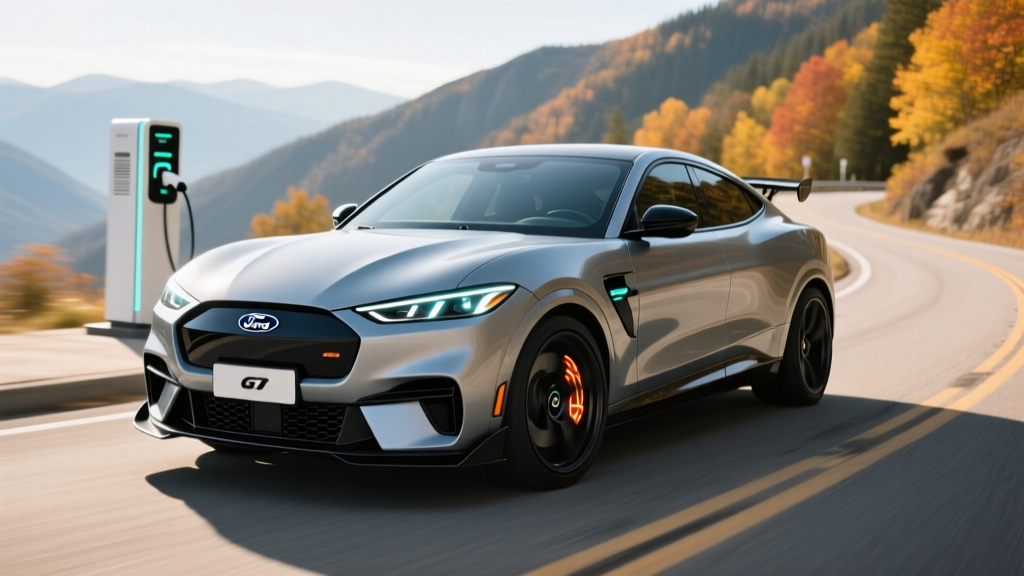
The Ford Mustang Mach-E GT has always occupied a strange space in the EV market: a performance crossover that shares its badge with a pony car but delivers something closer to a Tesla Model Y Performance rival. With the available Performance Upgrade package, Ford pushes the GT into genuine sports-car territory — but at what cost to range, charging practicality, and everyday usability? We break down the exact numbers so you can decide if the upgrade earns its premium.
Quick Verdict: Who the Mach-E GT Performance Upgrade Is For
The Performance Upgrade transforms the GT from a quick daily driver into a legitimate performance machine. You get the MagneRide adaptive dampers, a unique drive mode, summer performance tires, and slightly revised powertrain calibration that shaves the 0-60 mph time down to 3.3 seconds — competitive with a Porsche Taycan 4S. The trade-off is roughly 20-30 miles of EPA range compared to the standard GT and a firmer ride. If you prioritize driving dynamics over maximum range and already have reliable home charging, this is one of the best-balanced performance EVs on the market. If you regularly road-trip 300+ miles between charges, the standard GT or a Rivian R1S may serve you better.
Range, Battery, and Efficiency: The Real Numbers
The Mach-E GT Performance Upgrade uses Ford's extended-range battery pack: a 91 kWh usable lithium-ion unit with NMC (nickel-manganese-cobalt) chemistry. Ford does not offer an LFP option on the GT trims, which makes sense given the power demands, but it also means you should follow best practices for NMC longevity — avoid routinely charging to 100% and try not to let the pack sit at very low states of charge for extended periods.
Real-World Expectation: Plan for approximately 240-260 miles on highway-heavy trips at 70-75 mph. In cold weather (below 30°F), expect a 20-30% reduction, bringing usable range down to roughly 195-225 miles. The GT's wider, stickier summer tires and more aggressive powertrain calibration contribute to slightly higher energy consumption than the standard extended-range AWD model.
Efficiency: 89 MPGe combined / 37 kWh per 100 miles
| Specification | Value |
|---|---|
| EPA Range | 280 miles |
| Battery (usable) | 91 kWh, NMC chemistry |
| Drivetrain | Dual-motor AWD |
| Horsepower | 480 hp |
| Torque | 634 lb-ft (with Performance Upgrade) |
| 0-60 mph | 3.3 seconds |
| Top Speed | 130 mph (electronically limited) |
| Max DC Fast Charge | 150 kW (peak) |
| 10-80% DC Time | ~38 minutes |
| Level 2 Home Charging | 10.5 kW (~32 miles/hr) |
| MPGe (combined) | 89 MPGe |
| Cargo (rear seats up) | 29.7 cu ft |
| Cargo (rear seats folded) | 59.7 cu ft |
| Frunk | 4.7 cu ft |
| Base MSRP (GT Perf. Upgrade) | $62,495 (incl. destination) |
| Battery/Powertrain Warranty | 8 years / 100,000 miles |
Charging Speed: DC Fast Charging and Home Setup
The Mach-E GT's 150 kW peak DC fast-charge rate remains a point of contention among EV buyers accustomed to Hyundai Ioniq 5's 240 kW or Tesla Model Y's ~250 kW capabilities. Ford uses a CCS1 connector (with NACS adapter compatibility for Tesla Supercharger access). Here's what charging actually looks like in practice:
| Charge Level | Power / Voltage | Speed | Notes |
|---|---|---|---|
| Level 1 (120V) | ~1.2 kW | ~3 miles/hr | Emergency/top-up only |
| Level 2 (240V) | 10.5 kW | ~32 miles/hr | Full charge in ~9 hours |
| DC Fast Charge | 150 kW peak | 10-80% in ~38 min | Tapers significantly above 80%; preconditioning recommended |
Charging curve reality: The 150 kW peak is only sustained briefly between roughly 15-40% state of charge. Above 60%, the rate drops steeply — expect 50-70 kW in the 70-80% window. This means the published 10-80% time of 38 minutes is achievable, but 10-90% will take closer to 55 minutes. Always use the vehicle's preconditioning feature (activate via the navigation system when routing to a charger) to warm the battery and achieve peak rates, especially in cooler weather.
For home charging, a 48-amp Level 2 wall connector on a 60-amp circuit delivers the full 10.5 kW onboard charger rate, adding roughly 32 miles of range per hour. A full overnight charge from 10-80% takes about 6 hours — more than adequate for daily driving.
Performance and Driving Dynamics
The Performance Upgrade package adds several hardware and software changes over the standard GT:
- MagneRide adaptive dampers — continuously variable suspension tuning that firms up in Unbridled Extend mode
- Unique drive mode calibration — Unbridled Extend mode adjusts throttle mapping, torque distribution, and stability control thresholds for track use
- Summer performance tires — Pirelli P Zero tires on 20-inch wheels (note: these are not suitable for sustained winter driving; plan for a dedicated winter set if you live in snow country)
- Increased torque — 634 lb-ft vs. 600 lb-ft on the standard GT
The result is a 3.3-second 0-60 mph time that puts the Mach-E GT Performance Upgrade within a few tenths of a Tesla Model Y Performance (3.5s) and well ahead of a base Porsche Taycan (5.2s). The dual-motor AWD system provides excellent launch traction, and the MagneRide dampers keep body motion controlled during aggressive cornering. Brake feel remains the GT's weakest dynamic link — the regen blending is competent but not as seamless as Tesla's or Porsche's systems.
Interior, Tech, and Cargo
The Mach-E's cabin is a mixed bag that reflects Ford's transitional approach to EV interiors. The 15.5-inch vertical touchscreen running SYNC 4A dominates the dashboard and handles most climate and vehicle functions — there are very few physical buttons. The interface is responsive, supports wireless Apple CarPlay and Android Auto, and includes a customizable home screen. Ford's BlueCruise hands-free driving assist (SAE Level 2) is available on prequalified highway sections and works well for reducing fatigue on long trips, but it is not autonomous driving — you must remain attentive and keep your eyes on the road at all times.
Cargo space is competitive for the segment:
- 29.7 cu ft behind the rear seats (enough for 4-5 carry-on bags)
- 59.7 cu ft with rear seats folded
- 4.7 cu ft front trunk (frunk) with a drain plug — useful for wet items or tailgate ice storage
- Rear legroom: 38.1 inches (comfortable for adults on longer trips)
Notable drawbacks include a somewhat firm ride on the summer tires (especially noticeable on broken pavement), rear visibility compromised by the sloping roofline, and Ford's decision to use a piano-black center console that attracts fingerprints and dust.
Pricing, Trims, and Federal Tax Credit Eligibility
The 2026 Mustang Mach-E lineup starts with the Select trim, but the GT Performance Upgrade sits at the top of the range:
| Trim | MSRP (incl. destination) | Est. Federal Credit (§30D) | Effective Price |
|---|---|---|---|
| Select RWD | $39,995 | Up to $7,500* | ~$32,495 |
| Premium AWD ER | $49,495 | Up to $7,500* | ~$41,995 |
| GT | $57,495 | Up to $7,500* | ~$49,995 |
| GT Performance Upgrade | $62,495 | Up to $7,500* | ~$54,995 |
*Federal tax credit caveats (IRS §30D, 2026 rules): The full $7,500 credit requires meeting both critical-mineral and battery-component sourcing thresholds set by the IRS. Additionally, buyer income caps apply ($150,000 single / $300,000 joint AGI), and the vehicle MSRP must not exceed $80,000 for SUVs (the Mach-E qualifies). The credit can now be transferred to the dealer at point of sale as an instant discount, but you must confirm eligibility with your tax professional before purchase. Battery sourcing requirements have tightened since 2024, and the exact credit amount for specific build dates may vary. Always verify current status at IRS.gov before committing.
Competitor Comparison: Is the Mach-E GT Worth It?
The Mach-E GT Performance Upgrade competes in a crowded performance-EV space. Here's how it stacks up against its closest rivals on the metrics that matter:
| Metric | Mach-E GT Perf. Upg. | Tesla Model Y Perf. | Hyundai Ioniq 5 N |
|---|---|---|---|
| EPA Range | 280 mi | 285 mi | 221 mi |
| 0-60 mph | 3.3 sec | 3.5 sec | 3.4 sec |
| Peak DC Charge | 150 kW | ~250 kW | ~240 kW |
| 10-80% Time | ~38 min | ~25 min | ~18 min |
| MSRP | $62,495 | $54,990 | $67,500 |
| Supercharger Access | Yes (NACS adapter) | Native | No (CCS only) |
| Cargo (rear up) | 29.7 cu ft | 30.2 cu ft | 27.2 cu ft |
- You value ride quality and adaptive suspension tuning over raw charging speed
- You want Supercharger access (via adapter) without committing to a Tesla
- You prefer a more traditional dealership purchase and service experience
- Track-day capability (MagneRide, Unbridled Extend mode) is a priority
- DC fast-charge speed is your top priority (~250 kW vs. 150 kW)
- You want the lowest purchase price in this segment
- You value native Supercharger integration without an adapter
- You want the fastest charging in the segment (10-80% in ~18 min)
- Simulated gear shifts and ICE-like sound enhance your driving enjoyment
- Maximum range is not your primary concern (221 mi EPA)
Pros and Cons
- 3.3-second 0-60 mph rivals sports cars at twice the price
- MagneRide adaptive dampers deliver excellent ride-handling balance
- Tesla Supercharger access via NACS adapter (2024+ models)
- Competitive cargo space with useful frunk
- BlueCruise Level 2 assist reduces highway fatigue
- Strong 8-year/100,000-mile battery warranty
- 150 kW peak DC charge rate lags key competitors
- Summer tires are not winter-capable — budget for a second wheel set
- Heavy piano-black interior trim attracts dust and fingerprints
- Rear visibility is compromised by the coupe-like roofline
- Brake pedal feel and regen blending could be more refined
- Price premium over the standard GT is substantial (~$5,000)
Ownership, Warranty, and Long-Term Outlook
Ford covers the Mach-E's battery and electric powertrain components for 8 years or 100,000 miles, whichever comes first. The warranty guarantees that the battery will retain at least 70% of its original capacity during that period. Based on data from earlier model-year Mach-Es (2021-2023), NMC degradation has been modest — most owners report 5-8% capacity loss over the first 50,000 miles, which is well within the warranty threshold.
The bumper-to-bumper limited warranty runs 3 years/36,000 miles, which is average for the segment. Ford's dealer network is a genuine advantage over Tesla and Rivian for service accessibility, though EV-specific technician availability varies by location. Insurance premiums for the GT Performance Upgrade tend to run 15-25% higher than the Select trim due to the vehicle's performance classification — get a quote before purchasing.
For a detailed look at real-world efficiency and official ratings, see the EPA's data at fueleconomy.gov.
Frequently Asked Questions
What is the real-world range of the Mach-E GT Performance Upgrade?
The EPA rates it at 280 miles. In real-world highway driving at 70-75 mph, expect 240-260 miles. In cold weather (below 30°F), plan for 195-225 miles due to battery chemistry limitations and increased cabin heating demand.
How fast does the Mach-E GT charge at home and on the road?
At home on a Level 2 (240V, 48-amp) charger, the Mach-E GT adds roughly 32 miles of range per hour and charges fully overnight in about 9 hours. On a DC fast charger, it peaks at 150 kW and charges from 10-80% in approximately 38 minutes — though the charge curve tapers significantly above 80%, so plan for longer stops if you need a full charge.
Does the Mach-E GT Performance Upgrade qualify for the federal EV tax credit?
It may qualify for up to $7,500 under IRS §30D, but eligibility depends on your adjusted gross income (capped at $150K single / $300K joint), the vehicle's battery sourcing compliance (critical minerals and component requirements), and MSRP limits ($80K for SUVs — the Mach-E qualifies). The credit can be transferred to the dealer at point of sale. Always verify current rules at IRS.gov and consult a tax professional.
How much does the Mach-E GT Performance Upgrade cost after incentives?
Base MSRP is $62,495 including destination. With the maximum $7,500 federal credit applied, the effective price drops to approximately $54,995. State and local incentives may reduce this further — check AFDC's state incentive database for your area.
Is the Mach-E GT Performance Upgrade worth buying over the standard GT?
If you value track-capable suspension tuning (MagneRide), the 3.3-second 0-60 time, and the Unbridled Extend drive mode, the ~$5,000 premium is justified. If you primarily commute and want maximum range, the standard GT (290 miles EPA, 0-60 in 3.8s) offers a better balance of performance and efficiency.
Can I use Tesla Superchargers with the Mach-E GT?
Yes. Ford provides a NACS adapter that allows CCS-equipped Mach-E models to access the Tesla Supercharger network. Navigation-based charger routing and payment are integrated through the FordPass app and SYNC 4A system.
What are the biggest drawbacks of the Performance Upgrade package?
The summer performance tires are not suitable for winter conditions (you'll need a dedicated winter tire set), the 150 kW peak DC charging speed lags competitors like the Ioniq 5 N and Model Y Performance, and the firmer MagneRide calibration is more noticeable on rough roads compared to the standard GT.