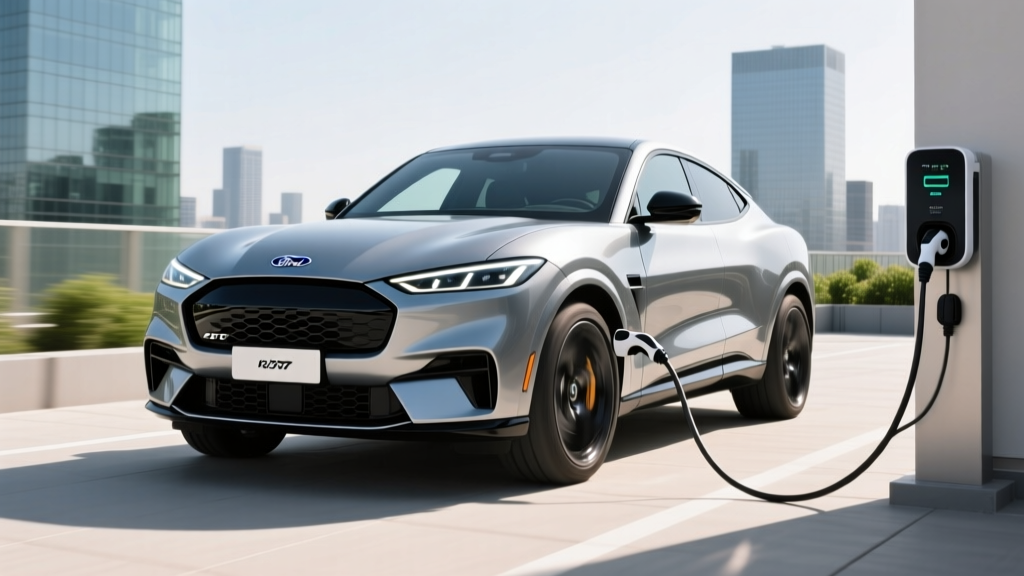
Quick Verdict: A Muscle EV With Real Daily-Driving Chops
The Ford Mustang Mach-E GT performance variant remains one of the most compelling dual-motor electric SUVs on the market, blending sports-sedan acceleration with crossover practicality. With 480 horsepower in standard GT trim and a rally-inspired GT Rally variant, Ford has positioned this as a legitimate performance EV—not just a Mustang wearing a battery. But beyond the 0-60 bragging rights, the real question for buyers is whether the Mach-E GT performance package delivers as a daily driver: range, charging speed, cargo space, and total ownership cost. This review breaks down every number that matters.
Ford Mustang Mach-E GT: Spec Sheet at a Glance
| Specification | Mach-E GT (AWD) | Mach-E GT Rally |
|---|---|---|
| EPA Range | 280 miles (extended-range battery) | 265 miles |
| Usable Battery | 91 kWh (NMC) | 91 kWh (NMC) |
| Horsepower | 480 hp | 480 hp |
| Torque | 600 lb-ft | 700 lb-ft |
| 0–60 mph | 3.8 seconds | 3.4 seconds |
| Drivetrain | Dual-motor AWD | Dual-motor AWD |
| Max DC Fast Charge | 150 kW | 150 kW |
| 10–80% DC Time | ~38 minutes | ~38 minutes |
| Level 2 Home Charge | 10.5 kW (~30 mi/hr) | 10.5 kW (~30 mi/hr) |
| EPA Efficiency | 84 MPGe (2.45 kWh/mi) | 78 MPGe (2.63 kWh/mi) |
| Cargo (rear seats up) | 29.7 cu ft | 29.7 cu ft |
| Cargo (rear seats folded) | 59.7 cu ft | 59.7 cu ft |
| Front Trunk (Frunk) | 4.7 cu ft | 4.7 cu ft |
| Base MSRP (2026) | $59,995 | $61,995 |
| Battery Warranty | 8 yr / 100,000 mi | 8 yr / 100,000 mi |
Range, Efficiency, and Real-World Expectations
The Mach-E GT's EPA-estimated range sits at 280 miles on the extended-range battery pack. The GT Rally, with its lifted suspension, all-terrain tires, and higher rolling resistance, drops to 265 miles. These numbers come from fueleconomy.gov and reflect a combined city/highway driving cycle.
On a 70 mph highway run in moderate temperatures, expect roughly 240–255 miles from the GT and 225–240 from the GT Rally before needing to charge. In cold weather (below 30°F), range can drop 20–30%, bringing the GT down to approximately 195–225 miles. The Mach-E does include a heat pump on newer model years, which mitigates some of that winter loss compared to resistance-heated competitors. City driving with regenerative braking engaged recovers more energy, often exceeding the EPA combined figure in stop-and-go traffic.
Efficiency is rated at 84 MPGe combined for the GT, translating to about 40 kWh per 100 miles (or 2.45 kWh per mile). That's respectable for a 4,900-pound dual-motor performance SUV, though it trails lighter single-motor rivals like the Tesla Model Y Long Range (122 MPGe combined). The GT Rally's all-terrain tires and added weight push consumption to roughly 43 kWh per 100 miles.
Charging Speed: DC Fast Charging and Home Level 2
The Mach-E GT is equipped with a CCS1 connector for DC fast charging (with Ford now offering a NACS adapter for Tesla Supercharger access). Peak DC charge rate is 150 kW, which is adequate but no longer class-leading—the Hyundai Ioniq 5 peaks at 240 kW and the Tesla Model Y at 250 kW.
| Charging Level | Power | Miles Added per Hour | Notes |
|---|---|---|---|
| Level 1 (120V household) | 1.4 kW | ~3–4 mi/hr | Emergency/trickle only |
| Level 2 (240V, 48A) | 10.5 kW | ~30 mi/hr | Full charge overnight (~9.5 hrs) |
| DC Fast Charge (peak) | 150 kW | ~180 mi/hr at peak | 10–80% in ~38 min; tapers above 80% |
The charging curve on the Mach-E GT is moderate. You'll see peak rates of around 145–150 kW between roughly 15% and 40% state of charge, after which the rate progressively tapers. From 10% to 80%, plan on approximately 38 minutes at a capable 150+ kW station. Above 80%, charging slows significantly—to around 40–50 kW—as the battery management system protects the NMC cells. For road trips, this means 20–25 minute stops are practical if you arrive at 15% and leave at 70%, which is the sweet spot for minimizing total travel time.
At home on a Level 2 charger (Ford's Connected Charge Station or a quality third-party unit like the ChargePoint Home Flex), the onboard charger accepts up to 10.5 kW. A full 0–100% charge takes roughly 9.5 hours, meaning you'll wake up to a full battery every morning with a standard overnight charge. If your electrical panel supports a 60A circuit (48A continuous), you'll get the full 10.5 kW. On a 40A circuit, expect about 7.7 kW and roughly 22 miles of range per hour of charging.
Performance: 0–60, Powertrain, and Driving Dynamics
This is where the Mach-E GT performance story earns its name. The dual-motor all-wheel-drive powertrain produces 480 horsepower and 600 lb-ft of torque in the standard GT, launching it from 0–60 mph in 3.8 seconds. The GT Rally bumps torque to 700 lb-ft and shaves the sprint to 3.4 seconds, aided by its MagneRide adaptive dampers and rally-tuned traction calibration.
Both variants use Ford's permanent-magnet synchronous motors front and rear, with a single-speed reduction gear. The battery is a 91 kWh usable lithium-ion pack using NMC (nickel-manganese-cobalt) cell chemistry, supplied by SK On. NMC offers higher energy density than LFP (lithium iron phosphate), which is why Ford chose it for the performance-oriented GT—it keeps weight manageable while delivering the output needed for sub-4-second sprints.
On the road, the GT's low center of gravity (the battery pack sits under the floor) gives it planted cornering that defies its SUV ride height. Steering is precise if slightly numb, and the MagneRide suspension on the GT Performance Edition and GT Rally absorbs imperfections without sacrificing body control. One-pedal driving is available and well-calibrated, though the regen isn't quite as aggressive as a Tesla or a Hyundai Ioniq 5 at its strongest setting.
Pricing, Trims, and Federal Tax Credit Eligibility
The 2026 Mach-E GT starts at $59,995 (including destination). The GT Rally is priced at $61,995. The GT Performance Edition, which adds the upgraded suspension, larger Brembo front brakes, and unique styling, pushes the price to approximately $65,000. Fully loaded with options, a GT can reach $68,000–$70,000.
| Trim | Base MSRP | Est. After §30D Credit |
|---|---|---|
| GT (AWD) | $59,995 | ~$52,495 (if eligible) |
| GT Rally | $61,995 | ~$54,495 (if eligible) |
| GT Performance Edition | ~$65,000 | ~$57,500 (if eligible) |
- MSRP Cap: SUVs must be under $80,000 MSRP. The Mach-E GT qualifies.
- Income Cap: Modified AGI must not exceed $150,000 (single), $225,000 (head of household), or $300,000 (joint filers).
- Battery Sourcing: The full $7,500 requires meeting both critical-mineral and battery-component sourcing thresholds set by the IRS. Partial credits ($3,750) may apply if only one threshold is met. Ford has worked to qualify the Mach-E, but sourcing rules tighten annually.
- Point-of-Sale Transfer: As of 2024, eligible buyers can transfer the credit to the dealer at purchase, reducing the purchase price directly rather than waiting for a tax refund.
Always verify current eligibility on IRS.gov's qualified vehicles list before purchasing, as battery-sourcing compliance can change model year to model year. Consult a tax professional for your specific situation.
Interior, Tech, and Daily-Driving Practicality
The Mach-E GT's interior is a step above the standard Mach-E, with sport bucket seats upholstered in ActiveX synthetic leather, aluminum pedals, and a flat-bottom steering wheel. The centerpiece is a 15.5-inch vertical touchscreen running Ford's SYNC 4A infotainment system, which supports wireless Apple CarPlay and Android Auto, over-the-air updates, and Ford's BlueCruise hands-free driving assist.
Standout Tech:
- BlueCruise 1.2+: A Level 2 driver-assistance system that allows hands-free driving on pre-mapped divided highways. The driver must remain attentive—a camera monitors eye gaze. BlueCruise is competitive with GM's Super Cruise but requires a subscription after the initial trial period.
- Ford Phone As A Key (PaaK): Uses your smartphone via Bluetooth to unlock and start the vehicle without a fob.
- Over-the-Air Updates: Ford regularly pushes software updates that can improve range estimation, charging profiles, and infotainment features.
- Intelligent Range: Uses cloud data, weather, and driving history to predict remaining range more accurately than a simple percentage calculation.
Notable Drawbacks:
- The large vertical screen, while impressive, has a learning curve and can be distracting. Physical buttons for climate controls are absent—everything routes through the touchscreen.
- Rear-seat legroom is 38.9 inches, adequate but less generous than a Hyundai Ioniq 5 (39.4 in) or Tesla Model Y (41.6 in).
- The 4.7 cu ft frunk is small compared to the Ford F-150 Lightning's massive front trunk, limiting its utility for charging cables or groceries.
- Road noise at highway speeds is noticeable, particularly on the GT Rally's all-terrain tires.
Warranty, Ownership Costs, and Who Should Buy
Ford covers the Mach-E GT's high-voltage battery and electric powertrain components for 8 years or 100,000 miles, whichever comes first. The battery warranty guarantees retention of at least 70% of original capacity during that period. The basic vehicle warranty is 3 years / 36,000 miles. These terms are industry-standard and match most competitors, though Hyundai's 10-year/100,000-mile battery warranty on the Ioniq 5 offers longer coverage.
Insurance costs for the Mach-E GT tend to run 15–25% higher than the non-GT Mach-E variants, reflecting the performance powertrain and higher repair costs. Expect annual premiums in the $2,200–$3,000 range depending on your location and driving record.
Who the Mach-E GT Performance Suits Best:
- The performance-commuter: You want a sub-4-second 0–60 for merging and passing but also need 250+ miles of daily range and a comfortable ride.
- The small family with active hobbies: 29.7 cu ft of cargo handles strollers, bikes (with seats folded), and weekend gear. The AWD system adds confidence in rain and light snow.
- The enthusiast who can't justify a Porsche Taycan: At roughly $60K before incentives, the GT delivers 80% of a Taycan's thrill at 50% of the price.
Who should look elsewhere:
- Maximum-range seekers: The Tesla Model Y Long Range delivers 330+ EPA miles for less money. The GT trades range for power.
- Fastest-charging priority: The Hyundai Ioniq 5 and Kia EV6 GT charge from 10–80% in roughly 18 minutes on 800V architecture—nearly half the Mach-E GT's time.
- Three-row family haulers: The Mach-E is strictly a five-seater. Look at the Kia EV9 or Rivian R1S for three rows.
Mach-E GT vs. Key Competitors
| Metric | Ford Mach-E GT | Tesla Model Y Perf. | Hyundai Ioniq 5 N | Kia EV6 GT |
|---|---|---|---|---|
| EPA Range | 280 mi | 285 mi | 221 mi | 206 mi |
| Horsepower | 480 hp | 510 hp | 640 hp (N Grin Boost) | 576 hp |
| 0–60 mph | 3.8 sec | 3.5 sec | 3.4 sec | 3.4 sec |
| DC Charge (10–80%) | ~38 min | ~27 min | ~18 min | ~18 min |
| Base MSRP | $59,995 | $54,990 | $67,500 | $62,900 |
| Cargo (rear up) | 29.7 cu ft | 30.2 cu ft | 27.2 cu ft | 24.4 cu ft |
The Mach-E GT occupies a middle ground: more range than the dedicated performance models from Hyundai and Kia, but slower charging and less peak power. The Tesla Model Y Performance is the value benchmark—more power, faster charging, and a lower price—but its interior quality and ride comfort don't match the Ford. The Ioniq 5 N is the driver's choice for track capability but sacrifices 60+ miles of range to get there.
Frequently Asked Questions
What is the real-world range of the Mach-E GT?
The EPA rates the Mach-E GT at 280 miles combined. In real-world highway driving at 70 mph, expect 240–255 miles. In cold weather (below 30°F), that can drop to 195–225 miles. City driving with regen often exceeds the EPA number.
How fast does the Mach-E GT charge?
On a DC fast charger, the Mach-E GT peaks at 150 kW and charges from 10–80% in approximately 38 minutes. At home on a Level 2 charger (10.5 kW), a full charge takes about 9.5 hours, adding roughly 30 miles of range per hour.
Does the Mach-E GT qualify for the federal EV tax credit?
The Mach-E GT is below the $80,000 SUV MSRP cap and may qualify for up to $7,500 under IRS §30D, depending on battery-sourcing compliance, your income level, and current-year rules. Always check the IRS qualified vehicle list before purchasing, as eligibility can shift.
Is the Mach-E GT worth buying over a Tesla Model Y Performance?
If you prioritize interior quality, ride comfort, and a more traditional ownership experience (dealer service, no reliance on a single brand's ecosystem), the Mach-E GT is compelling. If lowest price, fastest charging, and the largest Supercharger network matter most, the Model Y Performance wins on practicality.
What are the biggest pros and cons of the Mach-E GT?
- Sub-4-second 0–60 with composed handling
- Competitive 280-mile EPA range for a performance EV
- Quality interior with sport seats and MagneRide
- BlueCruise hands-free highway driving
- Eligible for up to $7,500 federal tax credit
- 150 kW peak DC charging trails 800V competitors
- No physical climate buttons—screen-only controls
- Rear legroom trails Model Y and Ioniq 5
- Small 4.7 cu ft frunk
- Insurance premiums 15–25% above non-GT trims
What battery chemistry does the Mach-E GT use?
The Mach-E GT uses an NMC (nickel-manganese-cobalt) lithium-ion battery supplied by SK On, with 91 kWh of usable capacity. NMC offers higher energy density than LFP, which is essential for packaging performance output in a crossover footprint. Ford's 8-year/100,000-mile battery warranty covers capacity retention above 70%.