Quick Verdict: The Mach-E GT Is Ford's Fastest Daily Driver
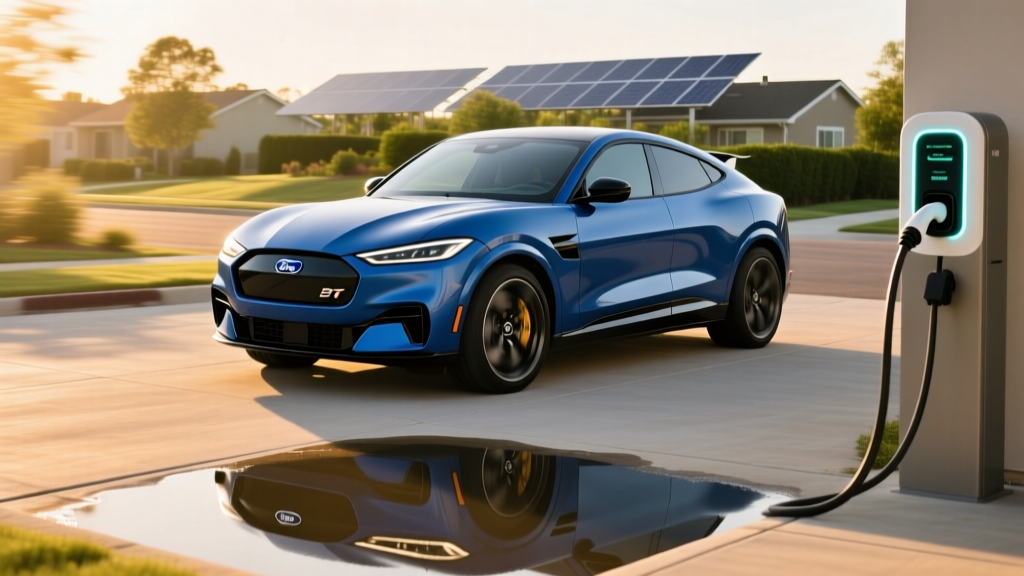
If you type "mach-e gt 0-60" into a search engine, you're looking for one thing: confirmation that Ford's electric Mustang-badged crossover can actually deliver supercar-rivaling acceleration in a practical, five-seat package. The 2026 Ford Mustang Mach-E GT answers with a 3.3-second sprint to 60 mph, 480 horsepower, and a usable extended-range battery that pushes past 300 miles on the EPA cycle. But straight-line speed is only part of the ownership equation. This review breaks down real-world range, charging curves, tax credit eligibility, and the trade-offs you'll face if you put this EV in your garage.
| Spec | Value |
|---|---|
| EPA Range (Extended Range AWD) | 304 miles |
| Real-World Range (highway/cold) | ~245–270 miles |
| Battery Capacity (usable) | 91 kWh (NMC) |
| Drivetrain | Dual-motor AWD |
| Horsepower / Torque | 480 hp / 634 lb-ft |
| 0-60 mph | 3.3 seconds |
| Max DC Fast Charge | 150 kW (peak) |
| 10–80% DC Charge Time | ~41 minutes |
| Level 2 Home Charge Rate | 10.5 kW (~30 mi/hr) |
| MPGe (combined) | 84 MPGe |
| Efficiency | 40 kWh/100 mi |
| Cargo (behind rear seats / folded) | 29.7 / 59.7 cu ft |
| Front Trunk (frunk) | 4.7 cu ft |
| Base MSRP (GT Extended Range AWD) | $59,875 |
| Battery Warranty | 8 years / 100,000 miles |
Mach-E GT 0-60 and Performance: The Numbers That Matter
The headline figure is 3.3 seconds from 0-60 mph — a number Ford achieved by pairing the GT's dual permanent-magnet motors with a Performance Upgrade package that unlocks the full 480 hp and 634 lb-ft of torque. That puts the Mach-E GT in the same acceleration bracket as a Porsche Taycan 4S and ahead of the Tesla Model Y Performance (3.5 seconds). The GT also includes MagneRide adaptive dampers, a sport-tuned suspension, and Brembo front brakes with 385 mm rotors — hardware that translates to confident cornering, not just drag-strip theatrics.
On the road, the instant torque delivery means merging and passing require almost no planning. The GT's all-wheel-drive system can bias torque rearward under hard acceleration, giving it a rear-drive character that feels more natural than many dual-motor EVs. Ford's "Unbridled Extend" drive mode stretches the power delivery curve for track use, preventing the torque taper that plagues single-speed EV drivetrains at higher velocities.
Real-World Range vs. EPA Estimates
EPA Estimated: 304 miles (Extended Range AWD)
Real-World Expectation: 270–285 miles in mixed city/highway driving at moderate temperatures. Expect 245–260 miles at sustained 75+ mph highway speeds. In sub-freezing winter conditions (below 32°F), plan for 210–240 miles due to battery chemistry limitations and cabin heating load.
The 91 kWh usable battery (approximately 98.8 kWh gross) uses NMC (nickel-manganese-cobalt) chemistry, which offers high energy density but is more temperature-sensitive than LFP. Ford's active liquid thermal management system does a solid job preconditioning the pack, but physics is physics — cold weather will cost you 15–25% of range, especially on short trips where the cabin and battery must heat from cold. The Mach-E GT includes a heat pump, which helps mitigate winter losses compared to resistive heating systems.
For context, fueleconomy.gov lists the Mach-E GT Extended Range AWD at 84 MPGe combined (40 kWh/100 mi). In our experience, aggressive driving in the GT — which is tempting given the powertrain — can push consumption to 45–48 kWh/100 mi, dropping effective range closer to 250 miles even in mild weather.
Charging Speed: DC Fast, Level 2, and the Curve Reality
The Mach-E GT's maximum DC fast-charge rate peaks at 150 kW — respectable, but not class-leading. Competitors like the Hyundai Ioniq 5 (peak 240 kW) and Kia EV6 (peak 240 kW) charge significantly faster thanks to their 800-volt architectures, while the Mach-E runs a 400-volt system. Here's the full charging breakdown:
| Charge Level | Power | Speed / Time | Connector |
|---|---|---|---|
| Level 1 (120V household) | ~1.4 kW | ~3 miles per hour | NACS (native) / J1772 adapter |
| Level 2 (240V home) | 10.5 kW | ~30 miles per hour / full charge in ~9.5 hrs | NACS (native) |
| DC Fast Charge | 150 kW peak | 10–80% in ~41 min; adds ~55 mi in 10 min at peak | NACS (native) |
Charging curve reality check: The 150 kW peak is only sustained between roughly 10–30% state of charge. By 50% SoC, the rate tapers to approximately 100–110 kW, and above 80% it drops below 50 kW. This is typical for 400V NMC packs but means your actual average charging speed across a 10–80% session is closer to 90–100 kW. On a road trip, plan for 35–45 minute stops at 150+ kW chargers to go from 15% to 80%.
Starting with the 2025 model year, Ford equipped the Mach-E with a native NACS (North American Charging Standard) port, granting access to Tesla Supercharger stations via Ford's FordPass charging network integration. This dramatically expands the available DC fast-charging footprint — over 20,000 Supercharger stalls are now accessible, which is a meaningful advantage over CCS-only EVs in rural corridors.
Pricing, Trims, and Federal Tax Credit Eligibility
The 2026 Mach-E GT is offered exclusively with the Extended Range AWD powertrain. Here's how the pricing stacks up:
- GT Extended Range AWD: $59,875 (base MSRP, including destination)
- GT with Performance Upgrade: ~$62,875 (adds 480 hp tune, MagneRide, larger brakes)
- As-tested (GT Perf. Upgrade + panoramic roof + BlueCruise): ~$66,000–$68,000
Does the Mach-E GT Qualify for the §30D Federal Tax Credit?
This is where GT buyers need to pay close attention. Under current IRS §30D rules, the federal EV tax credit has several gates:
- MSRP cap: SUVs/crossovers must be priced at or below $80,000. The Mach-E GT clears this easily.
- Buyer income cap: Modified AGI must not exceed $150,000 (single), $225,000 (head of household), or $300,000 (joint).
- Battery sourcing requirements: The credit is split into two $3,750 halves — one for critical minerals sourcing and one for battery component manufacturing. As of 2026, strict foreign-entity-of-concern (FEOC) rules apply. Ford sources and assembles much of the Mach-E battery domestically, but exact credit amounts ($3,750 or full $7,500) can vary by production batch and model year.
- Point-of-sale transfer: Eligible buyers can transfer the credit to the dealer at purchase, reducing the out-of-pocket price immediately rather than waiting for a tax refund.
Confirm your specific eligibility with your dealer and a tax professional before signing — sourcing compliance can shift mid-year.
Interior, Cargo, Tech, and Driver Assistance
The Mach-E GT's cabin blends performance cues (synthetic suede sport seats, aluminum pedals, unique ambient lighting) with practicality. The 15.5-inch vertical SYNC 4A touchscreen dominates the dash and runs wireless Apple CarPlay and Android Auto. The GT's flat floor and sloping roofline yield 29.7 cubic feet behind the rear seats (59.7 cu ft folded), plus a 4.7 cu ft front trunk — adequate for groceries and carry-ons but smaller than the Ioniq 5's 27.2 cu ft + 0.85 cu ft frunk configuration.
Rear legroom measures 38.9 inches, which accommodates adults comfortably on longer trips. The GT's BlueCruise hands-free driving system (SAE Level 2) is available on over 130,000 miles of pre-mapped divided highways. It handles steering, acceleration, and braking while monitoring driver attention via an infrared camera — but it is not autonomous. You must remain engaged and ready to take over at any time.
Notable drawbacks include the absence of a physical volume knob (it's a touch slider), a panoramic glass roof that adds weight and reduces headroom slightly, and rear visibility that's compromised by the coupe-like roofline and thick C-pillars. A digital rearview mirror is not available, unlike some competitors.
Pros and Cons
Pros
- 3.3-second 0-60 mph rivals sports cars at a fraction of the price
- Native NACS port provides Tesla Supercharger access
- MagneRide adaptive suspension balances sport and comfort
- BlueCruise hands-free highway driving on 130,000+ miles of road
- Over-the-air updates continue to improve vehicle software
- Qualifies under the $80,000 SUV MSRP cap for §30D credit
Cons
- 150 kW peak DC charge rate lags 800V competitors (240 kW)
- 41-minute 10–80% charge time is below class average
- No physical volume knob or climate controls
- Rear visibility is limited by styling
- Real-world highway range drops to ~250 miles under aggressive driving
- Panoramic roof adds cost and reduces headroom
Who Should Buy the Mach-E GT?
The Mach-E GT is best suited for performance-minded commuters and small families who want daily-drivable supercar acceleration without sacrificing five-seat practicality. If your commute includes highway stretches where BlueCruise can take over, the GT becomes a remarkably low-stress daily driver that happens to hit 60 in 3.3 seconds at stoplight drag races.
It's less ideal for frequent road-trippers who prioritize the fastest possible charging stops (the Ioniq 5 and EV6 are meaningfully quicker at DC chargers) or buyers who need maximum cargo space (the Tesla Model Y offers 30.2 cu ft behind the rear seats). If you tow, the Mach-E GT is rated for only 1,500 pounds — adequate for a small utility trailer but not a camper.
Frequently Asked Questions
What is the real-world range of the Mach-E GT?
Expect 270–285 miles in mixed driving at moderate temperatures. Sustained highway speeds above 75 mph reduce this to roughly 245–260 miles. In cold weather below freezing, plan for 210–240 miles due to battery and cabin heating demands.
How fast does the Mach-E GT charge at home and on the road?
At home on a 240V Level 2 charger, the Mach-E GT charges at 10.5 kW, adding roughly 30 miles of range per hour — a full charge takes about 9.5 hours. On DC fast chargers, it peaks at 150 kW and goes from 10–80% in approximately 41 minutes, though the charge curve tapers significantly above 50% SoC.
How much does the Mach-E GT cost after tax credits?
The base GT starts at $59,875. If you qualify for the full $7,500 federal §30D credit (income, MSRP, and battery sourcing requirements apply), the effective price drops to approximately $52,375. Point-of-sale transfer lets you apply this at the dealership. State and local incentives may reduce the cost further — check your jurisdiction's energy office for current programs.
Is the Mach-E GT worth buying vs. the Tesla Model Y Performance or Hyundai Ioniq 5 N?
The Mach-E GT offers a more traditional driving feel with adaptive suspension and a premium interior compared to the Model Y's minimalist approach. Against the Ioniq 5 N, the GT sacrifices some charging speed and track-focused engineering but gains a quieter ride and more accessible daily comfort. Choose the GT if you value ride quality, BlueCruise, and Supercharger access; choose the Ioniq 5 N if track capability and faster charging are priorities.
Does the Mach-E GT have a front trunk (frunk)?
Yes, but it's small — 4.7 cubic feet, enough for a charging cable bag or a small grocery run. It includes a drain plug, so it can double as a cooler for tailgating.
What is the battery warranty on the Mach-E GT?
Ford covers the high-voltage battery and electric powertrain components for 8 years or 100,000 miles, whichever comes first. The warranty guarantees the battery will retain at least 70% of its original capacity during that period.