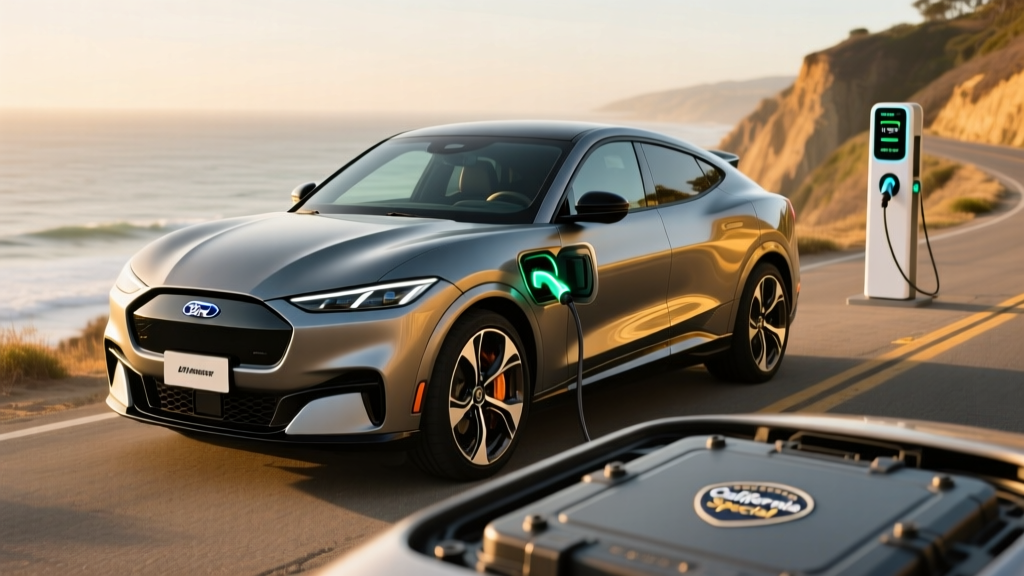
The Ford Mustang Mach-E has been a cornerstone of the mainstream electric SUV market since its debut, but for buyers on the West Coast — and those who simply want a more distinctive appearance — the California Special package adds visual flair, unique interior touches, and a few functional upgrades that set it apart from the standard lineup. For the 2026 model year, Ford has refined the Mach-E's powertrain efficiency and updated the California Special trim content, making it one of the more compelling mid-tier options in the electric crossover segment.
This review breaks down everything that matters to an EV buyer: real-world range versus EPA estimates, charging speed at home and on the road, battery chemistry and longevity, performance figures, cargo practicality, and exactly what you'll pay after the federal tax credit. We'll also compare it against key rivals like the Hyundai Ioniq 5, Tesla Model Y, and Volkswagen ID.4 to help you decide if the California Special Mach-E earns a spot in your driveway.
What Is the California Special Package on the Mustang Mach-E?
The California Special package is a styling and feature bundle available on select Mach-E trims — typically the Premium trim with the Extended Range battery. For 2026, it includes:
- Exclusive 19-inch machined-face aluminum wheels with a dark-finish pocket design
- California Special badging on the front fenders and rear liftgate
- A unique grille treatment with a body-color surround and contrasting black mesh insert
- Red-stitched perforated leather-trimmed seats with a California Special embossed logo
- Premium audio upgrade (10-speaker B&O sound system with subwoofer)
- A panoramic fixed-glass roof with infrared-rejecting tint
- Ambient interior lighting with a California-exclusive color palette
- All-weather floor liners with a custom California Special weave pattern
The package typically adds approximately $3,000–$4,000 to the Premium Extended Range AWD configuration, depending on model year adjustments and dealer options. It does not change the powertrain, battery, or charging hardware — those remain identical to the standard Mach-E Premium Extended Range AWD.
Range, Efficiency, and Real-World Expectations
The 2026 Mustang Mach-E Premium Extended Range AWD (the trim the California Special package rides on) carries an EPA-estimated range of 290 miles. The rear-wheel-drive Extended Range variant achieves up to 320 miles EPA, but the California Special package is most commonly paired with AWD for its all-weather capability.
EPA Estimate: 290 miles (AWD Extended Range)
Real-World Highway (70–75 mph, mild weather): ~245–265 miles
Real-World City/Suburban Mix: ~270–285 miles
Cold Weather (below 32°F, highway): ~200–230 miles
EVs lose range at sustained highway speeds due to aerodynamic drag — the Mach-E's crossover profile creates more wind resistance than a sedan like the Tesla Model 3. Cold temperatures further reduce range by 15–30% due to battery internal resistance and cabin heating demands. The Mach-E's standard heat pump helps mitigate this, but expect meaningful reductions in northern winters.
Efficiency lands at approximately 98 MPGe combined (roughly 34 kWh per 100 miles) for the AWD Extended Range model, according to fueleconomy.gov. That's competitive within the segment but trails the Hyundai Ioniq 5 Long Range AWD (110 MPGe) and the Tesla Model Y Long Range (122 MPGe).
Battery Specs: Capacity, Chemistry, and Longevity
| Specification | Value |
|---|---|
| Total Battery Capacity | 91 kWh (gross) |
| Usable Capacity | ~88 kWh |
| Chemistry | NMC (Nickel Manganese Cobalt) |
| Thermal Management | Active liquid cooling/heating with heat pump |
| Battery Warranty | 8 years / 100,000 miles (minimum 70% capacity retention) |
| Powertrain Warranty | 5 years / 60,000 miles |
| Bumper-to-Bumper | 3 years / 36,000 miles |
Ford uses NMC chemistry in the Extended Range battery, which offers higher energy density than LFP (lithium iron phosphate) — allowing more range in a similar physical package. The trade-off: NMC batteries degrade slightly faster over time and are more sensitive to prolonged storage at 100% state of charge. Ford's battery management system includes a top/bottom buffer (roughly 3 kWh combined) to protect long-term health.
For maximum longevity, charge to 80–90% for daily use and reserve 100% charges for road trips. Ford's SYNC system allows scheduled charging and departure preconditioning, which helps maintain battery health and ensures full range when you need it.
Charging Speed: DC Fast Charging and Home Level 2
Charging speed is one of the Mach-E's stronger attributes, and the 2026 model year continues to support robust DC fast-charging capability.
| Charging Level | Max Rate | Speed / Time |
|---|---|---|
| Level 1 (120V household) | ~1.4 kW | ~3 miles per hour |
| Level 2 (240V, 32A Ford Mobile Charger) | ~7.7 kW | ~22 miles per hour |
| Level 2 (240V, 48A Ford Connected Charge Station) | ~11.5 kW | ~33 miles per hour (full charge in ~8.5 hrs) |
| DC Fast Charge (CCS connector) | Peak 150 kW | 10–80% in ~38 minutes |
| DC Fast Charge (NACS with adapter) | Peak 150 kW | 10–80% in ~38 minutes (Tesla Supercharger access) |
Charging curve reality: The Mach-E peaks near 150 kW only between roughly 15–40% state of charge. Above 60%, the rate tapers significantly — dropping to ~80 kW by 70% and ~40 kW above 85%. This is why the 10–80% metric matters more than peak kW. A 38-minute 10–80% session is respectable, but it trails the Hyundai Ioniq 5 (18 minutes at 350 kW capable) and the Porsche Macan Electric (21 minutes at 270 kW).
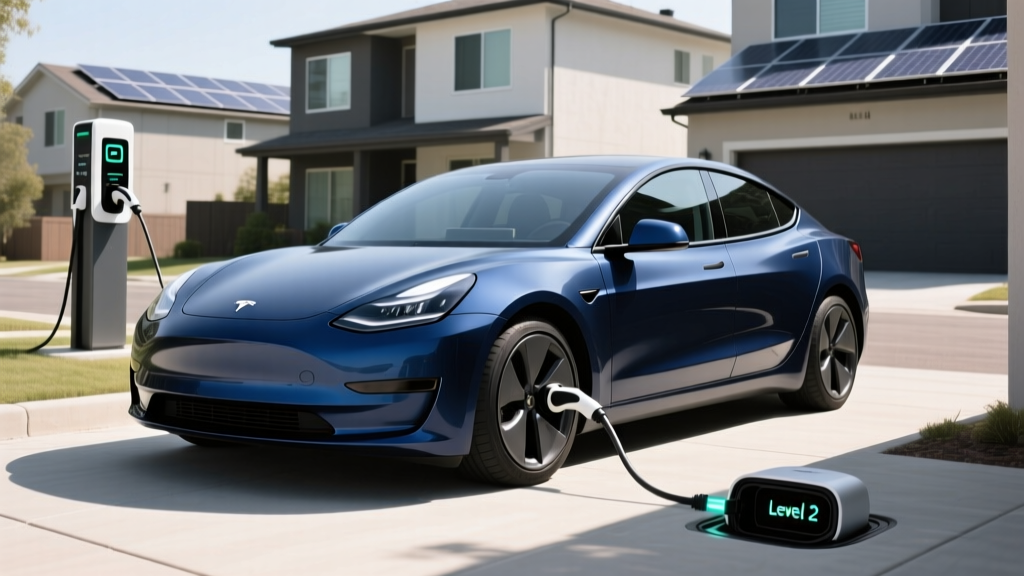
For home charging, the 48A Ford Connected Charge Station is the recommended setup. Plan on $800–$1,600 for professional installation (electrician labor, permit, and a 60A dedicated circuit from a 200A panel). If your panel is older or maxed out, a panel upgrade can add $1,500–$3,000.
Performance: 0-60, Horsepower, and Drivetrain
| Metric | Value |
|---|---|
| Powertrain | Dual-motor AWD |
| Horsepower | 346 hp (combined) |
| Torque | 428 lb-ft |
| 0–60 mph | 5.1 seconds |
| Top Speed | 112 mph (electronically limited) |
| Towing Capacity | 2,200 lbs (with factory tow package) |
The dual-motor AWD setup provides confident acceleration and all-weather traction. The 5.1-second 0–60 time is quick for a family crossover — it'll merge onto highways and pass with authority. The GT variant (480 hp, 3.5 seconds) is available but is not compatible with the California Special package.
Regenerative braking offers two modes: a traditional coasting feel or one-pedal driving that brings the Mach-E to a complete stop without touching the brake pedal. The transition between regen and friction braking is smoother than in earlier model years, though it still lacks the seamless blending found in Hyundai/Kia's EV platforms.
Interior Space, Cargo, and Practicality
The Mach-E is sized as a mid-size crossover, competing directly with the Model Y and Ioniq 5 on interior volume.
- Cargo (behind rear seats): 29.7 cu ft
- Cargo (rear seats folded): 59.7 cu ft
- Front trunk (frunk): 4.7 cu ft (drainable, useful for wet gear or groceries)
- Front headroom: 40.4 inches
- Rear headroom: 38.9 inches
- Front legroom: 43.3 inches
- Rear legroom: 38.1 inches
The California Special's panoramic glass roof slightly reduces front headroom by about 0.3 inches compared to the standard roof, but the open, airy cabin feel is a worthwhile trade-off for most buyers. The rear seat accommodates two adults comfortably for long trips, though a middle passenger will find the floor hump and narrower seat less ideal.
The drainable frunk is a standout feature — it's large enough for a bag of ice and drinks, and the drain plug makes cleanup easy. Ford also includes a Mega Power Frunk option on some trims that adds 120V outlets for tailgating.
Tech, Driver Assistance, and Infotainment
The 2026 Mach-E runs Ford's SYNC 4A infotainment system on a vertically oriented 15.5-inch touchscreen. The California Special package adds the B&O premium audio system and a few exclusive ambient lighting scenes.
Standard driver-assistance features include:
- Ford Co-Pilot360 2.0: Automatic emergency braking, blind-spot monitoring, rear cross-traffic alert, lane-keeping assist, evasive steering assist
- Adaptive Cruise Control with Stop-and-Go: Works in highway traffic
- BlueCruise (available): Hands-free driving on pre-mapped divided highways — SAE Level 2, meaning the driver must remain attentive and keep eyes on the road via the infrared driver-monitoring camera
BlueCruise is an SAE Level 2 driver-assistance system. It handles steering, acceleration, and braking on qualified highways, but the driver must remain engaged and ready to take over at any time. This is fundamentally different from Level 4 robotaxi services like Waymo. Never use BlueCruise while distracted, sleeping, or in conditions outside its operational design domain (construction zones, unmapped roads, severe weather).
BlueCruise subscription costs approximately $75/month or $800/year after the initial trial period. It covers over 130,000 miles of compatible highways in the U.S. and Canada — a genuine convenience feature for road-trippers but not a replacement for attentive driving.
Pricing, Tax Credits, and Total Cost
| Item | Amount |
|---|---|
| Mach-E Premium Extended Range AWD (base MSRP) | $48,995 |
| California Special Package | +$3,500 |
| Destination & Delivery | +$1,595 |
| Total MSRP (before incentives) | $54,090 |
| Federal §30D EV Tax Credit (if eligible) | Up to $7,500 (point-of-sale transfer available) |
| Effective Price After Max Credit | ~$46,590 |
Federal tax credit eligibility (§30D) requires all of the following:
- MSRP cap: SUVs/crossovers must be under $80,000 — the Mach-E qualifies ✓
- Buyer income cap: AGI ≤ $150,000 (single), $225,000 (head of household), $300,000 (joint) — verify with your tax professional
- Battery sourcing: Must meet critical mineral and battery component requirements set by the IRS and Treasury Department — Ford has worked to qualify the Mach-E, but sourcing rules tighten annually; verify current-year eligibility on IRS.gov or the dealer's point-of-sale system
- Point-of-sale transfer: Since 2024, eligible buyers can transfer the credit to the dealer at purchase, reducing the purchase price directly rather than waiting for a tax refund
Always confirm credit eligibility with your dealer and tax advisor before purchase. Battery-sourcing rules change, and a vehicle that qualifies in January may face different requirements by mid-year depending on Treasury guidance.
Pros, Cons, and the Competition
Pros
- Distinctive California Special styling stands out in a sea of white and black EVs
- 290 miles EPA range is practical for most commutes and weekend road trips
- Drainable frunk and 59.7 cu ft max cargo offer real utility
- BlueCruise provides genuine hands-free highway driving (Level 2)
- NACS adapter grants access to Tesla Supercharger network
- Competitive pricing after the federal tax credit
Cons
- DC fast charging (150 kW peak, ~38 min 10–80%) lags behind Ioniq 5 and Model Y
- Efficiency (98 MPGe) trails top competitors — means higher electricity costs over time
- California Special package is appearance-only; no performance or range upgrade
- Rear middle seat is compromised by a floor hump
- BlueCruise requires an ongoing subscription after the trial period
Key Competitor Comparison
| Spec | Mach-E CA Special (AWD ER) | Hyundai Ioniq 5 (AWD LR) | Tesla Model Y (LR AWD) |
|---|---|---|---|
| EPA Range | 290 mi | 290 mi | 330 mi |
| Battery | 91 kWh (NMC) | 77.4 kWh (NMC) | ~78 kWh (NMC) |
| DC Fast Charge (10–80%) | ~38 min (150 kW peak) | ~18 min (350 kW peak) | ~25 min (250 kW peak) |
| 0–60 mph | 5.1 sec | 5.0 sec | 4.8 sec |
| MPGe (combined) | 98 | 110 | 122 |
| Cargo (rear up / folded) | 29.7 / 59.7 cu ft | 27.2 / 59.3 cu ft | 30.2 / 76.2 cu ft |
| Starting MSRP (AWD) | ~$54,090* | ~$53,000 | ~$48,990 |
*Mach-E price includes California Special package and destination.
The Model Y wins on range, efficiency, and cargo space. The Ioniq 5 dominates on charging speed. The Mach-E California Special wins on character — its styling, frunk utility, and Ford dealer network accessibility matter to buyers who don't want a Tesla or a Hyundai badge.
Who Should Buy the Mach-E California Special?
Choose the Mach-E California Special if: You want a distinctive, non-Tesla EV with strong dealer support, a practical frunk, and BlueCruise for highway commutes. You value styling and interior ambiance over maximum range or fastest charging.
Choose the Ioniq 5 instead if: Fast DC charging is a priority for your road-trip habits, or you want the most efficient use of your electricity dollar.
Choose the Model Y instead if: Maximum range, Supercharger network access without an adapter, and maximum cargo space are your top priorities.
Frequently Asked Questions
What is the real-world range of the Mach-E California Special?
The EPA estimates 290 miles for the AWD Extended Range model. In real-world highway driving at 70–75 mph in mild weather, expect roughly 245–265 miles. In cold weather (below freezing), highway range can drop to 200–230 miles. City and suburban driving with regenerative braking gets closer to the EPA number, around 270–285 miles.
How fast does the Mach-E charge at home and on the road?
At home on a 48A Level 2 charger, the Mach-E adds about 33 miles of range per hour, reaching a full charge overnight in roughly 8.5 hours. On DC fast chargers, it peaks at 150 kW and charges from 10% to 80% in approximately 38 minutes. With Ford's NACS adapter, you can also use Tesla Superchargers at the same peak rate.
Does the Mach-E California Special qualify for the $7,500 federal tax credit?
It can, but eligibility depends on your income (AGI caps apply), the vehicle's MSRP (under $80,000 for SUVs — the Mach-E qualifies), and current battery-sourcing/critical-mineral requirements that change periodically. The credit can now be transferred at the point of sale, reducing your purchase price immediately. Always verify with your dealer and a tax professional — see IRS.gov for current rules.
Is the California Special package worth the extra cost?
If you value exclusive styling, the B&O audio system, and the panoramic glass roof, the ~$3,500 premium is reasonable for a vehicle in this price range. However, it adds no range, performance, or charging benefit — it's purely an appearance and comfort upgrade. If you're budget-conscious, the standard Premium Extended Range AWD delivers the same EV fundamentals.
How does the Mach-E compare to the Tesla Model Y for road trips?
The Model Y has a clear edge: 40 more miles of EPA range, faster DC charging (~25 min vs ~38 min for 10–80%), and native Supercharger access. The Mach-E's NACS adapter opens Supercharger access, but at 150 kW peak (not the 250 kW the Model Y can achieve). For frequent road-trippers, the Model Y is more efficient. For those who prefer Ford's dealer network, interior design, and BlueCruise, the Mach-E remains a strong choice.
What is the battery warranty on the Mach-E?
Ford covers the high-voltage battery for 8 years or 100,000 miles, whichever comes first, with a minimum 70% capacity retention guarantee. If the battery degrades below 70% of its original capacity within that period, Ford will repair or replace it at no cost. The powertrain is covered for 5 years / 60,000 miles.