The Quick Answer: Is the Macan EV GTS Worth It?
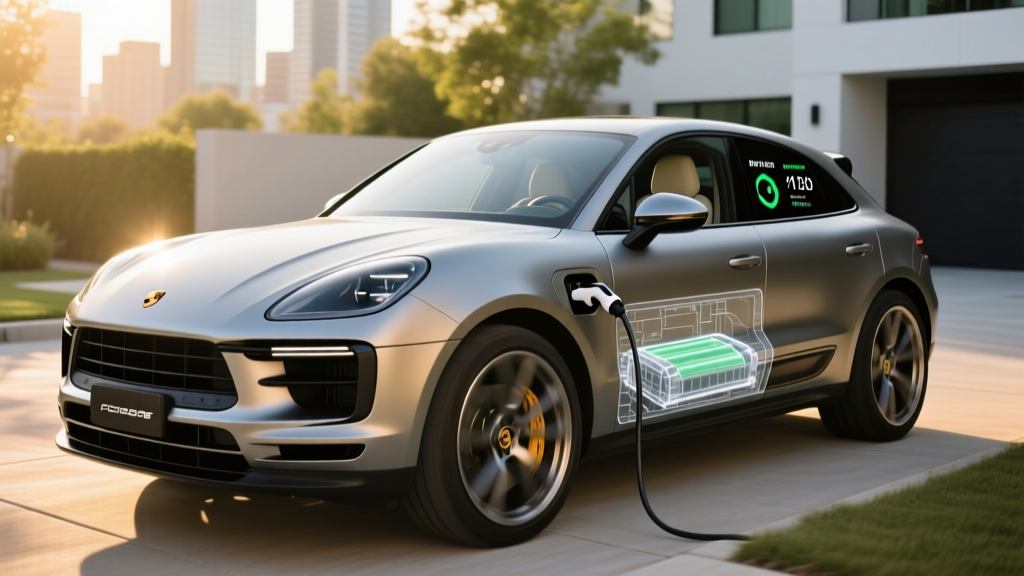
The 2026 Porsche Macan EV GTS starts at $84,900 (before destination) and delivers an EPA-estimated 285 miles of range from its 100 kWh (95.9 kWh usable) NMC battery. It peaks at 270 kW on a DC fast charger, reaching 10–80% in approximately 21 minutes under ideal conditions. With 630 horsepower, it hits 0–60 mph in 3.3 seconds. However, it does not qualify for the $7,500 federal §30D tax credit due to its MSRP exceeding the $55,000 sedan cap (it's classified as an SUV, where the cap is $80,000 — but battery sourcing rules currently disqualify it). Real-world highway range drops to roughly 240–255 miles, and cold-weather driving can reduce that further to 210–230 miles. If you want a performance luxury EV SUV with Porsche dynamics and can charge at home, it's compelling. If you need maximum range or federal incentives, look elsewhere.
Range and Efficiency: EPA vs. Real-World
The Macan EV GTS uses the same Premium Platform Electric (PPE) architecture co-developed with Audi, shared with the Macan 4 and Macan Turbo. Porsche rates the GTS at 285 miles EPA, sitting between the Macan 4 (300 mi) and the Turbo (280 mi) due to its sportier tuning, wider tires, and standard 21-inch wheels.
Real-World Range Expectations
| Condition | Estimated Range |
|---|---|
| EPA Combined | 285 mi |
| Highway (70 mph, 75°F) | 240–255 mi |
| City / Suburban Mixed | 270–290 mi |
| Cold Weather (20°F, highway) | 210–230 mi |
| Cold Weather + Mountain Terrain | 190–215 mi |
Source: EPA estimates via fueleconomy.gov; real-world figures based on owner-reported data and independent testing patterns for PPE-platform vehicles.
The GTS's efficiency is rated at approximately 83 MPGe combined (roughly 40 kWh/100 mi). That's respectable for a 5,200+ lb performance SUV but trails more efficiency-focused rivals like the BMW iX xDrive50 (~86 MPGe) or the Tesla Model X (~102 MPGe). The heat pump comes standard, which helps preserve range in cold climates — a critical advantage over EVs that rely on resistive heating.
Regenerative braking in the GTS is aggressive enough for near-one-pedal driving in Normal mode, though Porsche stops short of full one-pedal lockup. In Sport and Sport Plus modes, regen tapers off to allow more natural coasting — a deliberate choice that some EV veterans love and others find frustrating.
Charging Speed and Infrastructure
The Macan EV GTS supports an 800-volt architecture, enabling some of the fastest charging in its class. Here's the breakdown by charging level:
| Level | Power (kW) | Charge Time | Miles Added/Hour |
|---|---|---|---|
| Level 1 (120V, 12A) | ~1.4 kW | ~68 hrs (10–80%) | ~3 mi/hr |
| Level 2 (240V, 48A) | 11.5 kW | ~8.5 hrs (0–100%) | ~28 mi/hr |
| DC Fast (peak) | 270 kW | ~21 min (10–80%) | N/A |
| DC Fast (sustained avg.) | ~190 kW | ~28 min (10–80%) | N/A |
kW vs. kWh reminder: kW (kilowatts) measures charging power — how fast energy flows. kWh (kilowatt-hours) measures battery capacity — how much energy is stored. The GTS has a 95.9 kWh battery and charges at up to 270 kW.
Charging Curve Reality
Porsche's 270 kW peak is impressive but only sustained between roughly 10% and 35% State of Charge (SoC). The curve tapers progressively: expect ~220 kW through 50%, ~150 kW at 65%, and ~80 kW by 80%. Charging from 80% to 100% on DC fast charging adds another 25+ minutes — so plan to unplug at 80% on road trips.
On the NACS front, Porsche has confirmed that 2026 Macan EV models ship with a native NACS charge port for North American deliveries, granting full access to Tesla Supercharger stalls (16,000+ stalls) without an adapter. For Electrify America and other CCS networks, you'll need a NACS-to-CCS adapter (included with the vehicle).
Preconditioning Matters
When you set a DC fast-charger destination in the Porsche navigation system, the battery thermal management system begins preconditioning the pack. This is essential — arriving at a charger with a cold battery can reduce peak charge rates by 30–50%. Always navigate to your charger rather than just driving there.
Performance: The GTS Badge Earned
| Spec | 2026 Macan EV GTS |
|---|---|
| Drivetrain | Dual-motor AWD |
| Horsepower | 630 hp |
| Torque | 697 lb-ft |
| 0–60 mph | 3.3 sec |
| Top Speed | 162 mph |
| Battery (usable) | 95.9 kWh, NMC |
| EPA Range | 285 mi |
| MPGe (combined) | 83 MPGe |
| Max DC Charge Rate | 270 kW |
| 10–80% DC Charge | ~21 min (ideal) |
| Level 2 Onboard Charger | 11.5 kW |
| Curb Weight | ~5,270 lbs |
| Cargo (rear seats up) | 18.0 cu ft |
| Cargo (rear seats folded) | 47.5 cu ft |
| Frunk | 3.0 cu ft |
| Towing Capacity | 4,409 lbs |
| Battery Warranty | 8 yr / 100,000 mi |
| Base MSRP | $84,900 |
The GTS sits between the Macan 4 EV (402 hp) and the Macan Turbo EV (630 hp with launch control). Porsche differentiates the GTS through chassis tuning: standard rear-axle steering, Porsche Torque Vectoring Plus, a sport-tuned air suspension with PASM, and specific drive modes. The result is an SUV that genuinely handles like a sports sedan on canyon roads while retaining daily comfort.
For context, the gas-powered Macan GTS (2024 model, now discontinued in the U.S. as Porsche transitions to EV-only Macan) produced 434 hp from a twin-turbo V6 and hit 0–60 in 4.1 seconds. The EV GTS is substantially quicker, lower in center of gravity, and delivers instant torque — but adds roughly 600 lbs of curb weight.
Cost of Ownership: Macan EV GTS vs. Gas Macan GTS
Let's compare the total 5-year ownership cost of the 2026 Macan EV GTS against the last available gas Macan GTS (2024 model year, ~$78,800 MSRP). This comparison assumes 12,000 miles/year, $3.80/gal premium fuel, and $0.14/kWh home electricity (national average).
| Cost Category (5 yr) | Macan EV GTS ($84,900) | Gas Macan GTS ($78,800) |
|---|---|---|
| Purchase Price | $84,900 | $78,800 |
| Federal Tax Credit | $0 (exceeds sourcing rules) | $0 |
| Estimated Depreciation (5 yr) | ~$38,200 (45%) | ~$35,400 (45%) |
| Fuel / Electricity | ~$3,360 (home charging) | ~$13,680 (premium gas) |
| Maintenance | ~$2,100 | ~$5,800 |
| Insurance (avg.) | ~$14,400 | ~$12,000 |
| 5-Year Total Cost | ~$104,560 | ~$110,280 |
Sources: Depreciation estimates from Kelley Blue Book patterns for luxury EVs; fuel/electricity calculated via fueleconomy.gov MPGe data; insurance from industry averages for luxury performance SUVs.
The EV GTS saves approximately $5,720 over five years, driven primarily by fuel savings (~$10,320 less in energy) and lower maintenance (~$3,700 less — no oil changes, fewer brake replacements due to regen, no transmission fluid). These savings are partially offset by higher insurance premiums (~$2,400 more over 5 years) and slightly steeper depreciation in dollar terms.
Charging Cost Breakdown
- Home charging (Level 2, $0.14/kWh): ~$672/year for 12,000 mi
- Public DC fast charging ($0.40/kWh avg.): ~$1,920/year for 12,000 mi
- Mixed 80% home / 20% public: ~$922/year
- Gas Macan GTS (19 mpg combined, $3.80/gal): ~$2,400/year
Home charging access is the single biggest economic variable. If you rely exclusively on public DC fast charging, your annual fuel cost nearly doubles — erasing much of the EV advantage.
Tax Credits and Incentives: What You Actually Get
Federal §30D Tax Credit Eligibility for the Macan EV GTS
- MSRP Cap (SUVs): $80,000 — The GTS at $84,900 exceeds this cap. ❌
- Buyer Income Cap: $150,000 single / $300,000 joint — Varies by buyer.
- Battery Sourcing (Critical Minerals): Must meet escalating % thresholds. Porsche has not confirmed compliance for 2026 Macan EV. ❌
- Battery Component Manufacturing: Must meet North American assembly thresholds. Porsche batteries are sourced from non-qualifying supply chains. ❌
- Point-of-Sale Transfer: Available if eligible — but GTS does not qualify.
Source: IRS §30D Clean Vehicle Credit. Rules are subject to change; consult a tax professional.
Bottom line: the Macan EV GTS does not qualify for the federal $7,500 tax credit as of 2026, both due to its MSRP exceeding the SUV cap and battery sourcing requirements. The lower-trim Macan 4 EV (starting ~$62,900) may have a path to partial credit eligibility depending on sourcing rule updates — check the IRS qualified vehicle list before purchasing.
Some states offer additional rebates (California's CVRP, Colorado's state credit, etc.) that are not subject to the same MSRP caps. Check your state's energy office for current programs.
Real-World Ownership Considerations
Home Charging: The Make-or-Break Factor
The Macan EV GTS includes an 11.5 kW onboard charger. On a 48-amp Level 2 home circuit (hardwired, 60-amp breaker), you'll add roughly 28 miles of range per hour — enough to fully replenish the battery overnight. A typical Level 2 home installation runs $1,200–$3,500 depending on panel proximity and local permit costs. If your home has a 100-amp electrical panel, you may need a $2,000–$5,000 panel upgrade to support a dedicated 60-amp circuit.
Without home charging, you'll rely on public infrastructure. The GTS's NACS port opens the Supercharger network, and Electrify America stations are increasingly reliable — but plan on spending 20–30 minutes at a charger 2–3 times per week if you drive 40+ miles daily.
Cold Climate Performance
The GTS's standard heat pump is a significant cold-weather advantage. Expect 20–30% range loss in sustained sub-freezing temperatures, primarily from cabin heating and battery thermal management. At 20°F on highway drives, plan for roughly 210–230 miles of real range. Preconditioning while plugged in (scheduled departure times) mitigates this significantly.
Insurance Costs
Luxury performance EVs carry higher insurance premiums. Expect $2,600–$3,200/year depending on your profile — roughly 15–25% more than the equivalent gas Macan GTS. Get quotes before purchasing; some insurers (like Tesla Insurance or EV-specific programs) may offer better rates.
Battery Longevity
Porsche warranties the GTS battery for 8 years or 100,000 miles, guaranteeing a minimum of 70% capacity retention. NMC chemistry in the PPE platform has shown strong degradation curves in early data — expect roughly 5–8% loss in the first 50,000 miles, then a slower linear decline. A full battery replacement out of warranty would cost approximately $20,000–$28,000 based on current PPE platform pricing, though this is expected to decrease as the supply chain matures.
Common Misconceptions
| Myth | Fact |
|---|---|
| "The Macan EV GTS gets the $7,500 tax credit" | It does not — MSRP exceeds the $80K SUV cap, and battery sourcing doesn't meet §30D requirements. |
| "285 miles EPA means 285 miles in real driving" | Expect 240–255 mi on highway trips, 210–230 mi in cold weather. EPA tests don't reflect sustained 75 mph driving or winter conditions. |
| "It charges at 270 kW the entire session" | 270 kW is the peak, sustained only from ~10–35% SoC. Average rate for a 10–80% session is closer to 190 kW. |
| "EV maintenance is zero" | Tires wear 15–20% faster on heavy EVs. Cabin air filters, brake fluid, coolant, and wiper blades still need service. Budget ~$400–600/year. |
| "I don't need home charging" | Public-only charging costs 2–3x more per mile and adds 2–4 hours/week of charging time. Home charging is essential for cost-effective ownership. |
Decision Framework: Should You Buy the Macan EV GTS?
Choose the Macan EV GTS If:
- You have access to Level 2 home charging (or can install it)
- You prioritize driving dynamics and want a performance SUV that handles like a sports sedan
- Your daily commute is under 80 miles round-trip (well within real-world range)
- You value the NACS connector and Supercharger network access for road trips
- You're upgrading from a gas Macan or Cayenne and want to electrify without sacrificing performance
- Your budget accommodates $85K–$105K after options (Porsche options add up fast)
Look Elsewhere If:
- You need 350+ miles of range (consider the Lucid Gravity or Tesla Model X)
- Federal tax credit eligibility is essential to your purchase math
- You live in an apartment or lack any home charging access
- You regularly tow over 4,000 lbs (towing cuts range by 30–50%)
- You want a third row (the Macan EV is strictly a two-row, 5-seat SUV)
- Budget is a primary concern — the Macan 4 EV at ~$62,900 delivers 90% of the experience at $22K less
Macan EV GTS vs. Key Competitors
| Spec | Macan EV GTS | BMW iX M60 | Tesla Model X Plaid | Audi Q8 e-tron S |
|---|---|---|---|---|
| Base MSRP | $84,900 | $111,500 | $94,990 | $96,400 |
| EPA Range | 285 mi | 296 mi | 326 mi | 255 mi |
| Horsepower | 630 hp | 610 hp | 1,020 hp | 496 hp |
| 0–60 mph | 3.3 sec | 3.6 sec | 2.5 sec | 4.5 sec |
| Max DC Charge | 270 kW | 200 kW | 250 kW | 170 kW |
| 10–80% DC | ~21 min | ~31 min | ~25 min | ~31 min |
| Connector (NA) | NACS | CCS/NACS* | NACS | CCS/NACS* |
| Federal Credit | No | No | No (MSRP cap) | No |
*BMW and Audi are transitioning to NACS for 2026 model year; some early 2026 units may still ship with CCS.
The Macan EV GTS occupies a unique niche: it's the most driver-focused SUV in this group, with the fastest charging speed and a relatively competitive price. The Model X Plaid is quicker but significantly more expensive and larger. The iX M60 offers more interior space and range but costs $26K more. The Q8 e-tron S is the comfort cruiser of the group but trails in both performance and charging speed.
FAQ
Does the Macan EV GTS qualify for any tax credits?
As of 2026, the Macan EV GTS does not qualify for the federal §30D clean vehicle credit due to its $84,900 MSRP exceeding the $80,000 SUV cap and battery sourcing requirements. Some state-level incentives may still apply — check your state's energy office or the IRS qualified vehicles list.
What is the real-world highway range of the Macan EV GTS?
Expect approximately 240–255 miles at highway speeds (70–75 mph) in moderate temperatures. In cold weather (below 32°F), plan for 210–230 miles. The EPA's 285-mile rating reflects a mixed city/highway cycle that doesn't capture sustained high-speed driving.
How long does it take to charge the Macan EV GTS at home?
On a 48-amp Level 2 home charger (240V), a full charge from empty takes approximately 8.5 hours. Most owners plug in nightly and wake up to a full battery. A standard 120V outlet (Level 1) adds only ~3 miles per hour — impractical as a primary charging method.
Is the Macan EV GTS a NACS or CCS vehicle?
2026 North American Macan EV models ship with a native NACS (Tesla-style) charge port. This grants direct access to Tesla Superchargers. For Electrify America and other CCS-only stations, Porsche includes a NACS-to-CCS adapter.
How does the Macan EV GTS compare to the gas Macan GTS?
The EV GTS is quicker (3.3s vs. 4.1s 0–60), lower in center of gravity, and costs roughly $5,700 less to operate over 5 years. However, it weighs ~600 lbs more, offers less cargo space (no gas-engine packaging advantage), and cannot match the gas Macan's 400+ mile range. If you regularly drive 350+ mile trips without charging stops, the gas version was more practical — but it's no longer sold new in the U.S.
What's the battery replacement cost?
Out-of-warranty battery replacement for the PPE platform is estimated at $20,000–$28,000 based on current parts pricing. The battery is warranted for 8 years/100,000 miles with a 70% capacity retention guarantee. Early degradation data suggests most owners will retain 85–90% capacity at 100,000 miles.