Quick Answer: Is a Lyon Electric EV Right for You?
Lyon Electric is a Chinese-market EV brand (also known as 凌宝/Lingbao) produced by Jiangsu Jemmell New Energy. It manufactures affordable micro-EVs and compact electric hatchbacks primarily sold in China and select emerging markets. Lyon Electric does not currently sell vehicles in the United States, meaning U.S. buyers cannot claim the federal §30D tax credit, access U.S. warranty service, or register these vehicles for highway use in most states.
If you encountered the term "Lyon Electric" in your EV research, you are likely either (1) considering an import or gray-market purchase, (2) comparing global micro-EV options, or (3) confusing it with a similarly named domestic brand. This guide breaks down exactly what Lyon Electric offers, how those specs compare to U.S.-available EVs, and what your realistic alternatives are in 2026.
What Is Lyon Electric? Brand Overview and Vehicle Lineup
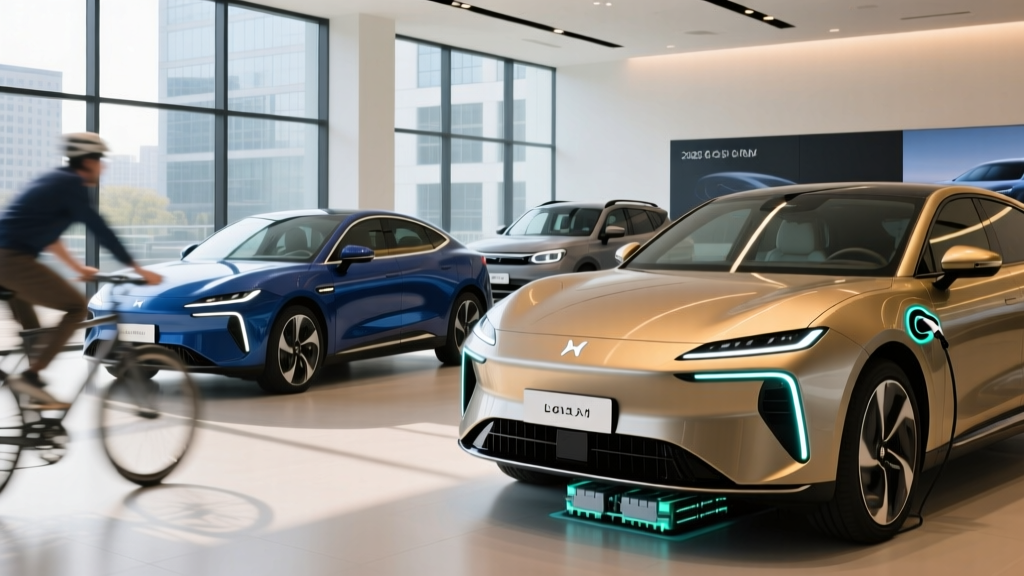
Lyon Electric (凌宝) is a budget EV sub-brand under Jiangsu Jemmell New Energy Vehicle Co., operating out of Xuzhou, China. The brand focuses on the micro-EV and subcompact hatchback segments, competing with vehicles like the Wuling Hongguang Mini EV and Changan Lumin in the Chinese domestic market. As of early 2026, the lineup includes:
- Lyon Electric BOX (凌宝BOX): A 4-seat micro-EV hatchback with approximately 220 km (137 miles) of CLTC-rated range, a ~14 kWh LFP battery pack, and a 35 kW (47 hp) electric motor.
- Lyon Electric UNI (凌宝UNI): A slightly larger subcompact with roughly 302 km (188 miles) CLTC range, a ~28 kWh LFP battery, and a 55 kW (74 hp) motor.
Pricing in China starts around ¥40,000–¥70,000 (approximately $5,500–$9,700 USD at 2026 exchange rates), making these among the cheapest new EVs available globally. However, these figures reflect the Chinese market and do not translate to U.S. ownership.
Lyon Electric vs. U.S.-Available Budget EVs: Spec Comparison
| Spec | Lyon BOX (China) | Chevrolet Equinox EV 2LT (US) | Nissan LEAF S (US) | Hyundai Kona Electric SE (US) |
|---|---|---|---|---|
| EPA/CLTC Range | 137 mi (CLTC) | 319 mi (EPA) | 212 mi (EPA) | 261 mi (EPA) |
| Battery Capacity | ~14 kWh (LFP) | 85 kWh (NMC) | 40 kWh (LFP) | 64.8 kWh (NMC) |
| Motor Output | 35 kW (47 hp) | 150 kW (201 hp) | 110 kW (147 hp) | 150 kW (201 hp) |
| DC Fast Charge | None (AC only) | 150 kW peak | 50 kW (CHAdeMO) | 100 kW peak |
| 10–80% Charge Time | N/A (Level 2 only) | ~20 min | ~40 min | ~43 min |
| Top Speed | ~62 mph (100 km/h) | ~112 mph | ~95 mph | ~108 mph |
| Base Price | ~$5,500 (China) | $33,600 | $28,140 | $32,975 |
| US Federal Tax Credit | Not eligible | Up to $7,500* | Up to $7,500* | Up to $7,500* |
| Safety Ratings (NHTSA) | Not tested | 5-star overall | 4-star overall | Not yet rated |
* §30D credit eligibility depends on MSRP caps, buyer income limits, and battery-component/critical-mineral sourcing per current IRS rules. Verify at the point of sale.
Why Lyon Electric Vehicles Aren't Available in the U.S.
Several regulatory and practical barriers prevent Lyon Electric from being sold or legally driven on U.S. roads:
- Federal Motor Vehicle Safety Standards (FMVSS): Every vehicle sold in the U.S. must comply with NHTSA's FMVSS requirements, including crash-test performance, airbag systems, lighting standards, and electronic stability control. Chinese-market micro-EVs like the Lyon BOX are not engineered or certified to these standards.
- 25-Year Import Rule: Under current U.S. law, vehicles not originally manufactured to FMVSS standards cannot be imported for road use unless they are at least 25 years old — effectively blocking any new Lyon Electric import.
- No U.S. Dealer or Service Network: Without authorized dealerships, there is no pathway for warranty claims, recall service, or parts supply. A gray-market import would be entirely unsupported.
- Insurance and Registration: Most state DMVs and insurance carriers will not register or insure a non-FMVSS-compliant vehicle for on-road use.
Real Costs of U.S. EV Ownership: What Budget Buyers Should Actually Plan For
If Lyon Electric's low price attracted you, here is a realistic look at what a budget-friendly U.S.-legal EV actually costs to buy and operate in 2026. We'll use the Nissan LEAF S (the cheapest new BEV widely available in the U.S.) and a comparable compact gas car as benchmarks.
5-Year Total Cost of Ownership: Budget EV vs. Gas Car
| Cost Factor | Nissan LEAF S (EV) | Toyota Corolla LE (Gas) |
|---|---|---|
| Base MSRP | $28,140 | $22,725 |
| Federal Tax Credit (§30D)* | −$3,750 to −$7,500 | $0 |
| Effective Purchase Price | $20,640–$24,390 | $22,725 |
| Home Level 2 Charger Install | $800–$2,000 | $0 |
| Fuel/Energy (5 yr, 60k mi)** | $2,700–$4,200 | $6,000–$7,500 |
| Maintenance (5 yr) | $1,200–$1,800 | $3,000–$4,200 |
| Insurance (5 yr avg) | $7,500–$9,500 | $6,000–$7,800 |
| Estimated 5-Year Total | $32,840–$41,890 | $37,725–$42,225 |
* Credit amount varies by battery sourcing compliance and buyer income. Check IRS §30D guidance.
** Energy costs assume $0.14/kWh home charging and $3.40/gal gas at 32 MPG combined. Actual costs vary by region and utility rate.
Key takeaways for budget-conscious buyers:
- The tax credit closes the gap. A LEAF with a full $7,500 credit (or point-of-sale reduction) can actually cost less than a Corolla at purchase.
- Fuel savings are substantial but not instant. At 60,000 miles over five years, EV energy costs run roughly $3,000–$4,800 less than gas — but you need home charging access to capture the lowest per-mile rates.
- Insurance is typically 15–25% higher for EVs due to repair costs and parts pricing. Get quotes before committing.
- Home charging is the economic linchpin. Without Level 2 home charging, you'll rely on public DC fast chargers at $0.30–$0.50/kWh, which can erase much of the fuel-cost advantage.
Common Misconceptions About Budget EVs (and the Facts)
| Myth | Fact |
|---|---|
| "A $6,000 Chinese micro-EV is all I need." | These vehicles lack FMVSS certification, cannot be legally registered in the U.S., and offer no crash protection comparable to a U.S.-market vehicle. The cheapest legal new BEV in the U.S. starts around $28,000 before credits. |
| "EVs always save money compared to gas cars." | They can — but only if you have access to affordable home charging and qualify for incentives. Public-charging-only EV owners in high-rate states may spend more per mile than gas car drivers. |
| "EPA range is what I'll actually get." | EPA range is a laboratory estimate. Expect 15–25% less range at sustained highway speeds (70+ mph) and 20–40% less in sub-freezing temperatures due to battery heating demands and cabin HVAC load. |
| "All EVs charge at the same speed." | Charging speed varies enormously. A Nissan LEAF tops out at 50 kW DC (~40 min 10–80%), while a Hyundai Ioniq 5 peaks at 240 kW (~18 min 10–80%). Peak kW also tapers sharply above 80% SoC to protect battery chemistry. |
| "EV batteries need replacing every few years." | Modern LFP and NMC packs are warrantied for 8 years/100,000 miles with a minimum 70% capacity retention threshold. Real-world DOE data shows most packs retain 85–90% capacity at 100k miles. |
Real-World Ownership Considerations Before You Buy Any EV
Before committing to any EV purchase — budget or premium — evaluate these practical factors honestly:
Home Charging Access
Do you have a garage, driveway, or assigned parking spot with access to a 240V circuit? A Level 2 home charger (7–11 kW) adds roughly 25–40 miles of range per hour of charging and is the single biggest factor in EV satisfaction. If you live in an apartment without charging access, weigh the cost and convenience of nearby public chargers carefully. Installation costs typically run $800–$2,000 if your electrical panel has capacity; a panel upgrade can add $1,500–$3,000.
Climate and Range Reality
If you live in a region with harsh winters, plan for significant range reduction. LFP batteries (used in the LEAF and many budget EVs) are more susceptible to cold-weather range loss than NMC chemistry. A 212-mile EPA-rated LEAF may deliver only 140–165 miles in 20°F weather with the heater running. A heat pump (standard on some models, optional on others) mitigates this by 5–10%.
Driving Patterns
If your daily commute is under 40 miles round-trip, even a short-range EV works well with overnight home charging. If you regularly drive 200+ miles on highways or take frequent road trips, prioritize a vehicle with 280+ miles of EPA range and 150+ kW DC fast-charging capability — and plan your routes around charging infrastructure.
Charging Network Compatibility
As of 2026, the North American Charging Standard (NACS) — the Tesla connector — has been adopted by Ford, GM, Rivian, Hyundai, and most major automakers. CCS1 remains on older models and some current vehicles. CHAdeMO (used by the LEAF) is being phased out at most public networks. If you buy a LEAF, verify that CHAdeMO chargers are available along your regular routes.
Decision Framework: Which EV Path Is Right for You?
Use this if-then framework to narrow your choice:
- IF you want the cheapest new EV legally available in the U.S. AND your daily driving is under 50 miles → Consider the Nissan LEAF S ($28,140, 212 mi EPA) or Chevrolet Equinox EV (~$33,600, 319 mi EPA).
- IF you need 300+ miles of range and fast road-trip charging → Look at the Hyundai Ioniq 5 (318 mi, 240 kW peak), Tesla Model 3 Long Range (363 mi), or Chevrolet Blazer EV (324 mi).
- IF you cannot install home charging AND your area has sparse public charging → A PHEV like the Toyota Prius Prime (44 mi electric-only, 52 MPG gas) may be more practical than a full BEV.
- IF you're researching Lyon Electric because you saw an ultra-low price online → Understand that these vehicles are not U.S.-legal, not crash-tested to FMVSS, and have no service network. Redirect your research to U.S.-available models in the $25,000–$35,000 range.
- IF you qualify for the full §30D credit (income under $150k single / $300k joint, vehicle under MSRP cap, battery sourcing compliant) → Your effective EV price drops by $3,750–$7,500, potentially below a comparable gas car.
Frequently Asked Questions
Can I import a Lyon Electric vehicle to the United States?
Not for road use. Lyon Electric vehicles are not manufactured to U.S. FMVSS standards and do not qualify for the 25-year import exemption. Attempting to register one for street use will be rejected by most state DMVs, and insurance carriers will not cover it.
What is the cheapest new EV I can buy in the U.S. in 2026?
The Nissan LEAF S starts at $28,140 with 212 miles of EPA range. After a potential §30D tax credit of up to $7,500 (depending on sourcing and income eligibility), the effective price can drop to approximately $20,640. The Chevrolet Equinox EV 2LT starts around $33,600 with 319 miles of range.
How does kW differ from kWh?
kW (kilowatts) measures power — the rate at which energy flows, like water pressure in a hose. kWh (kilowatt-hours) measures energy — the total amount stored or consumed, like gallons in a tank. A 64 kWh battery storing energy is like a 16-gallon fuel tank; a 150 kW charger delivering power is like a high-flow fuel pump. Never confuse the two.
Do I need a Level 2 home charger, or is Level 1 (120V) enough?
Level 1 (standard 120V outlet) adds roughly 3–5 miles of range per hour — sufficient only if you drive fewer than 30 miles daily and can charge for 10+ hours overnight. Level 2 (240V, 32–48 amps) adds 25–40 miles per hour and is strongly recommended for any EV with a battery over 40 kWh. Budget $800–$2,000 for professional installation.
How long do EV batteries last, and what does replacement cost?
Federal law mandates a minimum 8-year/100,000-mile battery warranty with at least 70% capacity retention. Real-world data from fueleconomy.gov and fleet operators shows most modern LFP and NMC packs retain 85–92% capacity at 100,000 miles. Full replacement costs range from $5,000 (LEAF-class) to $15,000+ (large NMC packs), but most packs outlast the vehicle's useful life.
Is a PHEV a better choice than a full EV if I'm on a tight budget?
Possibly. A plug-in hybrid like the Toyota Prius Prime ($33,445, 44 mi electric-only, 52 MPG combined) eliminates range anxiety and doesn't require home charging to be useful — you still save on gas even if you never plug in. However, PHEVs have higher maintenance costs than BEVs (oil changes, engine maintenance) and smaller battery warranties (typically 8 years/100,000 miles for the hybrid battery).