Can the Lyft Driver Tesla Purchase Program Actually Pay Off?
Rideshare drivers hunting for lower operating costs keep circling back to one question: does going electric actually save money when you're putting 40,000+ miles a year on the odometer? The Lyft driver Tesla purchase program — which has periodically offered discounted pricing, preferred financing, and charging credits to active Lyft drivers — aims to make that math work. But a program discount only matters if the underlying vehicle makes financial sense for high-mileage commercial use.
This review examines the 2026 Tesla Model 3 through the specific lens of a full-time Lyft driver. We'll cover real-world range under rideshare conditions (city stop-and-go, highway airport runs, climate-control always on), charging logistics when you can't afford 40-minute downtime, and the total cost of ownership versus the most common gas and hybrid alternatives Lyft drivers actually cross-shop.
2026 Tesla Model 3: Full Spec Sheet for Rideshare Use
| Spec | Model 3 RWD | Model 3 Long Range AWD |
|---|---|---|
| EPA Range | 363 mi | 341 mi |
| Battery (usable) | ~60 kWh (LFP) | ~79 kWh (NMC) |
| Max DC Fast Charge | 170 kW | 250 kW |
| 10–80% DCFC Time | ~30 min | ~25 min |
| Level 2 Home Charging | 11.5 kW (~44 mi/hr) | 11.5 kW (~44 mi/hr) |
| Efficiency | 132 MPGe / 25 kWh/100mi | 125 MPGe / 27 kWh/100mi |
| 0–60 mph | 5.8 sec | 4.2 sec |
| Horsepower | 271 hp | 346 hp |
| Drivetrain | RWD (single motor) | AWD (dual motor) |
| Cargo Volume | 23 cu ft (trunk + frunk) | 23 cu ft (trunk + frunk) |
| Rear Legroom | 35.2 in | 35.2 in |
| Base MSRP | $38,990 | $44,990 |
| Battery Warranty | 8 yr / 100,000 mi | 8 yr / 120,000 mi |
Source: EPA fueleconomy.gov, Tesla.com specifications. Prices reflect 2026 model year before destination fees.
Real-World Range: What Lyft Drivers Actually Get
The EPA sticker is a starting point, not a guarantee — especially in rideshare duty cycles where the car is always on, climate control runs constantly, and routes mix creeping downtown traffic with 70 mph freeway sprints to the airport.
- EPA Rated: 363 mi (RWD) / 341 mi (Long Range AWD)
- Real-World City Rideshare: ~290–320 mi (frequent stops, regen braking helps recapture energy)
- Highway Airport Runs (70+ mph): ~250–280 mi (aerodynamic drag dominates at speed)
- Cold Weather (below 35°F): ~220–260 mi (battery resistance + cabin heating; preconditioning helps)
- Summer with A/C max: ~280–310 mi (climate draw is moderate vs. heating)
For a driver doing 200 miles/day across mixed city and highway, the RWD Model 3 can typically complete a full shift on a single charge with 30–60 miles of buffer — enough to get home and plug in overnight.
The LFP (lithium iron phosphate) battery in the RWD model has an important operational advantage for rideshare: Tesla recommends regular charging to 100% for LFP chemistry, unlike the NMC pack in the Long Range which benefits from daily limits around 80%. That means RWD drivers get full use of the pack's capacity every day without accelerating degradation — a meaningful difference when you're cycling the battery daily.
Charging Speed and Downtime: The Earnings Killer
Every minute spent charging is a minute not earning. Here's how the 2026 Model 3 performs across the charging scenarios a Lyft driver will actually use:
| Charging Level | Power (kW) | Miles Added/Hour | Best Use Case |
|---|---|---|---|
| Level 1 (120V outlet) | ~1.4 kW | ~5 mi/hr | Emergency only |
| Level 2 (240V, 48A) | 11.5 kW | ~44 mi/hr | Overnight home charging |
| Tesla Supercharger V3 | Up to 250 kW (LR) / 170 kW (RWD) | ~175 mi in 15 min (LR) | Mid-shift top-up |
| Tesla Supercharger V4 | Up to 350 kW (cable-dependent) | Faster taper curve | Expanding network |
Charge curve reality: The peak 250 kW rate on the Long Range model only holds between roughly 10–30% State of Charge. Above 50%, the rate tapers to ~100 kW, and above 80% it drops further to ~40 kW. This is why the 10–80% time of ~25 minutes is the relevant metric — not the peak number. A Lyft driver pulling into a Supercharger at 15% SoC and leaving at 75% will add roughly 200 miles in about 20 minutes. That's a meal break, not lost earnings.
The Tesla Supercharger network's reliability remains a significant advantage for commercial drivers. Per NHTSA and third-party reliability surveys, Supercharger uptime consistently exceeds 95%, a critical factor when your income depends on predictable charging access. With NACS (North American Charging Standard) now adopted by most major automakers, Supercharger stalls may see increased congestion at popular urban locations — something to factor into your route planning.
Lyft Driver Tesla Purchase Program: Pricing, Incentives & Tax Credits
The Lyft driver Tesla purchase program has historically offered participating drivers access to preferred pricing, discounted financing rates through partner lenders, and occasionally Supercharger credits. Program terms change periodically, so confirming current offers through the Lyft Driver Hub or Tesla's referral/partner page is essential before committing.
| Cost Factor | Model 3 RWD | Model 3 Long Range |
|---|---|---|
| Base MSRP | $38,990 | $44,990 |
| Destination Fee | $1,390 | $1,390 |
| Federal §30D Tax Credit | Up to $7,500* | Up to $7,500* |
| Effective Price After Credit | ~$32,880 | ~$38,880 |
| Point-of-Sale Transfer | Available† | Available† |
*Eligibility depends on buyer income, battery sourcing, and MSRP caps. †Credit can be transferred to the dealer at point of sale, reducing the purchase price directly.
- MSRP Cap: Vehicle must be under $55,000 (sedans) — both Model 3 trims qualify ✅
- Buyer Income Cap: AGI ≤ $150,000 (single) / $225,000 (head of household) / $300,000 (joint)
- Battery Sourcing: Critical minerals and battery components must meet phased-in domestic/free-trade sourcing thresholds — verify current-year compliance on IRS.gov
- Point-of-Sale: Credit can be applied at purchase (not just at tax filing) via dealer transfer
- Commercial Use Note: If the vehicle is used primarily for business (rideshare), consult a tax professional — §30D is a personal credit, and business-use deductions may interact differently with your return
Operating Cost Breakdown: EV vs. Gas for Rideshare
The core financial argument for a Lyft driver considering the Tesla purchase program is operating cost. Let's model a realistic full-time scenario:
Assumptions: 40,000 miles/year, home charging at $0.14/kWh average, gas at $3.40/gallon, comparable gas vehicle at 32 MPG combined (e.g., Toyota Camry).
| Annual Cost | Model 3 RWD | Gas Sedan (32 MPG) |
|---|---|---|
| Fuel / Energy | $1,400 (home) / $2,400 (mixed w/ DCFC) | $4,250 |
| Maintenance | ~$400 (tires, cabin filter, wipers) | ~$1,200 (oil, brakes, filters, belts) |
| Total Annual Operating | $1,800–$2,800 | $5,450 |
| 5-Year Operating Total | $9,000–$14,000 | $27,250 |
Over five years of full-time rideshare driving, the Model 3 saves roughly $13,000–$18,000 in operating costs versus a comparable gas sedan. That's essentially the price of the car in fuel and maintenance savings alone — before factoring in any Lyft program discount or tax credit.
Key caveat: These savings depend heavily on access to affordable home charging. Drivers who rely exclusively on public DC fast charging at $0.35–$0.50/kWh will see energy costs climb to $3,500–$5,000/year, narrowing the gap substantially. Home Level 2 installation ($800–$2,500 depending on panel and run length) is a near-requirement for the economics to work.
Interior, Tech & Rider Experience
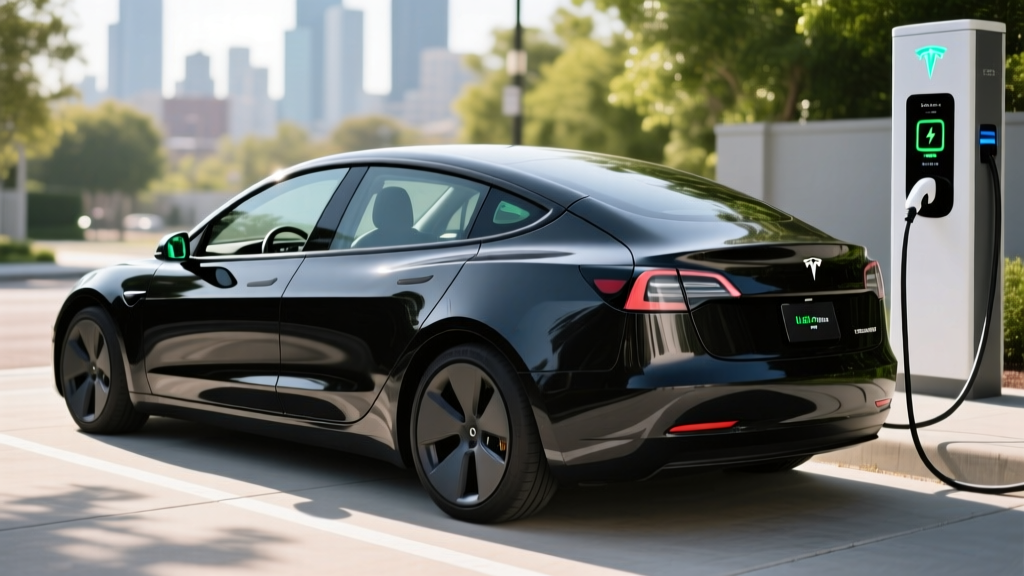
Rideshare ratings matter. A clean, quiet, tech-forward car earns better tips and higher star ratings. The refreshed Model 3 interior delivers on this front:
- 15.4-inch center touchscreen handles navigation, media, and climate — no phone mount needed for nav
- Rear 8-inch touchscreen lets riders control their own climate and view media (a premium touch that earns positive reviews)
- Ventilated front seats and heated front + rear seats standard — comfort in all climates
- Ambient lighting and acoustic glass create a premium cabin feel that riders notice
- 35.2 inches of rear legroom — adequate for most adults but tighter than a Camry (38.0 in) or Ioniq 6 (38.4 in); tall riders on long airport runs may notice
- 23 cu ft cargo (trunk + frunk combined) handles airport luggage for 2–3 passengers comfortably
Notable drawbacks for rideshare:
- No physical buttons for climate or volume — everything routes through the screen or voice, which some riders find frustrating when requesting adjustments
- Rear visibility is limited by the sloping roofline — the backup camera is essential, and shoulder checks require more effort
- The minimalist interior, while clean, lacks door pockets and storage for riders' small items
- Tesla's insurance costs tend to run 20–40% higher than comparable sedans — get quotes before purchasing
Driver-Assist Tech: Autopilot for Rideshare
Tesla's basic Autopilot (Traffic-Aware Cruise Control + Autosteer) comes standard and is genuinely useful for highway airport runs and stop-and-go traffic — reducing driver fatigue over a 10-hour shift. However, it is an SAE Level 2 system requiring constant driver engagement.
Full Self-Driving (Supervised), available as a $8,000 add-on or $99/month subscription, adds automated lane changes, traffic-light recognition, and city-street navigation. For Lyft drivers, the monthly subscription may make more sense than the upfront purchase — you can activate it during high-volume weeks and pause during slower periods.
- Does not make the car self-driving — you are legally and operationally the driver at all times
- Does not replace attention — the cabin camera monitors eye gaze and will issue warnings/disengagements
- Does not handle all scenarios — construction zones, unmapped roads, heavy rain/snow require immediate takeover
- Lyft's terms prohibit any hands-off or eyes-off operation during active rides
Warranty, Battery Longevity & High-Mileage Concerns
This is where full-time rideshare drivers need to pay close attention. The Model 3 RWD carries an 8-year / 100,000-mile battery and drive unit warranty; the Long Range AWD extends to 8 years / 120,000 miles. Both guarantee at least 70% capacity retention over the warranty period.
The high-mileage reality: A driver covering 40,000 miles/year will hit 100,000 miles in 2.5 years. After the battery warranty expires by mileage (even though years remain), any battery-related repair is out of pocket. Current Tesla battery replacement costs range from $12,000–$16,000 depending on the pack.
However, real-world degradation data is encouraging. LFP packs in particular show excellent cycle life — fleet data from high-mileage Tesla taxis and rideshare vehicles suggests 85–90% capacity retention at 150,000 miles with regular charging patterns. The LFP chemistry's tolerance for daily 100% charging without accelerated degradation is a specific advantage for commercial use.
Tire costs are the hidden expense. EVs are heavier and deliver instant torque, wearing tires 20–30% faster than gas equivalents. Budget $800–$1,200 per set, and expect 25,000–35,000 miles from a set under rideshare conditions. That's 1–2 tire replacements per year for a full-time driver.
- $3,000–$4,000/year fuel savings vs. gas (with home charging)
- Minimal maintenance — no oil, spark plugs, or exhaust
- Premium rider experience → better ratings and tips
- Supercharger network reliability for mid-shift charging
- LFP battery supports daily 100% charging without degradation penalty
- Regen braking extends brake pad life significantly
- Over-the-air updates add features without dealer visits
- Battery warranty expires at 100k mi — reached in ~2.5 years at full-time mileage
- Insurance premiums 20–40% higher than comparable sedans
- Rear legroom (35.2 in) trails Camry and competitors
- Home charging installation is near-mandatory for economics to work
- Tire wear is accelerated — $1,600–$2,400/year in tires
- No Apple CarPlay/Android Auto — some riders expect it
- Repair costs and body-shop wait times can be high post-collision
Is the Lyft Driver Tesla Purchase Program Worth It vs. Competitors?
| Factor | Tesla Model 3 RWD | Toyota Camry Hybrid | Hyundai Ioniq 6 SE |
|---|---|---|---|
| Base Price | $38,990 | $29,995 | $39,250 |
| After §30D Credit | ~$32,880* | N/A (HEV) | ~$31,750* |
| EPA Range / MPG | 363 mi | 52 MPG | 361 mi |
| Annual Fuel Cost (40k mi) | $1,400–$2,400 | $2,615 | $1,400–$2,400 |
| Rear Legroom | 35.2 in | 38.0 in | 38.4 in |
| DC Fast Charge | 170 kW | N/A | 233 kW |
| Charging Network | Supercharger (excellent) | Gas stations (everywhere) | CCS (growing, less reliable) |
*Credit eligibility varies. Verify on IRS.gov.
- Choose the Model 3 if: You have home charging access, drive 30,000+ miles/year, want the lowest per-mile energy cost, value the Supercharger network's reliability, and prioritize rider experience for higher ratings.
- Choose the Camry Hybrid if: You lack reliable home charging, want a lower purchase price, need maximum rear-seat space, or drive in areas with sparse public charging infrastructure.
- Choose the Ioniq 6 if: You want comparable EV economics with more rear legroom and don't mind the less mature CCS charging network (though NACS adapters are available).
Frequently Asked Questions
What is the Lyft driver Tesla purchase program?
The Lyft driver Tesla purchase program is a periodic partnership offering active Lyft drivers access to preferred pricing, financing options, and sometimes charging credits when purchasing a new Tesla. Program availability and terms vary by market and time period — check the Lyft Driver app's rewards section or Tesla's partner programs page for current offers.
Does the Tesla Model 3 qualify for the $7,500 federal EV tax credit?
The Model 3 has historically qualified for up to $7,500 under IRS §30D, but eligibility depends on battery-component and critical-mineral sourcing requirements that tighten each year, plus buyer income caps ($150K single / $300K joint) and the $55,000 sedan MSRP cap. The credit can be transferred to the dealer at point of sale. Always verify current eligibility at IRS.gov before purchasing.
How much does it cost to charge a Model 3 for rideshare driving?
At home on a Level 2 charger averaging $0.14/kWh, charging 40,000 miles/year costs roughly $1,400. Mixing in public DC fast charging at $0.35–$0.50/kWh pushes annual energy costs to $2,000–$2,800. Compare this to $4,250+ for gas in a 32 MPG sedan at $3.40/gallon.
Will the battery last if I drive 40,000+ miles per year for Lyft?
The RWD's LFP battery is well-suited to high-mileage use — LFP chemistry tolerates daily 100% charging and shows strong cycle-life data. Fleet reports suggest 85–90% capacity retention at 150,000 miles. However, the battery warranty expires at 100,000 miles (2.5 years at this pace), so any post-warranty battery repair would be out of pocket at $12,000–$16,000.
Is the Tesla Model 3 good for Lyft riders?
Riders generally rate the Model 3 highly for its quiet cabin, smooth ride, premium feel, and rear touchscreen. The main limitation is rear legroom (35.2 inches), which is tighter than a Camry or Ioniq 6. Tall riders on long trips may notice. Cargo space (23 cu ft trunk + frunk) handles airport luggage well for 2–3 passengers.
Can I use Tesla Autopilot while driving for Lyft?
You can use Autopilot (Level 2 driver assist) for highway and traffic assistance, but you must remain fully engaged — hands on wheel, eyes on road. Lyft's terms prohibit any hands-off or unsupervised driving during active rides. FSD (Supervised) does not change this requirement.