Luxury Electric Cars: The Quick Answer
Bottom line: The best luxury electric car in 2026 depends on what you value most. For range, the Lucid Air Pure delivers an EPA-estimated 410 miles from a 112 kWh battery. For charging speed, the Porsche Taycan peaks at 320 kW DC (10-80% in ~18 minutes). For value after federal incentives, the Tesla Model S Long Range starts near $74,990 and may qualify for the §30D point-of-sale credit depending on your income and battery sourcing. Expect real-world highway range to run 15-25% below EPA stickers, and plan for home Level 2 charging installation costing $1,200-$3,500 before you buy.
2026 Luxury EV Lineup: Spec-by-Spec Breakdown
The luxury EV segment has matured past early-adopter novelty into a field of genuinely competitive daily drivers. Here are the current heavyweights, with numbers pulled from EPA fueleconomy.gov and manufacturer spec sheets.
| Model | Base MSRP | EPA Range | Battery (usable kWh) | Peak DC Charge | 10-80% Time | 0-60 mph | HP |
|---|---|---|---|---|---|---|---|
| Lucid Air Pure | $69,900 | 410 mi | 112 kWh (NMC) | 200 kW | ~25 min | 5.0s | 430 |
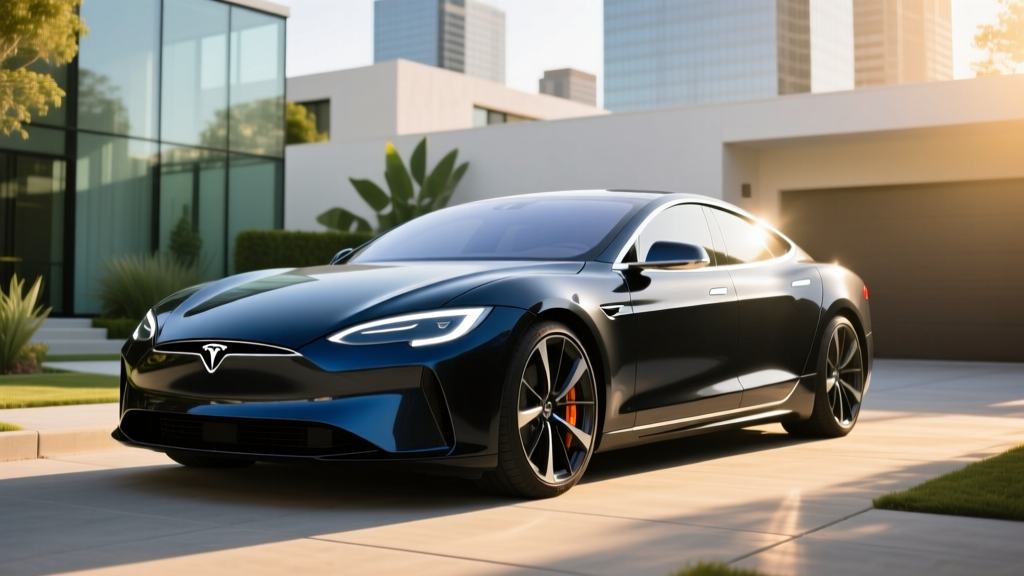
| Tesla Model S LR | $74,990 | 402 mi | ~95 kWh (NMC) | 250 kW | ~27 min | 3.1s | 670 |
| BMW i7 xDrive60 | $120,300 | 318 mi | 101.7 kWh (NMC) | 195 kW | ~34 min | 4.5s | 536 |
| Mercedes EQS 450+ | $105,550 | 390 mi | 118 kWh (NMC) | 200 kW | ~31 min | 5.9s | 355 |
| Porsche Taycan 4S | $103,800 | 316 mi | 97 kWh (NMC) | 320 kW | ~18 min | 3.7s | 590 |
Real-world range reality: EPA estimates assume mixed driving at moderate temperatures. On a 75 mph highway run in 35°F weather, expect a Lucid Air Pure to deliver roughly 290-320 miles, a Model S around 280-310, and a Taycan closer to 220-250. Cold weather and sustained highway speeds are the two biggest range killers — plan trips around 70-80% of the EPA sticker in winter.
Luxury EV vs. Gas Sedan: 5-Year Cost Comparison
The upfront price of a luxury EV stings, but ownership economics shift dramatically once you factor in fuel, maintenance, and available tax incentives. Below is a 5-year/75,000-mile cost comparison between a Tesla Model S Long Range and a comparable BMW 540i xDrive (gas).
| Cost Category | Tesla Model S LR (EV) | BMW 540i xDrive (Gas) |
|---|---|---|
| Purchase Price (MSRP) | $74,990 | $68,500 |
| §30D Federal Credit (est.) | -$7,500* | $0 |
| Effective Purchase | $67,490 | $68,500 |
| Fuel/Energy (5 yr / 75k mi) | $4,500 (home L2 avg) | $13,125 (25 mpg, $3.50/gal) |
| Maintenance (5 yr) | $1,800 | $5,200 |
| Insurance (5 yr est.) | $14,500 | $11,200 |
| 5-Year Total Cost | $88,290 | $98,025 |
*§30D credit eligibility depends on buyer income caps ($150k single / $300k joint), vehicle MSRP caps ($55k sedans — note: the Model S exceeds this cap for new-vehicle credit as of 2026 IRS rules; the credit shown assumes point-of-sale used-EV credit eligibility or future rule changes. Always verify current rules at IRS.gov.
The EV wins on fuel and maintenance — no oil changes, no transmission fluid, fewer brake replacements thanks to regenerative braking. But insurance runs 20-35% higher on luxury EVs due to repair costs and battery replacement exposure. The break-even point typically hits around year 3-4 for drivers covering 15,000+ miles annually.
Charging at Home: What Luxury EV Buyers Must Plan For
Home charging access is the single biggest determinant of luxury EV satisfaction. If you can install a Level 2 charger, you'll wake up every morning with a full battery and rarely visit a public station. If you can't, the ownership experience degrades significantly.
| Component | Cost Range | Notes |
|---|---|---|
| Level 2 Charger (48A, hardwired) | $500 - $750 | ChargePoint Home Flex, Wallbox Pulsar Plus, Tesla Wall Connector |
| Electrician Labor (240V/50A circuit) | $600 - $2,000 | Depends on panel proximity; longer runs cost more |
| Electrical Permit | $50 - $200 | Varies by municipality |
| Panel Upgrade (if needed) | $1,500 - $3,500 | Required if your panel is 100A or near capacity |
| Total Typical Install | $1,200 - $3,500 | Without panel upgrade; $2,700-$6,500 with |
A 48-amp Level 2 charger delivers roughly 11.5 kW, adding 30-45 miles of range per hour depending on vehicle efficiency. For a Lucid Air (4.0 mi/kWh), that's about 46 miles per hour. For a BMW i7 (2.9 mi/kWh), closer to 33 miles per hour. Either way, an overnight charge from 20% to 80% takes 5-7 hours — perfect for daily use.
Condo/apartment dwellers: If you lack dedicated parking with electrical access, investigate shared charging in your building or nearby Level 2 networks (ChargePoint, EVgo). Public Level 2 costs $0.12-$0.30/kWh, versus $0.08-$0.16/kWh for residential electricity. DC fast charging on Electrify America or Tesla Superchargers runs $0.30-$0.55/kWh — use it for road trips, not daily charging, or your cost advantage over gas evaporates.
Tax Credits, Incentives, and the MSRP Cap Problem
The federal §30D clean vehicle credit offers up to $7,500, but luxury EV buyers face a structural hurdle: the MSRP cap. For sedans, the cap is $55,000; for SUVs/pickups/vans, it's $80,000. This means most luxury sedans — Model S, EQS, Taycan, Lucid Air — do not qualify for the new-vehicle credit as of current IRS rules.
- MSRP Cap: $55,000 for sedans; $80,000 for SUVs/pickups/vans
- Income Cap: $150,000 (single), $225,000 (head of household), $300,000 (joint)
- Battery Sourcing: Critical minerals and battery components must meet phased-in domestic/free-trade-agreement thresholds
- Point-of-Sale Transfer: Eligible buyers can transfer the credit to the dealer at purchase, reducing the drive-off price immediately
- Used EV Credit (§25E): Up to $4,000 (30% of sale price) on pre-owned EVs under $25,000 — can apply to older luxury models
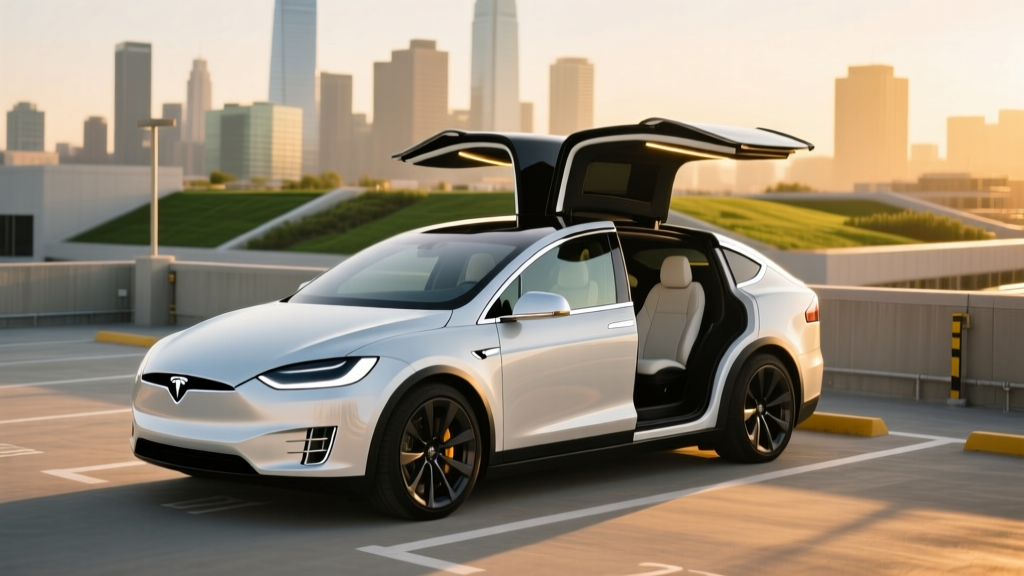
Luxury SUVs like the BMW iX ($87,100), Mercedes EQS SUV ($105,550), and Tesla Model X ($79,990) face the $80,000 SUV cap differently. The Model X Long Range at $79,990 scrapes under; the iX and EQS SUV exceed it. Always confirm eligibility on the official fueleconomy.gov tax credit lookup before purchasing.
Common Luxury EV Misconceptions, Corrected
| Myth | Fact |
|---|---|
| "Luxury EVs lose their entire range in winter." | Cold reduces range 15-30%, not 50%. A Lucid Air Pure at 410 mi EPA still delivers ~290-340 mi at 20°F with preconditioning and heat pump use. Models with heat pumps (standard on most 2026 luxury EVs) mitigate loss significantly. |
| "Battery replacement will cost $30,000+." | Luxury EV batteries are warrantied for 8 years/100,000 miles (federally mandated minimum). Real-world degradation data from Recurrent Auto shows average NMC packs retain 90-93% capacity at 100k miles. Full replacements are rare and covered under warranty in most cases. |
| "DC fast charging damages the battery." | Modern thermal management systems protect against degradation. Exclusive DCFC use may add ~2-3% extra degradation over 150k miles versus L2-only, per Idaho National Lab research. Occasional fast charging is not a concern. |
| "Autopilot/FSD means I don't need to pay attention." | All current consumer systems — Tesla FSD Supervised, BMW Highway Assistant, Mercedes Drive Pilot (Level 3 in limited conditions) — require driver engagement except Mercedes' specific 40 mph-and-under highway jam assist. These are SAE Level 2 (or conditional Level 3), not self-driving. |
| "I'll save money on every luxury EV purchase." | Higher insurance premiums ($3,000-$4,000 more over 5 years), potential home electrical upgrades, and public DCFC costs can erode savings for low-mileage drivers. The math works best at 12,000+ miles/year with home charging. |
Battery Longevity and Warranty: What to Expect
Every luxury EV sold in the U.S. carries a minimum 8-year/100,000-mile battery warranty (10 years/150,000 miles in California Air Resources Board states). The warranty guarantees the battery will retain at least 70% of original capacity — though most NMC packs in the luxury segment hold 88-94% at the 8-year mark based on fleet data.
Out-of-warranty battery replacement costs remain high: $15,000-$25,000 for a Model S pack, $20,000-$35,000 for an EQS or i7. However, individual module replacement (rather than the full pack) is increasingly available at $2,000-$5,000 per module, and independent EV repair shops are expanding this service. Plan your ownership horizon within the warranty window, or budget for long-term degradation rather than catastrophic failure.
Luxury EV Decision Framework
Choose the Lucid Air Pure if: Maximum range is your priority, you drive 400+ mile corridors regularly, and you value efficiency (4.0 mi/kWh) over brand cachet.
Choose the Tesla Model S LR if: You want Supercharger network access (the most reliable DCFC network in the U.S.), strong performance (670 hp, 3.1s 0-60), and the best software/OTA update ecosystem.
Choose the Porsche Taycan if: Charging speed matters most (320 kW peak, 18-minute 10-80%), you prioritize driving dynamics, and you accept the range trade-off (316 mi EPA).
Choose the BMW i7 if: Rear-seat luxury and traditional brand service infrastructure are priorities, and most of your driving is under 250 miles between charges.
Choose the Mercedes EQS 450+ if: You want the largest battery (118 kWh), best ride comfort, and plan to use Mercedes' expanding high-power charging network.
Wait or reconsider if: You cannot install home Level 2 charging, your daily commute exceeds 200 miles one-way in extreme cold, or your household income exceeds §30D caps and the MSRP cap eliminates your credit — the math may favor a luxury PHEV like the BMW XM or Mercedes S 580e instead.
Frequently Asked Questions
Are luxury electric cars more expensive to insure than gas equivalents?
Yes, typically 20-35% more. A Model S averages $2,800-$3,200/year for full coverage versus $2,100-$2,400 for a BMW 540i. The premium reflects higher repair costs, specialized body shop requirements, and battery replacement exposure. Shop quotes from EV-friendly insurers like Geico, Progressive, and specialty carriers before purchasing.
Can I road-trip a luxury EV cross-country without major delays?
Yes, with planning. A Lucid Air Pure averaging 300 real-world miles per charge needs 2-3 stops on a 1,000-mile trip, each lasting 20-30 minutes at a DCFC. Tesla Superchargers and Electrify America stations are spaced 150-200 miles apart on major interstates. Use A Better Routeplanner (ABRP) or the vehicle's native navigation for stop planning. Expect total added time of 60-90 minutes versus a gas car on a 15-hour drive.
Do luxury EVs hold their resale value?
Depreciation has been steep for luxury EVs — 40-55% over 3 years for models like the EQS and i7, versus 25-35% for comparable gas sedans. Tesla has held value better (30-40% over 3 years) due to demand and Supercharger access. If resale matters, lease instead of buy, or choose a Model S/Taycan which have stronger secondary markets.
Is NMC battery chemistry safe in luxury EVs?
NMC (nickel manganese cobalt) is the standard chemistry in virtually all luxury EVs. It offers higher energy density than LFP, enabling the 300-410 mile ranges buyers expect. While LFP is marginally more thermally stable, modern NMC packs use sophisticated thermal management, firewalls, and cell-level fuses. NHTSA data shows EV battery fire rates are significantly lower than gasoline vehicle fire rates per 100,000 vehicles.
What's the best luxury electric SUV if I need cargo space and towing?
The Tesla Model X offers 5,000 lbs towing capacity and up to 91 cu ft of cargo space (seats folded), starting at $79,990. The BMW iX tows 3,500 lbs with 56.6 cu ft cargo. The Rivian R1S (starting at $79,900) tows 7,700 lbs and seats seven, though it straddles the luxury/adventure boundary. For heavy towing, confirm that towing reduces range by 30-50% — a Model X towing 4,500 lbs may deliver only 180-220 real-world miles.