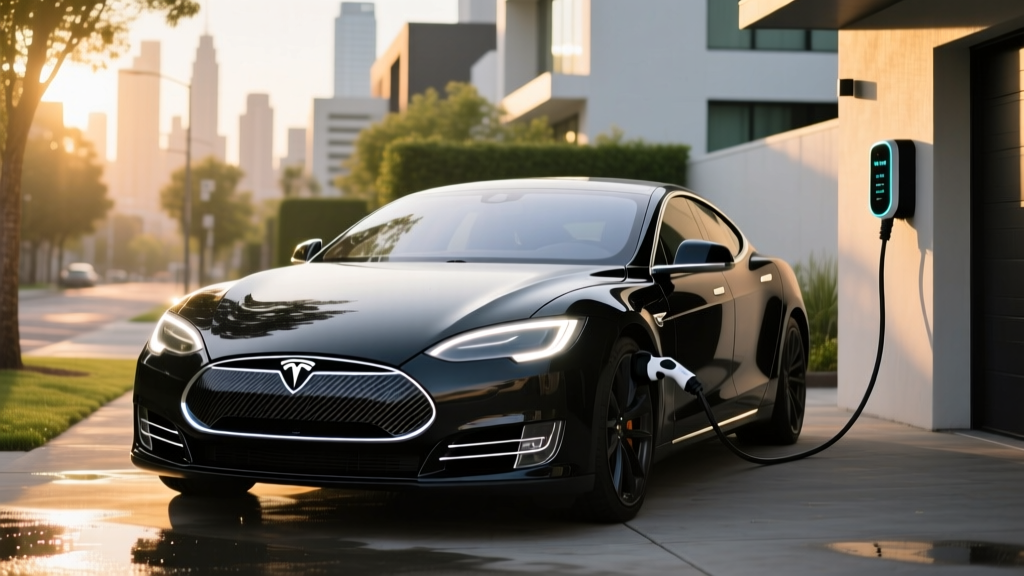
Tesla doesn't officially sell a trim called the "Luxe Package," but buyers searching for a luxe package Tesla are almost always looking at the Model S in its highest-spec configuration — the dual-motor all-wheel-drive Long Range or the tri-motor Plaid — optioned with premium paint, 21-inch Arachnid wheels, and yoke steering. For 2026, the Model S remains the flagship sedan in Tesla's lineup, combining executive-level comfort with supercar acceleration and access to the largest fast-charging network in North America.
This review breaks down the Model S Long Range and Plaid with real-world range data, charging curves, interior quality, and total cost after federal tax credits — so you can decide whether Tesla's luxury sedan still earns its premium price against the Lucid Air, BMW i7, and Mercedes EQS.
2026 Tesla Model S: Core Specifications at a Glance
| Spec | Model S Long Range | Model S Plaid |
|---|---|---|
| Base MSRP | $84,990 | $99,990 |
| EPA Range | 402 miles | 359 miles |
| Battery (usable) | ~100 kWh, NMC | ~100 kWh, NMC |
| Drivetrain | Dual-Motor AWD | Tri-Motor AWD |
| Horsepower | 670 hp | 1,020 hp |
| 0–60 mph | 3.1 seconds | 1.99 seconds |
| Top Speed | 155 mph | 200 mph |
| Peak DC Charge Rate | 250 kW | 250 kW |
| 10–80% DC Time | ~27 minutes | ~27 minutes |
| Level 2 Home Charge | 11.5 kW (~34 mi/hr) | 11.5 kW (~34 mi/hr) |
| MPGe (combined) | 120 MPGe | 116 MPGe |
| Efficiency | 28 kWh/100 mi | 29 kWh/100 mi |
| Cargo (rear + frunk) | 28 cu ft + 3.1 cu ft | 28 cu ft + 3.1 cu ft |
| Rear Legroom | 35.4 inches | 35.4 inches |
| Battery Warranty | 8 yr / 150,000 mi | 8 yr / 150,000 mi |
Sources: fueleconomy.gov, Tesla Model S official specs.
Real-World Range: What 402 EPA Miles Actually Looks Like
EPA Sticker: 402 miles (Long Range) / 359 miles (Plaid)
Real-World Highway (70 mph, mild weather): ~320–350 miles
Cold Weather (below 32°F, mixed driving): ~260–300 miles
Plaid Highway (70 mph): ~280–310 miles
The Model S Long Range's 402-mile EPA rating is among the highest of any production EV sold in the US, trailing only the Lucid Air Grand Touring (516 miles). That figure is achievable in city and suburban driving where regenerative braking recaptures energy frequently. On a 75-mph highway run in 65°F weather, expect roughly 320–350 miles before hitting 10% State of Charge (SoC).
The ~100 kWh NMC (nickel manganese cobalt) battery pack suffers the same cold-weather chemistry slowdown as every lithium-ion cell. In sub-freezing conditions, range drops 20–30% due to increased cabin heating demand and reduced battery discharge efficiency. Tesla's standard heat pump mitigates some of this loss — it's noticeably more efficient than the resistive heaters found in older EVs — but physics still wins in January. Preconditioning the battery while plugged in (via the Tesla app's scheduled departure feature) recovers roughly 10–15 miles of range that would otherwise be lost warming a cold pack.
The Plaid's tri-motor powertrain draws more current under hard acceleration, and its EPA rating of 359 miles reflects that. In practice, if you drive a Plaid the way its 1,020 hp invites, expect closer to 250–280 miles between charges.
Charging Speed: 250 kW Peak, But Watch the Curve
| Charging Method | Power (kW) | Miles Added per Hour | Notes |
|---|---|---|---|
| Level 1 (120V household) | ~1.4 kW | ~3–4 mi/hr | Emergency/trickle only |
| Level 2 (240V, 48A Wall Connector) | 11.5 kW | ~34 mi/hr | Full charge in ~9 hours |
| DC Fast (Tesla Supercharger V3/V4) | 250 kW peak | ~200 mi in 15 min | 10–80% in ~27 min |
| DC Fast (CCS adapter, Electrify America) | Up to 250 kW | Varies by station | Requires $250 CCS adapter |
Tesla's V3 and V4 Superchargers deliver a peak 250 kW to the Model S, but that peak only holds between roughly 10–30% SoC. By 50%, the rate tapers to ~150 kW, and above 80% it drops further to protect battery longevity. A typical 10–80% session takes about 27 minutes — fast enough for a rest stop, but not class-leading. The Hyundai Ioniq 5 and Porsche Taycan both sustain higher rates deeper into the charge curve thanks to 800-volt architectures; the Model S uses a 400V system.
For home charging, Tesla's Wall Connector at 48 amps delivers 11.5 kW, adding roughly 34 miles of range per hour. A full overnight charge from 10% takes about 9 hours. Most owners charging from 20–80% daily (the recommended NMC practice) will wake up to a full battery every morning with a standard NEMA 14-50 outlet or hardwired Wall Connector. Installation typically costs $800–$2,000 depending on panel proximity and whether a 200-amp service upgrade is needed.
The Model S ships with a NACS (North American Charging Standard) port natively — no adapter needed for Tesla's 17,000+ Supercharger stalls in North America. Tesla also sells a CCS adapter ($250) for use with Electrify America, EVgo, and other non-Tesla networks, though Supercharger reliability remains meaningfully higher based on JD Power and owner-survey data.
Performance and Driving Dynamics
The Long Range's 670 horsepower and 3.1-second 0–60 time would have defined a supercar a decade ago. Today it's the "sensible" Model S. The dual-motor AWD system provides torque-vectoring grip in rain and snow, and the adaptive air suspension adjusts ride height by up to 3 inches — lowering at highway speed for aerodynamic efficiency and raising for rough driveways.
The Plaid's tri-motor setup (one front, two rear) produces 1,020 hp and a verified 1.99-second 0–60 time on a prepped surface, making it the quickest production sedan ever sold. The carbon-sleeved rotors in the motors spin to 20,000+ RPM without mechanical limiting. In real driving, the Plaid's acceleration is genuinely disorienting — a party trick that never fully gets old, even if you use it sparingly.
Both trims feature Tesla's electric power steering, which is precise but light on feedback compared to the Porsche Taycan or BMW i7. The air suspension delivers a compliant ride in Comfort mode, though 21-inch Arachnid wheels (a popular "luxe" option at $4,500) transmit more road imperfections than the standard 19-inch Tempest wheels. If ride quality matters more than aesthetics, stick with 19s.
Interior, Tech, and the "Luxe" Experience
The Model S interior has been refreshed significantly since the 2021 "Palladium" update. The current cabin features:
- 17-inch center touchscreen (OLED, 2200×1300 resolution) with tilt adjustment
- 12.3-inch digital instrument cluster behind the yoke or round steering wheel
- 8-inch rear-seat touchscreen for climate and entertainment
- 22-speaker, 960-watt audio system with active noise cancellation
- Ventilated front seats with heated rear seats standard
- Tri-zone climate control with HEPA air filtration ("Bioweapon Defense Mode")
- Wireless phone charging pad (two slots, 15W each)
- Power-folding side mirrors with auto-dim
The materials are a step above the Model 3/Y — genuine aluminum trim, open-pore wood or carbon fiber accents, and premium vegan leather. However, compared to a Mercedes EQS or BMW i7, the Model S interior still feels more minimalist than opulent. Panel gaps have improved since 2023 but remain slightly inconsistent compared to German rivals. If "luxe" means traditional luxury — massaging seats, ambient lighting with 64 colors, soft-close doors — the EQS and i7 still lead.
The yoke steering wheel remains polarizing. It provides an unobstructed view of the instrument cluster and feels natural on highways, but requires a hand-over-hand adjustment for low-speed parking maneuvers. Tesla now offers a round wheel at no extra charge, and most buyers we've spoken with prefer it for daily driving.
Autopilot and FSD (Supervised)
Tesla's Autopilot and Full Self-Driving (Supervised) are SAE Level 2 driver-assistance systems. You must keep your hands on the wheel (or apply torque to the yoke) and eyes on the road at all times. The car does not drive itself. FSD (Supervised) costs $8,000 upfront or $99/month and adds automatic city-street navigation, traffic-light recognition, and lane changes — but it still makes errors requiring driver intervention. Only Level 4 robotaxi services like Waymo operate without a human driver.
Standard Autopilot includes Traffic-Aware Cruise Control and Autosteer (lane centering on highways). It works well on clearly marked interstates. FSD (Supervised) extends this to surface streets, but its performance varies significantly by geography and road-marking quality. For most buyers, standard Autopilot is sufficient; FSD remains an expensive beta for enthusiasts who want to experience the frontier of driver-assist tech.
Pricing, Tax Credits, and Total Cost
| Cost Item | Long Range | Plaid |
|---|---|---|
| Base MSRP | $84,990 | $99,990 |
| Typical "Luxe" Build (paint + 21" wheels + yoke) | ~$93,500 | ~$108,000 |
| Federal §30D Tax Credit | $0 (MSRP exceeds $55K sedan cap) | $0 (MSRP exceeds $55K sedan cap) |
| Estimated Delivery + Doc Fees | ~$1,800 | ~$1,800 |
| Est. Annual Insurance | $2,800–$3,600 | $3,200–$4,200 |
| Est. Annual Electricity (12,000 mi) | ~$540 (at $0.16/kWh) | ~$560 |
Here's the hard truth for luxe package Tesla shoppers: the Model S does not qualify for the $7,500 federal EV tax credit under IRS §30D rules. The credit caps sedan eligibility at an MSRP of $55,000, and the Model S starts at $84,990. It also exceeds the buyer income caps ($150,000 single / $300,000 joint for modified AGI). No amount of battery-sourcing compliance changes the math — the MSRP alone disqualifies it.
Some state incentives may still apply (California's CVRP, for example, has its own income and price thresholds), but these are typically $1,000–$2,000 — marginal against a $90,000+ purchase. Check your state's energy office for current programs.
Insurance costs are notably higher than a comparable BMW 5 Series or Mercedes E-Class, partly due to Tesla's aluminum-intensive repair costs and proprietary parts supply. Expect $2,800–$4,200 annually depending on your driving record and ZIP code. Get quotes before ordering.
Warranty and Long-Term Ownership
- Basic Vehicle: 4 years / 50,000 miles
- Battery & Drive Unit: 8 years / 150,000 miles (whichever comes first), with minimum 70% capacity retention guaranteed
- Roadside Assistance: 4 years / 50,000 miles
Tesla's 8-year/150,000-mile battery warranty is competitive with Lucid (8/100,000) and slightly less generous than Hyundai's 10-year/100,000-mile coverage on the Ioniq 6. The 70% capacity retention threshold is industry-standard: if your 100 kWh pack drops below 70 kWh within the warranty period, Tesla replaces or refurbishes it at no cost.
Real-world degradation data from Tesla's 2025 Impact Report shows Model S packs retaining approximately 88% capacity at 100,000 miles — well above the warranty floor. NMC chemistry degrades slightly faster than LFP in the first 20,000 miles, then stabilizes. Charging to 80% daily (rather than 100%) and avoiding repeated DC fast-charging sessions extends pack life measurably. For owners who garage with a Level 2 charger and set a charge limit, hitting 200,000 miles on the original pack is realistic.
How It Compares: Model S vs. the Luxury EV Field
| Category | Tesla Model S LR | Lucid Air GT | BMW i7 xDrive50 | Mercedes EQS 580 |
|---|---|---|---|---|
| Price | $84,990 | $125,600 | $105,700 | $104,400 |
| EPA Range | 402 mi | 516 mi | 318 mi | 371 mi |
| 0–60 mph | 3.1 sec | 3.0 sec | 4.5 sec | 4.1 sec |
| Peak DC Charge | 250 kW | 300 kW | 195 kW | 200 kW |
| Charging Architecture | 400V | 900V | 400V | 400V |
| Rear Legroom | 35.4 in | 37.1 in | 42.1 in | 41.7 in |
| Supercharger Access | Native | Adapter needed | Adapter needed | Adapter needed |
- Supercharger network access is a priority for road trips
- You want 400+ mile range under $90K
- Over-the-air updates and tech-forward UX matter to you
- You value performance (3.1s 0–60) in a practical sedan
- Traditional luxury craftsmanship is your top priority (BMW i7, EQS)
- Maximum range above all else (Lucid Air Grand Touring)
- You need limousine-level rear-seat space
- Federal tax credit eligibility is important to your budget
Pros and Cons
- 402-mile EPA range (Long Range) — top 3 among all EVs
- Native Supercharger access — most reliable DC network in the US
- Class-leading infotainment, gaming, and streaming on 17" screen
- Air suspension standard — adjustable ride height and comfort
- Strong OTA update cadence adds features post-purchase
- Massive cargo capacity (31 cu ft total) for a sedan with hatchback liftgate
- No federal tax credit — MSRP far exceeds §30D sedan cap
- 400V architecture limits sustained DC charge rate vs. 800V rivals
- Interior quality still trails German luxury sedans at this price
- Insurance costs 30–50% higher than ICE equivalents
- Yoke steering divisive; round wheel should be default
- FSD (Supervised) remains SAE Level 2 — not autonomous
Who the Luxe Package Tesla Model S Is For
The Model S in a high-spec build suits the tech-forward executive or enthusiast who wants a single vehicle that handles the daily commute, 400-mile road trips, and the occasional drag-strip outing — without sacrificing hatchback practicality. It's ideal if you have home Level 2 charging, live near Supercharger corridors, and value software-driven innovation over traditional luxury brand cachet.
It's less ideal for buyers who prioritize rear-seat comfort for chauffeured driving (the BMW i7 is substantially roomier back there), those on a strict budget who need the $7,500 federal credit, or anyone uncomfortable with Tesla's minimalist, screen-centric interface.
Frequently Asked Questions
What is the real-world range of the Model S Long Range?
Expect 320–350 miles on the highway in mild weather and 260–300 miles in freezing conditions. The 402-mile EPA figure is achievable in mixed city/suburban driving with moderate climate-control use.
How fast does the Model S charge at home and on the road?
At home on a Level 2 Wall Connector (11.5 kW), it adds ~34 miles per hour, fully charging overnight. On a Tesla V3/V4 Supercharger, it peaks at 250 kW and reaches 10–80% in roughly 27 minutes, though the charge curve tapers significantly above 50% SoC.
Does the Model S qualify for the federal EV tax credit?
No. Under IRS §30D rules, sedans must have an MSRP at or below $55,000 to qualify. The Model S starts at $84,990, disqualifying it regardless of buyer income or battery sourcing. See IRS.gov clean vehicle credits for full rules.
Is the Model S worth buying over the Lucid Air or BMW i7?
If Supercharger network access, over-the-air updates, and a lower starting price matter most, yes. If rear-seat luxury, 500+ mile range (Lucid), or traditional craftsmanship (BMW) are higher priorities, test-drive those rivals before committing.
What does a "luxe" Model S build cost in 2026?
A Long Range with Ultra Red paint ($2,500), 21-inch Arachnid wheels ($4,500), and cream premium interior ($0 — standard on LR) lands around $93,500 before delivery fees. A similarly optioned Plaid reaches approximately $108,000.
How long will the Model S battery last?
Tesla warrants the battery for 8 years / 150,000 miles at 70% minimum capacity. Fleet data shows ~88% retention at 100,000 miles. With daily charging limited to 80% and regular Level 2 use, 200,000+ miles on the original pack is a reasonable expectation.