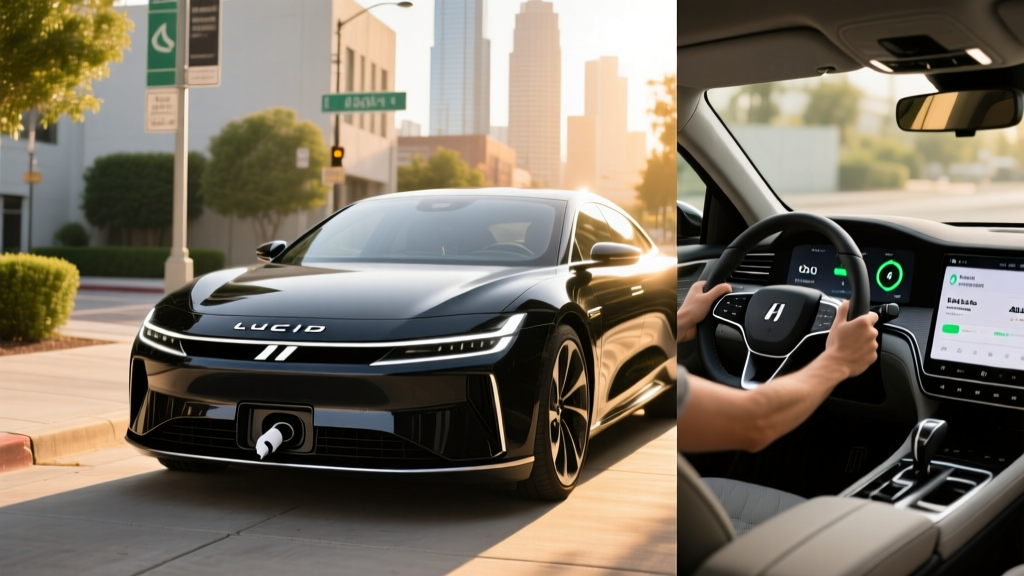
The Short Answer: Does Lucid Take Trade-Ins?
Yes — Lucid Motors accepts trade-in vehicles through its direct-to-consumer sales process. When you configure a Lucid Air on the company's website or visit a Lucid Studio or Service Center, you can receive a trade-in valuation powered by a third-party appraisal partner (typically Algora or a similar automotive valuation service). The offer is usually valid for a limited window, and the trade-in value is applied as a credit toward your purchase or lease.
However, there are nuances that matter if you're coming from a gas car or a competing EV. Trade-in offers for EVs can fluctuate based on battery state of health, market depreciation curves, and regional demand. Lucid's trade-in valuations tend to be competitive but not always the highest bid — it pays to cross-check with Carvana, CarMax, or a private-party sale before committing. If your trade-in has negative equity (you owe more than it's worth), Lucid can typically roll that gap into your financing, though this increases your monthly payment.
Below, we break down everything you need to know about buying the 2026 Lucid Air — from real-world range and charging performance to tax credit eligibility and how it stacks up against the Tesla Model S, Mercedes EQS, and BMW i7.
2026 Lucid Air: Core Specifications at a Glance
| Specification | Air Pure | Air Touring | Air Grand Touring | Air Sapphire |
|---|---|---|---|---|
| EPA Range | 419 mi | 425 mi | 516 mi | 427 mi |
| Battery (usable) | 88 kWh (LFP) | 112 kWh (NMC) | 112 kWh (NMC) | 118 kWh (NMC) |
| Drivetrain | RWD (single motor) | AWD (dual motor) | AWD (dual motor) | AWD (tri-motor) |
| Horsepower | 430 hp | 620 hp | 819 hp | 1,234 hp |
| 0–60 mph | 5.0 sec | 3.4 sec | 3.0 sec | 1.89 sec |
| Max DC Charge Rate | 200 kW | 250 kW | 300 kW | 300 kW |
| 10–80% DC Time | ~28 min | ~22 min | ~20 min | ~20 min |
| Level 2 Home Rate | 11.5 kW (~46 mi/hr) | 19.2 kW (~77 mi/hr) | 19.2 kW (~77 mi/hr) | 19.2 kW (~77 mi/hr) |
| Efficiency (MPGe) | 146 MPGe | 131 MPGe | 131 MPGe | 110 MPGe |
| kWh/100 mi | 23 | 26 | 26 | 30 |
| Base MSRP | $69,900 | $87,400 | $110,900 | $249,000 |
| Federal Tax Credit (§30D) | Up to $7,500 | Up to $7,500 | Not eligible (MSRP cap) | Not eligible (MSRP cap) |
Source: fueleconomy.gov and Lucid Motors official specs. MSRP reflects 2026 model-year pricing; destination fee additional.
Real-World Range: What the EPA Number Doesn't Tell You
Real-World Highway (70 mph, 72°F): ~380–420 miles
Real-World Highway (32°F, cold weather): ~310–350 miles
Mixed Commute (city + suburban): ~430–480 miles
The Lucid Air Grand Touring's 516-mile EPA rating remains the highest of any production sedan sold in the U.S. for the 2026 model year. But as with every EV, that number assumes a specific drive cycle. On a sustained 70-mph highway run in moderate temperatures, expect roughly 75–80% of the EPA figure — putting real-world range around 380 to 420 miles. That's still enough to drive from Los Angeles to Las Vegas on a single charge, or from New York to Washington, D.C., without stopping.
Cold weather is the equalizer. In freezing conditions (below 32°F), lithium-ion cells lose efficiency and cabin heating draws significant energy. Expect a 20–30% reduction, dropping the Grand Touring to roughly 310–350 real-world miles. The Air's standard heat pump helps mitigate this compared to resistive heating systems, but physics is physics. If you live in Minnesota or Maine and regularly drive long distances in winter, plan charging stops accordingly.
The Air Pure with its 88 kWh LFP (lithium iron phosphate) battery posts a more modest 419 EPA miles, but LFP chemistry offers a trade-off: lower energy density but longer cycle life and less degradation over time. For daily commuters who charge at home nightly, the Pure's range is more than adequate and the battery will likely outlast the car.
Charging Performance: DC Fast Charging and Home Setup
Lucid uses a 900-volt electrical architecture — the same high-voltage approach pioneered by Porsche's Taycan and now adopted by Hyundai/Kia's E-GMP platform. The benefit is faster charging with less heat generation, which preserves battery longevity.
| Charging Level | Power / Rate | Miles Added per Hour | Notes |
|---|---|---|---|
| Level 1 (120V household) | ~1.4 kW | ~4–5 mi/hr | Emergency/trickle only |
| Level 2 (240V, 48A circuit) | 11.5 kW (Pure) / 19.2 kW (Touring+) | 46–77 mi/hr | Full overnight charge in 6–10 hours |
| DC Fast Charge (peak) | 200–300 kW depending on trim | ~700–1,000+ mi/hr equivalent | 10–80% in 20–28 min; tapers above 80% |
The Grand Touring and Sapphire peak at 300 kW on a compatible DC fast charger (such as Electrify America's 350 kW stalls). In practice, the charge curve holds above 250 kW from roughly 10% to 40% state of charge, then gradually tapers. The 10–80% sprint takes approximately 20 minutes under ideal conditions — battery preconditioned, charger not shared, moderate ambient temperature. Above 80%, charging slows significantly to protect the cells; expect the 80–100% top-off to add another 25–35 minutes.
At home, the Touring, Grand Touring, and Sapphire support 19.2 kW Level 2 charging when connected to a hardwired Wall Connector on a 100-amp circuit. That's roughly 77 miles of range per hour, meaning a depleted Grand Touring can fully recharge overnight in about 7 hours. The Air Pure tops out at 11.5 kW on Level 2, which still delivers a full charge in roughly 9 hours — perfectly fine for overnight use.
Important installation note: A 19.2 kW charger requires a 100-amp dedicated circuit and likely a panel upgrade if your home has a standard 100- or 150-amp service panel. Budget $1,500–$3,500 for a licensed electrician to install a hardwired Level 2 unit, with panel upgrades potentially adding $2,000–$4,000. Always get a quote from a licensed electrician before purchasing equipment.
Lucid Trade-In Process: Step by Step
If you're ready to move forward, here's how Lucid's trade-in process works in practice:
- Configure your Air on lucidmotors.com or in the Lucid app, selecting your trim, color, wheels, and interior.
- Enter your trade-in details — year, make, model, mileage, condition, VIN, and photos. Lucid's system generates an initial estimate within minutes.
- Receive a firm offer valid for 7 days or 500 additional miles (whichever comes first). This offer is backed by Lucid's appraisal partner.
- Accept or decline. If you accept, the trade-in value is deducted from your purchase price before taxes (in most states), reducing your taxable amount — a meaningful savings.
- Deliver your trade-in at your local Lucid Studio or Service Center on delivery day. You'll need the title, registration, keys, and any lien-release documentation.
Pro tip: Get your Lucid trade-in offer first, then shop it against Carvana, CarMax, and at least one local dealer. If a third party offers more, you can sell there and simply apply the cash toward your Lucid purchase. The trade-in tax advantage (paying sales tax only on the price difference) varies by state — some states allow it, others don't. Check your state's DMV rules.
Pricing, Tax Credits, and Total Cost of Ownership
| Trim | Base MSRP | As-Tested (typical options) | Federal §30D Credit | Effective Price After Credit |
|---|---|---|---|---|
| Air Pure | $69,900 | $72,500 | Up to $7,500 | ~$65,000 |
| Air Touring | $87,400 | $92,000 | Up to $7,500 | ~$84,500 |
| Air Grand Touring | $110,900 | $118,000 | $0 (exceeds $55K sedan MSRP cap) | $118,000 |
| Air Sapphire | $249,000 | $249,000 | $0 (exceeds $55K sedan MSRP cap) | $249,000 |
Under IRS §30D rules, the federal EV tax credit is capped at $7,500 and subject to three key constraints that affect Lucid buyers:
- MSRP cap: Sedans must have an MSRP of $55,000 or less. Only the Air Pure qualifies; Touring, Grand Touring, and Sapphire all exceed this threshold.
- Buyer income cap: Modified adjusted gross income must not exceed $150,000 (single), $225,000 (head of household), or $300,000 (joint). High-earning Lucid buyers may not qualify even for the Pure.
- Battery sourcing requirements: Critical minerals and battery components must meet escalating domestic-content thresholds. Lucid's supply chain compliance varies by model year — confirm current-year eligibility on IRS.gov before relying on the credit.
The §30D credit can now be transferred to the dealer at the point of sale, meaning you receive the $7,500 as an immediate price reduction rather than waiting to claim it on your tax return. Lucid supports this point-of-sale transfer for eligible trims.
5-year ownership economics: The Air Pure, at roughly $65,000 after the credit, costs about $0.04–$0.06 per mile to "fuel" (home charging at $0.13/kWh national average). Compare that to a BMW 5 Series at $0.15–$0.18 per mile on premium gas. Over 75,000 miles, the Air Pure saves roughly $7,000–$9,000 in fuel alone. Factor in zero oil changes, fewer brake replacements (regen braking preserves pads), and lower maintenance, and total 5-year savings versus a comparable ICE luxury sedan can reach $12,000–$15,000, partially offsetting higher insurance premiums (typically 15–25% above gas equivalents).
Interior, Technology, and Daily Livability
The Air's cabin is a study in minimalist luxury. The glass canopy roof floods the interior with light, and the 34-inch curved Glass Cockpit display floats above the dashboard, combining instrument cluster, navigation, and infotainment into a single curved panel. A secondary retractable lower touchscreen handles climate controls and secondary functions.
Passenger and cargo dimensions:
- Front legroom: 45.3 inches
- Rear legroom: 41.7 inches (class-leading for the segment)
- Trunk: 22.1 cu ft
- Frunk (front trunk): 7.1 cu ft
- Total cargo: 29.2 cu ft (more than a Tesla Model S)
The rear seat is where the Air separates itself from the Model S. Adults over six feet can sit comfortably behind a similarly tall driver — a claim most luxury sport sedans can't make. The available Executive Rear Seating package adds power-reclining outboard seats with massage, though it reduces the rear middle seat to a pass-through.
Driver assistance: Lucid's DreamDrive Pro system uses 32 sensors including lidar (on Touring and above), cameras, and ultrasonic units. It provides adaptive cruise, lane centering, and highway assist — this is an SAE Level 2 system, meaning the driver must remain attentive and keep hands on or near the wheel at all times. It is not self-driving. DreamDrive competes with Tesla Autopilot, BMW Driving Assistant Pro, and Mercedes Drive Pilot, though Lucid's system is generally regarded as conservative and smooth rather than aggressive.
Pros, Cons, and the Competition
Pros
- Best-in-class EPA range (516 mi Grand Touring)
- Class-leading efficiency (kWh/100 mi) and real-world highway range
- Spacious rear seat and cargo volume exceeding rivals
- 300 kW peak DC charging (Grand Touring/Sapphire)
- Standard heat pump for cold-weather efficiency
- LFP battery option (Pure) for long-term durability
- 900V architecture enables sustained fast-charge performance
- Over-the-air updates continue to add features post-purchase
Cons
- Grand Touring and Sapphire exceed §30D MSRP cap — no federal credit
- Lucid's service center network is still limited vs. Tesla or legacy luxury brands
- Infotainment UI has a learning curve; no Apple CarPlay/Android Auto
- DreamDrive ADAS lags behind Tesla FSD and Mercedes Drive Pilot in feature breadth
- Insurance premiums 15–25% higher than comparable ICE sedans
- Depreciation steeper than Tesla Model S in first 2 years (industry data)
- No NACS (Tesla) connector standard — CCS1 port; NACS adapter required for Superchargers
Versus key competitors:
The Tesla Model S (405 mi Long Range, ~$79,990) offers access to the Supercharger network natively and a more mature software ecosystem, but its interior materials and rear seat space don't match the Air. The Mercedes EQS 450+ (390 mi, ~$105,550) delivers a quieter cabin and more traditional luxury feel but can't touch the Air's efficiency or range. The BMW i7 eDrive50 (318 mi, ~$106,700) prioritizes ride comfort and rear-seat luxury over range. If maximum miles per charge and energy efficiency are your top priorities, the Air Grand Touring has no peer.
Warranty and Long-Term Battery Outlook
Lucid provides the following warranty coverage for the 2026 Air:
- Vehicle limited warranty: 4 years / 50,000 miles
- Battery and drive unit warranty: 8 years / 100,000 miles (retains ≥70% capacity)
- Roadside assistance: 4 years / 50,000 miles
The 70% capacity retention threshold at 8 years / 100,000 miles is industry-standard, matching Tesla, BMW, and Mercedes. Based on data from early Air owners (2022–2025 models), real-world degradation has been modest — most high-mileage owners report 4–7% capacity loss at 50,000 miles, well within warranty parameters. Lucid's advanced thermal management system (liquid cooling with active heating) helps minimize calendar and cycle degradation.
For the Air Pure's LFP battery, long-term data is still accumulating, but LFP chemistry generally supports 3,000+ full charge cycles before reaching 80% capacity — theoretically equating to 1 million+ miles. The practical concern is calendar aging, not cycle wear, for most owners.
Who Should Buy the Lucid Air?
Choose the Lucid Air if:
- You want the longest EPA range of any production EV sedan and regularly drive 200+ miles between charges
- Rear-seat passenger space is a priority (family use, ride-share, executive transport)
- You value energy efficiency and want the lowest kWh/100 mi in the luxury segment
- You have home Level 2 charging and can take advantage of overnight rates
- You're willing to accept a smaller service network in exchange for standout range and tech
Look elsewhere if:
- You need native Tesla Supercharger access without an adapter (wait for Lucid's NACS transition or consider Model S)
- You want the most advanced autonomous driving features currently available (Tesla FSD Supervised or Mercedes Drive Pilot)
- You live far from a Lucid Service Center and need widely available loaner cars and mobile service
- Your budget is under $65,000 — consider the Hyundai Ioniq 6, Tesla Model 3, or Chevrolet Blazer EV instead
Frequently Asked Questions
Does Lucid take trade-ins from any brand?
Yes. Lucid accepts trade-ins regardless of make — gas vehicles, hybrids, and EVs from any manufacturer are eligible for appraisal. The offer depends on market value, condition, mileage, and regional demand.
Is the Lucid Air Grand Touring eligible for the $7,500 federal tax credit?
No. Under IRS §30D rules, sedans must have an MSRP at or below $55,000 to qualify. The Grand Touring starts at $110,900, well above the cap. Only the Air Pure ($69,900 MSRP) is potentially eligible, and even then, buyer income limits and battery-sourcing requirements apply. Always verify current-year eligibility on IRS.gov or consult a tax professional.
How fast does the Lucid Air charge at home?
On a 240V Level 2 hardwired charger, the Air Touring/Grand Touring/Sapphire charge at up to 19.2 kW, adding roughly 77 miles of range per hour. A full charge from empty takes about 7 hours. The Air Pure charges at 11.5 kW (~46 mi/hr), taking roughly 9 hours for a full charge.
Does the Lucid Air use NACS or CCS?
The 2026 Lucid Air ships with a CCS1 charge port. Lucid has announced plans to transition to NACS (Tesla's connector) in future model years, and a CCS-to-NACS adapter is available for Supercharger access. For home Level 2 charging, you'll use a J1772 connector (the North American standard).
What's the real-world range of the Air Grand Touring?
Expect approximately 380–420 miles on a highway trip at 70 mph in moderate temperatures, and 310–350 miles in freezing weather. In mixed city/suburban driving, 430–480 miles is achievable. The EPA sticker of 516 miles assumes an idealized test cycle — plan real trips around 75–80% of that figure.
Is Lucid's trade-in offer negotiable?
The trade-in valuation is generated by Lucid's third-party appraisal partner and is generally non-negotiable through Lucid directly. However, you are free to decline the offer and sell your vehicle elsewhere (private party, CarMax, Carvana, or a local dealer) and apply the proceeds toward your Lucid purchase.
How does the Air's efficiency compare to rivals?
The Air Grand Touring achieves 131 MPGe (26 kWh/100 mi), which is best-in-class for a full-size luxury sedan. The Tesla Model S Long Range posts 124 MPGe (28 kWh/100 mi), while the Mercedes EQS 450+ achieves 97 MPGe (35 kWh/100 mi). The Air's efficiency advantage translates directly into lower electricity costs and longer range from a smaller battery.