Why Lucid's Reverse Stock Split Matters to EV Buyers
When Lucid Group announced it proposes a reverse stock split in early 2026, the headline grabbed investors. But for shoppers eyeing the Lucid Air sedan, the corporate maneuver raises a more practical question: does financial restructuring signal risk for the company's long-term viability — or is it simply a mechanical move to maintain NASDAQ listing compliance while the brand scales production?
Reverse splits don't change a company's market capitalization or the cars it builds. They consolidate shares to boost the per-share price, often to satisfy exchange minimums. Lucid's Air lineup continues production at its Casa Grande, Arizona factory, and warranty obligations remain backed by the manufacturer regardless of share structure. What buyers should focus on is whether the Air's specs, pricing, and ownership experience justify the investment — especially as the luxury EV sedan segment grows more competitive.
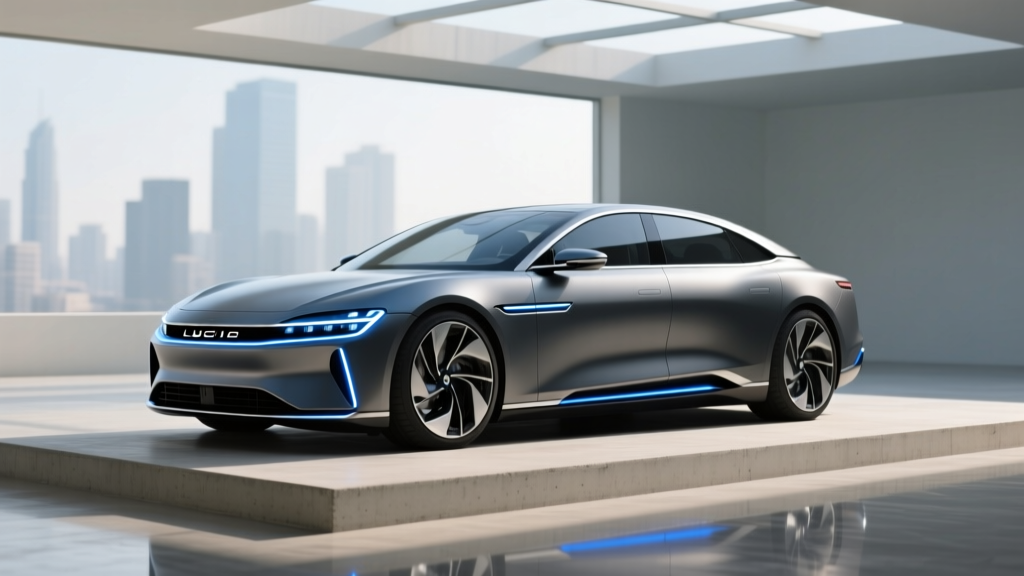
This review covers the 2026 Lucid Air lineup with exact EPA figures, real-world range expectations, charging performance, tax-credit eligibility under current IRS §30D rules, and how it stacks up against rivals like the Tesla Model S and Mercedes EQS.
2026 Lucid Air Lineup: Specs at a Glance
| Trim | EPA Range | Battery (kWh) | Drivetrain | 0-60 mph | Horsepower | Base MSRP |
|---|---|---|---|---|---|---|
| Air Pure | 419 mi | 88 kWh (NMC) | RWD | 5.0 sec | 430 hp | $69,900 |
| Air Touring | 425 mi | 112 kWh (NMC) | AWD Dual-Motor | 3.4 sec | 620 hp | $87,400 |
| Air Grand Touring | 516 mi | 112 kWh (NMC) | AWD Dual-Motor | 3.0 sec | 819 hp | $127,400 |
| Air Sapphire | 427 mi | 118 kWh (NMC) | AWD Tri-Motor | 1.89 sec | 1,234 hp | $249,000 |
All trims use nickel-manganese-cobalt (NMC) lithium-ion cells, prioritizing energy density over the cycle-life advantages of LFP chemistry. Lucid's battery pack design integrates structural and thermal management functions, contributing to the Air's class-leading efficiency.
Real-World Range: Beyond the EPA Sticker
EPA Estimate: 419–516 miles depending on trim.
Real-World Expectation: In mixed highway/city driving at 70 mph, expect roughly 85–90% of EPA figures — approximately 355–465 miles. In cold weather (below 32°F), range typically drops 20–30%, bringing the Grand Touring down to around 360–410 miles. City driving with regenerative braking can match or slightly exceed EPA numbers.
Lucid's efficiency advantage is measurable. The Air Grand Touring achieves 131 MPGe combined (approximately 24 kWh/100 mi), according to fueleconomy.gov. That's roughly 15–20% more efficient than the Tesla Model S Long Range and significantly better than the Mercedes EQS 580, which returns around 97 MPGe. This efficiency stems from Lucid's miniaturized drive units, low-drag aerodynamics (Cd of 0.20), and silicon-carbide inverters that reduce power-conversion losses.
For road trippers, the Grand Touring's 516-mile EPA rating means you can realistically plan 400-mile legs between charging stops in moderate weather — a genuine advantage over competitors requiring stops every 250–300 miles.
Charging Performance: DC Fast and Home Level 2
| Charging Method | Max Rate | Speed | Notes |
|---|---|---|---|
| Level 1 (120V) | 1.4 kW | ~3 mi/hr | Emergency/trickle only |
| Level 2 (240V, 48A) | 11.5 kW | ~35 mi/hr | Full charge in ~12-14 hours |
| Level 2 (240V, 80A) | 19.2 kW | ~58 mi/hr | Requires Lucid Connected Home charger or equivalent 80A circuit |
| DC Fast Charge | Up to 250 kW (Pure/Touring), 300+ kW (Grand Touring/Sapphire) | 10-80% in ~15-20 min | Peak rate sustained only up to ~40% SoC; tapers significantly above 80% |
Lucid's 900V+ electrical architecture enables faster charging than 400V competitors. On a 350 kW Electrify America or similar CCS station, the Grand Touring can accept over 300 kW peak — but like all EVs, the charge curve tapers. Expect peak rates between 10–40% state of charge, then a gradual decline. From 10–80%, plan for approximately 15–20 minutes under ideal battery preconditioning.
Preconditioning matters. If you navigate to a DC fast charger using the Air's built-in navigation, the battery thermal management system begins warming the pack to optimal charging temperature. Without preconditioning — for instance, arriving at a charger with a cold-soaked battery — peak rates may be 30–50% lower initially.
At home, the Air's 19.2 kW onboard charger (when equipped) is among the fastest in the segment. Most homes with a 100-amp dedicated circuit can support this rate, but older panels may require an upgrade. A licensed electrician should assess your panel capacity before installation.
Pricing, Trims, and Federal Tax Credit Eligibility
The 2026 Lucid Air starts at $69,900 for the Pure RWD and climbs to $249,000 for the tri-motor Sapphire. Destination charges add approximately $1,300.
| Trim | Base MSRP | §30D Credit Eligible? | Est. After Credit |
|---|---|---|---|
| Air Pure | $69,900 | Potentially $3,750 (meets MSRP cap; sourcing-dependent) | ~$66,150 |
| Air Touring | $87,400 | No — exceeds $55,000 sedan MSRP cap | $87,400 |
| Air Grand Touring | $127,400 | No — exceeds MSRP cap | $127,400 |
| Air Sapphire | $249,000 | No — exceeds MSRP cap | $249,000 |
Under current IRS §30D rules, the federal EV tax credit has strict requirements that limit the Air's eligibility:
- MSRP Cap: Sedans must be priced at or below $55,000. Only the Air Pure, with a base MSRP of $69,900, comes closest — but it still exceeds this cap. Buyers should verify current-year IRS guidance at irs.gov, as rules and manufacturer classifications can shift.
- Income Limits: Modified adjusted gross income must not exceed $150,000 (single), $225,000 (head of household), or $300,000 (joint).
- Battery Sourcing: Critical minerals and battery components must meet phased-in domestic-content and free-trade-agreement thresholds. Lucid's supply chain compliance varies by build date.
- Point-of-Sale Transfer: Eligible buyers can transfer the credit to the dealer at purchase, reducing the out-of-pocket price immediately rather than waiting for a tax refund.
State incentives may partially offset the lack of federal credit eligibility on higher trims. California's CVRP, Colorado's innovative motor vehicle credit, and other state programs have separate rules. Always confirm current availability with your state energy office or a tax professional.
Interior, Cargo, and Technology
The Air's cabin reflects its engineering-first philosophy. The glass canopy roof creates an airy feel, and the 34-inch curved glass cockpit display replaces traditional instrument clusters. Rear-seat legroom measures 41.4 inches — competitive with full-size luxury sedans.
Cargo capacity totals 32 cubic feet across the trunk (22 cu ft) and front trunk/frunk (10 cu ft). That's generous for a sedan and sufficient for two large suitcases plus carry-ons, though it trails hatchback rivals like the Tesla Model S (26 cu ft trunk but hatchback accessibility).
Infotainment runs on Lucid's proprietary LucidOS, which offers responsive navigation with integrated charging-route planning, over-the-air updates, and streaming apps. However, Lucid does not currently support Apple CarPlay or Android Auto — a notable omission for buyers who prefer phone-mirroring interfaces.
DreamDrive Pro, Lucid's driver-assistance suite, includes adaptive cruise control, lane-centering, automatic emergency braking, and a 32-sensor array (LiDAR, cameras, radar, ultrasonics). This is an SAE Level 2 system: the driver must remain attentive and keep hands on the wheel. It does not provide autonomous, hands-free driving. Lucid has announced plans for more advanced DreamDrive capabilities via OTA updates, but as of 2026, full hands-free highway driving is not available.
Warranty, Ownership Costs, and Long-Term Outlook
Lucid covers the Air with a 4-year/50,000-mile basic warranty and an 8-year/100,000-mile battery and powertrain warranty. The battery warranty guarantees at least 70% capacity retention over the coverage period — consistent with industry norms.
Insurance costs run higher than average for the segment. Early data suggests annual premiums of $3,500–$5,500 depending on trim, location, and driver profile — roughly 15–25% above a comparable Tesla Model S. Get quotes before purchasing.
Maintenance costs are low by luxury-sedan standards. No oil changes, fewer brake replacements (thanks to regenerative braking), and cabin-air-filter swaps constitute most scheduled service. Lucid offers mobile service in many metro areas, reducing dealer-visit friction.
Regarding the reverse stock split: corporate financial maneuvers do not void warranties or alter build quality. However, buyers concerned about long-term parts availability and service-network growth should monitor Lucid's production volumes and service-center expansion. As of 2026, Lucid operates roughly 30+ service locations in the U.S., with mobile service covering additional regions.
Lucid Air vs. Key Competitors
Choose the Lucid Air If:
- Maximum range per charge is your top priority (516 mi Grand Touring leads the segment)
- Efficiency matters — best-in-class kWh/100mi means lower charging costs
- You value a spacious rear seat and sedan refinement over hatchback utility
- 900V architecture and fast DC charging reduce road-trip downtime
- You want a distinctive, low-volume luxury EV
Consider Competitors If:
- Tesla Model S: You need Supercharger network access, CarPlay-like familiarity, or a proven service network
- Mercedes EQS: You prioritize brand cachet, dealer service infrastructure, or a more traditional luxury interior
- BMW i7: You want a flagship executive sedan with established dealer support and hands-free Level 2 highway driving
- Porsche Taycan: Driving dynamics and sports-sedan engagement matter more than maximum range
Frequently Asked Questions
What is the real-world range of the Lucid Air?
In mixed driving at highway speeds, expect 355–465 miles depending on trim. The Grand Touring's 516-mile EPA rating translates to roughly 440–465 real-world miles in moderate weather, dropping to approximately 360–410 miles in freezing temperatures. City driving with regenerative braking can match or exceed EPA estimates.
How fast does the Lucid Air charge?
On a 350 kW DC fast charger, the Grand Touring peaks above 300 kW and charges from 10–80% in approximately 15–20 minutes with battery preconditioning. At home on a 240V/80A circuit, the Air adds roughly 58 miles of range per hour, fully charging overnight.
Does the Lucid Air qualify for the federal EV tax credit?
Under current IRS §30D rules, the $55,000 MSRP cap for sedans disqualifies most Air trims. The Air Pure at $69,900 also exceeds this threshold. Always verify current-year eligibility at irs.gov, as rules and manufacturer classifications can change. State incentives may partially offset this.
Is the Lucid Air worth buying despite the reverse stock split?
A reverse stock split is a financial restructuring tool that doesn't affect vehicle quality, warranty coverage, or production. The Air remains the efficiency and range leader in its class. Buyers should evaluate the car on its merits — range, charging speed, comfort, and service access — while monitoring Lucid's production growth and service-network expansion.
What are the biggest drawbacks of the Lucid Air?
Key limitations include no Apple CarPlay/Android Auto support, a still-growing service network compared to Tesla or legacy luxury brands, higher insurance costs, and limited federal tax-credit eligibility. The infotainment system, while capable, lacks the third-party app ecosystem of some competitors.
Who is the Lucid Air best suited for?
The Air excels for long-distance commuters, road-trip enthusiasts who want minimal charging stops, and luxury-sedan buyers who prioritize efficiency and range over brand ubiquity. The Pure trim suits budget-conscious luxury shoppers, while the Grand Touring targets range-maximizing travelers. The Sapphire is a low-volume performance halo for collectors and driving enthusiasts.