Why Lucid's Q3 Revenue Miss Matters to EV Buyers
When an automaker posts a quarterly revenue miss, existing and prospective owners have legitimate questions: Will production continue? Will service centers expand? Will the company honor long-term warranties? Lucid Motors' Q3 revenue shortfall—driven by slower-than-expected Gravity SUV ramp-up and persistent low-volume Air sedan sales—lands in this exact context.
Rather than speculate on stock performance, this analysis focuses on what matters to buyers: the actual vehicles Lucid sells today, their real-world capabilities, ownership economics, and the risk calculus of buying from a low-volume OEM. We'll cover the 2026 Lucid Air lineup and the newly launched 2026 Lucid Gravity, with exact specs, pricing, and tax-credit eligibility.
2026 Lucid Air: The Efficiency Benchmark
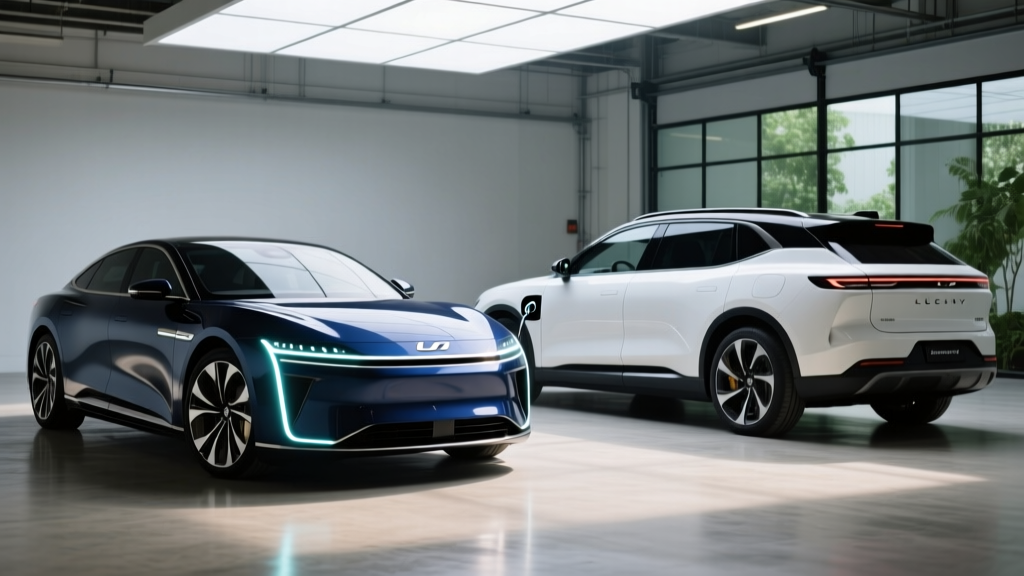
The Lucid Air remains one of the most efficient luxury EVs ever built. Its miniaturized drive units and 900V+ architecture deliver range figures that outpace rivals with larger batteries. For 2026, the Air lineup includes the Pure, Touring, and Grand Touring trims.
| Spec | Air Pure | Air Touring | Air Grand Touring |
|---|---|---|---|
| EPA Range | 419 mi | 425 mi | 516 mi |
| Battery (usable) | 88 kWh (NMC) | 112 kWh (NMC) | 112 kWh (NMC) |
| Drivetrain | RWD, single motor | AWD, dual motor | AWD, dual motor |
| Horsepower | 430 hp | 620 hp | 819 hp |
| 0-60 mph | 5.0 sec | 3.4 sec | 3.0 sec |
| Efficiency | 146 MPGe / 23 kWh/100mi | 131 MPGe / 26 kWh/100mi | 131 MPGe / 26 kWh/100mi |
| Base MSRP | $69,900 | $87,400 | $125,600 |
2026 Lucid Gravity: The SUV Lucid Needs to Sell
The Gravity is Lucid's volume play—a three-row luxury SUV competing directly with the Tesla Model X, Rivian R1S, and BMW iX. Its production ramp has been slower than projected, a core contributor to the Q3 revenue miss. But for buyers, the Gravity's specs are compelling.
| Spec | Gravity Touring | Gravity Grand Touring |
|---|---|---|
| EPA Range | 440 mi | 450 mi (est.) |
| Battery (usable) | 120 kWh (NMC) | 120 kWh (NMC) |
| Drivetrain | AWD, dual motor | AWD, dual motor |
| Horsepower | 600 hp | 820 hp |
| 0-60 mph | 3.8 sec | 3.5 sec |
| Cargo (behind 3rd / 2nd / 1st row folded) | 18 / 46 / 84 cu ft | 18 / 46 / 84 cu ft |
| 3rd-Row Legroom | 30.2 in | 30.2 in |
| Towing Capacity | 6,000 lbs | 6,000 lbs |
| Base MSRP | $79,900 | $99,900 |
Third-row space is tight for adults—think child seats or occasional use—but the frunk (front trunk) adds roughly 12 cu ft of enclosed storage, a practical advantage over the Model X. The Gravity's 900V architecture and compact motor packaging give it a flat floor and genuinely usable cargo volume.
Charging Speed: Where Lucid's 900V Architecture Pays Off
Lucid's high-voltage platform enables some of the fastest DC charging in production. Here's what owners can expect at the charger:
| Charging Method | Air Grand Touring | Gravity Touring | Notes |
|---|---|---|---|
| DC Fast Charge (Peak) | 300 kW | 250 kW | Requires 350 kW+ CCS/NACS station |
| 10-80% DCFC Time | ~20 min | ~25 min | With preconditioning active |
| Sustained DCFC (avg 10-80%) | ~180 kW | ~155 kW | Charge curve tapers above 60% SoC |
| Level 2 Home (48A / 11.5 kW) | ~44 mi/hr | ~38 mi/hr | Requires NEMA 14-50 or hardwired 60A circuit |
| Level 1 (120V / 12A) | ~3 mi/hr | ~3 mi/hr | Emergency/trickle only |
Preconditioning matters. If you navigate to a DC fast charger using the Lucid infotainment system, the battery thermal management will heat or cool the pack to optimize charge acceptance. Without preconditioning—say, arriving at a charger with a cold-soaked battery—peak rates may drop to 150 kW or less, extending 10-80% times by 5-10 minutes.
The Air Grand Touring's 300 kW peak is among the highest in production, but sustained rate is what counts. Expect roughly 180 kW average from 10-80%, which is still class-leading. Above 80% SoC, the charge curve tapers sharply—a universal lithium-ion behavior to protect cell longevity. Plan your stops around 10-80% sessions for maximum time efficiency.
Federal Tax Credit Eligibility: The $7,500 Question
Under IRS §30D rules, the Lucid Air Pure qualifies for up to $7,500 in federal clean vehicle credits, subject to strict eligibility requirements. Higher trims and the Gravity face MSRP cap issues.
- MSRP Cap: Sedans must be under $55,000; SUVs/vans/trucks under $80,000. The Air Pure ($69,900) exceeds the sedan cap—however, Lucid classifies the Air as a sedan, making only trims below $55,000 eligible. Currently, no Air trim qualifies under the MSRP cap.
- Gravity MSRP: The Gravity Touring at $79,900 falls under the $80,000 SUV cap and may qualify, but the Grand Touring at $99,900 does not.
- Buyer Income Cap: AGI must not exceed $150,000 (single), $225,000 (head of household), or $300,000 (joint).
- Battery Sourcing: Critical minerals and battery components must meet phased-in domestic/free-trade sourcing thresholds. Lucid's supply chain has been evolving; confirm current-year compliance on the fueleconomy.gov credit lookup.
- Point-of-Sale Transfer: Eligible buyers can transfer the credit to the dealer at purchase, reducing the out-of-pocket price immediately.
| Model / Trim | Base MSRP | Est. Federal Credit | Effective Price |
|---|---|---|---|
| Air Pure | $69,900 | $0 (exceeds sedan MSRP cap) | $69,900 |
| Air Touring | $87,400 | $0 | $87,400 |
| Air Grand Touring | $125,600 | $0 | $125,600 |
| Gravity Touring | $79,900 | Up to $7,500* | ~$72,400* |
| Gravity Grand Touring | $99,900 | $0 (exceeds SUV MSRP cap) | $99,900 |
*Gravity Touring eligibility depends on battery-sourcing compliance and buyer income. Always verify on the IRS and fueleconomy.gov before purchase. State incentives (California CVRP, Colorado, etc.) may apply separately.
Warranty, Service, and the Low-Volume OEM Risk
Lucid provides competitive warranty coverage, but the ownership experience differs meaningfully from buying a Tesla or legacy luxury brand:
| Coverage | Term |
|---|---|
| Basic Vehicle | 4 years / 50,000 miles |
| Battery & Drive Units | 8 years / 100,000 miles |
| Battery Capacity Retention | ≥70% SoH over 8 yr / 100,000 mi |
| Roadside Assistance | 4 years / 50,000 miles |
The battery warranty guarantees at least 70% State of Health over the coverage period. Lucid uses NMC chemistry across the lineup, which offers higher energy density than LFP but is more sensitive to sustained high-SoC storage. Best practice: charge to 80% daily, 100% only before long trips.
Service network reality: Lucid operates roughly 20+ service centers nationwide as of late 2025, supplemented by mobile service vans. If you live outside a major metro (SF, LA, NYC, Miami, Houston), warranty repairs may require a loaner and multi-day turnaround. This is the most tangible risk of buying from a low-volume automaker—and a factor in the Q3 revenue miss narrative, as limited service footprint constrains buyer confidence.
Driver Assistance: DreamDrive, Not Self-Driving
DreamDrive Pro uses a 36-sensor array including LiDAR—a hardware advantage over Tesla's camera-only Autopilot. In practice, the system is competent for highway cruising but more conservative in merge and construction-zone scenarios than GM's Super Cruise or Ford's BlueCruise. It does not currently offer hands-free operation on mapped highways, a feature gap Lucid has indicated it will address via OTA updates.
Who Should Buy a Lucid — And Who Shouldn't
- You prioritize efficiency and range above all else in a luxury sedan
- You have reliable home Level 2 charging and drive 200+ miles weekly
- You live near a Lucid service center or accept mobile-service logistics
- You value a quiet, spacious cabin with genuine rear-seat legroom (41.4 in)
- You need a three-row EV SUV with real cargo volume and 6,000-lb towing
- You want sub-$80K pricing (Touring trim) with potential §30D credit eligibility
- You can tolerate early-production ramp delays and limited service infrastructure
- You need a dense dealer/service network (consider BMW iX, Mercedes EQS SUV)
- You require hands-free highway driving now (GM Super Cruise, Ford BlueCruise)
- You want LFP battery chemistry for daily 100% charging without degradation concerns
- Class-leading efficiency: 516 mi EPA on Air GT, 131 MPGe
- Fastest production DC charging: 300 kW peak (Air GT)
- Spacious cabin with flat floor and generous frunk
- 900V architecture future-proofs for next-gen chargers
- Gravity offers 440+ mi range in a three-row SUV
- Limited service centers — risky outside major metros
- Air lineup does not qualify for federal §30D credit (MSRP cap)
- DreamDrive lags Super Cruise/BlueCruise in hands-free features
- Low production volume = longer delivery waits, uncertain resale
- NMC chemistry requires SoC management for longevity
Frequently Asked Questions
What is the real-world range of the 2026 Lucid Air?
The Air Grand Touring achieves an EPA-rated 516 miles, but real-world highway driving at 70-80 mph typically yields 410-440 miles. In cold weather below 30°F, expect 330-370 miles. The Air Pure (419 mi EPA) delivers roughly 340-360 highway miles in moderate temperatures.
How fast does the Lucid Air charge at home and on the road?
On a 48-amp Level 2 home charger (11.5 kW), the Air adds approximately 44 miles of range per hour—a full overnight session covers daily driving easily. On DC fast chargers, the Air Grand Touring peaks at 300 kW and charges 10-80% in about 20 minutes when preconditioned. Expect ~180 kW sustained average.
Does the Lucid Air or Gravity qualify for the $7,500 federal tax credit?
As of 2026, no Lucid Air trim qualifies—the sedan MSRP cap under §30D is $55,000, and the cheapest Air Pure starts at $69,900. The Gravity Touring ($79,900) falls under the $80,000 SUV cap and may qualify if battery-sourcing and buyer-income requirements are met. Always verify at fueleconomy.gov and consult a tax professional.
Is buying a Lucid risky given the Q3 revenue miss?
Lucid remains a low-volume automaker with constrained cash flow. The risk isn't immediate vehicle discontinuation—the Air and Gravity are in production—but rather limited service infrastructure, slower OTA feature delivery, and uncertain long-term resale values. If you're risk-averse, a lease (which shifts residual-value risk to the lessor) may be the prudent choice.
How does the Lucid Gravity compare to the Rivian R1S and Tesla Model X?
The Gravity offers superior range (440+ mi vs. R1S's ~350 mi and Model X's ~320 mi) and faster charging. The R1S has better off-road capability and a more established service network. The Model X has the Supercharger network advantage (though NACS adoption is narrowing this gap) and falcon-wing rear doors. Cargo and third-row space are comparable across all three.
What battery chemistry does Lucid use, and how long will it last?
Lucid uses NMC (nickel manganese cobalt) lithium-ion cells across all trims. NMC offers superior energy density vs. LFP, enabling the Air's 516-mile range from a relatively compact pack. Expected degradation is roughly 10-12% over 100,000 miles under normal use. The battery warranty covers capacity below 70% SoH within 8 years / 100,000 miles.