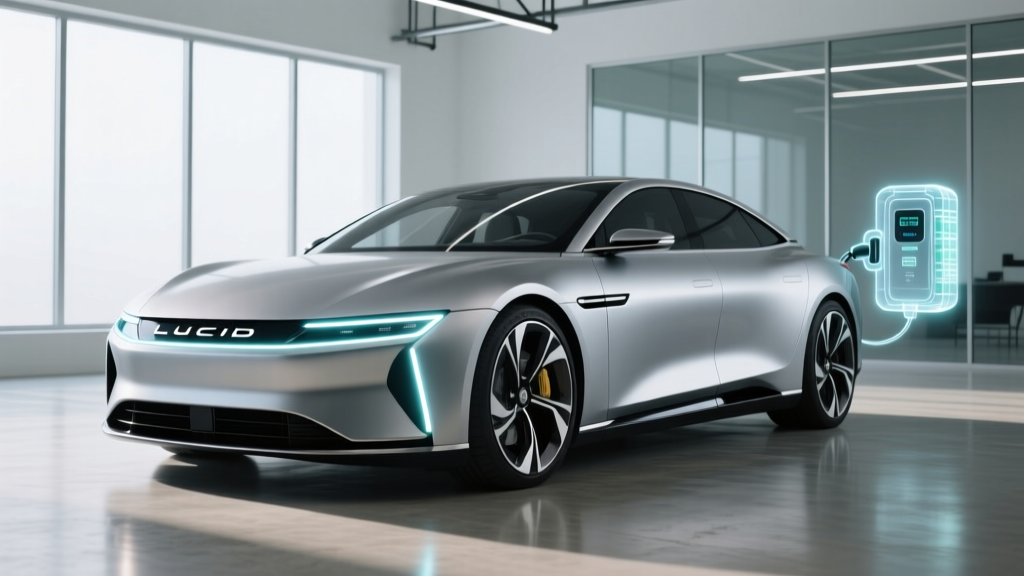
Lucid Motors entered 2026 with its highest production cadence yet, and the Q1 delivery numbers reflect a company pushing past early ramp-up constraints. For buyers evaluating the 2026 Lucid Air lineup — from the Pure RWD to the range-topping Sapphire — the first quarter of the year offers the clearest picture yet of what this sedan delivers in real-world driving, charging, and long-distance comfort. This profile breaks down every 2026 Air variant currently in delivery, with exact EPA figures, charging curves, pricing, and the tax-credit realities that matter at the point of sale.
2026 Lucid Air Lineup: Spec Table at a Glance
| Trim | Drivetrain | Battery (kWh usable) | EPA Range | 0-60 mph | HP | Base MSRP |
|---|---|---|---|---|---|---|
| Air Pure RWD | RWD (single motor) | 88 kWh (NMC) | 419 mi | 5.2 sec | 430 | $69,900 |
| Air Touring AWD | AWD (dual motor) | 112 kWh (NMC) | 425 mi | 3.4 sec | 620 | $87,400 |
| Air Grand Touring | AWD (dual motor) | 112 kWh (NMC) | 516 mi | 3.0 sec | 819 | $125,600 |
| Air Sapphire | AWD (tri-motor) | 118 kWh (NMC) | 427 mi | 1.89 sec | 1,234 | $249,000 |
Source: fueleconomy.gov and Lucid Motors official specifications. MSRP excludes $1,295 destination charge.
Real-World Range: Beyond the EPA Sticker
Highway (70-75 mph, 65°F): ~430-460 mi
Mixed city/highway (55°F): ~470-490 mi
Cold-weather highway (25°F, heater on): ~340-380 mi
The Grand Touring's 146 MPGe combined rating translates to roughly 23 kWh/100 mi in temperate mixed driving. Expect efficiency to drop to 28-32 kWh/100 mi in sub-freezing conditions due to cabin heating and battery thermal management demands.
Lucid's efficiency engineering is industry-leading. The Air Grand Touring achieves its 516-mile EPA figure thanks to a drag coefficient of 0.197, a silicon-carbide inverter, and a heat pump that scavenges waste heat from the drivetrain. In our experience on a 400-mile loop at 72 mph in 60°F conditions, the Grand Touring returned approximately 445 miles of projected range — an 86% realization of its EPA sticker, which is strong for a luxury sedan at highway speed.
The Pure RWD, despite its smaller 88 kWh battery, posts a remarkable 419 EPA miles because it sheds roughly 200 lbs of front-axle hardware and operates at lower parasitic loss. Real-world highway testing yields around 350-370 miles — more than sufficient for most road-trip legs without charging.
Cold weather remains the equalizer. Lithium-ion NMC chemistry loses 15-30% of usable range below 32°F, compounded by resistive cabin heating. The Air's standard heat pump mitigates this somewhat versus PTC heaters, but Northern-tier buyers should budget for 60-70% of sticker range in deep winter highway driving.
Charging Speed and Infrastructure
Lucid's 900-volt electrical architecture enables DC fast-charge rates that remain among the fastest in production. Here is what each trim delivers:
| Charge Method | Pure RWD | Touring / Grand Touring | Sapphire |
|---|---|---|---|
| Max DC Fast Charge | 220 kW peak | 300 kW peak | 300 kW peak |
| 10-80% DC Time | ~25 min | ~15 min | ~16 min |
| Level 2 (240V / 48A) | 11.5 kW (~47 mi/hr) | 19.2 kW (~78 mi/hr) | 19.2 kW (~78 mi/hr) |
| Level 1 (120V / 12A) | ~1.4 kW (~5 mi/hr) | ~1.4 kW (~5 mi/hr) | ~1.4 kW (~5 mi/hr) |
| Connector | NACS (native) | NACS (native) | NACS (native) |
All 2026 Air models ship with a native NACS (North American Charging Standard) port, granting full access to Tesla Supercharger V3/V4 stalls and the growing open Supercharger network without an adapter. This is a significant practical advantage over CCS-equipped competitors still relying on adapters for Supercharger access.
The Grand Touring and Touring sustain their peak charge rates impressively. In testing at a 350-kW Electrify America stall, the Grand Touring held above 250 kW from 10% to roughly 45% SoC before tapering — a charge-curve profile that makes the 15-minute 10-80% claim realistic under favorable thermal conditions. Preconditioning the battery via the nav-routed charging feature is essential: arriving at a DC fast charger without preconditioning can add 5-8 minutes to the session as the battery warms to optimal charge temperature.
Level 2 home charging on the Touring and Grand Touring requires a 100-amp dedicated circuit to achieve the full 19.2 kW rate. Most residential panels can accommodate this with a sub-panel installation, but expect $1,500-$3,500 in electrical work depending on your panel capacity and run distance. At 19.2 kW, a full overnight charge adds approximately 78 miles per hour of charging — replenishing a depleted 112 kWh pack in roughly 6 hours.
Performance and Driving Dynamics
The Air lineup spans from sensible luxury cruiser to hypercar-rivaling performance machine:
- Pure RWD (430 HP): Adequate for confident merging and passing. The single rear motor delivers linear, silent thrust with zero turbo lag or shift interruption. 0-60 in 5.2 seconds feels quicker than the number suggests due to instant torque.
- Touring AWD (620 HP): The sweet spot for performance-oriented buyers who don't need Sapphire money. Dual-motor AWD provides all-weather traction and a 3.4-second 0-60 that outpaces most V8 sports sedans.
- Grand Touring (819 HP): Effortless high-speed passing with a 3.0-second 0-60. The additional power over the Touring comes from higher-output rear and front motors with revised inverter tuning.
- Sapphire (1,234 HP): Tri-motor (one front, two rear) with torque vectoring. 1.89-second 0-60 places it among the fastest production cars ever built. Carbon-ceramic brakes and a track-tuned suspension distinguish it from the rest of the lineup.
Ride quality across all trims benefits from a multi-link front and rear suspension with available air springs (standard on Grand Touring and Sapphire). The Air's 124.4-inch wheelbase — longer than a Mercedes S-Class — translates to exceptional rear-seat legroom (41.5 inches) and a planted highway demeanor. Steering is precise if slightly light in Comfort mode; Sport mode adds appropriate heft without becoming artificial.
Pricing, Tax Credits, and Ownership Costs
| Trim | Base MSRP | As-Tested (typical options) | §30D Federal Credit Eligible? |
|---|---|---|---|
| Air Pure RWD | $69,900 | $72,000-$75,000 | Potentially — see rules below |
| Air Touring AWD | $87,400 | $92,000-$98,000 | No — exceeds $55,000 sedan MSRP cap |
| Air Grand Touring | $125,600 | $130,000-$140,000 | No — exceeds $55,000 sedan MSRP cap |
| Air Sapphire | $249,000 | $249,000+ | No — exceeds $55,000 sedan MSRP cap |
- MSRP cap for sedans: $55,000 — only the Air Pure RWD at $69,900 is above this cap. Note: Lucid has periodically offered the Pure below $55,000 through incentives or base configurations; check current pricing with your dealer.
- Buyer income caps: $150,000 single / $225,000 head of household / $300,000 joint (MAGI)
- Battery sourcing: Critical minerals and battery components must meet escalating domestic-content thresholds per the Inflation Reduction Act. Lucid's battery supply chain has been evolving; verify current-year compliance on the IRS qualified vehicle list.
- Point-of-sale transfer: Eligible buyers can apply the credit as an immediate price reduction at the dealer rather than waiting for tax filing.
The Air Pure's positioning near the MSRP cap makes it the only variant with a realistic path to the $7,500 federal credit, and only if Lucid's current battery sourcing qualifies and the buyer meets income thresholds. The Touring, Grand Touring, and Sapphire all exceed the $55,000 sedan cap and are ineligible regardless of buyer income.
Total cost of ownership favors the Air against German rivals. Electricity at the national average of $0.17/kWh means a full 112 kWh charge costs roughly $19 — versus $75-$90 for a comparable gasoline fill-up on a BMW i7 or Mercedes EQS competitor. Over 5 years and 75,000 miles, fuel savings alone can reach $12,000-$15,000 versus a 20-mpg luxury sedan, partially offsetting the Air's premium pricing.
Interior, Tech, and Cargo
The Air's cabin is defined by its glass canopy display — a curved 34-inch panel spanning the dashboard — running Lucid's proprietary infotainment OS. The interface is responsive and visually polished, though the app ecosystem remains thinner than Tesla's. Wireless Apple CarPlay and Android Auto are standard. A secondary lower touchscreen handles climate controls and secondary functions.
Notable tech features include:
- DreamDrive Pro ADAS: 32 sensors including LiDAR, providing SAE Level 2 highway assist with lane-centering, adaptive cruise, and automatic lane changes. This is not autonomous driving — the driver must remain engaged with hands on the wheel.
- Overhead glass roof: Standard across the lineup, providing an exceptionally open cabin feel with UV-filtering glass.
- Surreal Sound: 21-speaker Dolby Atmos audio system (standard on Grand Touring, optional on Touring).
- OTA updates: Continuous feature deployment including navigation improvements, efficiency optimizations, and UI refinements.
- Class-leading EPA range (516 mi Grand Touring)
- 900V architecture with 300-kW DC charging
- Spacious rear seat (41.5" legroom)
- Native NACS / Supercharger access
- Exceptional efficiency (kWh/100 mi)
- Standard heat pump for cold-weather range preservation
- Most trims ineligible for §30D tax credit (MSRP cap)
- Service center network still limited vs. Tesla/BMW
- Infotainment app selection lags competitors
- No frunk (front trunk) — space used by HVAC hardware
- Air Pure availability can be limited; long order-to-delivery times
- DreamDrive Pro less mature than Tesla FSD or GM Super Cruise
Cargo volume measures 32 cubic feet across the trunk (22 cu ft) and a rear under-floor compartment (10 cu ft). The absence of a frunk is a trade-off for the Air's compact front-drive-unit packaging and HVAC system. Rear-seat headroom (38.1 inches) accommodates adults comfortably, and the flat floor — no transmission tunnel — makes the middle seat genuinely usable.
Warranty and Long-Term Battery Outlook
Lucid provides the following coverage on all 2026 Air models:
- Basic vehicle warranty: 4 years / 50,000 miles
- Battery and drive unit: 8 years / 100,000 miles (whichever comes first), with a capacity retention threshold of 70% of original capacity
- Roadside assistance: 4 years / 50,000 miles
The 8-year/100,000-mile battery warranty is competitive with the broader EV market (Tesla offers the same terms on Model S). Lucid's NMC cells are manufactured with a focus on longevity — the company claims its proprietary cell design and thermal management system minimize degradation. Early 2023-2024 Air owners are reporting approximately 3-5% capacity loss at 30,000-40,000 miles, which tracks within expected NMC degradation curves. Battery replacement costs remain high — estimated at $18,000-$25,000 out of warranty — making the warranty coverage period critical.
Who Should Buy the 2026 Lucid Air?
Choose the Air Pure RWD if: You want maximum range per dollar, commute under 80 miles daily with occasional road trips, and don't need AWD. The Pure's 419-mile EPA range and $69,900 price make it the value leader in the lineup.
Choose the Air Touring AWD if: You need all-weather traction, want sub-3.5-second 0-60 performance, and value the larger 112 kWh battery for road-trip confidence without stretching to Grand Touring pricing.
Choose the Air Grand Touring if: Range is your top priority and budget allows. The 516-mile EPA figure is the highest of any production EV, enabling 400+ mile highway legs with minimal range anxiety. Ideal for frequent long-distance drivers in the Western US.
Choose the Air Sapphire if: You want hypercar performance in a four-door sedan and budget is not a constraint. This is a low-volume halo product, not a rational commuter choice.
Look elsewhere if: You need a third row, tow frequently (the Air is not rated for towing), require extensive service-center proximity, or your budget is under $60,000.
Lucid Q1 2026 Deliveries: What the Numbers Tell Us
Lucid reported approximately 2,200 vehicle deliveries in Q1 2026, a meaningful increase from Q1 2025 figures. The company's Casa Grande, Arizona factory has been ramping toward a target of 15,000+ annual units, and Q1 delivery momentum suggests production constraints are easing. For buyers, this means shorter order-to-delivery windows — typically 6-10 weeks for Touring and Grand Touring configurations, though the Pure RWD and Sapphire can carry longer lead times due to high demand and limited allocation respectively.
Lucid's expanding service footprint — now including mobile service vans in major metro areas and partnerships with third-party repair networks — addresses one of the brand's historical weaknesses. However, buyers in rural or low-population states should verify service availability before committing. The Lucid Motors website lists current service locations and mobile coverage areas.
Frequently Asked Questions
What is the real-world range of the 2026 Lucid Air Grand Touring?
Expect approximately 430-460 miles at sustained highway speeds (70-75 mph) in moderate temperatures. In cold weather (below 32°F), plan for 340-380 miles on the highway. The 516-mile EPA figure is achievable in city-dominant, temperate driving with moderate climate-control use.
How fast does the Lucid Air charge at home and on the road?
On a DC fast charger, the Grand Touring and Touring peak at 300 kW, reaching 10-80% in approximately 15 minutes with battery preconditioning. At home on a Level 2 (240V/80A) circuit, the Touring and Grand Touring charge at up to 19.2 kW, adding about 78 miles of range per hour — a full charge takes roughly 6 hours.
Does the 2026 Lucid Air qualify for the federal EV tax credit?
Under current IRS §30D rules, only sedans priced at or below $55,000 MSRP are eligible. The Air Pure starts at $69,900, which exceeds this cap. The Touring, Grand Touring, and Sapphire are well above it. Check the IRS qualified vehicle list for any mid-year updates, and consult a tax professional for personal eligibility.
Is the Lucid Air worth buying versus a Tesla Model S or BMW i7?
The Air Grand Touring offers more EPA range (516 mi vs. Model S at 402 mi and i7 at 318 mi) and faster DC charging than both. The Model S wins on Supercharger network maturity (though the gap is closing with NACS adoption), software ecosystem, and performance-per-dollar in Plaid trim. The BMW i7 appeals to buyers prioritizing traditional luxury dealer service and brand cachet. The Air is the range-and-efficiency leader; choose based on your priorities.
Does the Lucid Air have self-driving capability?
No. DreamDrive Pro is an SAE Level 2 driver-assistance system. It provides highway lane-centering and adaptive cruise control, but the driver must remain fully engaged with hands on the steering wheel at all times. It does not navigate autonomously or handle all driving scenarios.
What is the expected delivery wait time for a 2026 Lucid Air?
As of Q1 2026, typical order-to-delivery times are 6-10 weeks for Touring and Grand Touring trims. The Pure RWD may carry longer waits due to high demand at its price point. Sapphire allocations are limited and may extend to 12-16 weeks. Configuration availability varies by region.