Why the Lucid Air Is Dominating Preowned EV Searches
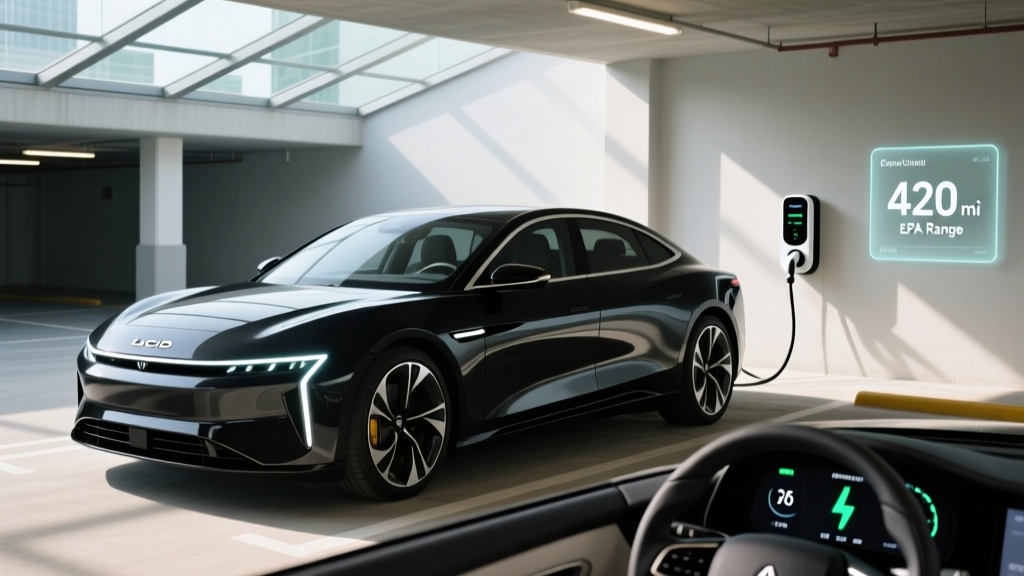
The Lucid Air holds a singular position in the used electric-vehicle market: it offers more EPA-rated range than any production sedan ever sold, paired with a 900-volt architecture that still outpaces most 2026 competitors on DC fast-charging speed. For buyers searching for a Lucid preowned example, the appeal is obvious — you can access 400–516 miles of EPA range and up to 1,111 horsepower at a significant discount from the original MSRP, which started above $87,000 and climbed past $250,000 for the Sapphire.
But a preowned Lucid Air purchase carries unique considerations that don't apply to a used Tesla Model S or BMW i7. Lucid is a low-volume manufacturer (roughly 8,000–9,000 units delivered globally through 2024–2025), service center availability remains concentrated in major metro areas, and the company's financial trajectory matters when you're committing to long-term ownership. This guide breaks down every number that matters — from real-world range to battery warranty transfer — so you can evaluate a preowned Air with the same rigor you'd apply to any major purchase.
Lucid Air Preowned Spec Sheet: What You're Actually Getting
Lucid produced the Air across several configurations from the 2022 through 2025 model years. Below are the core specifications you'll encounter on the preowned market, organized by trim. Note that Lucid made running changes to battery capacity and software, so verify the specific vehicle's window sticker or build sheet.
| Specification | Air Pure RWD | Air Touring AWD | Air Grand Touring | Air Sapphire |
|---|---|---|---|---|
| EPA Range | 410 mi | 425 mi | 516 mi | 427 mi |
| Battery (usable) | 88 kWh (NMC) | 92 kWh (NMC) | 112 kWh (NMC) | 118 kWh (NMC) |
| Drivetrain | Rear-Wheel Drive | Dual-Motor AWD | Dual-Motor AWD | Tri-Motor AWD |
| Horsepower | 430 hp | 620 hp | 819 hp (1,050 w/ Sprint) | 1,234 hp |
| 0–60 mph | 5.0 sec | 3.4 sec | 3.0 sec | 1.89 sec |
| Peak DC Charge Rate | 200 kW | 250 kW | 300 kW | 300 kW |
| 10–80% DC Time | ~34 min | ~26 min | ~22 min | ~22 min |
| Level 2 Home Charging | 19.2 kW (AC) | 19.2 kW (AC) | 19.2 kW (AC) | 19.2 kW (AC) |
| Efficiency (combined) | 140 MPGe / 24 kWh/100mi | 131 MPGe / 26 kWh/100mi | 131 MPGe / 26 kWh/100mi | 109 MPGe / 31 kWh/100mi |
| Original MSRP | ~$87,400 | ~$107,400 | ~$138,000 | ~$249,000 |
The Grand Touring's 516-mile EPA figure is measured under controlled laboratory conditions per fueleconomy.gov. In real-world highway driving at 70–75 mph in moderate temperatures (65–80°F), expect approximately 400–440 miles from a Grand Touring on a full charge. In cold weather (below 30°F), range drops 15–25%, which can bring a Grand Touring down to 350–390 miles. The Pure RWD, with its smaller 88-kWh pack, realistically delivers 320–350 miles on the highway and closer to 280 miles in freezing conditions. The Air's exceptional efficiency (low kWh/mi) helps it outperform most competitors in cold weather proportionally, but physics still applies.
Charging Speed: The 900-Volt Advantage on Preowned Models
Lucid's 900-volt electrical architecture remains one of the most advanced in any production EV. Higher voltage allows the Air to accept more power at a given current, translating to faster charging on capable DC fast chargers. Here's what this means at the plug:
| Charging Level | Power / Rate | Range Added | Notes |
|---|---|---|---|
| Level 1 (120V household) | ~1.4 kW | ~4–5 mi/hr | Emergency/trickle only; full charge takes days |
| Level 2 (240V home, 48A) | 11.5 kW | ~38–46 mi/hr | Standard home setup; full charge ~10 hrs (GT) |
| Level 2 (240V home, 80A) | 19.2 kW | ~64–77 mi/hr | Requires 100A circuit + Lucid Connected Home charger; full charge ~6 hrs (GT) |
| DC Fast (50 kW station) | 50 kW | ~150–180 mi/hr | Common older public charger; 10–80% in ~90 min |
| DC Fast (150 kW station) | 150 kW | ~450–550 mi/hr | Common Electrify America tier; 10–80% in ~35 min |
| DC Fast (350 kW station) | Up to 300 kW (GT/Sapphire) | ~900+ mi/hr (peak) | Requires 350-kW capable charger; 10–80% in ~22 min |
Critical charging-curve detail: The Air Grand Touring peaks near 300 kW only between roughly 10–30% state of charge. From 30–60%, it sustains approximately 200–250 kW, and above 80% the rate tapers significantly to protect the NMC cells. If you habitually charge from 20–80% at a 350-kW station, your session averages around 220–240 kW — still exceptional, but the "300 kW" headline number is a peak, not a sustained rate. Touring and Pure trims peak lower (250 kW and 200 kW respectively), so their charge curves are flatter but their total session times are longer.
For home charging, the Air's onboard AC charger supports up to 19.2 kW — among the highest of any EV. This requires Lucid's Connected Home wall connector and a dedicated 100-amp circuit installed by a licensed electrician. Most homes will need a panel upgrade to support this. A more practical setup is a 48-amp Level 2 charger on a 60-amp circuit, delivering 11.5 kW and adding roughly 40 miles per hour of charging — enough to replenish a Grand Touring overnight in about 10 hours.
Preowned Pricing: What You'll Actually Pay
Lucid Air depreciation has been steep, which is excellent news for preowned buyers but painful for original owners. As of early 2026, here are typical asking prices on the preowned market:
| Trim | Original MSRP | Typical Preowned Price | Used EV Credit (§25E) | Effective Price |
|---|---|---|---|---|
| Air Pure RWD (2022–2023) | $87,400 | $42,000–$52,000 | Up to $4,000 | $38,000–$48,000 |
| Air Touring AWD (2022–2023) | $107,400 | $55,000–$68,000 | Up to $4,000 | $51,000–$64,000 |
| Air Grand Touring (2022–2023) | $138,000 | $70,000–$88,000 | Up to $4,000 | $66,000–$84,000 |
| Air Sapphire (2023–2024) | $249,000 | $150,000–$190,000 | Not eligible (>$25k used cap) | $150,000–$190,000 |
Federal tax credit for used EVs (IRS §25E): The used-EV credit — separate from the new-vehicle §30D credit — offers 30% of the sale price up to a maximum of $4,000 on qualifying preowned electric vehicles. To qualify, per IRS guidelines:
- The vehicle must be purchased from a licensed dealer (private-party sales do not qualify)
- The sale price must be $25,000 or less — this disqualifies virtually every preowned Lucid Air except heavily optioned salvage-title examples, which carry their own risks
- Buyer income caps apply: modified AGI must not exceed $75,000 (single), $112,500 (head of household), or $150,000 (joint)
- The vehicle must be at least two model years old
- You can only claim the used-EV credit once every three years
Battery Health, Warranty & Long-Term Ownership
The Lucid Air uses NMC (nickel manganese cobalt) lithium-ion cells across all trims. NMC chemistry offers higher energy density than LFP (lithium iron phosphate), which is how Lucid achieves its class-leading range in a sedan form factor — but NMC is more sensitive to sustained high states of charge and extreme temperatures.
Battery warranty: Lucid provides an 8-year/100,000-mile battery and powertrain warranty that covers defects and capacity loss below 70% of original capacity. This warranty is transferable to subsequent owners, which is critical for preowned buyers. Before purchasing, verify the remaining warranty coverage by checking the in-service date and current odometer reading. A 2022 Air with 45,000 miles would have coverage through approximately 2030 or 100,000 miles, whichever comes first.
Battery degradation expectations: Based on early owner data and Lucid's thermal management system (liquid-cooled with active preconditioning), projected degradation for the Air's NMC pack is approximately 5–8% over the first 100,000 miles under normal use. This means a Grand Touring that started at 516 EPA miles might show 475–490 miles of range at 100,000 miles — still far more than most new EVs offer. To minimize degradation:
- Set daily charge limit to 80% and only charge to 100% before long trips
- Use preconditioning before DC fast charging (the car does this automatically when a charger is set as a navigation destination)
- Avoid leaving the car at 100% SoC for extended periods, especially in hot climates
Service and parts availability: This is the most significant ownership risk for a preowned Lucid. As of 2026, Lucid operates roughly 20–25 service centers and studios nationwide, concentrated in California, Texas, Florida, New York, and a handful of other states. If you live outside a major metro area, routine service may require a long drive or reliance on Lucid's mobile service Rangers. Parts availability for collision repair can involve extended wait times compared to legacy automakers. Factor this into your decision, especially if this will be your only vehicle.
Interior, Tech & Driver Assistance
The Air's cabin is genuinely spacious — a direct result of Lucid's miniaturized powertrain components, which free up interior volume. Key dimensions:
- Rear legroom: 45.3 inches (class-leading; more than a Mercedes S-Class)
- Front headroom: 39.6 inches
- Trunk: 32.0 cu ft (rear cargo) + 10.0 cu ft (frunk) = 42.0 cu ft total
- Seating: 5-passenger standard; Executive Rear Seating package (available on Grand Touring) replaces the 3-place rear bench with two power-reclining individual seats
Infotainment: The Air uses a 34-inch curved glass "Cockpit" display that floats above the dashboard, running Lucid's proprietary OS. It includes native navigation with route-based battery preconditioning, streaming media, and over-the-air updates. There is no Apple CarPlay or Android Auto — Lucid's system handles phone integration through its own interface, which some buyers love and others find limiting. A lower 17-inch "Pilot" panel handles climate and secondary controls and can retract into the dash.
DreamDrive ADAS (SAE Level 2): Lucid's driver-assistance suite includes adaptive cruise control, lane centering, automatic emergency braking, blind-spot monitoring, and surround-view cameras. DreamDrive Pro (standard on Touring and above, optional on Pure) adds highway lane-change assist and intersection assist. This is not autonomous driving. The driver must keep hands on the wheel and eyes on the road at all times. DreamDrive is competent but does not currently match the hands-free highway capability of GM's Super Cruise or Ford's BlueCruise on mapped roads.
Lucid Air vs. Preowned Competitors: Which Should You Choose?
The preowned luxury EV sedan market includes several strong alternatives. Here's how the Air stacks up against the most common cross-shopped models:
| Attribute | Lucid Air GT | Tesla Model S Plaid | BMW i7 xDrive50 | Mercedes EQS 580 |
|---|---|---|---|---|
| EPA Range | 516 mi | 396 mi | 318 mi | 350 mi |
| Battery | 112 kWh NMC | 100 kWh | 101.7 kWh NMC | 107.8 kWh NMC |
| Peak DC Charge | 300 kW | 250 kW | 195 kW | 200 kW |
| 0–60 mph | 3.0 sec | 1.99 sec | 4.5 sec | 4.1 sec |
| Rear Legroom | 45.3 in | 40.9 in | 43.0 in | 42.1 in |
| Service Network | ~20–25 centers | 200+ service centers | 350+ BMW dealers | 380+ MB dealers |
| Typical Preowned Price | $70K–$88K | $65K–$85K | $72K–$90K | $60K–$78K |
- Choose the Lucid Air if: Maximum range is your top priority, you value efficiency above all else, you live near a Lucid service center, and you want the most advanced charging architecture on a preowned platform.
- Choose the Tesla Model S if: You need the widest Supercharger network access, the fastest acceleration, and the most established service infrastructure — and you can accept ~120 fewer miles of range.
- Choose the BMW i7 if: You want a traditional luxury dealership experience, the most refined ride quality, and you primarily drive under 300 miles between charging stops.
- Choose the Mercedes EQS if: You want the lowest preowned entry price in this segment, a plush interior, and you can plan around its ~350-mile range and slower charging.
Pre-Purchase Checklist: What to Verify Before Buying
Because Lucid is a newer, lower-volume automaker, due diligence on a preowned Air goes beyond a standard used-car inspection. Here's what to confirm before signing:
- Battery State of Health (SoH): Request the battery health report from the vehicle's diagnostics menu or have a Lucid service center run a full SoH assessment. Look for capacity retention above 93% on vehicles under 40,000 miles.
- Warranty transfer confirmation: Contact Lucid with the VIN to confirm the remaining battery/powertrain warranty period and mileage allowance.
- OTA update status: Verify the car has received the latest over-the-air software update. Some early 2022 models experienced update interruptions that required dealer intervention.
- Service history: Request records of any warranty repairs, especially related to the drive units, suspension, or 12V battery (a known wear item in all EVs).
- Charging port and cable: Test both the CCS1 port (on early models) and any NACS adapter compatibility. Inspect the charge port door mechanism for smooth operation.
- Tire condition: The Air's weight (5,000+ lbs) and instant torque accelerate tire wear. Budget $1,200–$1,800 for a set of replacement tires if the current set is below 4/32" tread depth.
- Insurance quote: Get a quote before purchasing. Lucid Air insurance premiums run 20–40% higher than a comparable Tesla Model S due to lower parts availability and specialized repair requirements.
Pros, Cons & Final Verdict
✅ Pros
- Class-leading EPA range (up to 516 mi on Grand Touring)
- 900V architecture with up to 300-kW peak DC charging
- Exceptional rear-seat legroom (45.3 in) — limousine-level space
- High efficiency (24–26 kWh/100mi) reduces charging costs
- Steep depreciation = strong value on the preowned market
- Transferable 8-yr/100,000-mi battery warranty
- 19.2-kW onboard AC charger enables fast home charging
❌ Cons
- Limited service center network (~20–25 locations nationally)
- No Apple CarPlay or Android Auto
- DreamDrive ADAS lags behind Super Cruise/BlueCruise in hands-free capability
- Higher insurance premiums than comparable Tesla or legacy luxury EVs
- Collision repair parts can have long lead times
- Does not qualify for the $4,000 federal used-EV credit (price exceeds $25K cap)
- Low production volume raises long-term company viability questions
Bottom line: A preowned Lucid Air is the best range-per-dollar proposition in the luxury EV sedan market — if you live within reasonable distance of a Lucid service center and can accept the ownership infrastructure trade-offs. The Grand Touring at $70,000–$88,000 preowned delivers 516 EPA miles of range and 300-kW charging capability that no competitor matches, at roughly half its original MSRP. For road-trip-heavy drivers who prioritize range and charging speed above dealer-network convenience, it's a compelling buy. For those who need nationwide service accessibility and the lowest ownership friction, a preowned Tesla Model S or BMW i7 remains the safer choice.
Frequently Asked Questions
What is the real-world range of a preowned Lucid Air?
The Grand Touring achieves 516 miles EPA-rated. In real-world highway driving at 70–75 mph, expect 400–440 miles. In freezing temperatures, plan for 350–390 miles. The Pure RWD delivers approximately 320–350 highway miles and 280 miles in cold weather. These figures still exceed nearly every EV on the road.
How fast does a preowned Lucid Air charge?
The Grand Touring and Sapphire peak at 300 kW on a 350-kW-capable DC fast charger, achieving a 10–80% charge in approximately 22 minutes. The Touring peaks at 250 kW (~26 min), and the Pure at 200 kW (~34 min). At home on a 48-amp Level 2 charger, expect roughly 40 miles of range per hour of charging.
Does a preowned Lucid Air qualify for any federal tax credit?
Almost certainly not. The federal used-EV credit (§25E) requires a sale price of $25,000 or less, and preowned Lucid Air examples typically sell for $42,000 to $190,000 depending on trim. Some state-level incentives may apply — check your state's energy office or IRS §25E guidelines for details.
Is it worth buying a preowned Lucid Air vs. a Tesla Model S?
If range and charging speed are your top priorities and you live near a Lucid service center, the Air offers a meaningfully better ownership experience for road trips. If you need the broadest charging and service network, hands-free driving capability (FSD Supervised), and stronger resale liquidity, the Model S is the lower-risk choice. Both are excellent vehicles — your local service access is often the deciding factor.
What are the biggest risks of buying a preowned Lucid?
The three primary risks are: (1) limited service center availability, which can mean long waits for warranty repairs or long drives for routine service; (2) higher-than-average insurance premiums due to specialized repair requirements; and (3) Lucid's financial stability as a low-volume startup, which could affect long-term parts availability and software support. Mitigate these by confirming warranty transfer, getting insurance quotes pre-purchase, and keeping a reserve fund for out-of-warranty repairs.
Can I charge a preowned Lucid Air at Tesla Superchargers?
Early Lucid Air models (2022–2023) were built with CCS1 connectors. Lucid has offered NACS adapters for Supercharger access, and newer models may ship with native NACS ports. Verify the specific vehicle's connector type and adapter availability with the seller or Lucid directly before purchase. Supercharger access via adapter is generally functional but may not support the Air's peak charge rate.
How long will the battery last in a preowned Lucid Air?
Lucid's NMC battery packs are liquid-cooled with active thermal management. Projected degradation is approximately 5–8% over 100,000 miles under normal use. The 8-year/100,000-mile warranty guarantees capacity retention above 70%. With proper care (80% daily charge limit, preconditioning before fast charging), the pack should deliver 200,000+ miles before reaching 80% capacity — a threshold that still means 400+ miles of range on a Grand Touring.