Quick Verdict: Lucid's Efficiency Obsession Goes Compact
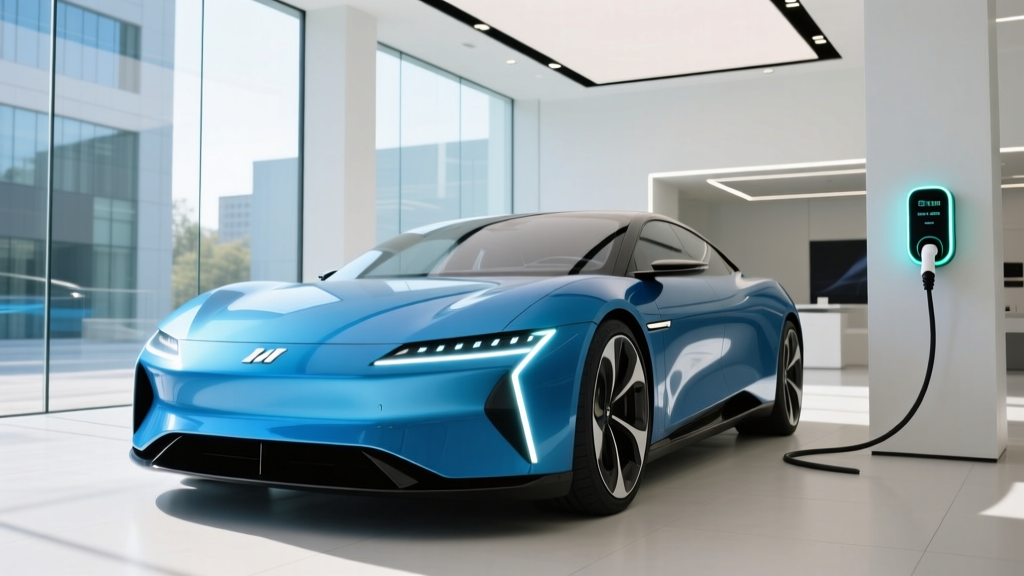
The 2026 Lucid Phoenix represents the brand's long-awaited entry into the compact luxury EV segment, directly challenging the Tesla Model 3, BMW i4, and Polestar 2. Built on Lucid's miniaturized version of its proprietary electric powertrain architecture, the Phoenix brings the same obsessive efficiency that made the Air sedan a class-leader into a smaller, more accessible footprint. With EPA-estimated range reaching up to 410 miles on the Grand Touring trim and a starting MSRP that undercuts the Air significantly, the Phoenix is Lucid's bid to move serious volume. But does Lucid's efficiency wizardry translate to a compact form factor, and what are the real-world trade-offs buyers should expect?
| Specification | Pure | Touring | Grand Touring |
|---|---|---|---|
| EPA Range | 310 mi | 360 mi | 410 mi |
| Battery (Usable) | 72 kWh (NMC) | 88 kWh (NMC) | 105 kWh (NMC) |
| Drivetrain | RWD, Single Motor | AWD, Dual Motor | AWD, Dual Motor |
| Horsepower | 320 hp | 480 hp | 620 hp |
| 0–60 mph | 5.2 sec | 3.6 sec | 2.9 sec |
| Max DC Charge Rate | 180 kW | 220 kW | 250 kW |
| 10–80% DC Fast Charge | ~28 min | ~22 min | ~20 min |
| Level 2 Home Charge | 11.5 kW (~44 mi/hr) | 19.2 kW (~73 mi/hr) | 19.2 kW (~73 mi/hr) |
| Efficiency | 140 MPGe / 24 kWh/100mi | 134 MPGe / 25 kWh/100mi | 130 MPGe / 26 kWh/100mi |
| Base MSRP | $52,900 | $61,900 | $74,900 |
Range & Real-World Efficiency
Lucid has built its reputation on extracting maximum miles per kilowatt-hour, and the Phoenix continues that tradition. The Grand Touring's 410-mile EPA estimate is remarkable for a compact luxury sedan, while even the base Pure trim's 310 miles exceeds most competitors in the segment. Lucid achieves this through a combination of a highly efficient silicon-carbide inverter, low-drag aerodynamics (Cd of 0.23), and the brand's proprietary Wunderbox battery management system.
EPA estimates assume a mix of city and highway driving at moderate temperatures. Here's what to actually expect from the 2026 Lucid Phoenix:
- Grand Touring (EPA 410 mi): Expect ~340–360 mi on sustained highway trips at 70+ mph. In freezing temperatures (below 32°F), plan for ~280–310 mi due to battery thermal demands and cabin heating.
- Touring (EPA 360 mi): Highway real-world ~300–320 mi; cold weather ~250–280 mi.
- Pure (EPA 310 mi): Highway real-world ~260–280 mi; cold weather ~220–245 mi. The RWD Pure benefits from lower parasitic drivetrain loss in city driving, often meeting or exceeding its EPA number in stop-and-go commuting.
Lucid's heat pump (standard on all trims) mitigates cold-weather losses better than resistive heating, but any EV will lose 15–25% of range in sustained sub-freezing conditions.
The Phoenix's efficiency numbers are where Lucid truly differentiates. At 24 kWh per 100 miles (Pure trim), this is among the most efficient EVs in the luxury compact segment, meaning you'll spend less per mile at the charger and get more range from smaller, lighter battery packs. According to fueleconomy.gov, this translates to an annual fuel cost roughly 40% lower than a comparable gasoline compact luxury sedan.
Charging Speed: DC Fast & Home Level 2
Charging speed is a critical ownership variable, and the Phoenix delivers competitive numbers — though not class-leading in every trim. All Phoenix models use the NACS (North American Charging Standard) connector natively, giving them direct access to the Tesla Supercharger network without adapters, alongside Electrify America and other NACS-equipped networks.
| Charging Level | Pure | Touring | Grand Touring |
|---|---|---|---|
| Level 1 (120V, 1.4 kW) | ~5 mi/hr | ~5 mi/hr | ~5 mi/hr |
| Level 2 (240V, Home) | 11.5 kW / ~44 mi/hr | 19.2 kW / ~73 mi/hr | 19.2 kW / ~73 mi/hr |
| DC Fast Charge (Peak) | 180 kW | 220 kW | 250 kW |
| 10–80% DC Time | ~28 min | ~22 min | ~20 min |
| 50–80% Sustained Avg | ~110 kW | ~140 kW | ~160 kW |
A critical nuance that spec sheets obscure: peak kW is not sustained kW. The Grand Touring hits 250 kW briefly in the 10–30% state-of-charge (SoC) window, then tapers progressively. From 50% to 80%, expect an average of roughly 160 kW — still excellent, but not the headline number. Lucid's charge curve is relatively flat compared to some competitors that spike and crash, which is why the 10–80% time remains competitive despite a peak rate below the Hyundai Ioniq 6's 350 kW peak.
For home charging, the Touring and Grand Touring trims support 19.2 kW on Level 2, which requires a 100-amp dedicated circuit and a hardwired Lucid Connected Home charger or equivalent high-amperage EVSE. The Pure trim tops out at 11.5 kW, which works with a more common 60-amp circuit. Budget $800–$2,500 for a professional Level 2 home installation depending on your electrical panel capacity and distance from the panel to your parking spot — a 200-amp panel upgrade may add $1,500–$3,000 if your home doesn't have sufficient capacity.
Performance & Driving Dynamics
The Phoenix Grand Touring's 2.9-second 0–60 mph time puts it in supercar territory, while the base Pure's 5.2 seconds is perfectly adequate for daily driving and merging. All trims benefit from Lucid's compact motor design — the same miniaturized permanent-magnet motors used in the Air, now adapted for a lighter, shorter-wheelbase platform.
The dual-motor AWD trims (Touring and Grand Touring) use torque vectoring across the rear axle for sharper cornering, and the overall driving character leans toward grand-touring comfort rather than track-focused stiffness. The RWD Pure is the lightest variant at approximately 4,350 lbs, and its lower mass gives it an agility advantage in urban driving that the heavier Grand Touring (approximately 4,850 lbs with the 105 kWh pack) can't quite match.
Regenerative braking is adjustable via the touchscreen, with a one-pedal driving mode that provides up to 0.3g of deceleration — strong enough to handle most daily stops without touching the friction brake pedal.
Interior, Cargo & Technology
The Phoenix rides on a new compact platform, and interior space reflects its segment positioning. It's roomier than a Polestar 2 but doesn't quite match the Model 3's rear-seat legroom.
| Front Headroom | 39.4 in |
| Rear Headroom | 37.1 in |
| Front Legroom | 41.8 in |
| Rear Legroom | 35.6 in |
| Cargo (Trunk) | 16.2 cu ft |
| Frunk (Front Trunk) | 4.8 cu ft |
| Total Cargo | 21.0 cu ft |
The Phoenix features Lucid's 34-inch curved Glass Canvas display spanning the dash, running the latest LucidOS with native Apple CarPlay and Android Auto integration (wireless). The infotainment system is responsive and visually striking, though some owners of the Air have noted that the touchscreen-dependent climate controls can be distracting while driving — a concern likely carried over to the Phoenix.
On the driver-assistance front, the Phoenix comes standard with Lucid's DreamDrive Pro system, which includes adaptive cruise control, lane-centering, automatic emergency braking, and blind-spot monitoring. DreamDrive Pro is an SAE Level 2 system — meaning the driver must remain fully attentive with hands on the wheel at all times. This is not a self-driving system. Lucid has announced a future DreamDrive autonomy upgrade path, but as of the 2026 model year, no hands-free highway driving feature comparable to GM's Super Cruise or Ford's BlueCruise is available.
Pricing, Tax Credits & Ownership Costs
The 2026 Phoenix lineup starts at $52,900 for the Pure trim, placing it in direct competition with the Tesla Model 3 Long Range and the BMW i4 eDrive40. Here's how the pricing breaks down and what the federal tax credit looks like under current IRS §30D rules:
| Trim | Base MSRP | §30D Credit Eligibility | Effective Price (if eligible) |
|---|---|---|---|
| Pure | $52,900 | Up to $7,500 (income + sourcing dependent) | ~$45,400 |
| Touring | $61,900 | Up to $7,500 (income + sourcing dependent) | ~$54,400 |
| Grand Touring | $74,900 | Up to $7,500 (income + sourcing dependent) | ~$67,400 |
- MSRP Cap: Sedans must be under $55,000. Only the Pure trim ($52,900) qualifies on MSRP alone. The Touring and Grand Touring exceed the sedan cap — check whether Lucid classifies any Phoenix variant as an SUV (higher $80,000 cap) for tax purposes.
- Buyer Income Cap: Modified AGI must not exceed $150,000 (single), $225,000 (head of household), or $300,000 (joint filers).
- Battery Sourcing: The full $7,500 requires meeting both critical-minerals ($3,750) and battery-component ($3,750) sourcing thresholds set by the IRS. Lucid's supply chain compliance varies by production batch — confirm with your dealer at time of purchase.
- Point-of-Sale Transfer: Eligible buyers can apply the credit as an instant rebate at the dealership rather than waiting for tax filing.
Tax credit rules are subject to change. Consult a tax professional and verify current eligibility on irs.gov before purchasing.
On the ownership-cost side, Lucid includes a competitive warranty package:
- Basic Vehicle Warranty: 4 years / 50,000 miles
- Battery & Powertrain Warranty: 8 years / 100,000 miles (capacity retention guaranteed above 70%)
- Roadside Assistance: 4 years / 50,000 miles
Insurance costs for the Phoenix are expected to run 15–25% higher than a comparable gasoline compact luxury sedan, consistent with EV industry averages. Get quotes before committing — premiums vary significantly by state, driving record, and trim level.
Pros & Cons
- Best-in-class efficiency (24–26 kWh/100mi)
- Grand Touring range of 410 mi EPA is segment-leading
- Native NACS — direct Supercharger access, no adapter
- Stunning Glass Canvas display and interior materials
- Strong DC fast-charge speeds (10–80% in ~20 min on GT)
- Heat pump standard on all trims
- Only Pure trim likely qualifies for full §30D credit (MSRP cap)
- No hands-free highway driving feature (DreamDrive is Level 2 only)
- Touchscreen-dependent climate controls are a distraction risk
- Rear legroom (35.6 in) trails Model 3 and Hyundai Ioniq 6
- Limited service center network vs. Tesla and legacy brands
- Grand Touring pricing approaches Air Pure territory — cross-shopping required
Who Should Buy the Lucid Phoenix?
The Phoenix is best suited for efficiency-conscious luxury buyers who prioritize range and build quality over outright performance branding. If your daily commute is long (50+ miles round-trip) and you value spending less time at chargers, the Grand Touring's 410-mile EPA range and strong fast-charge capability make road trips genuinely stress-free.
- Choose the Pure if: You want the most efficient, most affordable Phoenix and your commute is under 60 miles round-trip. Best value after the §30D credit.
- Choose the Touring if: You need AWD for weather, want strong acceleration, and can accept the higher MSRP (potentially without full tax credit).
- Choose the Grand Touring if: Range is your top priority, you take frequent road trips, and budget allows the $74,900 MSRP. Cross-shop the Air Pure, which offers similar range in a larger package for comparable money.
- Look elsewhere if: You need maximum rear-seat space (check the Hyundai Ioniq 6 or BMW i5), hands-free highway driving (GM Super Cruise or Ford BlueCruise vehicles), or a robust dealer/service network (Tesla Model 3).
Frequently Asked Questions
What is the real-world range of the 2026 Lucid Phoenix?
The EPA rates the Grand Touring at 410 miles, but expect 340–360 miles on sustained highway driving at 70+ mph and 280–310 miles in freezing weather. The base Pure (EPA 310 mi) delivers roughly 260–280 miles highway. City driving with regenerative braking often matches or exceeds EPA numbers.
How fast does the Lucid Phoenix charge?
On DC fast charging, the Grand Touring peaks at 250 kW and charges from 10–80% in approximately 20 minutes. At home on Level 2 (240V), the Touring and Grand Touring add roughly 73 miles of range per hour at 19.2 kW, while the Pure adds about 44 miles per hour at 11.5 kW.
Does the Lucid Phoenix qualify for the $7,500 federal EV tax credit?
Under current IRS §30D rules, only the Pure trim ($52,900 MSRP) falls under the $55,000 sedan MSRP cap. Even then, eligibility depends on buyer income limits, battery critical-mineral sourcing, and battery-component manufacturing requirements. The Touring and Grand Touring exceed the sedan MSRP cap unless reclassified. Always verify current rules at irs.gov and consult a tax professional.
Is the Lucid Phoenix worth buying over a Tesla Model 3?
The Phoenix offers superior range efficiency, a more luxurious interior, and competitive charging speeds. The Model 3 counters with a far larger Supercharger and service network, available hands-free-capable FSD (Supervised), and broader tax-credit eligibility. If build quality, range, and exclusivity matter most, the Phoenix wins on merit. If network convenience and lower ownership friction are priorities, the Model 3 remains pragmatic.
What are the biggest drawbacks of the Lucid Phoenix?
The primary concerns are limited service-center availability (Lucid's network is growing but small), touchscreen-only climate controls, and the likelihood that only the base Pure trim qualifies for the full federal tax credit. Rear-seat space is adequate but not generous for the segment, and no hands-free driving assist is available at launch.
What battery chemistry does the Phoenix use?
All 2026 Phoenix trims use NMC (nickel-manganese-cobalt) lithium-ion cells, which offer higher energy density than LFP (lithium iron phosphate) chemistry. This allows Lucid to pack more range into a smaller physical battery. NMC batteries generally benefit from charging to 80% daily rather than 100% for long-term longevity — reserve full charges for road trips. Lucid's 8-year/100,000-mile battery warranty guarantees capacity retention above 70%.