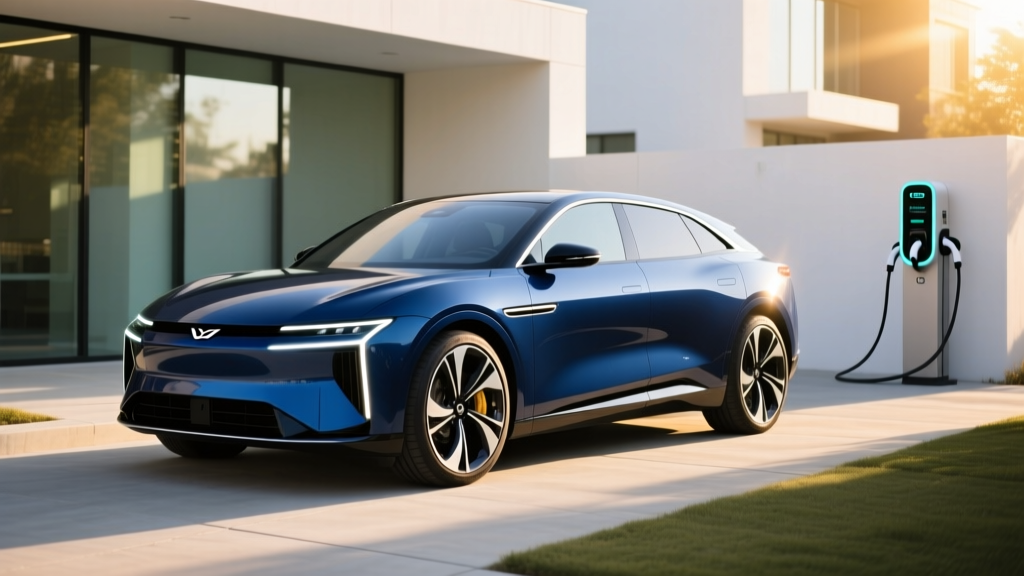
The Lucid Ocean is the automaker's long-awaited compact luxury electric SUV, designed to translate the efficiency wizardry of the Air sedan into a more practical, family-friendly crossover. First revealed as a concept in 2023 and confirmed for production in 2025, the Ocean is scheduled to reach U.S. driveways in late 2026 as a 2027 model-year vehicle. Until then, every figure below is manufacturer-estimated or derived from the production platform Lucid has previewed — not final EPA-certified data.
This preview covers what Lucid has disclosed about the Ocean's range, charging architecture, pricing, and positioning, plus the real-world ownership factors buyers should weigh before placing a reservation.
What the Lucid Ocean Is (and Isn't Yet)
The Ocean slots below the midsize Gravity SUV in Lucid's lineup, targeting the segment dominated by the Tesla Model Y, Porsche Macan EV, and upcoming Rivian R2. It rides on a shortened version of Lucid's proprietary 900V+ electric architecture and uses the company's miniaturized drive units — the same compact motors that give the Air its class-leading interior volume relative to its footprint.
Lucid has confirmed two powertrain configurations: a single-motor rear-wheel-drive (RWD) base model and a dual-motor all-wheel-drive (AWD) variant. The production design shown in 2025 retained roughly 90% of the concept's surfacing, including the glass canopy roof, clamshell-style hood with integrated frunk, and the signature Lucid light bar.
Estimated Range, Battery, and Efficiency
Lucid has targeted a top-trim EPA range of over 400 miles for the dual-motor AWD variant equipped with the larger battery pack, with the single-motor RWD model expected to achieve a similar or slightly higher figure thanks to lower drivetrain losses. For context, that would make the Ocean one of the most range-efficient compact luxury SUVs on the market, rivaling only the Air sedan's efficiency crown.
| Spec | RWD (Base) | AWD (Dual-Motor) |
|---|---|---|
| EPA Range (est.) | 400+ mi | 400+ mi |
| Battery Capacity (usable, est.) | ~88 kWh | ~112 kWh |
| Battery Chemistry | NMC (est.) | NMC |
| Horsepower | ~350 hp | ~600+ hp |
| 0–60 mph | ~5.5 sec | ~3.4 sec |
| Drivetrain | RWD | AWD (dual-motor) |
| Efficiency (target) | ~130 MPGe / ~26 kWh/100mi | ~120 MPGe / ~28 kWh/100mi |
| Starting MSRP (est.) | ~$49,900 | ~$59,900 |
Lucid has historically used nickel-manganese-cobalt (NMC) chemistry across its lineup for its superior energy density — critical for hitting 400+ miles in a compact SUV footprint. The company has not announced an LFP (lithium iron phosphate) variant, though LFP could appear in a future base model if Lucid prioritizes cost reduction over maximum range. NMC packs offer higher energy density but are more sensitive to sustained 100% state-of-charge storage; daily charging to 80–90% is recommended for longevity.
Charging Speed and Architecture
The Ocean inherits Lucid's 900V+ electrical architecture, which enables faster DC charging and thinner, lighter wiring harnesses compared to 400V systems used in older EVs. Lucid has indicated the Ocean will support peak DC fast-charge rates above 250 kW, with a 10–80% charging time target of approximately 20 minutes on a capable 350 kW charger.
| Level | Power / Rate | Speed (Miles/Hour) | Notes |
|---|---|---|---|
| Level 1 (120V) | ~1.4 kW | ~4–5 mi/hr | Emergency/trickle only |
| Level 2 (240V, 48A) | ~11.5 kW | ~38–42 mi/hr | Overnight home charging; full charge ~10 hrs |
| DC Fast Charge (peak) | ~250+ kW | ~800+ mi/hr (peak) | 10–80% in ~20 min; tapers above 80% |
Charging curve reality check: Peak kW is not sustained kW. The 250+ kW rate applies between roughly 10–40% state of charge. Above 60%, the battery management system tapers charge rate to protect cell health — expect rates to drop to 80–120 kW in the 60–80% window, and below 50 kW above 90%. This is standard for NMC packs and not unique to Lucid, but it means a 10–90% stop will take closer to 30–35 minutes, not 20.
The Ocean will ship with a NACS (North American Charging Standard) port, giving it native access to Tesla's Supercharger network — the largest and most reliable DC network in the U.S. CCS adapters will not be needed for Tesla stalls, though Lucid may include a CCS adapter for legacy Electrify America and EVgo stations still transitioning to NACS.
Performance and Driving Dynamics
Lucid's miniaturized permanent-magnet motors are among the most power-dense in production. The dual-motor AWD Ocean is expected to produce over 600 horsepower, launching to 60 mph in approximately 3.4 seconds. The single-motor RWD variant targets around 350 hp with a 0–60 time near 5.5 seconds — brisk for daily driving and merging, if not supercar territory.
Lucid has emphasized that the Ocean's suspension tuning prioritizes ride comfort and composure over the stiff, track-oriented feel of the Air Sapphire. Expect adaptive dampers on upper trims and a standard air suspension option for adjustable ride height — useful for rough driveways and light off-pavement use, though the Ocean is not a body-on-frame off-roader.
Interior, Cargo, and Technology
The Ocean's concept interior featured Lucid's "space concept" design philosophy — pushing the dashboard forward and using compact drive units to maximize cabin volume. Lucid has targeted the following dimensions:
- Rear legroom: ~39 inches (competitive with Model Y, exceeding Macan EV)
- Cargo (rear seats up): ~30 cu ft
- Cargo (rear seats folded): ~68 cu ft
- Frunk: ~7 cu ft (usable for charging cables or a small bag)
The infotainment system will run Lucid's latest UX on a curved 34-inch glass cockpit display spanning the driver's view, supplemented by a lower touchscreen for climate and secondary controls. Wireless Apple CarPlay and Android Auto are expected, along with over-the-air update capability.
Driver assistance: The Ocean will ship with Lucid's DreamDrive Pro suite — a Level 2 (SAE) driver-assist system using lidar, radar, and cameras. DreamDrive Pro includes adaptive cruise, lane-centering, automatic emergency braking, and a highway-assist feature. This is not autonomous driving. The driver must remain engaged with hands on the wheel and eyes on the road at all times. Lucid has not announced a hands-free highway feature comparable to GM's Super Cruise or Ford's BlueCruise.
Pricing, Trims, and Federal Tax Credit Eligibility
Lucid has signaled a starting MSRP around $49,900 for the base RWD model, with the dual-motor AWD starting near $59,900. A fully loaded AWD variant with the large battery, air suspension, and premium package could reach the mid-$70,000s before options.
| Trim | Est. MSRP | §30D Credit Potential | Effective Price (if eligible) |
|---|---|---|---|
| RWD Base | ~$49,900 | Up to $7,500 | ~$42,400 |
| AWD Standard | ~$59,900 | Up to $7,500 | ~$52,400 |
| AWD Grand Touring (est.) | ~$74,900 | $0 (exceeds MSRP cap) | ~$74,900 |
Federal tax credit caveats (IRS §30D): The $7,500 credit is not guaranteed for every buyer or every trim. Under current IRS rules, eligibility depends on:
- MSRP cap: SUVs must have an MSRP at or below $80,000. Base and mid-trim Oceans should qualify; a loaded Grand Touring could exceed the cap.
- Buyer income cap: Modified adjusted gross income must not exceed $150,000 (single), $225,000 (head of household), or $300,000 (joint filing).
- Battery sourcing: A percentage of critical minerals and battery components must be sourced from the U.S. or free-trade-agreement countries. These thresholds increase annually. Lucid has not publicly confirmed the Ocean's battery supply chain compliance — this will be the determining factor for whether the credit applies at all.
- Point-of-sale transfer: Eligible buyers can apply the credit as a down-payment reduction at the dealer rather than waiting for a tax refund.
Consult a tax professional and the IRS §30D guidance before relying on the credit in your purchase budget.
How the Lucid Ocean Compares to Key Rivals
The Ocean enters one of the most competitive segments in the EV market. Here's how it's likely to stack up against confirmed or near-term rivals:
| Vehicle | EPA Range | Peak DC kW | Starting MSRP | NACS Native |
|---|---|---|---|---|
| Lucid Ocean AWD (est.) | 400+ mi | 250+ | ~$59,900 | Yes |
| Tesla Model Y LR AWD | 320 mi | 250 | ~$48,990 | Yes |
| Porsche Macan 4 EV | 308 mi | 270 | ~$78,800 | No (CCS/NACS adapter) |
| Rivian R2 (announced) | 330+ mi (est.) | ~200 (est.) | ~$45,000 (est.) | Yes |
The Ocean's primary differentiator is range efficiency. If Lucid hits 400+ miles EPA, it will outdistance every rival in this segment by 70–90 miles — a meaningful gap on road trips. The trade-off is that Lucid's production and service footprint remains far smaller than Tesla's, and the Ocean's pricing may land closer to Porsche territory once options are added.
- Choose the Ocean if: You prioritize maximum range and efficiency above all else, regularly drive 300+ miles between charging stops, and value a premium interior with distinctive design. The Ocean is ideal for long-distance commuters and road-trip-heavy households who want to minimize charging stops.
- Look elsewhere if: You need immediate availability (the Ocean is still months from delivery), you require hands-free highway driving (DreamDrive Pro is supervised Level 2 only), you want the lowest entry price (Rivian R2 and base Model Y undercut it), or you need robust off-road capability (consider Rivian R1S or the R2 for that use case).
Warranty and Ownership Considerations
Lucid's current warranty structure for the Air and Gravity provides a useful baseline for what to expect with the Ocean:
- Battery & Powertrain: 8 years / 100,000 miles (whichever comes first), with coverage triggered if battery capacity drops below 70% of original capacity.
- Basic Vehicle: 4 years / 50,000 miles bumper-to-bumper.
- Roadside Assistance: 4 years / 50,000 miles.
Lucid's service network remains limited compared to legacy automakers — there are roughly two dozen service centers nationwide, supplemented by mobile service vans for software-related and minor hardware repairs. Buyers in rural areas or states without a Lucid presence should factor in potential travel for warranty service. This is the single largest ownership risk for Lucid compared to Tesla's 350+ service locations or Porsche's established dealer network.
Pros and Cons at a Glance
- Targeted 400+ mi EPA range — best in compact luxury SUV segment
- Not yet available — deliveries expected late 2026 at earliest
- Limited service network outside major metros
- No hands-free highway driving (supervised Level 2 only)
- Federal tax credit eligibility unconfirmed (battery sourcing TBD)
- Brand-new model year — expect early-production quirks
Frequently Asked Questions
What is the real-world range of the Lucid Ocean?
Lucid targets 400+ miles EPA for the Ocean. Real-world highway driving at 70–75 mph should yield approximately 330–360 miles in moderate temperatures. In cold weather (below freezing), expect 280–320 miles due to battery chemistry limitations and cabin heating energy draw. City driving with frequent regenerative braking opportunities will return results closest to the EPA sticker.
How fast does the Lucid Ocean charge?
On a 350 kW DC fast charger, the Ocean is expected to peak above 250 kW and charge from 10–80% in approximately 20 minutes. At home on a Level 2 (240V, 48A) charger, expect roughly 38–42 miles of range added per hour, meaning a full overnight charge from near-empty takes about 10 hours. Level 1 (120V) charging adds only 4–5 miles per hour and is suitable only for emergencies or very low daily mileage.
How much does the Lucid Ocean cost after tax credits?
The base RWD model is estimated at ~$49,900 MSRP. If you qualify for the full $7,500 federal §30D credit (income within limits, vehicle meets battery-sourcing requirements, MSRP under $80,000), the effective price drops to ~$42,400. The AWD variant at ~$59,900 could net to ~$52,400 with the credit. A fully loaded Grand Touring trim near $75,000 should remain under the $80,000 SUV MSRP cap but credit eligibility depends entirely on battery-sourcing compliance, which Lucid has not confirmed.
Is the Lucid Ocean worth buying vs. a Tesla Model Y or Rivian R2?
If range is your top priority and you're willing to wait for 2027 delivery, the Ocean's projected 400+ miles is unmatched in this segment. However, the Model Y is available today, costs less, and has vastly more service infrastructure. The Rivian R2 (expected 2026) may undercut the Ocean on price and offer more rugged utility. The Ocean wins on efficiency and design distinction; it loses on availability and service network depth.
Does the Lucid Ocean qualify for the federal EV tax credit?
Potentially, but it is not confirmed. Under IRS §30D rules, the Ocean must meet MSRP caps ($80,000 for SUVs), buyer income limits ($150K single / $300K joint), and critical-mineral/battery-component sourcing thresholds that tighten each year. Lucid has not publicly disclosed the Ocean's battery supply chain details. Do not budget around the $7,500 credit until Lucid confirms eligibility for specific trims — and verify your personal income eligibility with a tax professional.
What connector does the Lucid Ocean use?
The Ocean will use the NACS (North American Charging Standard) connector, the same port used by Tesla vehicles. This gives the Ocean native access to Tesla Supercharger stalls without an adapter. For legacy CCS stations (some Electrify America and EVgo locations still transitioning), Lucid may provide a CCS-to-NACS adapter, though this has not been confirmed.
Sources: Lucid Motors official previews and concept disclosures; fueleconomy.gov for EPA testing methodology; IRS §30D Clean Vehicle Credit for tax credit rules. All Ocean specifications are manufacturer estimates and subject to change prior to EPA certification and production launch.