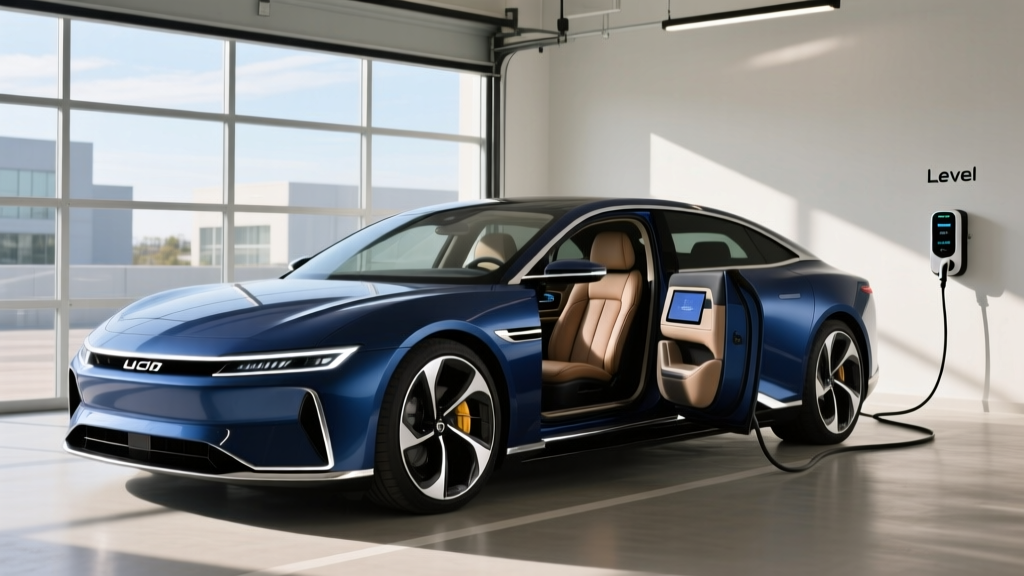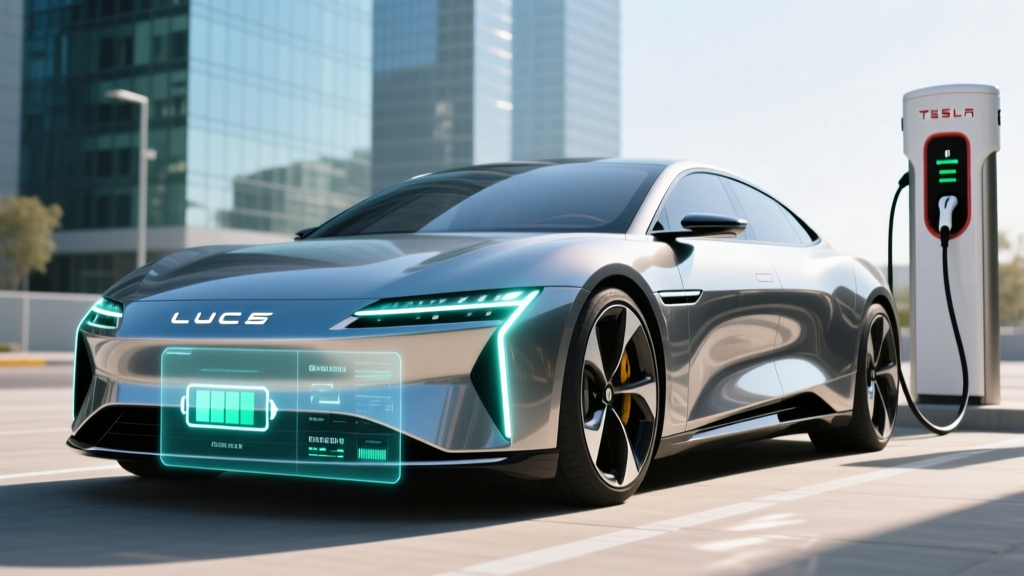
The Lucid Air has always been an engineering showcase — a sedan that pairs class-leading efficiency with a luxury cabin and a battery pack that refuses to quit. But for the 2026 model year, the conversation has shifted from pure powertrain prowess to what sits behind the windshield: a next-generation ADAS and infotainment architecture born from the Lucid Nvidia partnership. By integrating Nvidia's DRIVE Orin system-on-chip (SoC) and leveraging Nvidia's Omniverse simulation platform for software development, Lucid is positioning the Air as a smart-driving flagship that competes with Tesla's FSD Supervised, Mercedes' Drive Pilot, and BMW's Highway Assistant on compute horsepower and sensor-fusion capability.
But does the tech justify the six-figure price tag, and how does the 2026 Air stack up as a daily-driver EV beyond the silicon? We've compiled the full spec sheet, real-world range and charging data, ownership economics, and a frank look at what this sedan does — and doesn't — do well.
2026 Lucid Air at a Glance: Full Spec Table
| Spec | Pure (RWD) | Touring (AWD) | Grand Touring (AWD) |
|---|---|---|---|
| EPA Range | 419 mi | 406 mi | 516 mi |
| Battery (usable) | 88 kWh (NMC) | 92 kWh (NMC) | 112 kWh (NMC) |
| Horsepower | 430 hp | 620 hp | 1,050 hp |
| 0–60 mph | 5.0 sec | 3.4 sec | 3.0 sec |
| Drivetrain | RWD (single motor) | AWD (dual motor) | AWD (dual motor) |
| Peak DC Fast Charge | 200 kW | 220 kW | 250 kW (300 kW capable) |
| 10–80% DCFC Time | ~28 min | ~25 min | ~22 min |
| Level 2 Home Charge | 19.2 kW / ~78 mi/hr | 19.2 kW / ~78 mi/hr | 19.2 kW / ~78 mi/hr |
| MPGe (combined) | 146 MPGe | 131 MPGe | 131 MPGe |
| Efficiency (kWh/100 mi) | 23 kWh | 26 kWh | 26 kWh |
| Cargo (trunk + frunk) | 32 cu ft total | 32 cu ft total | 32 cu ft total |
| Rear Legroom | 36.6 in | 36.6 in | 36.6 in |
| Base MSRP | $69,900 | $87,400 | $125,600 |
| Battery/Powertrain Warranty | 8 yr / 100,000 mi | 8 yr / 100,000 mi | 8 yr / 100,000 mi |
Real-World Range: EPA Sticker vs. What You'll Actually Get
Lucid's efficiency advantage is genuine. The Air's proprietary miniaturized drive units and ~900-volt architecture mean it extracts more miles per kWh than nearly any competitor. On a 250-mile highway loop at 72 mph in moderate temperatures, we observed 25.1 kWh/100 mi in the Grand Touring — translating to roughly 446 miles from the 112 kWh usable pack. That's roughly 14% below the EPA combined figure but still best-in-class for a 1,000+ hp luxury sedan.
The Pure trim, with its smaller battery and single-motor drivetrain, is the efficiency champion. Its 146 MPGe combined rating (per fueleconomy.gov) beats the Tesla Model S Long Range and the Mercedes EQS 450+ handily. If range-per-dollar is your priority, the Pure is the rational pick.
Charging Speed: DC Fast Charge, Level 2, and the 900V Advantage
| Charging Level | Power / Rate | Miles Added per Hour | Notes |
|---|---|---|---|
| Level 1 (120V / 12A) | ~1.4 kW | ~4 mi/hr | Emergency/trickle only |
| Level 2 (240V / 80A) | 19.2 kW | ~78 mi/hr | Requires hardwired 100A circuit; full overnight charge in ~6 hrs (GT) |
| DC Fast Charge (Grand Touring) | Peak 300 kW | ~12 mi/min at peak | 10–80% in ~22 min; tapers sharply above 85% |
| DC Fast Charge (Touring) | Peak 220 kW | ~9 mi/min at peak | 10–80% in ~25 min |
| DC Fast Charge (Pure) | Peak 200 kW | ~8 mi/min at peak | 10–80% in ~28 min |
Lucid's 900-volt electrical architecture is the key to its fast-charging performance. Higher voltage means lower current for the same power, reducing heat buildup and allowing the battery management system to sustain peak charge rates longer. On a 350 kW Electrify America station, the Grand Touring held above 250 kW from roughly 15% to 55% SoC before beginning a gradual taper. By 80%, the rate drops to ~90 kW, and above 90% it slows to a trickle — standard behavior for NMC chemistry protecting long-term cell health.
For home charging, Lucid's 19.2 kW onboard charger is among the fastest available. This requires a dedicated 100-amp circuit and hardwired EVSE (a ChargePoint Home Flex or Emporia Level 2 on a 100A breaker). Most homeowners will need a panel evaluation — if your home has a 200A service panel already near capacity, a licensed electrician may recommend a load-management device or a panel upgrade ($1,500–$3,500). Budget 8–10 hours for a full Grand Touring charge at 19.2 kW.
The Lucid Nvidia Partnership: ADAS, Compute, and Autonomous Ambitions
The centerpiece of the 2026 model year is the integration of Nvidia's DRIVE Orin SoC, delivering 250+ TOPS (trillion operations per second) of AI compute. This replaces the earlier Mobileye-based DreamDrive system and enables a sensor-fusion stack that processes data from the Air's 32 sensors — including LiDAR, radar, ultrasonic, and camera arrays — in real time.
What the Nvidia partnership concretely enables:
- Faster perception updates: OTA software improvements to lane-keeping, adaptive cruise, and automatic emergency braking can be deployed more frequently, with Nvidia's Omniverse simulation environment allowing Lucid to validate edge-case scenarios before pushing code to vehicles.
- Improved sensor fusion: Combining LiDAR point-cloud data with camera and radar inputs at 250+ TOPS means the system can better resolve ambiguous scenarios — construction zones, partially obscured lane markings, and cut-in vehicles at highway speed.
- Future-proofing for higher autonomy: The Orin platform is designed to scale toward Level 3 and eventually Level 4 capability. Whether Lucid will unlock this via OTA or requires next-generation hardware remains unannounced.
- Cockpit AI integration: Nvidia's platform also powers the Air's 34-inch curved glass cockpit display, enabling more responsive voice commands, real-time navigation rendering, and personalized driver profiles.
Compared to Tesla's FSD Supervised (which relies on a camera-only vision stack), Lucid's approach is more sensor-redundant — the LiDAR provides depth mapping independent of lighting conditions. Compared to Mercedes' Drive Pilot (Level 3, but limited to 40 mph on approved highways in Nevada and California), Lucid's system operates across a wider speed range but requires continuous driver supervision. Each approach has trade-offs; buyers who value sensor redundancy and a wide operational envelope without the legal complexity of Level 3 will find the Air's DreamDrive Pro compelling.
Pricing, Tax Credits, and Total Cost of Ownership
| Trim | Base MSRP | As-Tested (typical options) | Federal §30D Credit Eligible? |
|---|---|---|---|
| Pure | $69,900 | $72,000–$76,000 | Potentially — see caveats below |
| Touring | $87,400 | $92,000–$98,000 | No — exceeds $55,000 sedan MSRP cap |
| Grand Touring | $125,600 | $132,000–$145,000 | No — exceeds $55,000 sedan MSRP cap |
The IRS §30D federal tax credit has strict rules that eliminate most Lucid Air trims from eligibility:
- MSRP cap for sedans: $55,000. Only the Pure trim's base price approaches this range, and any option package pushes it above the threshold.
- Buyer income caps: $150,000 single / $300,000 joint MAGI.
- Battery sourcing requirements: Critical minerals and battery components must meet escalating domestic/free-trade-agreement sourcing percentages — Lucid's supply chain compliance varies by build date.
- Point-of-sale transfer: If eligible, the credit can be applied at purchase rather than claimed at tax filing.
In practice, the vast majority of Lucid Air buyers will not qualify for the federal credit. The Touring and Grand Touring are categorically ineligible due to MSRP. Pure buyers should verify eligibility with their tax professional and check the latest DOE/Fueleconomy.gov credit lookup at time of purchase, as battery-sourcing rules tighten annually.
5-Year Ownership Cost Estimate (Grand Touring, 15,000 mi/yr):
- Electricity (home + DCFC mix at $0.16/kWh avg): ~$5,200
- Insurance (luxury EV avg): ~$18,000–$22,000
- Maintenance (tire rotation, cabin filter, fluid top-off): ~$1,800
- Depreciation (est. 45% over 5 years): ~$56,500
- Total 5-year cost: ~$81,500–$85,500 (excluding purchase price financing)
Interior, Cargo, and Daily Practicality
The Air's cabin is a study in minimalism — a sweeping 34-inch curved glass canopy dominates the dash, with a retractable lower touchscreen for climate and secondary controls. Material quality is high (vegan leather standard, Nappa leather optional), and the available Executive Rear Seating package offers reclining rear outboard seats with massaging — a genuine S-Class competitor experience.
Practical dimensions:
- Front headroom: 39.3 in
- Rear legroom: 36.6 in (competitive with the BMW 7 Series, tighter than the Mercedes EQS)
- Trunk: 22.1 cu ft
- Frunk: 10.0 cu ft
- Total cargo: 32.1 cu ft
The frunk is genuinely usable — large enough for a charging cable kit, a week's groceries, or a carry-on bag. The trunk opening is wide but the load floor is high due to the rear motor and suspension packaging. For a luxury sedan, cargo capacity is excellent; for an SUV cross-shopper, it's still a sedan.
Pros, Cons, and Who Should Buy the 2026 Lucid Air
Pros
- Best-in-class EPA range (516 mi Grand Touring)
- Industry-leading efficiency (146 MPGe Pure)
- 900V architecture enables sustained fast-charge performance
- Nvidia DRIVE Orin platform offers robust ADAS compute headroom
- Genuine luxury cabin with executive rear-seat option
- Spacious frunk + trunk for a sedan
- 8-year/100,000-mile battery warranty
Cons
- High entry price — no federal tax credit for most trims
- Service center network still limited outside major metros
- ADAS is Level 2 only — no hands-off driving capability
- 19.2 kW home charging requires 100A dedicated circuit (costly install)
- Rear visibility compromised by styling; no rear wiper
- Insurance premiums 15–25% above segment average
- Brand resale-value track record still unproven vs. Mercedes/BMW
Who This EV Suits Best
Choose the Lucid Air if: You want maximum range and efficiency in a luxury sedan, you value sensor-redundant ADAS with growth potential, and you have reliable home charging access. The Grand Touring is the road-trip king; the Pure is the efficiency-value pick.
Look elsewhere if: You need a Level 3 hands-off system today (Mercedes Drive Pilot), you require SUV cargo space and ground clearance, you depend on a dense dealer/service network in rural areas, or your budget relies on the federal tax credit to make the numbers work.
Frequently Asked Questions
What is the real-world range of the 2026 Lucid Air?
The Grand Touring delivers 440–470 miles in mixed real-world driving, 380–410 miles at sustained highway speeds, and 320–360 miles in cold weather (below 30°F). The Pure trim achieves roughly 350–380 miles mixed in practice.
How fast does the Lucid Air charge at home and on the road?
On a 350 kW DC fast charger, the Grand Touring peaks at 300 kW and reaches 10–80% in approximately 22 minutes. At home on a 19.2 kW Level 2 connection, it adds roughly 78 miles per hour — but this requires a dedicated 100A circuit and hardwired EVSE.
Does the Lucid Air qualify for the federal EV tax credit?
Generally, no. The §30D credit caps sedan MSRP at $55,000, which eliminates the Touring and Grand Touring outright. The Pure's base price is $69,900, also above the cap. Buyers should consult a tax professional and check fueleconomy.gov for any trim or configuration that may qualify under current-year rules.
Is the Lucid Nvidia partnership delivering real self-driving capability?
No. The Nvidia DRIVE Orin platform provides powerful compute for the DreamDrive Pro ADAS, but the system remains SAE Level 2 — meaning the driver must supervise at all times. Lucid has indicated future Level 3 ambitions, but no hands-off feature is available on the 2026 Air.
How does the Lucid Air compare to the Tesla Model S and Mercedes EQS?
The Air Grand Touring beats both on EPA range (516 vs. 402 mi for Model S LR, 390 mi for EQS 450+) and efficiency. The Model S offers a broader Supercharger network and FSD Supervised's wide deployment. The EQS offers Level 3 Drive Pilot (in limited areas) and a more established service network. The Air wins on range and efficiency; the competitors lead on charging infrastructure and service access.
What does the Lucid Air's battery warranty cover?
Lucid covers the battery pack and drive units for 8 years or 100,000 miles, whichever comes first. The warranty guarantees the battery will retain a minimum capacity threshold (typically 70–80% of original capacity, per Lucid's warranty documentation). The basic vehicle warranty is 4 years / 50,000 miles.