What the Lucid-Nuro-Uber Robotaxi Actually Is
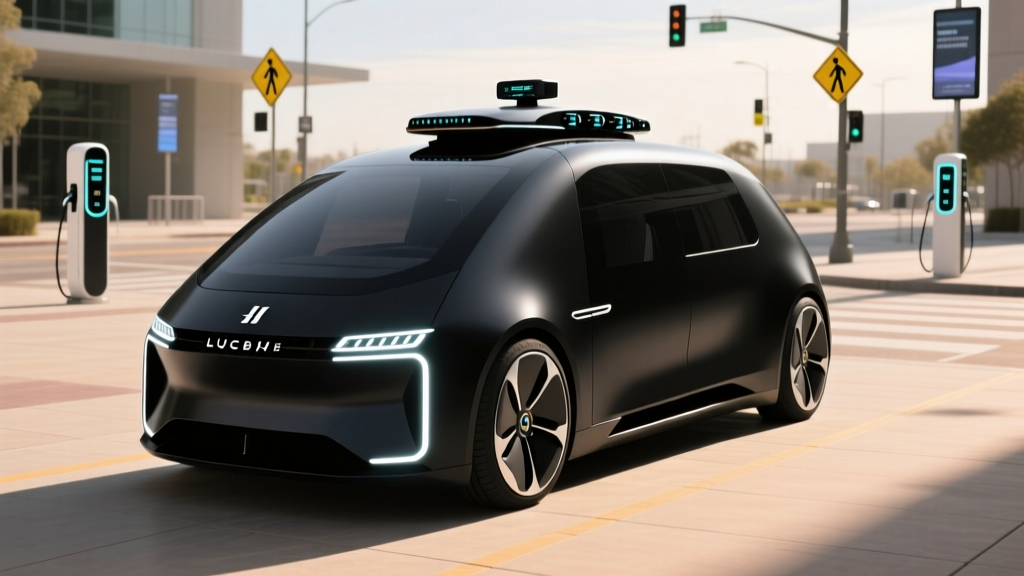
In late 2024 and into 2025, three very different companies began converging on a single idea: Lucid Motors would supply the vehicle platform, Nuro would integrate its autonomous driving stack, and Uber would operate the rider network. The result — colloquially searched as the "Lucid Nuro Uber" robotaxi — is not a car you can buy at a dealership. It is a purpose-built, SAE Level 4 autonomous mobility service vehicle expected to begin limited commercial deployment in select U.S. metro areas starting in late 2026 or 2027.
As of early 2026, the vehicle remains in pre-production testing. Lucid has confirmed it is developing a next-generation, smaller, lower-cost platform (internally referenced as the "Midsize" or Project Midsize) that will underpin both a consumer sedan/SUV and a dedicated robotaxi variant. Nuro, which pivoted from its R3 delivery pod toward passenger autonomy after restructuring in 2023-2024, is the autonomy integration partner. Uber, which sold its ATG self-driving unit to Aurora in 2020, is positioning itself as the network layer — much as it does with Waymo in Phoenix and San Francisco.
The Lucid-Nuro robotaxi targets SAE Level 4 — meaning it operates without a human driver within a defined operational design domain (geofenced metro areas, specific weather conditions). This is fundamentally different from Lucid's consumer vehicles, which ship with DreamDrive Pro, a Level 2 driver-assist system requiring active human supervision. Level 4 means no steering wheel is required in the production configuration.
Because this vehicle is not yet available for consumer purchase, this profile focuses on announced and projected specifications, the technology stack, what riders can expect, and how the Lucid-Nuro-Uber robotaxi compares to Waymo, Cruise (now restructured under GM), and Zoox. All specs are preliminary and subject to change before commercial launch.
Projected Vehicle Specs: Platform, Battery & Range
Lucid has not published a full spec sheet for the robotaxi variant, but based on the company's Midsize platform disclosures, patent filings, and executive statements at investor events, we can construct a credible projected profile. The robotaxi is expected to share core architecture with the upcoming consumer Midsize sedan but feature a modified interior optimized for passenger comfort without a driver's position.
| Attribute | Projected Spec | Notes |
|---|---|---|
| EPA Range (est.) | 350–400 miles | Based on Lucid's ~120 kWh usable pack and class-leading efficiency |
| Battery Capacity | ~118–124 kWh usable | NMC chemistry expected; Lucid has not announced LFP for this platform |
| Battery Chemistry | NMC (Nickel Manganese Cobalt) | Higher energy density needed for 350+ mi target in a midsize footprint |
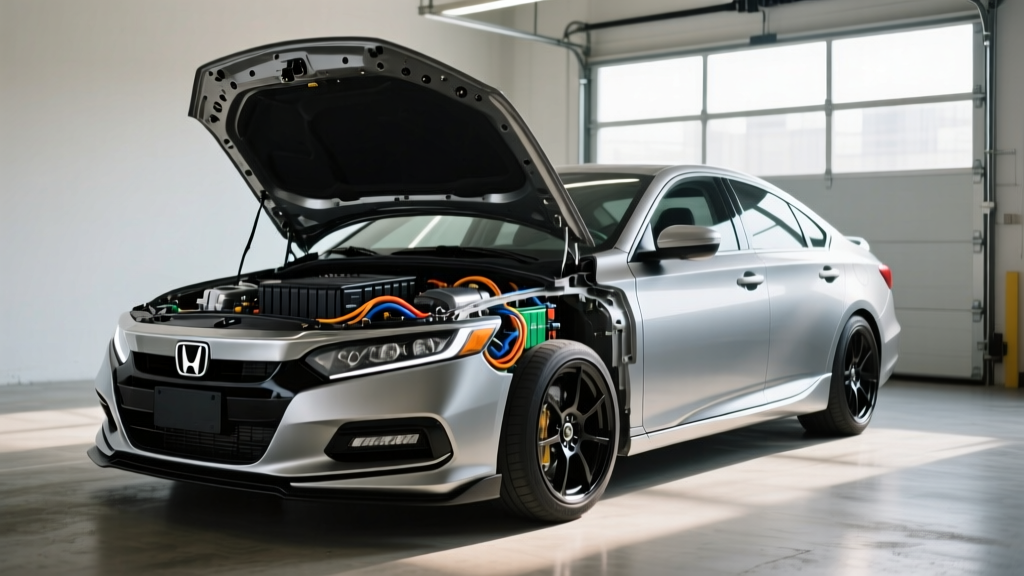
| Drivetrain | Dual-motor AWD | Redundancy for autonomous operation |
| Horsepower | ~600–700 hp (combined) | Lucid's dual-motor Midsize target |
| 0–60 mph | ~3.5 sec (est.) | Robotaxi may be software-limited for passenger comfort |
| Efficiency | ~3.5–4.0 mi/kWh (~120 MPGe est.) | Lucid's efficiency advantage; Air achieves 4+ mi/kWh |
| Max DC Fast Charge | ~300 kW peak (900V architecture) | Lucid's 900V+ electrical system carries over |
| 10–80% DC Charge Time | ~20 minutes (projected) | Sustained rate matters more than peak; expect taper above 60% |
| Level 2 Home Charge Rate | ~19.2 kW / ~70 mi/hr | Relevant for depot charging, not rider concern |
| Connector | NACS (Tesla Supercharger compatible) | Lucid transitioned to NACS for 2025+ models |
| Autonomy Level | SAE Level 4 | Geofenced; no driver required in ODD |
| Passenger Capacity | 2–4 passengers | Lounge-style interior; no driver seat |
| Cargo Volume | ~15–20 cu ft (est.) | Reduced vs. consumer variant; luggage space prioritized |
| Base Price (Fleet) | Not publicly disclosed | Not consumer-purchasable; fleet/Uber pricing TBD |
Projected EPA estimate: 350–400 miles.
Real-world highway (70 mph, moderate climate): Expect ~280–320 miles. Lucid's Air Grand Touring achieves ~4.0 mi/kWh on the EPA cycle but drops to ~3.2–3.5 mi/kWh at sustained highway speeds. The robotaxi's added sensor suite (lidar, compute hardware) and heavier interior may reduce efficiency slightly.
Cold weather (below 32°F): Expect 20–30% range loss, yielding ~240–280 miles. NMC chemistry is more cold-sensitive than LFP, though Lucid's thermal management system (heat pump standard) mitigates this.
Robotaxi duty cycle reality: For fleet operations, range matters less than charging turnaround. A 350-mile EPA range means a single charge covers a full 10–12 hour shift in most metro deployments before needing a depot top-up.
Charging Speed & Fleet Depot Strategy
For a robotaxi, charging speed is an operational economics question, not a consumer convenience one. Lucid's 900V+ architecture is one of the fastest-charging platforms in production, and the robotaxi variant is expected to leverage this fully.
| Level | Power (kW) | Miles Added per Hour | Use Case |
|---|---|---|---|
| Level 1 (120V) | ~1.4 kW | ~5 mi/hr | Not used in fleet ops |
| Level 2 (240V, 80A) | 19.2 kW | ~70 mi/hr | Overnight depot charging |
| DC Fast (peak) | ~300 kW | ~800+ mi/hr (at peak) | Mid-shift top-up; 10-80% in ~20 min |
Charge curve reality: Lucid's 900V system sustains high charge rates longer than 400V competitors, but no battery sustains peak kW for the full session. Expect the robotaxi to charge from 10–60% at or near 300 kW, then taper to ~150 kW from 60–80%, and below 50 kW above 80%. For fleet operations, the sweet spot is 10–80% in roughly 20 minutes — enough to add ~250 miles of range during a driver changeover or meal break equivalent.
Uber and Nuro have indicated that depot-based Level 2 charging will handle overnight replenishment, with DC fast charging reserved for mid-day shifts. This mirrors Waymo's operational model in Phoenix, where Jaguar I-PACE vehicles return to dedicated charging depots.
Autonomy Stack: Nuro's Sensor Suite & Uber's Network
Nuro brings a sensor-heavy perception stack to the Lucid platform. Based on Nuro's R3 delivery vehicle and subsequent passenger-vehicle prototypes, the expected sensor complement includes:
- LiDAR: Multiple solid-state units providing 360° coverage (likely Luminar or Innoviz sensors)
- Cameras: 12+ cameras for object classification, traffic signal recognition, and redundancy
- Radar: 4D imaging radar for adverse weather performance
- Compute: Custom Nuro autonomy computer with redundant processing paths
- Operate outside its geofenced service area — expect initial deployment in 1–3 metro areas (likely Phoenix, San Francisco, or Los Angeles based on Uber/Nuro testing footprints)
- Handle all weather conditions — heavy rain, snow, and fog will likely trigger pull-overs or service suspension
- Replace human drivers on highway interstates initially — Level 4 ODDs typically start with surface streets and controlled-access routes within the geofence
- Be purchasable by consumers — this is a fleet-only vehicle operated through the Uber app
Uber's role is the demand layer: routing, pricing, rider matching, and payment. Uber CEO Dara Khosrowshahi has repeatedly stated that the company's autonomous strategy is a marketplace model — partnering with multiple autonomy providers (Waymo, Nuro, and potentially others) rather than building the stack in-house. This means riders in supported cities will see "Autonomous" as a ride option in the Uber app, with the Lucid-Nuro vehicle as one possible dispatch.
Pricing, Tax Credits & Fleet Economics
The Lucid-Nuro-Uber robotaxi is not a consumer vehicle, so the IRS §30D federal EV tax credit does not apply to riders or individual buyers. However, fleet operators may qualify for the Commercial Clean Vehicle Credit (§45W), which provides up to $40,000 for qualifying commercial EVs — a critical incentive for fleet-scale deployment.
| Cost Factor | Details |
|---|---|
| Vehicle MSRP (consumer equivalent) | Lucid Midsize consumer variant expected at ~$50,000–$60,000; robotaxi variant pricing undisclosed |
| §30D Federal Tax Credit | Not applicable — vehicle not sold to consumers. See IRS §30D rules for consumer eligibility on other Lucid models. |
| §45W Commercial Credit | Up to $40,000 per vehicle for fleet operators; subject to domestic content and sourcing rules |
| Estimated Rider Cost | Uber has indicated autonomous rides will be priced at or slightly below UberX levels in mature markets |
| Battery Warranty (fleet) | Lucid consumer warranty: 8 years/100,000 miles; fleet warranty terms TBD but expected to cover high-mileage duty cycles |
For consumers considering a Lucid you can buy (the Air sedan or upcoming Gravity SUV), the §30D credit has strict eligibility rules: buyer income caps ($150K single / $300K joint for new vehicles), MSRP caps ($55K sedans / $80K SUVs/trucks), and battery critical-mineral and component sourcing requirements that change annually. Always verify current-year eligibility at IRS.gov and consult a tax professional. As of 2026, the Lucid Air Pure (starting ~$69,900) may qualify for partial or full credit depending on battery sourcing compliance, while higher trims exceed the sedan MSRP cap.
How the Lucid-Nuro-Uber Robotaxi Compares
The autonomous ride-hailing landscape in 2026 has several active players. Here's how the Lucid-Nuro-Uber collaboration stacks up against established competitors:
| Attribute | Lucid-Nuro-Uber | Waymo (Geely Zeekr) | Zoox (Amazon) | Cruise/GM (Origin) |
|---|---|---|---|---|
| Status (early 2026) | Pre-production testing | Commercial in 4+ cities | Limited commercial (Las Vegas, SF) | Paused/restructuring post-2024 incidents |
| Vehicle Platform | Lucid Midsize (custom) | Jaguar I-PACE / Zeekr M-Vision | Zoox custom (bidirectional) | GM Origin (purpose-built) |
| EPA Range | 350–400 mi (proj.) | 234 mi (I-PACE) | ~150 mi (est.) | ~300 mi (est.) |
| SAE Level | Level 4 | Level 4 | Level 4 | Level 4 |
| Network | Uber app | Waymo One app + Uber | Zoox app (limited) | Cruise app (suspended) |
| Key Advantage | Range + efficiency + Uber scale | Proven safety record, scale | Purpose-built bidirectional design | GM manufacturing scale (if relaunched) |
The Lucid-Nuro vehicle's primary differentiator is range and energy efficiency. Lucid's powertrain technology consistently delivers class-leading miles per kWh, which translates directly to longer shifts between charges and lower fleet operating costs. Waymo's current Jaguar I-PACE fleet, while proven, is limited by a 234-mile EPA range that requires more frequent charging stops. The Zeekr M-Vision next-gen Waymo vehicle will address this, but Lucid's 900V architecture and ~4.0 mi/kWh efficiency remain a structural advantage.
Who Benefits From the Lucid-Nuro-Uber Robotaxi?
This vehicle is not for buyers — it's for riders and fleet operators. Here's who stands to gain most:
- Urban commuters in deployment cities who want a premium autonomous ride experience with more interior space and range than current Waymo I-PACE vehicles
- Airport travelers — the 350+ mile range means airport runs don't require mid-trip charging, and the lounge-style interior caters to luggage-toting passengers
- Uber loyalists who already use the app and will see autonomous options appear alongside UberX, Comfort, and Black without downloading a separate app (unlike Waymo One)
- Fleet investors and operators evaluating the unit economics of autonomous vehicles, where Lucid's efficiency advantage directly reduces per-mile energy costs
Who should look elsewhere: Consumers who want to own an EV with advanced driver assist should look at the Lucid Air (DreamDrive Pro, Level 2), Tesla Model S/3 (Autopilot/FSD Supervised, Level 2), or Mercedes EQS (Drive Pilot, Level 3 in limited conditions). The robotaxi is a service, not a product.
- Class-leading projected range (350–400 mi EPA) reduces fleet downtime
- 900V architecture enables ~20-min 10-80% DC fast charge
- Uber integration = massive existing rider network, no new app needed
- Lucid's ~4 mi/kWh efficiency lowers per-mile operating cost
- Purpose-built robotaxi interior (no wasted driver controls)
- Nuro's multi-sensor redundancy (LiDAR + camera + radar)
- Not yet commercially deployed — timeline uncertain (late 2026/2027)
- Not purchasable by consumers; fleet-only model
- Geofenced operation — useless outside approved metro areas
- Nuro's passenger autonomy track record is unproven at scale vs. Waymo
- Weather limitations (heavy rain, snow likely suspend service)
- NMC battery chemistry more expensive and cold-sensitive than LFP
- No confirmed pricing for rider cost or fleet purchase price
Frequently Asked Questions
What is the real-world range of the Lucid-Nuro robotaxi?
The projected EPA estimate is 350–400 miles, based on Lucid's Midsize platform efficiency. In real-world highway driving at 70 mph, expect ~280–320 miles. In cold weather (below freezing), expect ~240–280 miles due to NMC chemistry sensitivity and cabin heating loads. For fleet operations, a single charge should cover a full shift in most metro deployments.
How fast does it charge?
Projected peak DC fast charging is ~300 kW on Lucid's 900V architecture, with a 10–80% session taking approximately 20 minutes. The charge curve tapers significantly above 80% to protect battery longevity. Depot Level 2 charging at 19.2 kW adds ~70 miles per hour and handles overnight replenishment. These are projected figures; Lucid has not published final robotaxi-variant charging data.
How much does a ride cost?
Uber has not published specific pricing for autonomous Lucid-Nuro rides. Based on Waymo's pricing in Phoenix and San Francisco, expect fares comparable to or slightly below UberX in mature markets, with potential premium pricing during initial launch phases. The long-term goal is to undercut human-driver rides by eliminating the driver's share of the fare.
Does it qualify for the federal EV tax credit?
The §30D consumer tax credit does not apply — this vehicle is not sold to individuals. Fleet operators may qualify for the §45W Commercial Clean Vehicle Credit (up to $40,000 per vehicle), subject to domestic content and battery sourcing requirements. For consumers interested in purchasing a Lucid Air or Gravity, §30D eligibility depends on MSRP caps, buyer income limits, and battery sourcing rules that change annually. Verify at IRS.gov.
Is it worth waiting for vs. using Waymo now?
If you're in Phoenix, San Francisco, Los Angeles, or Austin, Waymo is available now via the Waymo One app and increasingly through Uber. The Lucid-Nuro robotaxi won't begin commercial service until late 2026 at the earliest, with limited initial deployment. Waymo has millions of paid rider miles and a published safety record. If range and ride comfort are priorities and you're in a future deployment city, the Lucid-Nuro vehicle may offer a superior experience — but it's a future promise, not a current option.
Can I buy this vehicle for personal use?
No. The Lucid-Nuro robotaxi is a fleet-only vehicle designed for autonomous ride-hailing. Consumers interested in Lucid's technology can purchase the Lucid Air sedan (starting ~$69,900) or the upcoming Gravity SUV, both of which feature Level 2 DreamDrive Pro driver assistance — not Level 4 autonomy.
Where will it be available?
Uber and Nuro have not announced specific launch cities. Based on testing footprints and regulatory environments, likely initial markets include Phoenix, AZ; San Francisco, CA; and Los Angeles, CA. These cities have established autonomous vehicle permitting frameworks and favorable weather for sensor operation. Expansion to additional metros will depend on safety performance data and local regulatory approval.
What battery warranty does it carry?
Lucid's consumer vehicles carry an 8-year/100,000-mile battery and powertrain warranty with a capacity retention threshold (typically 70%+). Fleet robotaxi warranty terms have not been disclosed but will need to accommodate much higher annual mileage (potentially 80,000–100,000+ miles/year in ride-hailing service). NMC batteries in high-cycle fleet use may require replacement or refurbishment sooner than consumer vehicles — a key operating cost factor.
The Bottom Line
The Lucid-Nuro-Uber robotaxi represents one of the most technically compelling autonomous vehicle partnerships in development. Lucid's best-in-class efficiency and 900V charging architecture, combined with Nuro's sensor stack and Uber's network scale, could produce a robotaxi with meaningfully lower per-mile operating costs than current competitors. The 350–400 mile projected range is a genuine differentiator for fleet utilization.
But this vehicle exists today as prototypes and press releases, not as a ride you can hail. Waymo has a multi-year head start with millions of commercial miles and an expanding city footprint. If you need an autonomous ride today, Waymo via its own app or Uber is the answer. If you're tracking the future of autonomous mobility and want to understand which platforms will compete for your ride dollars in 2027 and beyond, the Lucid-Nuro-Uber collaboration deserves close attention — particularly for its potential to reshape fleet economics through superior energy efficiency.
Sources: Lucid Motors investor presentations, Nuro official announcements, IRS.gov (§30D and §45W credit rules), NHTSA.gov (automated vehicle safety guidelines), EPA fueleconomy.gov (Lucid Air efficiency data as platform proxy).