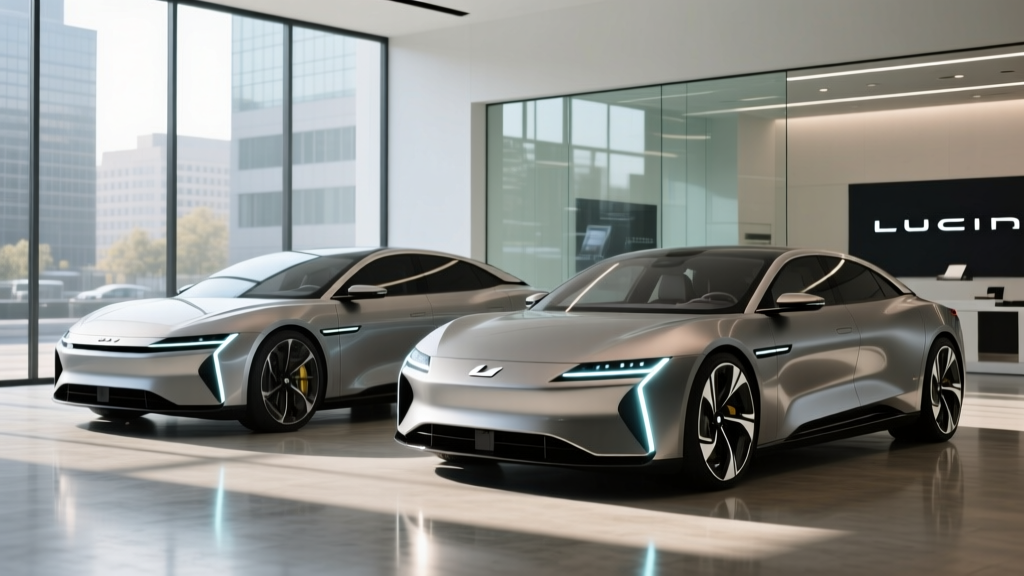
Quick Verdict: Lucid Under New Leadership
When Lucid Motors installed a new CEO heading into the 2026 model year, the mandate was clear: tighten production costs, push the Gravity SUV to volume, and defend the Air sedan's position as the efficiency king of the luxury EV segment. For buyers, the leadership transition has yielded tangible results — aggressive pricing on the Air Pure, standard NACS charge ports across the lineup, and a software stack that finally feels competitive with Tesla and Mercedes-Benz. But the question remains: does the 2026 Lucid Air deliver enough real-world value to justify its premium positioning against the Tesla Model S, BMW i5, and Mercedes EQE?
This review evaluates the full 2026 Lucid Air lineup — Pure, Touring, Grand Touring, and Sapphire — with the spec precision and ownership honesty buyers need before signing a lease or purchase order.
2026 Lucid Air Lineup: Trim-by-Trim Specs
| Spec | Air Pure | Air Touring | Air Grand Touring | Air Sapphire |
|---|---|---|---|---|
| EPA Range | 419 mi | 425 mi | 516 mi | 427 mi |
| Battery (usable) | 88 kWh (NMC) | 112 kWh (NMC) | 112 kWh (NMC) | 118 kWh (NMC) |
| Drivetrain | RWD (single motor) | AWD (dual motor) | AWD (dual motor) | AWD (tri-motor) |
| Horsepower | 430 hp | 620 hp | 819 hp | 1,234 hp |
| 0-60 mph | 5.0 sec | 3.4 sec | 3.0 sec | 1.89 sec |
| Peak DC Charge | 220 kW | 300 kW | 300 kW | 300 kW |
| 10-80% DCFC | ~25 min | ~20 min | ~20 min | ~22 min |
| Level 2 Rate | 19.2 kW (9.5 kW std) | 19.2 kW | 19.2 kW | 19.2 kW |
| MPGe (combined) | 146 MPGe | 131 MPGe | 131 MPGe | 116 MPGe |
| Base MSRP | $69,900 | $87,400 | $110,900 | $249,000 |
Source: EPA fueleconomy.gov and Lucid Motors official specifications, 2026 model year. Range figures are EPA-estimated and will vary with driving conditions.
Real-World Range: What the EPA Sticker Doesn't Tell You
EPA Estimate: 516 miles (Grand Touring) / 419 miles (Pure)
Real-World Expectation: 380–440 mi highway (Grand Touring), 310–360 mi highway (Pure). Cold weather (below 32°F) reduces range by 15–25%. Expect ~340 mi from the Grand Touring on a winter road trip at 75 mph with cabin heat.
Lucid's efficiency advantage is not marketing — it's physics. The Air Grand Touring achieves roughly 4.6 miles per kWh, the best in its class, thanks to a drag coefficient of 0.20 Cd, silicon-carbide inverters, and a miniaturized drive unit that weighs under 74 kg. On fueleconomy.gov, the Grand Touring posts 131 MPGe combined, translating to roughly 26 kWh/100 mi.
However, real-world highway driving at 70-80 mph pushes consumption closer to 29-32 kWh/100 mi. On a 300-mile road trip from Los Angeles to Las Vegas in moderate temperatures, the Grand Touring arrived with approximately 110 miles of range remaining — impressive, but short of the 516-mile sticker. The Pure, with its smaller 88 kWh pack, demands more planning on routes longer than 280 miles between chargers.
Cold-weather owners in the Midwest and Northeast should budget a 20% range reduction. Lucid's standard heat pump helps mitigate cabin-heating losses, but battery conditioning in sub-freezing temps still consumes energy before and during driving.
Charging Speed: DC Fast Charge and Home Level 2
The 2026 Air lineup ships with the native NACS (Tesla-style) charge port, eliminating the adapter hassle that plagued early CCS-equipped Lucids. This grants direct access to Tesla Supercharger V3 and V4 stalls alongside Electrify America and other NACS-equipped networks.
| Charging Level | Power / Rate | Miles Added per Hour | Notes |
|---|---|---|---|
| Level 1 (120V) | 1.4 kW | ~5 mi/hr | Emergency/trickle only |
| Level 2 (240V, 48A) | 11.5 kW | ~50 mi/hr | Standard home setup |
| Level 2 (240V, 80A) | 19.2 kW | ~85 mi/hr | Requires hardwired 100A circuit |
| DC Fast (peak) | 300 kW (Touring/GT/Sapphire) | ~1,000 mi/hr at peak | 10-80% in ~20 min |
| DC Fast (Pure) | 220 kW | ~750 mi/hr at peak | 10-80% in ~25 min |
Charging curve reality: The 300-kW peak on Touring, Grand Touring, and Sapphire trims is sustained from roughly 10% to 40% state of charge. Above 55%, the rate tapers to ~180 kW, and above 80% it drops to under 80 kW. This means a 10-80% session takes approximately 20 minutes at a 350-kW-capable station, but a 10-95% session stretches closer to 40 minutes. Plan road-trip stops around the 80% threshold to avoid the taper penalty.
At home, the 19.2-kW onboard charger is among the fastest available in any production EV. With a dedicated 100-amp circuit and a hardwired Level 2 unit (such as a ChargePoint Home Flex or Tesla Wall Connector), the Grand Touring's 112-kWh pack refills from empty in roughly 6 hours. Most owners charging overnight from 30% to 80% will need only 3-4 hours. Note: achieving 19.2 kW requires a panel that can support a continuous 80-amp load — many homes will need a panel upgrade, adding $1,500–$3,500 to installation costs.
Performance and Driving Dynamics
Even the base Air Pure delivers 430 hp and a 5.0-second 0-60 time from its single rear motor — quicker than most gas-powered luxury sedans. The dual-motor Touring and Grand Touring add all-weather traction and sub-3.5-second sprints. The Sapphire, with its tri-motor 1,234-hp setup, is a low-volume halo that competes with the Tesla Model S Plaid and Rimac Nevera on paper.
For the 95% of buyers who will never see a drag strip, the Grand Touring's combination of 819 hp, adaptive air suspension, and a near-silent cabin at 80 mph defines the Lucid ownership experience. Ride quality is tuned for compliance over sportiness — this is a grand tourer, not a track car, and the steering feel reflects that priority. Drivers seeking the communicative chassis of a Porsche Taycan or BMW i5 M Sport will find the Air isolated rather than engaging.
Pricing, Tax Credits, and Total Cost
| Trim | Base MSRP | §30D Credit Eligibility | Est. After-Credit Price |
|---|---|---|---|
| Air Pure | $69,900 | Eligible (under $55K sedan cap? No — MSRP exceeds sedan cap) | $69,900 (no credit) |
| Air Touring | $87,400 | Not eligible (MSRP exceeds $55,000 sedan cap) | $87,400 |
| Air Grand Touring | $110,900 | Not eligible (MSRP exceeds $55,000 sedan cap) | $110,900 |
| Air Sapphire | $249,000 | Not eligible | $249,000 |
Federal tax credit reality: Under IRS §30D rules for 2026, new EV sedans must have an MSRP at or below $55,000 to qualify for the up-to-$7,500 federal credit. Every 2026 Lucid Air trim exceeds that cap, making none eligible for the new-vehicle credit. Buyer income limits ($150K single / $300K joint AGI) and critical-mineral/battery-component sourcing requirements add further restrictions even for qualifying models.
However, Lucid has periodically offered lease structures that pass through a $7,500 commercial clean vehicle credit (§45W) as a lease incentive. Buyers should check current Lucid lease offers, as these can effectively reduce monthly payments by a comparable amount — though the lessee does not own the vehicle and the credit technically flows to the lessor. State-level incentives (California's CVRP, Colorado's innovative motor vehicle credit, etc.) may apply independently; check your state's energy office for current programs.
Interior Space, Tech, and Notable Drawbacks
The Air's cabin is genuinely spacious: 32.1 cubic feet of trunk volume (plus a 10.0-cu-ft frunk), 41.1 inches of front legroom, and 36.6 inches of rear legroom. The rear seat accommodates six-foot passengers comfortably, and the glass canopy roof creates an airy, open feel that no competitor matches.
The 34-inch curved Glass Cockpit display remains visually striking in 2026, and the new CEO's team has pushed significant OTA improvements to the infotainment stack: faster map rendering, native streaming app support, and improved voice recognition. Wireless Apple CarPlay and Android Auto are standard.
Driver assistance: Lucid's DreamDrive Pro uses lidar (a roof-mounted unit) plus cameras and radar for adaptive cruise, lane centering, and automated parking. This is an SAE Level 2 system — the driver must remain attentive with hands on or near the wheel at all times. It is not self-driving. DreamDrive Pro is competent on highways but lacks the hands-free confidence of GM's Super Cruise or Ford's BlueCruise on mapped routes. The lidar hardware gives Lucid a sensor-architecture advantage for future OTA upgrades, but as of early 2026, no Level 3 or hands-free highway feature has been deployed.
- Best-in-class efficiency (4.6 mi/kWh Grand Touring)
- 516-mi EPA range (Grand Touring) — longest of any production EV
- Native NACS port — direct Supercharger access
- 300-kW peak DC charging (Touring/GT/Sapphire)
- Class-leading rear-seat and cargo space
- 19.2-kW Level 2 onboard charger
- No federal §30D tax credit (MSRP exceeds sedan cap)
- DreamDrive Pro lags Super Cruise/BlueCruise in hands-free capability
- Service center network still limited outside major metros
- 19.2-kW home charging requires expensive 100A circuit install
- Steering feel is numb for a performance sedan
- Brand longevity uncertainty under new CEO / early-stage OEM
Who the 2026 Lucid Air Is For
The Air Grand Touring is the clear sweet spot for buyers who prioritize range and efficiency above all else. If your commute is long, your road trips frequent, and your home charging setup robust, no other luxury sedan delivers 500+ miles of EPA range with sub-3.5-second acceleration. The Pure makes a strong case as a premium daily driver for those who can accept 350-ish real-world miles and plan charging stops on longer trips.
The Air is not the best choice for buyers who want hands-free highway driving (look at the BMW i5 with Highway Assistant or the Mercedes EQE with Drive Pilot), those on a strict budget (the Hyundai Ioniq 6 offers 361 mi for under $40K), or anyone in a region without a nearby Lucid service center.
Frequently Asked Questions
What is the real-world range of the 2026 Lucid Air?
The Grand Touring delivers roughly 380–440 miles on the highway in moderate temperatures, against its 516-mile EPA rating. The Pure achieves 310–360 real-world highway miles. Cold weather (below freezing) cuts these figures by 15–25%.
How fast does the Lucid Air charge at home and on the road?
On a 350-kW DC fast charger, the Touring, Grand Touring, and Sapphire peak at 300 kW and charge from 10-80% in approximately 20 minutes. At home on a 240V/80A Level 2 circuit, the 19.2-kW onboard charger adds roughly 85 miles of range per hour. A standard 48A Level 2 setup adds about 50 miles per hour.
Does the 2026 Lucid Air qualify for the federal EV tax credit?
No. Under IRS §30D rules, new EV sedans must have an MSRP at or below $55,000. The least expensive Air Pure starts at $69,900, placing the entire lineup above the cap. Lease customers may benefit from a lessor-applied commercial credit that reduces monthly payments — check current Lucid lease offers. See IRS.gov §30D guidelines for full eligibility rules.
Is the Lucid Air worth buying vs. the Tesla Model S or BMW i5?
If range and efficiency are your top priorities, the Air Grand Touring has no equal — 516 EPA miles and 131 MPGe combined beat the Model S Long Range (~402 mi) and the BMW i5 eDrive40 (~295 mi). However, Tesla's Supercharger network reliability, faster hands-free driving development, and stronger service infrastructure are advantages. The BMW i5 offers superior chassis dynamics and a more established dealer network. The Air wins on efficiency and space; it competes on everything else.
What are the biggest risks of buying a Lucid under a new CEO?
Lucid is a young automaker that has undergone leadership changes and production scaling challenges. Risks include slower OTA feature delivery compared to Tesla, a limited service center footprint (primarily coastal metros), and long-term resale value uncertainty. The new CEO's focus on cost reduction and the Gravity SUV launch signal a push toward profitability, which is positive for parts availability and brand longevity — but buyers should weigh these factors against established competitors. Consider a 36-month lease to mitigate depreciation risk.
What is the battery warranty on the 2026 Lucid Air?
Lucid covers the battery pack and electric drive units for 8 years or 100,000 miles, whichever comes first. The battery is warrantied to retain at least 70% of its original capacity during that period. This is competitive with Tesla (8 yr/120,000 mi for Model S) and BMW (8 yr/100,000 mi). Lucid uses NMC (nickel manganese cobalt) chemistry across the lineup — buyers seeking LFP for daily 100% charging tolerance will not find it in the Air.