Lucid Motors Reverse Stock Split: The Signal Behind the Headlines
When a company like Lucid Group executes or seriously considers a reverse stock split, it's rarely just an accounting maneuver — it's a statement about where the company stands in the capital markets and where it intends to go. For prospective Lucid Air buyers in 2026, understanding the Lucid Motors reverse stock split conversation matters because it directly intersects with long-term parts availability, software support, resale value, and the company's ability to fund next-generation platforms like the Gravity SUV and the upcoming mid-size sedan.
A reverse stock split consolidates outstanding shares to boost the per-share price, often to maintain compliance with exchange listing requirements (Nasdaq mandates a minimum $1 bid price). Lucid's stock has traded under intense pressure since the post-2021 EV euphoria faded, and the company has burned through significant cash scaling production at its Casa Grande, Arizona factory. The Saudi Arabia Public Investment Fund (PIF) remains Lucid's majority backer, providing a financial floor that many EV startups lack — but the reverse-split chatter underscores that Lucid is not yet self-sustaining on vehicle revenue alone.
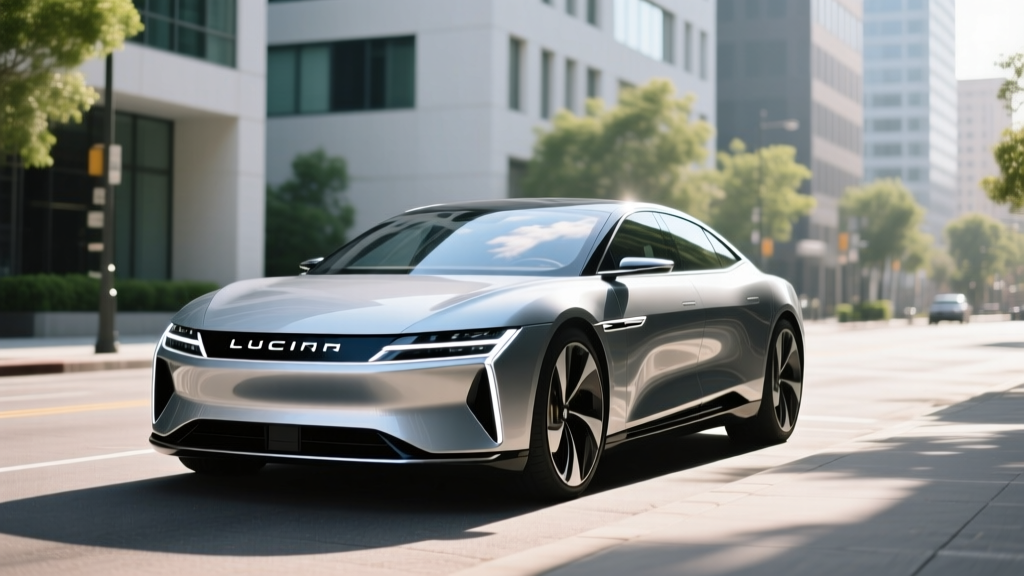
This review examines the 2026 Lucid Air lineup not just as an engineering achievement, but as a purchase decision in the context of corporate financial health. The Air remains one of the most efficient, longest-range luxury sedans on the market. The question is whether the company behind it can support owners for the long haul.
2026 Lucid Air: Range, Battery, and Efficiency Specs
The Lucid Air's headline advantage has always been range, and the 2026 lineup continues to leverage the company's proprietary 900V architecture and miniaturized drive units. Here are the core specifications across the current trim ladder:
| Spec | Air Pure | Air Touring | Air Grand Touring | Air Sapphire |
|---|---|---|---|---|
| EPA Range | 419 mi | 425 mi | 516 mi | 427 mi |
| Battery (usable) | 88 kWh | 112 kWh | 112 kWh | 118 kWh |
| Chemistry | NMC | NMC | NMC | NMC |
| Drivetrain | RWD (single motor) | AWD (dual motor) | AWD (dual motor) | AWD (tri-motor) |
| Horsepower | 430 hp | 620 hp | 819 hp | 1,234 hp |
| 0-60 mph | 5.0 sec | 3.4 sec | 3.0 sec | 1.89 sec |
| MPGe (combined) | 146 MPGe | 131 MPGe | 131 MPGe | 110 MPGe |
| kWh/100 mi | 23 | 26 | 26 | 31 |
| Base MSRP | $69,900 | $87,400 | $110,900 | $249,000 |
The Air's efficiency is where Lucid's engineering shines brightest. At 23 kWh/100 miles for the Pure RWD, it outperforms the Tesla Model S Long Range (28 kWh/100 mi) and the Mercedes EQS 450+ (31 kWh/100 mi). This efficiency advantage means the Air extracts more miles per kilowatt-hour of battery, reducing both charging costs and the frequency of stops on road trips. According to fueleconomy.gov, the Air Pure ranks among the most energy-efficient vehicles — electric or otherwise — ever rated by the EPA.
Charging: 900V Architecture and Real Charge Times
Lucid's 900V electrical architecture (compared to the more common 400V in most EVs, or 800V in Hyundai/Kia/Porsche) enables faster charging at compatible DC fast chargers. Here's what the numbers look like in practice:
| Charging Level | Power / Rate | Time or Miles Added |
|---|---|---|
| Level 1 (120V household) | ~1.4 kW | ~3–4 miles per hour |
| Level 2 (240V home, 48A) | 11.5 kW | ~36 miles per hour; full charge in ~10–12 hrs |
| DC Fast Charge (peak) | Up to 300 kW | 10–80% in ~15–20 min (Grand Touring/Touring) |
| DC Fast Charge (sustained avg.) | ~180–220 kW | Expect taper above 80% SoC; 80–100% adds ~15 min |
Charging curve reality: Peak 300 kW is achievable only at chargers capable of delivering it (Electrify America 350 kW stations, some Tesla Supercharger V4 stalls with NACS adapter). The Air sustains strong charge rates through the 20–60% SoC window, then progressively tapers. A typical 10–80% session at a capable 350 kW charger takes approximately 15–20 minutes for the Grand Touring's 112 kWh pack. At a 150 kW charger — still common on many networks — expect 10–80% in roughly 30–35 minutes.
For home charging, Lucid supplies a mobile cord set, but most owners will install a dedicated Level 2 wall connector. At 11.5 kW (48 amps on a 60-amp circuit), you'll add approximately 36 miles of range per hour of charging — enough to fully replenish even the Grand Touring overnight. A licensed electrician will typically quote $800–$2,500 for a 240V/60A circuit installation, depending on panel capacity and conduit run length. If your home's electrical panel maxes out at 100 amps, a panel upgrade to 200 amps can add $1,500–$3,500.
Connector note: The 2026 Lucid Air ships with a NACS (Tesla-style) charge port, giving native access to Tesla Supercharger stations. Lucid also provides access to Electrify America and other CCS networks via adapter. This dual-network access is a significant practical advantage for road-trippers.
Performance, Interior, and Technology
The Air's performance range is vast. The Pure RWD delivers a respectable 5.0-second 0–60 mph time — quicker than most luxury gas sedans — while the tri-motor Sapphire's 1.89-second sprint places it in hypercar territory alongside the Rimac Nevera. The dual-motor Touring and Grand Touring occupy the sweet spot for most buyers: effortlessly quick, with all-weather AWD traction.
Inside, the Air offers a genuinely spacious cabin thanks to the compact size of Lucid's drive units. Rear-seat legroom measures 37.6 inches — competitive with the BMW 5 Series and significantly more than the Tesla Model S (35.4 in). Cargo volume totals 32 cubic feet combined (15.8 cu ft trunk + 16.2 cu ft frunk), which is exceptional for a luxury sedan and enough for two large suitcases plus carry-ons in the rear trunk alone.
Standout tech features:
- 34-inch curved glass cockpit display — a single floating panel replacing traditional instrument and infotainment screens, running Lucid's proprietary OS
- Lucid DreamDrive Pro — a Level 2 ADAS suite with 32 sensors including LiDAR, offering adaptive cruise, lane centering, and automated parking. Note: this is not autonomous driving — the driver must remain engaged at all times (SAE Level 2)
- Over-the-air updates — Lucid regularly deploys firmware improvements covering efficiency optimization, UI refinement, and new features
- Atmosphere luxury modes — curated cabin lighting, soundscapes, and climate profiles
- ProPILOT-style hands-on-wheel detection with capacitive sensing
Notable drawbacks:
- The glass canopy roof, while stunning, can produce significant solar heat gain in summer — Lucid offers a removable shade, but it's an accessory rather than standard
- The infotainment OS, while visually impressive, has drawn criticism for occasional lag and a learning curve compared to Tesla's or BMW's more mature systems
- Service center density remains limited outside major metro areas — owners in rural regions may face 100+ mile drives for warranty work
- No Apple CarPlay or Android Auto integration — Lucid uses a proprietary system exclusively
Pricing, Tax Credits, and Total Cost of Ownership
Understanding what you'll actually pay for a 2026 Lucid Air requires navigating the federal EV tax credit landscape, state incentives, and the vehicle's MSRP positioning.
| Trim | Base MSRP | Federal §30D Credit | Effective Price (est.) |
|---|---|---|---|
| Air Pure | $69,900 | Up to $7,500* | ~$62,400 |
| Air Touring | $87,400 | Up to $7,500* | ~$79,900 |
| Air Grand Touring | $110,900 | $0 (MSRP cap exceeded) | $110,900 |
| Air Sapphire | $249,000 | $0 (MSRP cap exceeded) | $249,000 |
*Federal §30D tax credit eligibility requires meeting ALL of the following:
- MSRP cap: Sedans must be priced at or below $55,000. The Air Pure at $69,900 exceeds this cap, making it ineligible for the new-vehicle §30D credit as of current IRS rules. (This is a critical nuance many buyers miss.) See IRS §30D guidelines.
- Buyer income limits: AGI must not exceed $300,000 (joint), $225,000 (head of household), or $150,000 (single).
- Battery sourcing: Critical minerals and battery component requirements phase in progressively; Lucid's supply chain compliance should be verified at point of sale.
- Point-of-sale transfer: Eligible buyers can transfer the credit to the dealer at purchase, reducing the upfront cost rather than waiting for a tax refund.
Correction on Air Pure credit eligibility: Because the Air Pure's MSRP of $69,900 exceeds the $55,000 sedan cap, no new Lucid Air currently qualifies for the federal §30D new-vehicle credit. Buyers should instead investigate the used EV credit (§25E, up to $4,000 for pre-owned EVs priced under $25,000 — unlikely to apply to recent Air models) or state-level incentives, which vary significantly. Consult a tax professional for your specific situation.
5-Year Ownership Cost Estimate (Air Pure, 15,000 mi/yr):
- Electricity (home charging at $0.14/kWh avg.): ~$3,600
- Equivalent gasoline (30 MPG sedan at $3.50/gal): ~$8,750
- Fuel savings over 5 years: ~$5,150
- Insurance (luxury EV premium): ~$12,000–$16,000 over 5 years (higher than gas equivalents)
- Maintenance (no oil changes, reduced brake wear via regen): ~$1,200 over 5 years
- Depreciation: Luxury EVs have historically depreciated 40–55% over 5 years; Lucid's brand uncertainty may push this toward the higher end
Warranty, Service, and the Corporate Stability Question
Lucid provides a competitive warranty package:
- Basic vehicle: 4 years / 50,000 miles
- Battery and drive unit: 8 years / 100,000 miles (with a capacity retention threshold of 70% — if the pack degrades below 70% of original capacity within the warranty period, Lucid will repair or replace it)
- Roadside assistance: 4 years / 50,000 miles
The battery warranty is standard for the luxury EV segment, matching Tesla and Mercedes. However, the Lucid Motors reverse stock split discussion raises a practical question: will Lucid be around to honor this warranty in year six or seven? The Saudi PIF's majority ownership provides substantial backing — the PIF has invested over $5 billion in Lucid and has committed to the company's long-term viability as part of Saudi Arabia's Vision 2030 economic diversification plan. But PIF support is not a guarantee against restructuring, production pauses, or strategic pivots.
For buyers, this means:
- Resale value risk is real. Lucid's financial uncertainty is already priced into used Air values, which have depreciated steeply. A reverse split, while technically neutral to market cap, often signals distress and can further erode buyer confidence.
- Parts and service access may become constrained if Lucid scales back operations. Current service infrastructure is concentrated in California, Arizona, New York, Florida, and a handful of other markets.
- Software support for OTA updates depends on Lucid maintaining its engineering team — a risk that doesn't exist to the same degree with Tesla or legacy OEMs.
Lucid Air vs. Key Competitors: Is It Worth Buying?
Choose the Lucid Air if:
- Maximum range and energy efficiency are your top priorities (516 mi EPA on the Grand Touring is unmatched among luxury sedans)
- You value a spacious rear seat and large frunk for road trips
- You prefer a less ubiquitous alternative to Tesla and want genuine engineering differentiation
- You can absorb higher depreciation risk as the cost of owning a boutique EV
Choose the Tesla Model S if:
- Charging network reliability (Supercharger ubiquity) is paramount
- You want the most mature software ecosystem and service network
- Resale value stability matters more than range maximization
Choose the Mercedes EQS if:
- Traditional luxury build quality and dealer service infrastructure are non-negotiable
- You prioritize ride comfort and cabin quietness over outright efficiency
Choose the BMW i5 or Porsche Taycan if:
- Driving dynamics and handling precision outweigh range maximization
- You want a brand with established long-term parts and service support
Biggest Pros and Cons
Pros
- Best-in-class EPA range (516 mi Grand Touring) and efficiency (23 kWh/100 mi Pure)
- 900V architecture enables genuinely fast DC charging at capable stations
- Spacious interior with class-leading rear legroom and massive frunk+trunk cargo
- NACS native port provides direct Supercharger access
- Tri-motor Sapphire offers hypercar performance (1,234 hp, 1.89s 0–60)
- Understated, elegant design that ages better than polarizing competitors
- Saudi PIF backing provides a financial safety net absent in other EV startups
Cons
- No Lucid Air trim qualifies for the federal §30D new-vehicle credit (MSRP exceeds $55K sedan cap)
- Service center network remains thin outside major metros
- Corporate financial uncertainty — reverse stock split discussions signal market pressure
- Infotainment OS lacks Apple CarPlay/Android Auto; occasional responsiveness issues
- Glass roof heat gain requires accessory shade in warm climates
- Depreciation steeper than Tesla, Porsche, or BMW competitors
- Limited towing capacity (not rated for towing — a sedan limitation, not Lucid-specific)
Who the 2026 Lucid Air Suits Best
The Air is ideal for long-distance commuters and road-trippers who prioritize range above all else and live within reasonable distance of a Lucid service center. The Grand Touring's 516-mile EPA range means most drivers can complete a 400-mile highway trip without stopping to charge — a genuine one-charge road trip vehicle in a way few EVs can claim.
It's less suited for buyers who need maximum resale predictability, those in rural areas far from Lucid service, or anyone who views their vehicle purchase as a conservative financial decision. The corporate risk profile is real, even if the PIF backing mitigates worst-case scenarios.
For family use, the Air's rear seat space and cargo volume are excellent, but families needing a third row or significant towing capacity should look to the Lucid Gravity SUV or competitors like the Rivian R1S or Tesla Model X.
Frequently Asked Questions
What is the real-world range of the 2026 Lucid Air?
The Air Pure delivers approximately 320–360 miles in mixed real-world driving (EPA 419 mi). The Grand Touring achieves roughly 380–430 miles highway (EPA 516 mi). In cold weather below 30°F, subtract 15–25% from these figures. Lucid's heat pump and thermal management help, but battery chemistry dictates cold-weather losses.
How fast does the Lucid Air charge at home and on the road?
At home on a 240V/48A Level 2 circuit, the Air charges at 11.5 kW, adding roughly 36 miles of range per hour. On DC fast chargers capable of 350 kW, the Air can peak at 300 kW and reach 10–80% in approximately 15–20 minutes (Touring/Grand Touring). At more common 150 kW chargers, expect 30–35 minutes for 10–80%.
Does the Lucid Air qualify for the federal EV tax credit?
No. Under current IRS §30D rules, new sedans must have an MSRP at or below $55,000 to qualify. The least expensive Air Pure starts at $69,900, exceeding the cap. State-level incentives may still apply — check your local DMV or energy office for details.
What does the Lucid Motors reverse stock split mean for buyers?
A reverse stock split itself doesn't change a company's market capitalization or the vehicle you're buying. However, it often signals that a stock is trading below exchange minimums, reflecting investor concern about profitability timelines. For Air buyers, the key takeaway is that Lucid's long-term viability depends heavily on continued Saudi PIF investment and the company's ability to scale production and reach positive cash flow. The warranty is real today; the risk is whether the company remains robust enough to honor it in years 5–8.
Is the Lucid Air worth buying versus a Tesla Model S or Mercedes EQS?
If range and efficiency are your top priorities, the Air Grand Touring's 516-mile EPA rating and 26 kWh/100 mi efficiency are unmatched. The Model S wins on charging network maturity and software polish; the EQS wins on traditional luxury service infrastructure. The Air is the enthusiast-engineer's choice — but it carries higher corporate risk that buyers must accept.
What is the Lucid Air's battery warranty?
Lucid covers the battery and drive unit for 8 years or 100,000 miles, whichever comes first, with a capacity retention threshold of 70%. If the pack degrades below 70% of original capacity within the warranty window, Lucid will repair or replace it. This matches industry standards set by Tesla, BMW, and Mercedes-Benz.
Does the Lucid Air have Apple CarPlay or Android Auto?
No. Lucid uses a proprietary infotainment operating system displayed on a 34-inch curved glass cockpit. While the system supports OTA updates and has its own app ecosystem, it does not integrate Apple CarPlay or Android Auto. This is a dealbreaker for some buyers who rely on those platforms for navigation and media.
Specifications and pricing reflect 2026 model-year data as published by Lucid Motors. Federal tax credit rules are subject to change; verify current eligibility with the IRS and a qualified tax professional before purchasing. Real-world range estimates are based on independent testing and owner reports; individual results vary with driving style, temperature, terrain, and tire condition.