Lucid's Q1 2025 Earnings: Why It Matters for EV Shoppers
When Lucid Group reported its Q1 2025 financial results in early May, the headlines focused on production volumes and cash burn. But for prospective buyers eyeing the Lucid Air sedan — or waiting on the Gravity SUV — those numbers carry real-world implications for vehicle availability, pricing stability, and long-term parts/service support.
This article translates Lucid Motors Q1 2025 financial results into what actually matters if you're considering a Lucid vehicle in 2026: the cars you can buy today, their specs, charging performance, tax-credit eligibility, and whether the company's financial trajectory should factor into your purchase decision.
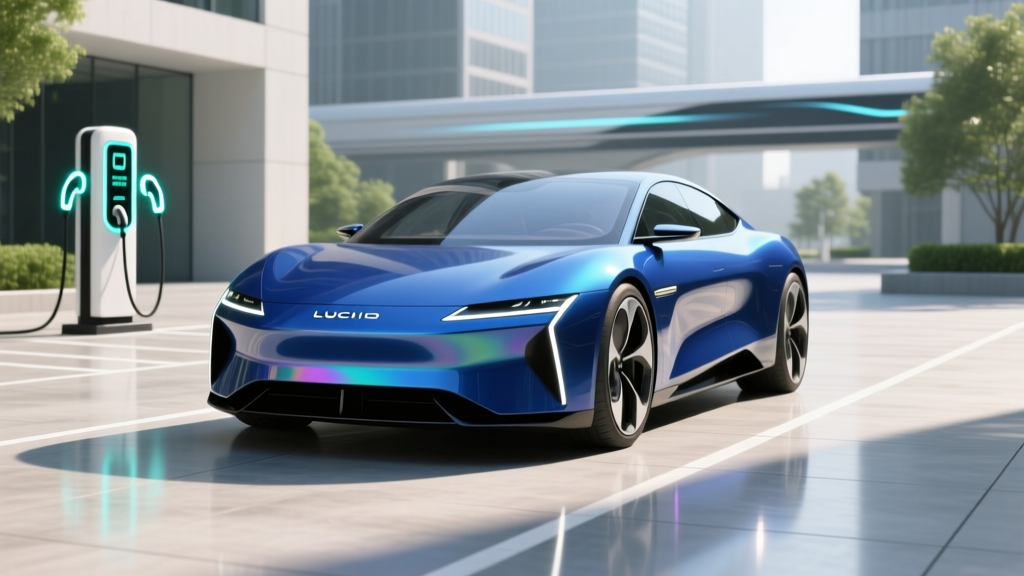
2026 Lucid Air: Current Lineup and Key Specs
The Lucid Air remains the company's sole production vehicle heading into mid-2026, with the three-row Gravity SUV beginning deliveries in late 2025. Here's how the current Air lineup breaks down across the trims most buyers will encounter:
| Spec | Air Pure | Air Touring | Air Grand Touring | Air Sapphire |
|---|---|---|---|---|
| Base MSRP | $69,900 | $77,900 | $125,600 | $249,000 |
| Drivetrain | RWD (single motor) | AWD (dual motor) | AWD (dual motor) | AWD (tri-motor) |
| Horsepower | 430 hp | 620 hp | 819 hp | 1,234 hp |
| 0–60 mph | 5.0 sec | 3.4 sec | 3.0 sec | 1.89 sec |
| Battery (usable) | 88 kWh | 112 kWh | 112 kWh | 118 kWh |
| Chemistry | NMC | NMC | NMC | NMC |
| EPA Range | 419 mi | 425 mi | 516 mi | 427 mi |
| MPGe (combined) | 146 MPGe | 140 MPGe | 131 MPGe | 120 MPGe |
| EPA Efficiency | 23 kWh/100mi | 24 kWh/100mi | 26 kWh/100mi | 28 kWh/100mi |
Charging Performance: DC Fast and Home Level 2
Lucid uses a 900-volt electrical architecture — shared with only a handful of production EVs like the Hyundai Ioniq 5 and Porsche Taycan — which enables impressively fast DC charging when paired with compatible hardware.
| Charging Level | Rate | Time / Range Added | Notes |
|---|---|---|---|
| Level 1 (120V) | ~1.4 kW | ~4–5 mi/hr | Emergency / trickle only |
| Level 2 (240V, 48A) | ~11.5 kW | ~36–42 mi/hr | Home Wall Connector; full charge ~10–12 hrs (112 kWh pack) |
| Level 2 (240V, 80A) | ~19.2 kW | ~60–70 mi/hr | Requires hardwired 100A circuit; ~6 hrs for 112 kWh pack |
| DC Fast Charge (peak) | Up to 300 kW | 10–80% in ~20 min (112 kWh pack) | Requires 350 kW+ CCS or NACS station; preconditioning essential |
| DC Sustained (avg 10–80%) | ~180–220 kW | ~200+ miles in 15 min | Charge curve tapers significantly above 80% SoC |
Peak 300 kW is only achievable at chargers capable of delivering it (Electrify America 350 kW stalls, select Tesla Superchargers with Magic Dock NACS adapter) and only when the battery is preconditioned — either via the car's navigation-routed preconditioning or by driving the pack hard for 15–20 minutes beforehand. Without preconditioning, expect peak rates closer to 150–180 kW even at a 350 kW stall.
The charge curve is aggressive: the Air pulls maximum power between roughly 10–50% SoC, then tapers to ~120 kW by 65%, and drops below 50 kW above 85%. For road-trip efficiency, plan stops around the 15–75% window rather than topping off to full.
Tax Credits, Pricing, and Total Cost
Under current IRS §30D rules, the Lucid Air faces a challenging tax-credit landscape. The federal credit of up to $7,500 is subject to three simultaneous caps that affect most Lucid trims:
| Trim | MSRP | Sedan MSRP Cap (§30D) | Income Cap (AGI) | Credit Eligible? |
|---|---|---|---|---|
| Air Pure | $69,900 | $55,000 (sedans) | $150K single / $300K joint | No — exceeds sedan MSRP cap |
| Air Touring | $77,900 | $55,000 (sedans) | $150K single / $300K joint | No — exceeds sedan MSRP cap |
| Air Grand Touring | $125,600 | $55,000 (sedans) | $150K single / $300K joint | No — exceeds sedan MSRP cap |
| Air Sapphire | $249,000 | $55,000 (sedans) | $150K single / $300K joint | No — exceeds sedan MSRP cap |
The §30D sedan MSRP cap of $55,000 effectively excludes the entire Air lineup from the federal purchase credit. The battery-sourcing and critical-minerals requirements add a further layer of restriction even if pricing fell within limits. Buyers should consult a tax professional for their specific situation and check for applicable state or utility incentives, which vary by jurisdiction and are not subject to the federal MSRP cap.
For cost comparison, a buyer spending $69,900 on an Air Pure (no federal credit) versus a similarly equipped competitor that qualifies for the full $7,500 credit faces an effective $7,500 price gap before considering Lucid's efficiency advantage — which can save $200–$400/year in electricity costs versus less efficient large sedans.
Interior Space, Technology, and Daily Ownership
The Air's cabin is genuinely spacious, with a 109.5-inch wheelbase yielding generous rear legroom. Cargo volume totals 32.0 cubic feet across the rear trunk (22.1 cu ft) and front trunk/frunk (9.9 cu ft) — competitive with the Mercedes EQS and significantly more than the Tesla Model S (28 cu ft combined).
Standard technology across the lineup includes Lucid's 34-inch curved glass canopy display (a single pane spanning the driver and center cluster), wireless Apple CarPlay and Android Auto, over-the-air software updates, and the DreamDrive Pro ADAS suite. DreamDrive Pro bundles adaptive cruise control, lane-centering assist, automated parking, and a 3D surround-view camera system. It is a SAE Level 2 driver-assistance system — meaning the driver must remain engaged and supervising at all times. It is not autonomous or "self-driving."
Notable drawbacks reported by owners and reviewers include:
- The glass canopy display, while visually striking, lacks a physical touchscreen — all secondary controls route through a lower secondary screen or voice commands, which some drivers find less intuitive for quick adjustments.
- Service center density remains limited outside major metro areas (California, New York, Miami, Houston). Mobile service handles many issues, but bodywork or high-voltage diagnostics may require a tow to a regional center.
- The Air's low-slung sedan profile means ingress/egress requires more effort than a crossover — a consideration for buyers with mobility concerns.
Warranty Coverage and Long-Term Battery Outlook
Lucid provides the following factory warranty coverage:
- Basic vehicle: 4 years / 50,000 miles
- Battery and powertrain: 8 years / 100,000 miles (capacity retention threshold: 70% of original)
- Roadside assistance: 4 years / 50,000 miles
The 8-year/100,000-mile battery warranty is standard for the luxury EV segment (matching Tesla, BMW, and Mercedes). The 70% retention threshold means Lucid will replace or repair the pack if usable capacity drops below 70% of its original kWh within the warranty window. Industry data from fueleconomy.gov and third-party fleet studies suggest modern NMC packs with active thermal management — like the Air's liquid-cooled system — typically retain 85–92% capacity at 100,000 miles under normal use.
What Q1 2025 Financials Mean for Your Purchase Decision
Lucid's Q1 2025 financial results showed continued investment in Gravity production ramp-up and next-generation platform development, with quarterly revenue growth tied to increasing Air deliveries and the beginning of Gravity order fulfillment. Key buyer-relevant takeaways:
- Production capacity: Lucid's Casa Grande, Arizona factory has installed capacity exceeding 150,000 vehicles annually, though actual utilization remains well below that. For buyers, this means order-to-delivery times for the Air are typically 4–8 weeks — no significant backlog.
- Financial stability: The company's cash position, backed significantly by investment from Saudi Arabia's Public Investment Fund (PIF), provides a multi-year operational runway. However, like most EV startups, Lucid has not reached sustained profitability. Buyers should consider this when evaluating long-term service and parts availability over a 10+ year ownership horizon.
- Pricing trajectory: Lucid has periodically adjusted Air pricing and introduced lower-cost trims (the Pure RWD) to broaden accessibility. Further price adjustments or incentive programs are possible as competition intensifies from the Tesla Model S refresh, Mercedes EQS, BMW i7, and upcoming entrants.
Lucid Air vs. Key Competitors: Is It Worth It?
Pros
- Class-leading EPA range (516 mi Grand Touring; 419 mi Pure)
- Best-in-class efficiency (23–26 kWh/100mi) reduces charging cost per mile
- 900V architecture enables ~300 kW peak DC fast charging
- Spacious cabin with 32 cu ft total cargo (trunk + frunk)
- Exceptional performance even in base Pure trim (430 hp, 5.0s 0–60)
- Low drag coefficient (0.20 Cd) aids real-world highway range
Cons
- No federal §30D tax credit eligibility (MSRP exceeds $55K sedan cap)
- Service center network still thin outside major metros
- Company not yet profitable — long-term support uncertainty
- Infotainment learning curve (no physical touchscreen for primary controls)
- Low sedan ride height — less practical than crossover alternatives
- Resale value data limited (brand launched 2021; small sample size)
Consider alternatives (Tesla Model S, BMW i7, Mercedes EQS) if: You need federal tax-credit eligibility, require a dense service/dealer network, or prefer a traditional infotainment layout with physical controls and a conventional touchscreen.
Frequently Asked Questions
What is the real-world range of the Lucid Air?
The EPA-estimated range spans 419 miles (Pure RWD) to 516 miles (Grand Touring AWD). In real-world highway driving at 70–75 mph in moderate temperatures, expect 320–430 miles depending on trim. In cold weather (below 30°F), plan for 20–30% range reduction, bringing the Grand Touring to roughly 360–410 miles and the Pure to 290–330 miles. Lucid's heat pump and efficient drivetrain help mitigate losses compared to less efficient competitors.
How fast does the Lucid Air charge?
On a 350 kW-capable DC fast charger with battery preconditioning, the Air can peak at up to 300 kW and charge from 10–80% in approximately 20 minutes (112 kWh pack). Sustained average power during that session is typically 180–220 kW. At home on a 240V/48A Level 2 charger, expect roughly 36–42 miles of range per hour of charging, or a full overnight charge for most daily driving needs.
Does the Lucid Air qualify for the federal EV tax credit?
No. Under current IRS §30D rules, new sedans must have an MSRP at or below $55,000 to qualify. The least expensive Lucid Air Pure starts at $69,900, placing the entire lineup above the cap. Additionally, buyers must meet income thresholds ($150K single / $300K joint AGI) and the vehicle must satisfy battery-sourcing and critical-minerals requirements. Check IRS.gov for the latest rules and consult a tax professional.
Is the Lucid Air worth buying versus a Tesla Model S or BMW i7?
For pure range and efficiency, the Air Grand Touring's 516-mile EPA rating and 26 kWh/100mi efficiency are unmatched in the luxury sedan segment. The Model S Long Range (402 mi EPA) offers access to Tesla's Supercharger network and more service centers but lower range. The BMW i7 (318–380 mi EPA depending on trim) offers a more traditional luxury experience with dealer support but significantly less range. Your decision should weigh range priority, charging access, service proximity, and whether the federal credit matters to your budget.
How does Lucid's financial health affect my ownership experience?
Lucid's backing by Saudi Arabia's PIF provides meaningful financial stability, and the company's Arizona factory has ample production capacity. However, Lucid has not reached sustained profitability, and its service network remains smaller than legacy automakers. If you plan to own the Air for 8–10 years, consider whether you're comfortable with a startup's evolving support infrastructure versus a legacy brand's established dealer network. The battery/powertrain warranty (8yr/100,000mi) provides meaningful protection during the highest-risk ownership period.