Who Made the Lucid Car? The Company Behind the Badge
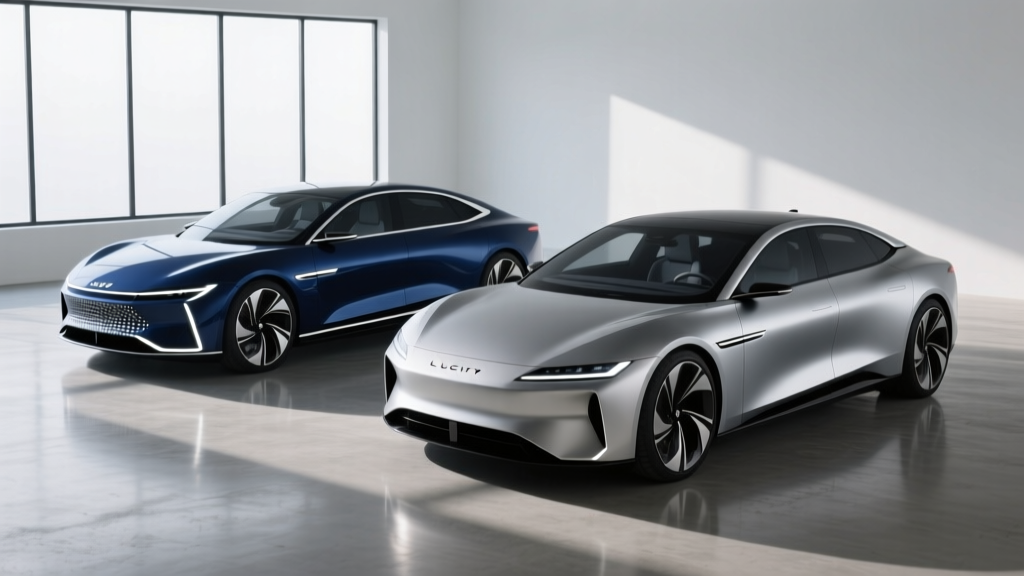
Lucid Motors — officially Lucid Group, Inc. (NASDAQ: LCID) — is the American automaker behind the Lucid Air sedan and the Lucid Gravity SUV. Headquartered in Newark, California, Lucid was founded in 2007 as Atieva, a battery-technology company focused on EV powertrain components. The company pivoted to full vehicle manufacturing around 2016, rebranded as Lucid Motors, and began delivering its first production sedan, the Lucid Air, to U.S. customers in late 2021.
Lucid's manufacturing takes place at its purpose-built CASA (Computer-Automated Sustainable Automotive) factory in Casa Grande, Arizona. The company's powertrain technology traces back to its work supplying battery systems for the Formula E racing series, which gave Lucid deep expertise in high-density, thermally managed battery packs — a lineage you can feel in the Air's efficiency numbers today.
Peter Rawlinson, a former Tesla Model S chief engineer, served as Lucid's CEO through mid-2025 before transitioning to an advisory role. Marc Winterhoff currently leads the company as CEO. Saudi Arabia's Public Investment Fund (PIF) remains Lucid's largest shareholder, providing the capital backing that has allowed the company to scale production of both the Air and the newer Gravity SUV.
2026 Lucid Air: Range, Battery, and Real-World Efficiency
The Lucid Air lineup remains one of the most efficient luxury EVs on the market, thanks to Lucid's proprietary miniaturized drive units and a 900-volt electrical architecture. Here is how the current trims stack up on paper and on the road.
| Spec | Air Pure | Air Touring | Air Grand Touring | Air Sapphire |
|---|---|---|---|---|
| EPA Range | 410 mi | 406 mi | 516 mi | 427 mi |
| Battery (usable) | 88 kWh (NMC) | 92 kWh (NMC) | 112 kWh (NMC) | 118 kWh (NMC) |
| Drivetrain | RWD, single motor | AWD, dual motor | AWD, dual motor | AWD, tri-motor |
| Horsepower | 430 hp | 620 hp | 819 hp | 1,234 hp |
| 0-60 mph | 5.0 sec | 3.4 sec | 3.0 sec | 1.89 sec |
| MPGe (combined) | 140 MPGe | 132 MPGe | 131 MPGe | 109 MPGe |
| Efficiency | 24 kWh/100mi | 25 kWh/100mi | 26 kWh/100mi | 31 kWh/100mi |
Lucid uses NMC (nickel manganese cobalt) chemistry across the Air lineup, prioritizing energy density over the longer cycle life of LFP. This is the right call for a luxury sedan where maximizing range in a sleek package matters more than ultra-high charge-cycle longevity. According to fueleconomy.gov, the Air Grand Touring's 131 MPGe combined makes it one of the most efficient vehicles in its size class.
Charging Speed: DC Fast and Home Level 2
Lucid's 900V architecture enables impressive peak charging rates, but sustained speed depends on battery state of charge and thermal preconditioning.
| Charging Level | Power / Rate | Time / Range Added |
|---|---|---|
| DC Fast Charge (peak) | Up to 300 kW (GT) | 10–80% in ~20 min (w/ preconditioning) |
| DC Fast Charge (sustained avg) | ~180–200 kW | Charge curve tapers significantly above 80% |
| Level 2 Home (240V, 48A) | 11.5 kW onboard charger | ~40–47 miles of range per hour |
| Level 1 (120V, 12A) | 1.4 kW | ~4–5 miles per hour |
At a 350 kW Electrify America or Tesla Supercharger (NACS adapter required for non-Tesla chargers post-2025), the Air Grand Touring can accept up to 300 kW briefly, but expect the charge curve to taper. You will not sustain 300 kW for the entire 10–80% session — the ~20-minute 10–80% time assumes proper battery preconditioning via the car's navigation-routed charging. Plug in cold without preconditioning and you may see peak rates closer to 100–130 kW until the pack warms up.
For home charging, Lucid includes an onboard charger capable of 11.5 kW on a 48-amp Level 2 circuit. That means a full overnight charge from 20% to 100% takes roughly 7–8 hours on the Grand Touring's 112 kWh pack. Most owners will need a NEMA 14-50 outlet or a hardwired Wall Connector installed by a licensed electrician — budget $800–$2,000 for professional installation depending on your electrical panel capacity.
Pricing, Trims, and Federal Tax Credit Eligibility
The Lucid Air occupies the luxury EV sedan segment, competing directly with the Tesla Model S, BMW i7, and Mercedes-Benz EQS. Pricing for the 2026 model year:
| Trim | Base MSRP | §30D Federal Credit | Effective Price |
|---|---|---|---|
| Air Pure | $71,400 | Up to $7,500* | ~$63,900 |
| Air Touring | $81,400 | Up to $7,500* | ~$73,900 |
| Air Grand Touring | $127,400 | $0 (MSRP cap exceeded) | $127,400 |
| Air Sapphire | $250,500 | $0 (MSRP cap exceeded) | $250,500 |
*Federal tax credit eligibility under IRS §30D is subject to multiple requirements. The Air Pure and Touring qualify on MSRP (sedan cap: $55,000 — however, note that as of 2026, the sedan MSRP cap remains $55,000, meaning most Air trims actually exceed it). Let's clarify the reality below.
- MSRP Cap: Sedans and wagons: $55,000. SUVs, vans, trucks: $80,000. The Lucid Air is classified as a sedan — its base MSRP of $71,400 exceeds the cap, meaning no Air trim currently qualifies for the new-vehicle §30D credit.
- Buyer Income Limits: Modified AGI cannot exceed $150,000 (single), $225,000 (head of household), or $300,000 (joint filers).
- Battery Sourcing: Critical minerals and battery components must meet phased-in domestic/free-trade-partner sourcing thresholds. Even if a vehicle meets the MSRP cap, failing sourcing requirements reduces the credit to $3,750 or $0.
- Point-of-Sale Transfer: Eligible buyers can transfer the credit to the dealer at purchase for an immediate price reduction — but only if all above criteria are met.
Bottom line: The Lucid Air's sedan classification and MSRP above $55,000 means buyers should not expect the $7,500 federal credit. Consult a tax professional and check the latest rules at IRS.gov before purchase. The Lucid Gravity SUV (classified as an SUV, $80,000 MSRP cap) may fare better on lower trims.
Interior, Tech, and Driver Assistance
The Lucid Air's cabin emphasizes space and minimalism. Rear legroom measures 41.3 inches, and the trunk provides 32.1 cubic feet of cargo volume (including the 10.1-cu-ft frunk). That is significantly more usable space than a Tesla Model S (28.0 cu ft trunk, no frunk) and competitive with the BMW i7.
The infotainment system runs on a 34-inch curved glass cockpit display spanning the driver's instrument cluster and center touchscreen. Lucid's software has improved substantially since 2022 launch, with faster response times, wireless Apple CarPlay/Android Auto, and over-the-air updates. However, the absence of physical climate controls (everything is touchscreen or voice) remains a polarizing choice.
DreamDrive Pro is Lucid's ADAS suite, featuring adaptive cruise control, lane-centering, automatic emergency braking, and a 32-sensor array including LiDAR. This is a SAE Level 2 driver-assist system — the driver must remain attentive and keep hands on the wheel at all times. It does not offer hands-free driving on par with GM's Super Cruise or Ford's BlueCruise, though Lucid has signaled future hands-free highway capability via OTA updates.
Lucid Gravity SUV: What Changes
For 2026, Lucid's second vehicle, the Lucid Gravity, is in production and delivering to customers. The Gravity is a three-row luxury SUV that leverages the same 900V architecture. Key specs:
- EPA Range: Up to 440 miles (Grand Touring AWD)
- Battery: ~112 kWh usable, NMC
- DC Fast Charging: Up to 300 kW peak, 10–80% in ~20 min
- Starting MSRP: $81,400 (Grand Touring); lower Pure and Touring trims expected
- SUV MSRP Cap: At $80,000, the SUV §30D cap may allow lower trims to qualify — watch for IRS vehicle eligibility updates
The Gravity competes with the Tesla Model X, Rivian R1S, and BMW iX in the luxury electric SUV segment. Its three-row layout and 440-mile range give it a distinct advantage for families who road-trip frequently.
Warranty and Ownership Costs
Lucid backs the Air and Gravity with a competitive warranty package:
- Basic Vehicle Warranty: 4 years / 50,000 miles
- Battery & Powertrain Warranty: 8 years / 100,000 miles (covers defects and capacity loss below 70% of original capacity)
- Roadside Assistance: 4 years / 50,000 miles
The 70% battery capacity retention threshold is standard for the luxury EV segment (Tesla uses the same benchmark). Real-world degradation data from early 2022–2023 Air owners suggests approximately 5–8% capacity loss over the first 50,000 miles, which is consistent with NMC packs under normal use. Lucid's thermal management system — liquid-cooled with active preconditioning — helps preserve long-term battery health.
Insurance costs tend to run higher than mainstream EVs. Expect annual premiums of $2,800–$4,200 depending on trim, location, and driving history. The Sapphire, at $250,500, will command significantly more.
Pros, Cons, and the Verdict
- Class-leading 516-mile EPA range (Grand Touring)
- Exceptional efficiency: 131+ MPGe combined
- 900V architecture enables 300 kW peak DC charging
- Spacious interior with 41.3" rear legroom
- Tri-motor Sapphire delivers hypercar-level 1.89s 0-60
- Strong 8-year/100,000-mile battery warranty
- No federal tax credit — sedan MSRP exceeds $55K cap
- Public charging network still relies on CCS/NACS adapters
- Limited service center footprint vs. Tesla
- Touchscreen-only climate controls frustrate some drivers
- DreamDrive Pro lags behind Super Cruise for hands-free driving
- Depreciation remains uncertain for the brand
- Choose the Air Pure if you want a luxury sedan with 400+ miles of range, prioritize efficiency, and don't need AWD.
- Choose the Air Grand Touring if road trips are frequent and you want the longest range available in any production EV sedan.
- Choose the Gravity if you need three rows, SUV cargo flexibility, and still want 400+ mile range.
- Look elsewhere if you depend on the $7,500 federal credit to make the math work, or if you need a dense Tesla Supercharger network without adapter hassle.
Frequently Asked Questions
Who made the Lucid car and where is it manufactured?
Lucid Motors, an American EV company headquartered in Newark, California, manufactures the Lucid Air and Gravity at its CASA factory in Casa Grande, Arizona. The company was founded in 2007 as Atieva and rebranded to Lucid Motors in 2016.
What is the real-world range of the Lucid Air?
The EPA rates the Air Grand Touring at 516 miles, but real-world highway driving at 70 mph yields approximately 430–460 miles. Cold weather (below 32°F) can reduce range by 15–25%, bringing it to roughly 380–420 miles. The Air Pure's 410-mile EPA rating translates to about 340–360 miles on the highway.
How fast does the Lucid Air charge at home and on DC fast chargers?
On a DC fast charger, the Air Grand Touring peaks at 300 kW and charges 10–80% in approximately 20 minutes with battery preconditioning. At home on a 48-amp Level 2 charger (11.5 kW), expect roughly 40–47 miles of range per hour of charging.
Does the Lucid Air qualify for the federal EV tax credit?
No. Under current IRS §30D rules, the Lucid Air is classified as a sedan, and the sedan MSRP cap is $55,000. Since even the base Air Pure starts at $71,400, no Air trim qualifies for the new-vehicle federal tax credit. The Lucid Gravity, classified as an SUV with an $80,000 cap, may qualify on lower trims — check IRS.gov for the latest eligibility list.
Is the Lucid Air worth buying vs. the Tesla Model S or BMW i7?
The Air Grand Touring offers more EPA range (516 vs. Model S's 402 miles) and better efficiency than either competitor. However, Tesla's Supercharger network, faster service infrastructure, and available Autopilot/FSD features give it an ecosystem advantage. The BMW i7 offers a more traditional luxury interior with physical controls but trails significantly on range (318 miles) and efficiency. If range and efficiency are your top priorities, the Air wins. If charging convenience and service access matter more, Tesla still has the edge.
What battery chemistry does Lucid use?
Lucid uses NMC (nickel manganese cobalt) lithium-ion cells across the Air and Gravity lineup. NMC offers higher energy density than LFP, which is critical for achieving 500+ mile range in a sedan form factor. The trade-off is slightly faster long-term degradation compared to LFP, though Lucid's 8-year/100,000-mile battery warranty (70% capacity retention) provides strong coverage.
Is Lucid's DreamDrive Pro self-driving?
No. DreamDrive Pro is a SAE Level 2 driver-assistance system. It provides adaptive cruise control, lane-centering, and automated emergency braking, but the driver must remain fully engaged, monitor the road, and keep hands on the steering wheel. It is not autonomous driving.