Lucid Mobile Service: The Ownership Experience Behind the Air
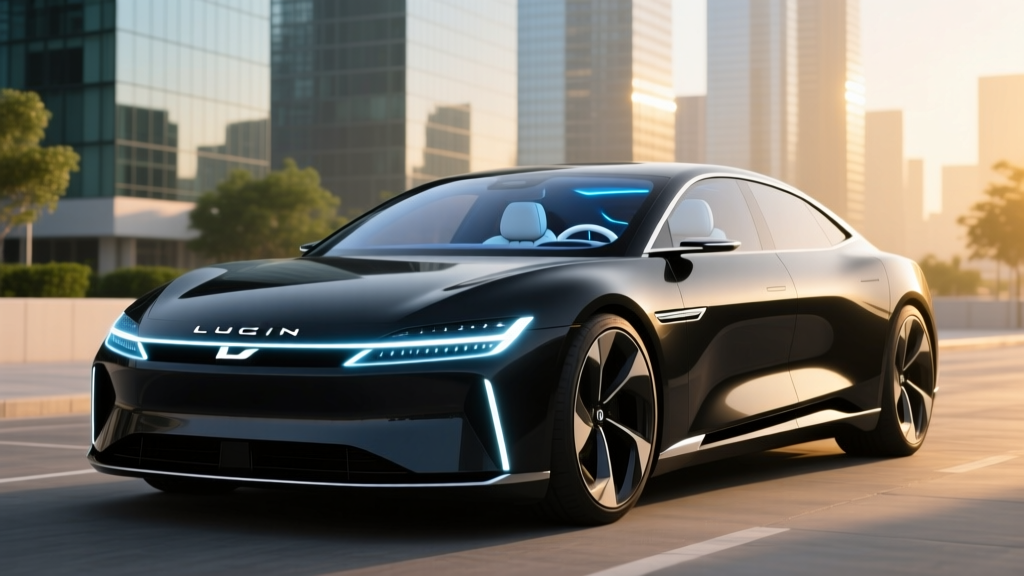
Buying a Lucid Air isn't just about the 516-mile EPA range or the 900-volt architecture — it's about buying into an ownership ecosystem that, unlike legacy luxury brands, doesn't rely on a sprawling dealership network. At the center of that ecosystem is Lucid Mobile Service, the brand's van-based, at-your-location repair and maintenance program. For a company with fewer than 30 physical service centers nationwide as of early 2026, mobile service isn't a perk; it's the backbone of post-sale support.
This profile examines what Lucid Mobile Service actually delivers, pairs it with a full technical breakdown of the 2026 Lucid Air lineup, and helps you decide whether the ownership model works for your situation.
What Lucid Mobile Service Covers — and What It Doesn't
Lucid Mobile Service deploys technicians in branded Sprinter-style vans to your home, office, or roadside. The program handles a defined scope of work:
- Software updates and diagnostics — over-the-air (OTA) glitches, module resets, sensor recalibration
- 12V battery replacement — a common early-wear item in all EVs
- Cabin air filter swaps and HVAC service
- Tire rotation, replacement, and alignment checks (mobile units carry a limited tire inventory)
- Brake fluid flushes and pad inspections (regenerative braking means pads last far longer than in ICE vehicles)
- Minor body and trim repairs — weather stripping, mirror caps, charge-port door mechanisms
- Warranty recall campaigns that don't require a lift or high-voltage isolation procedure
What mobile service cannot handle: high-voltage battery pack replacement, structural collision repair, drive-unit swaps, or any job requiring a two-post lift. Those go to a Lucid Service Center or an approved certified body shop. If you live more than 60-80 miles from a physical center, expect a flatbed tow — covered under warranty, but potentially a multi-day logistics event.
2026 Lucid Air: Full Spec Breakdown
The 2026 Air lineup spans four trims. Below is the consolidated spec matrix across the range, reflecting EPA and manufacturer data.
| Spec | Air Pure | Air Touring | Air Grand Touring | Air Sapphire |
|---|---|---|---|---|
| EPA Range | 419 mi | 425 mi | 516 mi | 427 mi |
| Battery (usable) | 88 kWh | 92 kWh | 112 kWh | 118 kWh |
| Chemistry | NMC | NMC | NMC | NMC |
| Drivetrain | RWD (single motor) | AWD (dual motor) | AWD (dual motor) | AWD (tri-motor) |
| Horsepower | 430 hp | 620 hp | 819 hp | 1,234 hp |
| 0-60 mph | 5.0 sec | 3.4 sec | 3.0 sec | 1.89 sec |
| Max DC Charge | 200 kW | 220 kW | 300 kW | 300 kW |
| 10-80% DC Time | ~28 min | ~25 min | ~20 min | ~22 min |
| Level 2 Rate | 19.2 kW (~70 mi/hr) | 19.2 kW (~70 mi/hr) | 19.2 kW (~70 mi/hr) | 19.2 kW (~70 mi/hr) |
| MPGe (combined) | 146 MPGe | 131 MPGe | 131 MPGe | 109 MPGe |
| Efficiency | 23 kWh/100mi | 26 kWh/100mi | 26 kWh/100mi | 31 kWh/100mi |
| Base MSRP | $69,900 | $87,400 | $125,600 | $249,000 |
Sources: EPA / fueleconomy.gov, Lucid Motors official specs. Prices exclude $1,295 destination fee.
Real-World Range: What the EPA Sticker Doesn't Tell You
EPA Estimate: Up to 516 miles (Grand Touring) / 419 miles (Pure RWD)
Real-World Expectation:
- Highway (70-75 mph, moderate climate): Expect 340-380 mi (Grand Touring) or 290-320 mi (Pure). Aerodynamic drag at speed is the biggest range killer in any EV, and the Air's low drag coefficient (0.197 Cd) helps, but physics is physics.
- Cold weather (below 32°F / 0°C): Budget a 20-30% reduction. A Grand Touring in a Minnesota January may deliver 340-370 mi. Battery preconditioning mitigates this somewhat but consumes energy itself.
- Mixed suburban/city driving (40-55 mph, mild temps): This is where Lucid's efficiency shines. Owners consistently report matching or slightly exceeding EPA figures in these conditions — the Air Pure can touch 430+ mi.
Lucid's Wonderland architecture and proprietary motor design deliver class-leading energy efficiency (23 kWh/100 mi on the Pure). That efficiency is the real story — not the battery size. The Air Grand Touring achieves 516 EPA miles on 112 kWh, while competitors like the Mercedes EQS 450+ manage 352 mi from a 108.4 kWh pack. That's a 46% efficiency advantage for Lucid, and it translates directly into real-world usability.
Charging Speed and Infrastructure
The Air's 900V+ electrical architecture is one of the highest-voltage platforms in production, enabling charge speeds that rival or exceed the Porsche Taycan and Hyundai Ioniq 5. Here's the practical breakdown:
| Charging Level | Power | Miles Added/Hour | Use Case |
|---|---|---|---|
| Level 1 (120V) | 1.4 kW | ~4-5 mi/hr | Emergency trickle only |
| Level 2 (240V, 48A) | 11.5 kW | ~42 mi/hr | Standard home charging |
| Level 2 (240V, 80A) | 19.2 kW | ~70 mi/hr | Full-speed home (requires 100A circuit) |
| DC Fast (350 kW station) | Up to 300 kW (GT) | ~200+ mi in 15 min | Road-trip charging |
Charge-curve reality: The Grand Touring's 300 kW peak only sustains from roughly 10-35% State of Charge (SoC). Above 50%, the rate tapers to ~150 kW, and above 80% it drops sharply to ~50 kW to protect the NMC cells. This is normal for lithium-ion but means the advertised 10-80% time of ~20 minutes assumes optimal battery temperature (preconditioned) and a capable 350 kW charger. At a 150 kW Electrify America station, expect 10-80% in roughly 35 minutes for the Grand Touring.
Lucid uses the CCS1 connector in North America. As of 2026, Lucid has not announced a switch to NACS (Tesla's connector), though adapters are available for Supercharger access at reduced speeds (~150 kW max).
Pricing, Tax Credits, and Ownership Cost
The Lucid Air occupies a tricky position in the federal EV tax credit landscape. Here's the 2026 picture under IRS §30D rules:
| Trim | Base MSRP | §30D Eligible? | Est. Effective Price |
|---|---|---|---|
| Air Pure | $69,900 | Yes (under $55K sedan cap? No — exceeds sedan cap) | ~$69,900 (no federal credit) |
| Air Touring | $87,400 | No (exceeds $55K sedan MSRP cap) | ~$87,400 |
| Air Grand Touring | $125,600 | No (exceeds $55K sedan MSRP cap) | ~$125,600 |
| Air Sapphire | $249,000 | No (exceeds $55K sedan MSRP cap) | ~$249,000 |
Interior, Cargo, and Technology
The Air's cabin is a study in minimalist luxury — think Scandinavian design rather than German button-fest. Key dimensions:
- Rear legroom: 41.3 inches — class-leading, exceeding the Mercedes S-Class and BMW 7 Series
- Cargo (trunk): 22.1 cu ft (sedan trunk, split-folding rear seat available)
- Frunk: 7.1 cu ft — fits a carry-on roller or charging cables
- Total cargo: ~29.2 cu ft combined — generous for a full-size sedan but far less than a crossover like the Tesla Model S (28 cu ft trunk + 28 cu ft with seats folded, plus frunk)
Tech highlights:
- 34-inch curved glass cockpit display — floats above the dash, no traditional instrument cluster
- Upper glass canopy roof — standard on Touring and above, creates an airy cabin but no physical shade (UV-blocking glass)
- DreamDrive Pro ADAS — LiDAR-equipped (Touring+), 32 sensors total. This is SAE Level 2 driver assistance — hands-on-wheel, eyes-on-road required at all times. It is not autonomous driving.
- Wireless Apple CarPlay/Android Auto — finally added via OTA in late 2024; native Lucid infotainment remains the primary interface
Notable drawbacks:
- The UI learning curve is steep — many functions (glove box, mirror adjustment, climate vent direction) are screen-only with no physical controls
- Rear-seat headroom is tight for passengers over 6'2" due to the sloping roofline
- No available heads-up display (HUD) as of 2026
- Build-quality inconsistencies reported by early owners (panel gaps, trim rattle) — Lucid has improved, but it's not yet at Porsche/Mercedes fit-and-finish
Warranty Coverage
Lucid's warranty is competitive within the luxury EV segment:
- Basic vehicle: 4 years / 50,000 miles
- Battery & drive unit: 8 years / 100,000 miles (12 years / unlimited miles on the high-voltage battery for capacity retention above 70% of original)
- Roadside assistance: 4 years / 50,000 miles — includes flatbed towing to nearest service center
- Mobile service: Included at no additional cost for warranty-covered repairs; out-of-warranty mobile visits may carry a trip fee ($150-$250 depending on region)
The 12-year battery retention warranty is a standout. Lucid guarantees the pack will hold at least 70% of its original capacity over that period — if degradation exceeds 30%, they replace or remediate the battery at no charge. Given Lucid's efficiency-first engineering and conservative charge-management software, significant early degradation has not been a widespread issue as of 2026.
Who Should Buy a Lucid Air — and Who Shouldn't
Pros
- Class-leading EPA range (516 mi Grand Touring)
- Best-in-class efficiency (23 kWh/100 mi Pure)
- Massive rear-seat legroom — true limousine space
- Ultra-fast 300 kW DC charging capability
- Mobile service reduces dealership dependency
- 12-year battery retention warranty
Cons
- No federal tax credit (all trims exceed $55K sedan cap)
- Limited service-center network; rural owners may wait weeks
- Sedan cargo limits — no hatchback, no towing
- Screen-heavy UI frustrates some drivers
- Build quality still maturing vs. legacy luxury OEMs
- Resale value uncertainty (brand is young, limited used-market data)
Best for: Long-distance commuters, tech-forward luxury sedan buyers, and drivers in metro areas with mobile service coverage who prioritize range and efficiency above all else. The Air Pure at $69,900 is arguably the best value-per-mile-of-range sedan on the market.
Think twice if: You need cargo versatility (consider the upcoming Lucid Gravity SUV), live far from a service center, or require the federal tax credit to make the math work. The Tesla Model S ($74,990, 402 mi EPA, NACS Supercharger access) and BMW i7 ($119,300, 318 mi EPA) offer more established service networks.
Frequently Asked Questions
What is the real-world range of the Lucid Air?
In mixed suburban driving at moderate temperatures, the Air Grand Touring delivers 440-470 real-world miles. On the highway at 75 mph, expect 340-380 mi. In sub-freezing conditions, plan for 340-370 mi with preconditioning. The Air Pure RWD achieves roughly 350-380 mi in mixed use and 290-320 mi highway.
How fast does the Lucid Air charge at home and on the road?
On a 48A Level 2 home charger (11.5 kW), the Air adds ~42 miles of range per hour — a full overnight charge (8 hours) restores ~336 mi. At a 350 kW DC fast charger, the Grand Touring peaks at 300 kW and charges 10-80% in roughly 20 minutes when preconditioned. At 150 kW chargers, 10-80% takes ~35 minutes.
Does the Lucid Air qualify for the federal EV tax credit?
No. Under current IRS §30D rules, the new clean vehicle credit imposes a $55,000 MSRP cap on sedans. All Air trims ($69,900-$249,000) exceed this limit. Additionally, buyer income caps ($150K single / $300K joint) and battery-sourcing requirements further restrict the credit. Check IRS.gov for the latest rules and consult a tax professional.
Is Lucid Mobile Service reliable?
For covered repairs (software, 12V battery, filters, tires, minor trim), owner satisfaction is generally high in metro areas with 5-10 day response times. Rural owners report longer waits (2-4 weeks). For major high-voltage or structural work, you'll need a physical service center — and with fewer than 30 nationwide, that may involve a flatbed tow and a loaner vehicle wait. The service model works well if you're near a metro area; it's a genuine limitation if you're not.
How does the Lucid Air compare to the Tesla Model S?
The Air Grand Touring beats the Model S Long Range on range (516 vs. 402 EPA mi) and efficiency. The Model S wins on Supercharger network access (NACS native), hatchback cargo practicality, more established service infrastructure, and a lower starting price for comparable performance. If road-trip charging convenience matters most, Tesla still has an edge. If range, efficiency, and rear-seat space are priorities, the Air is the stronger choice.
What does it cost to maintain a Lucid Air?
EVs eliminate oil changes, spark plugs, and transmission fluid. Expect annual maintenance to include cabin air filter replacement (~$80-120), tire rotation or replacement (the Air's weight and torque eat tires — budget $1,200-$1,800 for a set of four every 25,000-35,000 mi), brake fluid flush every 2 years (~$150), and wiper fluid/blades. Total annual maintenance typically runs $400-$700 — far below a comparable BMW 7 Series or Mercedes S-Class.