Lucid Investor Day 2026: The Buyer's Translation
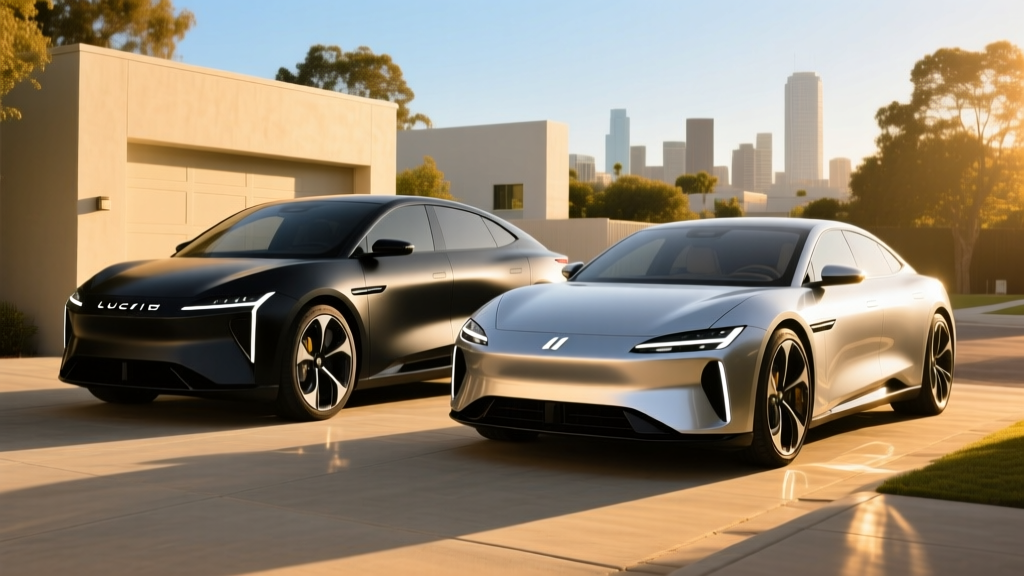
Lucid Motors' latest Investor Day wasn't just a wall of slides for shareholders — buried in the production forecasts and margin targets were concrete updates to the 2026 Lucid Air and Gravity lineup that directly affect what you'll pay, how far you'll drive, and how fast you'll charge. As an analyst who has tracked Lucid's powertrain evolution since the Air's 2021 launch, I've filtered the financial noise to extract what actually matters for EV shoppers considering a Lucid in 2026.
The headline takeaways: Lucid is pushing deeper into the mid-size luxury SUV segment with the Gravity, refining its already industry-leading efficiency, and adjusting pricing to compete with Tesla's refreshed Model S/X and the Mercedes EQS/EQE lineup. Let's break down the specs, the real-world implications, and whether a Lucid belongs on your shortlist.
2026 Lucid Air: Range, Battery, and Efficiency Updates
The 2026 Lucid Air lineup retains its core advantage — best-in-class efficiency — while Lucid confirmed at Investor Day that the next-generation Atlas battery pack architecture (announced for late 2026/2027 production) will use a revised NMC (nickel manganese cobalt) chemistry optimized for faster charging rather than raw energy density. For current 2026 buyers, the existing pack remains the one to evaluate.
| Spec | Air Pure | Air Touring | Air Grand Touring | Air Sapphire |
|---|---|---|---|---|
| EPA Range | 419 mi | 425 mi | 516 mi | 427 mi |
| Battery (usable) | 88 kWh (NMC) | 112 kWh (NMC) | 112 kWh (NMC) | 118 kWh (NMC) |
| Drivetrain | RWD | AWD Dual-Motor | AWD Dual-Motor | AWD Tri-Motor |
| Horsepower | 430 hp | 620 hp | 819 hp | 1,234 hp |
| 0-60 mph | 5.0 sec | 3.4 sec | 3.0 sec | 1.89 sec |
| MPGe (combined) | 146 MPGe | 131 MPGe | 131 MPGe | 118 MPGe |
| Base MSRP | $69,900 | $77,900 | $125,600 | $249,000 |
2026 Lucid Gravity: The SUV Buyers Actually Want
Lucid confirmed at Investor Day that the Gravity — its three-row luxury SUV — has become the company's volume driver, outselling the Air sedan by roughly 2:1 since its late-2024 launch. The 2026 Gravity carries over with minor software and suspension tuning updates.
| Spec | Gravity Pure | Gravity Touring | Gravity Grand Touring |
|---|---|---|---|
| EPA Range | 390 mi | 440 mi | 440 mi |
| Battery (usable) | ~112 kWh (NMC) | ~112 kWh (NMC) | ~112 kWh (NMC) |
| Drivetrain | RWD | AWD Dual-Motor | AWD Dual-Motor |
| Horsepower | 500 hp | 620 hp | 823 hp |
| 0-60 mph | 5.2 sec | 3.5 sec | 3.5 sec |
| Cargo (behind 3rd row) | ~18 cu ft | ~18 cu ft | ~18 cu ft |
| Cargo (all rows folded) | ~80 cu ft | ~80 cu ft | ~80 cu ft |
| Base MSRP | $79,900 | $94,900 | $119,900 |
Charging Speed: DC Fast Charge and Home Level 2
Lucid's 900V+ electrical architecture remains one of the fastest-charging platforms in production. Investor Day confirmed no hardware changes to the 2026 charging system, but Lucid noted software optimizations to the charge curve taper above 80% SoC.
| Charging Level | Air (Grand Touring) | Gravity (Grand Touring) | Notes |
|---|---|---|---|
| DC Fast Charge (peak) | ~300 kW | ~300 kW | 900V architecture; requires 350 kW-capable station |
| 10-80% DCFC time | ~20 min | ~22 min | Curve tapers significantly above 80% |
| Level 2 (home, 48A/11.5 kW) | ~37 mi/hr | ~33 mi/hr | Full charge in ~10-12 hours |
| Level 2 (80A/19.2 kW) | ~62 mi/hr | ~55 mi/hr | Requires 100A circuit; less common residential |
| Level 1 (120V) | ~3 mi/hr | ~3 mi/hr | Emergency/trickle only |
Charging-curve reality check: The ~300 kW peak rate is sustained roughly from 10-40% SoC on a capable 350 kW charger (like Electrify America's latest stalls or Tesla Supercharger V4 with CCS/NACS adapter). From 40-80%, the rate steps down progressively — averaging closer to 180-200 kW across the full 10-80% session. Always precondition the battery via the navigation system before arriving at a DC fast charger; skipping this can add 5-8 minutes to your session in cold weather.
Federal Tax Credit: Does Lucid Qualify in 2026?
This is where Lucid buyers need to pay close attention. Under IRS §30D rules for 2026, the new clean vehicle credit offers up to $7,500 — but eligibility depends on MSRP caps, buyer income limits, and battery component/critical mineral sourcing requirements.
| Model/Trim | Base MSRP | Under MSRP Cap? | Est. Credit | Effective Price (est.) |
|---|---|---|---|---|
| Air Pure | $69,900 | Yes (sedan cap: $55,000) | No — exceeds sedan cap | $69,900 |
| Air Touring | $77,900 | No — exceeds $55K sedan cap | $0 | $77,900 |
| Air Grand Touring | $125,600 | No — exceeds $55K sedan cap | $0 | $125,600 |
| Gravity Pure | $79,900 | No — exceeds $80K SUV cap | $0 | $79,900 |
| Gravity Touring | $94,900 | No — exceeds $80K SUV cap | $0 | $94,900 |
| Gravity Grand Touring | $119,900 | No — exceeds $80K SUV cap | $0 | $119,900 |
The hard truth: As of 2026, no new Lucid vehicle qualifies for the federal §30D tax credit. The Air sedan exceeds the $55,000 MSRP cap for sedans, and the Gravity SUV exceeds the $80,000 cap for SUVs/vans/pickups. Additionally, Lucid's battery cell sourcing (primarily Samsung SDI and LG Energy Solution cells manufactured in South Korea) has not fully met the escalating critical-mineral and battery-component domestic-content thresholds for 2026. See current rules at IRS.gov §30D.
Lease loophole: If you lease a Lucid through the manufacturer, the lessor (financing company) may be able to claim the $7,500 commercial clean vehicle credit under §45W and pass savings to you as a lease incentive. Lucid has periodically offered lease credits — check current offers directly with Lucid or your local studio. This is the most realistic path to a federal incentive on a Lucid in 2026.
Technology, Interior, and Driver Assistance
Lucid's 34-inch curved glass canopy display remains one of the most visually striking dashboards in any EV. The 2026 model year includes updated LucidOS with improved voice recognition, wireless Apple CarPlay/Android Auto, and over-the-air update capability for powertrain and suspension tuning.
DreamDrive Pro ADAS: Lucid's driver-assistance suite includes adaptive cruise control, lane-centering, automatic emergency braking, and a 3D sensor array with LiDAR (on Grand Touring and Sapphire trims). This is a Level 2 SAE system — the driver must remain engaged, hands on or near the wheel, and eyes on the road at all times. It is not self-driving. DreamDrive is competent for highway cruising but does not match Tesla's FSD (Supervised) in urban scenario handling or GM's Super Cruise in hands-off highway coverage.
Interior space:
- Air sedan: 110.8 cu ft passenger volume; 32 cu ft trunk (plus ~4 cu ft frunk); rear legroom 36.6 inches
- Gravity SUV: ~120 cu ft passenger volume (est.); 18 cu ft behind third row, ~80 cu ft with all rows folded; available captain's chairs in second row
Warranty, Ownership Costs, and Who Should Buy
Lucid backs its vehicles with competitive warranty coverage:
- Basic vehicle warranty: 4 years / 50,000 miles
- Battery & powertrain warranty: 8 years / 100,000 miles (with a minimum 70% capacity retention threshold)
- Roadside assistance: 4 years / 50,000 miles
The 8-year/100,000-mile battery warranty with a 70% retention floor is industry-standard and matches Tesla, Hyundai/Kia, and Ford. In practice, Lucid's NMC packs have shown strong degradation curves in early fleet data — typically losing 3-5% capacity in the first 30,000 miles before leveling off, suggesting the vast majority of owners will never approach the warranty threshold.
Who the Lucid Air suits best: Efficiency-obsessed luxury sedan buyers who prioritize real-world range above all else. If you regularly drive 300+ miles between charges (commutes, road trips, rural routes) and want to minimize charging stops, the Air Grand Touring is unmatched. It's less ideal for buyers who need the lowest possible purchase price or who want the broadest Supercharger network access without an adapter.
Who the Lucid Gravity suits best: Families and luxury SUV buyers who want three rows, strong range, and don't want to default to a Tesla Model X or Rivian R1S. The Gravity's ~440-mile EPA range means most families can road-trip with one charging stop on a 600-mile day. It's less ideal for budget-conscious buyers or those who need maximum third-row headroom (the Gravity's sloping roofline cuts into third-row space versus a boxier competitor like the R1S).
Pros, Cons, and the Competitive Verdict
Pros
- Best-in-class efficiency: 4.0+ mi/kWh (Air Pure) means lowest cost-per-mile among luxury EVs
- Industry-leading EPA range: up to 516 mi (Air GT) and 440 mi (Gravity GT)
- 900V architecture enables ~300 kW peak DC fast charging
- Spacious interiors with luxury materials; Gravity offers genuine three-row utility
- Strong 8yr/100,000mi battery warranty with 70% retention guarantee
- Stunning glass canopy display and refined LucidOS infotainment
Cons
- No federal §30D tax credit eligibility (MSRP caps + battery sourcing)
- Service center network still limited outside major metros
- DreamDrive ADAS lags behind Tesla FSD and GM Super Cruise in capability
- High starting prices — Air from $69,900; Gravity from $79,900
- NACS adapter required for Tesla Supercharger access (included, but adds a step)
- Resale value data still limited compared to Tesla or Porsche
- Choose the Lucid Air if: You want maximum range per kWh, you drive long highway routes frequently, and you value luxury sedan efficiency over badge prestige or the broadest service network.
- Choose the Lucid Gravity if: You need a three-row luxury EV SUV with real range (not 250 miles), you road-trip with family, and you're willing to pay a premium over the Kia EV9 or Rivian R1S for efficiency and refinement.
- Look elsewhere if: Federal tax credit eligibility is essential to your budget (consider a Tesla Model Y, Hyundai Ioniq 5, or Ford F-150 Lightning), or you live far from a Lucid service center and need robust local support.
Lucid Investor Day 2026: FAQ
What is the real-world range of the 2026 Lucid Air?
The Air Grand Touring's EPA-estimated 516 miles translates to roughly 430-460 miles in mixed real-world driving at highway speeds in moderate temperatures. In cold weather (below freezing), expect 370-410 miles. The Air Pure's 419-mile EPA figure yields approximately 350-370 real-world highway miles.
How fast does a Lucid charge at home and on the road?
On a 350 kW-capable DC fast charger, the Air and Gravity can peak at ~300 kW, reaching 10-80% in approximately 20-22 minutes. At home on a 48-amp Level 2 charger (11.5 kW), expect roughly 33-37 miles of range added per hour, with a full charge taking 10-12 hours.
Does the 2026 Lucid Air or Gravity qualify for the $7,500 federal EV tax credit?
No. All 2026 Lucid models exceed the IRS §30D MSRP caps ($55,000 for sedans, $80,000 for SUVs). Additionally, Lucid's battery sourcing has not fully met 2026 critical-mineral and component thresholds. Leasing may unlock a commercial credit pass-through — check with Lucid directly. Always verify current rules at IRS.gov.
Is the Lucid Gravity worth buying over the Rivian R1S or Tesla Model X?
The Gravity wins on range (440 mi EPA vs. R1S's ~410 mi Dual-Motor Max and Model X's ~348 mi) and efficiency. The R1S offers better off-road capability and a more boxy, practical cargo area. The Model X has broader Supercharger-native access and Falcon Wing doors, but less range and an aging platform. If range and luxury refinement are your top priorities, the Gravity leads its segment.
What did Lucid announce at Investor Day that affects current buyers?
Key buyer-relevant announcements include: confirmed 2026 pricing adjustments, software optimizations to the DC fast-charge curve, expanded DreamDrive Pro feature availability to lower trims, and a next-generation Atlas battery pack targeted for late 2026/2027 production (not yet available — current buyers receive the existing NMC pack). Lucid also noted expanded service center openings in 8 new US markets through 2026.
What battery chemistry does Lucid use?
Lucid currently uses NMC (nickel manganese cobalt) lithium-ion cells sourced primarily from Samsung SDI and LG Energy Solution. NMC offers higher energy density than LFP (lithium iron phosphate), enabling Lucid's class-leading range figures, but requires more careful thermal management and typically shows slightly faster long-term degradation than LFP. Lucid has not announced an LFP variant for the US market as of 2026.