2026 Lucid Gravity X: The 3-Row Electric SUV That Challenges Everything
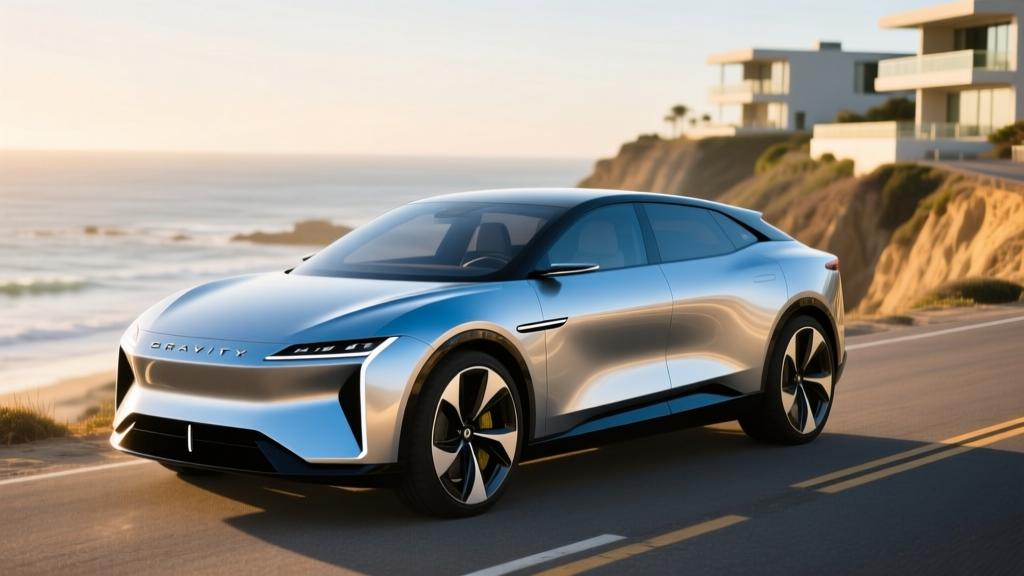
Lucid Motors entered the luxury EV SUV segment with the Gravity, and the performance-oriented Gravity X trim pushes the formula further. With a claimed 440+ mile EPA range estimate, a 900-volt electrical architecture enabling blistering DC fast-charge speeds, and genuine three-row seating for up to seven, the Gravity X targets a very specific buyer: someone who wants Tesla Model X space, Rivian R1S capability, and Lucid Air efficiency — all in one vehicle. But does the spec sheet survive contact with real-world ownership? We break down every number that matters.
| Spec | Value |
|---|---|
| EPA Est. Range | ~440 mi (Grand Touring); ~400 mi (X performance tune, est.) |
| Battery (Usable) | ~112 kWh, NMC lithium-ion |
| Drivetrain | Dual-motor AWD |
| Horsepower | ~800+ hp (X performance variant, est.) |
| 0–60 mph | ~3.5 sec (est., X trim) |
| Max DC Fast Charge | 300+ kW (900V architecture) |
| 10–80% DCFC Time | ~20 minutes (claimed) |
| Level 2 Home Charge | 19.2 kW AC (~70 mi/hr at 240V/80A) |
| Efficiency | ~110 MPGe / ~30 kWh/100 mi (est.) |
| Seating | 6 or 7 passengers (3 rows) |
| Cargo (behind 3rd row) | ~28 cu ft; ~60 cu ft (3rd row folded); ~120 cu ft (max) |
| Towing Capacity | ~6,000 lbs (est.) |
| Battery/Powertrain Warranty | 8 yr / 100,000 mi |
| Base MSRP | ~$94,900 (Gravity Grand Touring); X trim pricing TBD at launch |
Note: The Lucid Gravity began deliveries in late 2024/early 2025. Gravity X performance variant specifications are based on manufacturer announcements and preliminary data. Final EPA certification figures and trim pricing will be confirmed closer to the X variant's on-sale date. Always verify with Lucid Motors and fueleconomy.gov before purchasing.
Real-World Range: What the EPA Sticker Doesn't Tell You
Real-World Highway (70–80 mph): Expect ~330–370 mi
Cold Weather (below 32°F): Expect ~280–330 mi (20–30% reduction typical for NMC packs)
Mixed Commute (city + suburban): ~380–410 mi — closest to EPA due to regen braking efficiency
Lucid's efficiency engineering is legitimately class-leading. The Air sedan achieves over 5 mi/kWh in EPA testing, and the Gravity leverages the same powertrain miniaturization philosophy — smaller, lighter motors with fewer losses. However, physics is physics: a three-row SUV with a frontal area significantly larger than a sedan will consume more energy at highway speeds.
In real-world driving, the Gravity X's performance tuning (stiffer suspension, stickier tires, more aggressive motor mapping) will likely cost 5–10% range versus the Grand Touring trim. On a 75-mph highway run in moderate temperatures (65–75°F), plan for roughly 330–370 miles before needing a charge stop. In winter conditions — particularly below freezing where battery internal resistance increases and cabin heating draws significant power — that number can drop to 280–330 miles even with the Gravity's standard heat pump system.
For daily commuting under 80 miles round-trip, range is a non-issue. You'll charge at home and rarely think about it. For road trips exceeding 300 miles, the Gravity X's charging speed (detailed below) becomes the more important metric than raw range.
Charging Speed: 900V Architecture Makes the Difference
Lucid's 900-volt electrical architecture is the Gravity's most underappreciated advantage. Higher voltage means lower current for the same power delivery, which reduces heat generation in the battery pack and charging cables. The practical result: the Gravity can sustain higher charge rates for longer portions of the charging curve.
| Charging Level | Power (kW) | Speed (mi/hr added) | Notes |
|---|---|---|---|
| Level 1 (120V / 12A) | ~1.4 kW | ~4–5 mi/hr | Emergency/trickle only; ~80+ hrs for full charge |
| Level 2 (240V / 48A) | ~11.5 kW | ~38 mi/hr | Standard home charger; ~10–11 hrs for 10–100% |
| Level 2 (240V / 80A) | ~19.2 kW | ~70 mi/hr | Requires hardwired 100A circuit; ~5–6 hrs for full charge |
| DC Fast Charge (peak) | 300+ kW | ~750+ mi/hr (peak) | 10–80% in ~20 min; requires 350 kW-capable station |
| DC Fast Charge (50 kW station) | 50 kW | ~165 mi/hr | 10–80% in ~90 min; common at older CCS stations |
Understanding the charge curve: The "300+ kW" peak only applies when the battery state of charge (SoC) is low (roughly 10–30%) and the pack is preconditioned to optimal temperature. As SoC climbs above 50%, the charge rate tapers significantly — by 80%, you might be seeing 80–120 kW. This is normal for all lithium-ion batteries and is why the 10–80% time (~20 minutes) is a more useful metric than peak kW alone.
At home, the Gravity's 19.2 kW onboard AC charger is among the fastest in the industry. Most home Level 2 chargers deliver 11.5 kW (48 amps), but if you install a hardwired 80-amp unit on a 100-amp dedicated circuit (expect $1,200–$2,500 for equipment plus $1,500–$4,000 for electrician labor, depending on panel capacity), you can recoup roughly 70 miles of range per hour of charging. Overnight, that's a full battery every morning.
Connector note: The Gravity uses the NACS (North American Charging Standard) connector, giving it native access to the Tesla Supercharger network — the most reliable and widespread DC fast-charging network in the US. This is a significant practical advantage over CCS-only vehicles, which rely on Electrify America, EVgo, and other networks with more variable uptime.
Performance, Drivetrain, and Efficiency
The Gravity X is positioned as the performance variant of the Gravity lineup. With an estimated 800+ horsepower from its dual-motor all-wheel-drive system and a 0–60 mph time in the ~3.5-second range, it competes directly with the Tesla Model X Plaid and Rivian R1S Tri-Motor on straight-line acceleration while offering more passenger space than either.
Lucid's motor technology is worth noting: the company uses miniaturized permanent-magnet motors that are physically smaller and lighter than competitors' units, reducing unsprung mass and improving packaging efficiency. This contributes to the Gravity's class-leading interior volume relative to its exterior footprint.
Efficiency is estimated at roughly 110 MPGe combined (approximately 30 kWh per 100 miles). For context, the Tesla Model X achieves around 102 MPGe combined, and the Rivian R1S (dual-motor) achieves roughly 73 MPGe. Lucid's efficiency advantage translates directly into lower electricity costs per mile and longer range from a given battery capacity.
Interior Space, Cargo, and Daily Livability
The Gravity's three-row layout accommodates six passengers (with second-row captain's chairs) or seven (with a second-row bench). Third-row legroom is approximately 32 inches — adequate for children and shorter adults on trips under two hours, but tighter than a full-size SUV like the Chevrolet Tahoe.
Cargo volume is competitive for the segment:
- Behind third row: ~28 cu ft — enough for two large suitcases or a week of groceries for a family of five
- Third row folded: ~60 cu ft — accommodates a full-size dog crate, multiple bikes (front wheels removed), or large furniture items
- Maximum (2nd and 3rd rows folded): ~120 cu ft — approaching minivan territory
- Front trunk (frunk): ~14 cu ft — useful for charging cables, a small cooler, or overflow luggage
The cabin features Lucid's 34-inch curved glass cockpit display (dubbed the "Clearview" display), which spans the driver's field of view without obstructing it. The infotainment system runs on Lucid's proprietary software with native integration for navigation, media, and vehicle controls. Wireless Apple CarPlay and Android Auto are expected, along with over-the-air update capability.
Pricing, Trim Levels, and Federal Tax Credit Eligibility
The Lucid Gravity lineup starts with the Grand Touring trim at approximately $94,900 MSRP. The performance-oriented Gravity X variant is expected to carry a premium, likely in the $105,000–$115,000 range based on Lucid's historical pricing strategy with the Air sedan lineup. Final pricing will be confirmed at launch.
| Trim | Est. MSRP | §30D Federal Credit | Effective Price (est.) |
|---|---|---|---|
| Gravity Pure (if offered) | ~$79,900 | Up to $7,500* | ~$72,400 |
| Gravity Grand Touring | ~$94,900 | $0 (exceeds MSRP cap) | ~$94,900 |
| Gravity X (performance) | ~$109,900 | $0 (exceeds MSRP cap) | ~$109,900 |
*Credit eligibility depends on multiple factors. See details below.
Does the Gravity X Qualify for the Federal EV Tax Credit?
Almost certainly not. Under current IRS §30D rules, SUVs must have an MSRP at or below $80,000 to be eligible for the new clean vehicle credit. The Gravity Grand Touring at ~$94,900 and the X variant at an estimated ~$109,900 both exceed this cap. Even the base Gravity Pure (if offered at ~$79,900) must also satisfy:
- Buyer income caps: Modified adjusted gross income (MAGI) must not exceed $300,000 (joint filers), $225,000 (head of household), or $150,000 (single filers)
- Battery component sourcing: A percentage of battery components must be manufactured or assembled in North America (thresholds increase annually through 2029)
- Critical minerals sourcing: A percentage of critical minerals must be sourced from the US or free-trade-agreement countries
- Final assembly: Vehicle must undergo final assembly in North America (the Gravity is assembled in Casa Grande, Arizona — this requirement is met)
The credit can now be transferred to the dealer at point of sale as an immediate price reduction, rather than claimed on your tax return. However, given the MSRP cap, Gravity X buyers should budget the full sticker price. Consult a tax professional and verify current rules at IRS.gov before making purchase decisions based on credit eligibility.
Pros and Cons: The Honest Assessment
Pros
- Class-leading efficiency: ~110 MPGe expected, significantly better than Model X or R1S, meaning lower per-mile electricity cost
- 900V fast-charging architecture: 10–80% in ~20 minutes at a 350 kW station — among the fastest in the segment
- NACS connector standard: Native Tesla Supercharger access without adapters — the most reliable public charging network
- Genuine 3-row seating: Accommodates 6–7 passengers with reasonable third-row space
- Massive cargo capacity: Up to ~120 cu ft with seats folded, plus a usable frunk
- Exceptional performance: ~3.5-second 0–60 with dual-motor AWD
- 19.2 kW onboard AC charger: Faster home charging than most competitors (who max at 11.5 kW)
- Arizona-built: Domestic assembly supports §30D final-assembly requirement (though MSRP cap still blocks credit)
Cons
- No federal tax credit: MSRP exceeds the $80,000 SUV cap — you pay full price
- Six-figure price point: X trim likely $105K–$115K, limiting the buyer pool significantly
- Third-row space is tight for adults: ~32 inches of legroom — fine for kids, cramped for tall passengers on long trips
- Lucid's service network is small: Far fewer service centers than Tesla or legacy automakers — check proximity to your area
- Real-world range drops in cold/highway driving: Plan for 330 mi highway, 280 mi winter — not the 440 mi EPA sticker
- Relatively new brand: Long-term reliability data is limited compared to established manufacturers
- Insurance costs may be high: Luxury EV SUVs with 800+ hp tend to carry elevated premiums
Who Should Buy the Lucid Gravity X?
Buy the Gravity X if:
- You need three rows for family but refuse to drive a minivan
- You regularly take road trips and value fast DC charging (20-minute stops) over maximum range
- You want Tesla Supercharger access but prefer a non-Tesla vehicle
- You prioritize efficiency and want the lowest per-mile electricity cost in the luxury 3-row EV segment
- You have home Level 2 charging and can take advantage of the 19.2 kW onboard charger
- Your budget comfortably accommodates a $100K+ vehicle without relying on tax credits
Look elsewhere if:
- You need the federal $7,500 tax credit to make the math work (consider the Rivian R1S or Tesla Model X, though both also exceed the cap in most trims)
- You need adult-sized third-row seating for regular use (a full-size SUV like the Cadillac Escalade IQ or a minivan may serve better)
- You live in an area with no nearby Lucid service center
- You want the most proven long-term reliability data (Tesla's track record, despite its quirks, is more established)
- Your daily commute is short and you'd save more with a PHEV like the Volvo EX90 plug-in hybrid variant
Lucid Gravity X vs. Key Competitors
| Spec | Lucid Gravity X | Tesla Model X Plaid | Rivian R1S Tri-Motor | Cadillac Escalade IQ |
|---|---|---|---|---|
| EPA Range | ~400 mi | ~320 mi | ~350 mi | ~460 mi |
| Battery (usable) | ~112 kWh NMC | ~100 kWh | ~149 kWh (Max Pack) | ~200+ kWh Ultium |
| 0–60 mph | ~3.5 sec | ~2.5 sec | ~3.0 sec | ~5.0 sec |
| Max DC Charge | 300+ kW | 250 kW | 200+ kW | ~350 kW |
| 10–80% DCFC | ~20 min | ~25 min | ~28 min | ~25 min |
| Seating | 6–7 | 5–7 | 7 | 7 |
| Est. MSRP | ~$109,900 | ~$109,990 | ~$106,000 | ~$130,000+ |
| §30D Credit | No (MSRP cap) | No (MSRP cap) | No (MSRP cap) | No (MSRP cap) |
| Connector | NACS | NACS (native) | NACS (2025+) | CCS → NACS adapter |
The Gravity X's primary advantage over these competitors is efficiency. Its ~110 MPGe rating means you'll spend roughly $1,200–$1,500 per year on electricity (at 12,000 miles/year and $0.15/kWh national average), versus $1,600–$2,000 for the Model X and R1S. Over five years, that's $2,000–$3,000 in fuel savings — not enough to offset the purchase price difference alone, but a meaningful reduction in total cost of ownership.
Where the Model X Plaid wins is raw acceleration (2.5 seconds is supercar territory) and the maturity of Tesla's Supercharger network and service infrastructure. The R1S wins on off-road capability and adventure-oriented features (adjustable air suspension with significant ground clearance, a gear tunnel for gear storage). The Escalade IQ wins on sheer size and traditional luxury prestige, though at a significant price premium.
Warranty, Ownership Costs, and Long-Term Outlook
Lucid covers the Gravity's battery and drive unit with an 8-year / 100,000-mile warranty, which is standard for the luxury EV segment (Tesla offers 8 yr / 150,000 mi on the Model X battery). The bumper-to-bumper limited warranty is typically 4 years / 50,000 miles. The battery warranty guarantees a minimum capacity retention — typically 70% of original capacity — over the warranty period, though Lucid's specific degradation threshold should be confirmed in your purchase agreement.
Based on Lucid Air owner data and industry-wide NMC battery degradation curves, expect roughly 5–8% capacity loss over the first 100,000 miles under normal use. Lucid's thermal management system (liquid cooling with active preconditioning) is designed to minimize degradation during fast charging and extreme temperatures.
Estimated 5-year total cost of ownership (purchase price + electricity + insurance + maintenance, minus depreciation):
- Purchase: ~$109,900 (no federal credit)
- Electricity (60,000 mi at $0.15/kWh, ~30 kWh/100 mi): ~$2,700
- Insurance (estimated): ~$18,000–$24,000 over 5 years (luxury performance EV SUV rates)
- Maintenance: ~$1,500–$2,500 (EVs require less maintenance than ICE vehicles — no oil changes, fewer brake replacements due to regen)
- Depreciation (estimated 50–55% over 5 years): ~$55,000–$60,000
Total 5-year cost: approximately $127,000–$139,000 including depreciation. This is competitive with the Model X Plaid and R1S Tri-Motor when comparing like-for-like trims.
Frequently Asked Questions
What is the real-world range of the Lucid Gravity X?
The EPA estimate is approximately 400 miles for the X performance variant (440 miles for the Grand Touring). In real-world highway driving at 70–80 mph, expect 330–370 miles. In cold weather (below 32°F), expect 280–330 miles. City and suburban driving with regenerative braking will get you closest to the EPA sticker, around 380–410 miles.
How fast does the Lucid Gravity X charge?
On a 350 kW-capable DC fast charger, the Gravity X can accept over 300 kW at peak (low SoC, preconditioned battery), achieving a 10–80% charge in approximately 20 minutes. At home on a Level 2 charger, it supports up to 19.2 kW AC (with an 80-amp hardwired unit), adding roughly 70 miles of range per hour. A standard 48-amp Level 2 charger delivers about 38 miles per hour.
Does the Lucid Gravity X qualify for the federal EV tax credit?
No. Under current IRS §30D rules, SUVs must have an MSRP of $80,000 or less to qualify. The Gravity X is expected to start well above $100,000. Even if you qualify based on income limits ($300,000 joint / $150,000 single), the MSRP cap disqualifies the vehicle. Verify current rules at IRS.gov.
Is the Lucid Gravity X worth buying vs. the Tesla Model X or Rivian R1S?
It depends on your priorities. The Gravity X offers the best efficiency (~110 MPGe), fastest home charging (19.2 kW), and native NACS/Supercharger access. The Model X Plaid is quicker (2.5 sec 0–60) and benefits from Tesla's mature service network. The R1S is more capable off-road and adventure-oriented. If efficiency and road-trip charging speed matter most, the Gravity X is the strongest choice in the segment.
What are the biggest drawbacks of the Lucid Gravity X?
The primary concerns are price (no tax credit, six-figure MSRP), Lucid's relatively small service network compared to Tesla or legacy brands, limited long-term reliability data for the brand, and a third row that's tight for adults on long trips. Insurance costs for a luxury performance EV SUV are also likely to be elevated.
Can the Lucid Gravity X tow?
Yes. The Gravity is expected to offer approximately 6,000 pounds of towing capacity, sufficient for a small boat, a pair of jet skis, or a light travel trailer. Keep in mind that towing will significantly reduce range — expect a 30–50% reduction depending on trailer weight and aerodynamics.
What connector does the Lucid Gravity use?
The Gravity uses the NACS (North American Charging Standard) connector, the same plug used by Tesla vehicles. This provides native access to the Tesla Supercharger network without adapters — currently the most reliable and widespread DC fast-charging infrastructure in the United States.
Sources: fueleconomy.gov (EPA range and efficiency data), Lucid Motors official specifications, IRS §30D Clean Vehicle Credit rules. Specifications for the Gravity X performance variant are preliminary and subject to change. Always confirm final figures with the manufacturer before purchase.